This website is managed by Ultima Markets’ international entities, and it’s important to emphasise that they are not subject to regulation by the FCA in the UK. Therefore, you must understand that you will not have the FCA’s protection when investing through this website – for example:
You will not be guaranteed Negative Balance Protection
You will not be protected by FCA’s leverage restrictions
You will not have the right to settle disputes via the Financial Ombudsman Service (FOS)
You will not be protected by Financial Services Compensation Scheme (FSCS)
Any monies deposited will not be afforded the protection required under the FCA Client Assets Sourcebook. The level of protection for your funds will be determined by the regulations of the relevant local regulator.
Note: UK clients are kindly invited to visit https://www.ultima-markets.co.uk/. Ultima Markets UK expects to begin onboarding UK clients in accordance with FCA regulatory requirements in 2026.
If you would like to proceed and visit this website, you acknowledge and confirm the following:
1.The website is owned by Ultima Markets’ international entities and not by Ultima Markets UK Ltd, which is regulated by the FCA.
2.Ultima Markets Limited, or any of the Ultima Markets international entities, are neither based in the UK nor licensed by the FCA.
3.You are accessing the website at your own initiative and have not been solicited by Ultima Markets Limited in any way.
4.Investing through this website does not grant you the protections provided by the FCA.
5.Should you choose to invest through this website or with any of the international Ultima Markets entities, you will be subject to the rules and regulations of the relevant international regulatory authorities, not the FCA.
Ultima Markets wants to make it clear that we are duly licensed and authorised to offer the services and financial derivative products listed on our website. Individuals accessing this website and registering a trading account do so entirely of their own volition and without prior solicitation.
By confirming your decision to proceed with entering the website, you hereby affirm that this decision was solely initiated by you, and no solicitation has been made by any Ultima Markets entity.
Ultima Markets does not have an establishment in Singapore and does not operate from Singapore.
Ultima Markets does not provide products or services to citizens or residents of Singapore, and account applications from Singapore citizens or residents will not be accepted.
If you are a citizen or resident of Singapore, please do not open an account or use Ultima Markets’ products or services.
By selecting “Acknowledge and Continue Browsing”, you confirm that you are accessing this website on your own initiative and that your access is not the result of any direct marketing, targeted advertising, solicitation, or promotional activity by Ultima Markets.
Nothing on this website constitutes an offer, solicitation, or promotion of products or services in any jurisdiction where such activity is prohibited. You are responsible for ensuring that your access to and use of this website complies with applicable local laws and regulations.
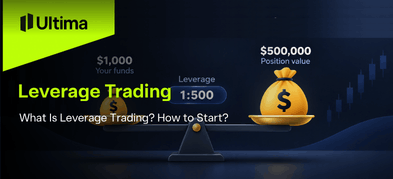
Explore leverage trading principles and applications, master the latest forex and CFD leverage strategies to boost capital efficiency and manage risks effectively.
A forex trader spots a potential move in EUR/USD but does not want to commit the full value of a currency position. Leverage makes it possible to open the trade using a smaller amount as margin, while profits and losses still reflect the entire position.
So, what is leverage trading in practice? This guide moves beyond the definition to explore where it is used, how traders plan leveraged positions and what can happen after an order is placed.
What Is Leverage Trading Used For?
Leverage allows traders to gain market exposure without paying the full value of a position upfront. Instead, they provide margin to support the trade. This can leave more capital available in the account, but it does not make an oversized position safer.
In forex, traders use leverage to take positions on exchange-rate movements. CFD traders can also speculate on gold, oil, indices and shares without owning the underlying asset. In either case, leverage changes how much capital is required, not whether the trade idea is sound.
Leverage serves different trading ideas across markets, and each market has its own risks.
Market
Example of a trading idea
What needs extra attention
Forex
Trading EUR/USD around an interest-rate decision
Rapid exchange-rate movements and spreads
Gold CFDs
Taking a view on gold after an inflation release
Sudden volatility and price gaps
Index CFDs
Trading an equity index during earnings season
Broad market moves and correlated exposure
Oil CFDs
Responding to changes in supply expectations
Sharp reactions to unexpected news
These are examples, not trading signals. Position sizes and exit plans should reflect the market being traded.
Leverage Trading Example: Opening a EUR/USD Position
Imagine a trader expects EUR/USD to rise and places a buy order for 0.10 lots at 1.1000. In forex, 0.10 lots represents 10,000 units of the base currency, so the position is worth approximately US$11,000 at entry. If the applicable leverage is 1:50, the initial margin would be around US$220.
For a USD-denominated account, each pip is worth approximately US$1.
Closing at 1.1050 after a 50-pip rise produces approximately US$50 profit before costs. Closing at 1.0970 after a 30-pip decline produces approximately US$30 loss before costs.
The US$220 margin is not a loss limit. A stop-loss can provide an intended exit, but a sharp move or price gap may result in a different execution price.
Yes. When trading CFDs, a trader can usually open a buy (long) position if they expect a price to rise or a sell (short) position if they expect it to fall.
For example, a trader expecting gold prices to weaken might open a short gold CFD. A fall in price could generate a profit, while a rise would generate a loss. Going short is not inherently less risky than going long, especially with leverage.
5 Questions to Ask Before Opening a Leveraged Trade
Before selecting leverage or placing an order, work through five questions:
What is the trading idea? Identify the price move you expect and the circumstances that would prove you wrong.
Where would you exit? Set an intended profit target and a level where your idea is no longer valid, allowing for possible slippage.
How large should the position be? Estimate the monetary value of each pip or point. Smaller positions generally mean less is at stake for the same market move.
How much margin will remain? Check the new order alongside existing positions, including any shared exposure to currencies or other market drivers.
What events could affect the trade? Check upcoming data releases, possible volatility and any overnight financing charges.
The aim is to plan the possible loss before focusing on potential returns.
Leverage Is Not a Trading Strategy
Trend-following, breakout trading and range trading help identify possible entries and exits. Leverage is different: it determines the margin required for the position.
A GBP/USD breakout does not become more reliable because higher leverage is available. Traders still need to assess the setup, exit level and potential loss.
Common Leverage Trading Mistakes
A common mistake is choosing trade size according to the margin a platform permits rather than the loss the account could absorb. Several positions may require modest margin individually yet carry substantial combined exposure.
Another is using the same lot size for gold and EUR/USD without checking contract specifications. Their monetary value per price movement can differ considerably. Adding to a losing position without reviewing total exposure may further increase the risk, especially in volatile markets.
Conclusion
Understanding what is leverage trading means looking beyond the headline ratio. The real decisions are what to trade, which direction to take, how large a position to open and when to exit.
A demo account can help you practise choosing an instrument, setting position size, placing orders and monitoring trades using virtual funds.
With anUltima Markets demo account, you can explore how lot sizes affect exposure before risking real capital. Demo results do not guarantee the same experience in live markets.
FAQ
What is leverage in trading?
Leverage allows traders to control a larger market position using a smaller amount of capital as margin. It increases market exposure and can magnify both potential profits and losses.
Is leverage trading a good idea?
Leverage trading can improve capital efficiency, but it also increases the risk of significant losses. Whether it is suitable depends on your trading experience, risk tolerance and ability to manage positions responsibly.
How much is $100 with 10x leverage?
With 10x leverage, US$100 in margin allows you to control a position worth US$ 1,000. A 1% price movement would result in approximately US$10 in profit or loss, excluding trading costs.
Share Now
Disclaimer:This content is provided for informational purposes only and does not constitute, and should not be construed as, financial, investment, or other professional advice. No statement or opinion contained herein should be considered a recommendation by Ultima Markets or the author regarding any specific investment product, strategy, or transaction. Readers are advised not to rely solely on this material when making investment decisions and should seek independent advice where appropriate.
Thank you for visiting the Ultima Markets website. Please note that this website is intended for individuals residing in jurisdictions where access is permitted by law. Ultima and its affiliated entities do not operate in your home jurisdiction.
By clicking ‘Acknowledge’, you confirm that you are entering this website solely on your own initiative and not as a result of any specific marketing outreach. You wish to obtain information from this website based on reverse solicitation principles, in accordance with the applicable laws of your home jurisdiction.