This website is managed by Ultima Markets’ international entities, and it’s important to emphasise that they are not subject to regulation by the FCA in the UK. Therefore, you must understand that you will not have the FCA’s protection when investing through this website – for example:
You will not be guaranteed Negative Balance Protection
You will not be protected by FCA’s leverage restrictions
You will not have the right to settle disputes via the Financial Ombudsman Service (FOS)
You will not be protected by Financial Services Compensation Scheme (FSCS)
Any monies deposited will not be afforded the protection required under the FCA Client Assets Sourcebook. The level of protection for your funds will be determined by the regulations of the relevant local regulator.
Note: UK clients are kindly invited to visit https://www.ultima-markets.co.uk/. Ultima Markets UK expects to begin onboarding UK clients in accordance with FCA regulatory requirements in 2026.
If you would like to proceed and visit this website, you acknowledge and confirm the following:
1.The website is owned by Ultima Markets’ international entities and not by Ultima Markets UK Ltd, which is regulated by the FCA.
2.Ultima Markets Limited, or any of the Ultima Markets international entities, are neither based in the UK nor licensed by the FCA.
3.You are accessing the website at your own initiative and have not been solicited by Ultima Markets Limited in any way.
4.Investing through this website does not grant you the protections provided by the FCA.
5.Should you choose to invest through this website or with any of the international Ultima Markets entities, you will be subject to the rules and regulations of the relevant international regulatory authorities, not the FCA.
Ultima Markets wants to make it clear that we are duly licensed and authorised to offer the services and financial derivative products listed on our website. Individuals accessing this website and registering a trading account do so entirely of their own volition and without prior solicitation.
By confirming your decision to proceed with entering the website, you hereby affirm that this decision was solely initiated by you, and no solicitation has been made by any Ultima Markets entity.
Discover the currency of Brazil, which is the Brazilian real (BRL). Learn about its history, value, exchange rate factors, and its role in global markets.
The currency of Brazil is the Brazilian real (BRL), the official currency used by more than 200 million people in South America’s largest economy. Introduced in 1994, the Brazilian real replaced a series of unstable currencies and became a key part of Brazil’s efforts to control inflation and strengthen economic confidence.
Today, the Brazilian real is one of the most important emerging market currencies. Its value is influenced by Brazil’s economic performance, interest rates, commodity exports and global investor sentiment. Understanding the currency of Brazil provides useful insight into the country’s economy and its role in international markets.
What Is the Currency of Brazil?
The official currency of Brazil is the Brazilian real, known by the currency code BRL and represented by the symbol R$. The plural form is reais.
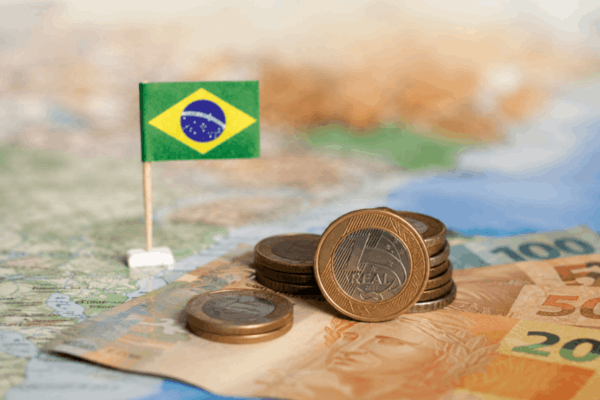
The Brazilian real is issued by the Central Bank of Brazil (Banco Central do Brasil) and is divided into 100 smaller units called centavos.
Brazil currently uses banknotes in denominations of:
Banknote
Value
R$2
Two reais
R$5
Five reais
R$10
Ten reais
R$20
Twenty reais
R$50
Fifty reais
R$100
One hundred reais
R$200
Two hundred reais
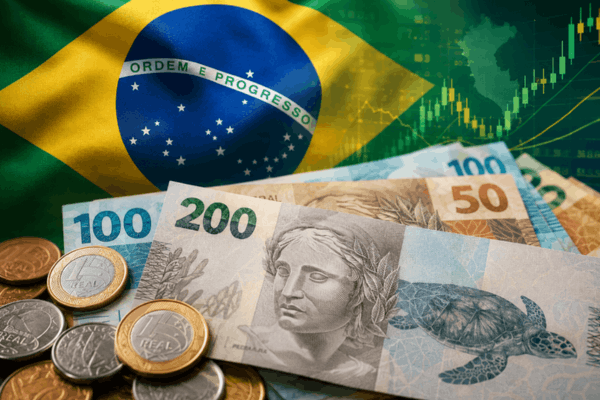
Brazilian banknotes feature images of animals representing the country’s rich biodiversity, including the jaguar, sea turtle and golden lion tamarin. Coins are also commonly used for smaller transactions, including values of 1, 5, 10, 25 and 50 centavos, as well as the R$1 coin.
Beyond physical cash, Brazil has also seen rapid growth in digital payments through Pix, an instant payment system launched by the Central Bank of Brazil. The popularity of Pix has transformed everyday payments and reduced dependence on traditional cash transactions.
The History of the Brazilian Real
Before the current real was introduced, Brazil experienced decades of currency changes and economic instability. During the 1980s and early 1990s, the country faced extremely high inflation, which caused prices to rise quickly and weakened confidence in the financial system.
Previous Brazilian currencies included:
Cruzeiro
Cruzado
Cruzado Novo
Cruzeiro Real
The introduction of the real in 1994 was part of the Plano Real, an economic stabilisation programme designed to reduce inflation and rebuild trust in Brazil’s currency.
The plan successfully lowered inflation and created a more stable economic environment. Since then, the Brazilian real has remained Brazil’s official currency and has become a recognised currency in global emerging markets.
How Strong Is the Brazilian Real?
The value of the Brazilian real changes constantly depending on domestic and international economic conditions. Unlike major reserve currencies such as the US dollar and euro, the real is considered an emerging market currency, meaning it can experience larger price movements during periods of economic uncertainty.
Several factors influence the strength of Brazil’s currency:
Interest Rates
Brazil’s interest rate decisions play an important role in determining the value of the real. The Central Bank of Brazil uses interest rates to manage inflation and support economic stability.
Higher interest rates can make Brazilian assets more attractive to international investors seeking higher returns. Increased foreign investment may create greater demand for the real and support its value.
Commodity Exports
Brazil is one of the world’s largest commodity exporters. The country plays a major role in global markets for:
Soybeans
Iron ore
Coffee
Sugar
Crude oil
Because many commodities are traded internationally in US dollars, changes in global commodity prices can directly affect Brazil’s economy and currency.
When commodity prices rise, Brazil may benefit from stronger export revenues, improving its trade position and potentially supporting the Brazilian real. However, falling commodity prices can reduce export income and place pressure on the currency.
Inflation and Economic Growth
Inflation is another major factor affecting the currency of Brazil. Higher inflation can reduce purchasing power and weaken investor confidence, while stable inflation generally supports a stronger economic outlook.
Economic growth, government policies and fiscal management also influence how international investors view Brazil’s financial markets.
Why Is the Brazilian Real Volatile?
The Brazilian real can experience periods of significant volatility because it is closely linked to global risk sentiment and emerging market conditions.
Key factors that can affect BRL include:
Factor
Potential Impact on BRL
Strong US dollar
May weaken the real
Higher commodity prices
May support the real
Higher interest rates
Can attract foreign capital
Fiscal concerns
May reduce investor confidence
Political uncertainty
Can increase volatility
For example, when global investors become more cautious, they often move capital towards safer assets such as the US dollar. This can create selling pressure on emerging market currencies, including the Brazilian real.
The Brazilian Real Outlook in 2026
The outlook for the Brazilian real in 2026 depends on several economic factors, including inflation trends, monetary policy and global demand for commodities.
Brazil continues to benefit from its strong position in agriculture, energy and natural resources. Continued demand for Brazilian exports may provide support for the economy and the currency.
However, investors are also watching challenges such as fiscal policy, inflation management and global interest rate movements. Decisions from both the Central Bank of Brazil and the US Federal Reserve can influence capital flows and the USD/BRL exchange rate.
Overall, the future direction of Brazil’s currency will likely depend on whether economic growth remains stable while inflation pressures are controlled.
Brazilian Real vs US Dollar
The USD/BRL exchange rate is one of the most widely followed currency pairs involving Brazil. It shows how many Brazilian reais are needed to buy one US dollar.
When USD/BRL rises, it means the US dollar has strengthened against the real. When the exchange rate falls, it indicates that the Brazilian real has gained value against the dollar.
The exchange rate is influenced by:
US Federal Reserve interest rate decisions
Brazil’s Selic interest rate
Inflation data
Commodity market movements
Foreign investment flows
Because of Brazil’s economic importance, USD/BRL is often used as an indicator of broader emerging market sentiment.
Can You Trade the Brazilian Real?
The Brazilian real is available in the foreign exchange market, with USD/BRL being the most commonly traded pair.
Traders and investors often monitor:
Central bank announcements
Economic data releases
Commodity prices
Global interest rate trends
Political developments
However, currency markets involve risk, and exchange rates can move quickly due to unexpected economic or geopolitical events.
Trading involves risk and may lead to capital loss. Profits are not guaranteed.
Conclusion
The currency of Brazil, the Brazilian real, has played a central role in the country’s economic development since its introduction in 1994. After overcoming periods of severe inflation, the real has become one of the most important currencies in Latin America.
Today, the value of Brazil’s currency is shaped by interest rates, commodity exports, inflation and global investor sentiment. As Brazil continues to expand its role in global trade and commodity markets, the Brazilian real will remain a key indicator of the country’s economic strength and emerging market trends.
FAQs
What is the currency of Brazil?
The currency of Brazil is the Brazilian real, with the code BRL and symbol R$.
When was the Brazilian real introduced?
The Brazilian real was introduced in 1994 as part of the Plano Real economic stabilisation programme.
Is the Brazilian real a stable currency?
The real is one of Latin America’s major currencies, but its value can fluctuate due to inflation, interest rates, commodity prices and global market conditions.
What was Brazil’s currency before the real?
Brazil used several currencies before the real, including the Cruzeiro and Cruzeiro Real.
Share Now
Disclaimer:This content is provided for informational purposes only and does not constitute, and should not be construed as, financial, investment, or other professional advice. No statement or opinion contained herein should be considered a recommendation by Ultima Markets or the author regarding any specific investment product, strategy, or transaction. Readers are advised not to rely solely on this material when making investment decisions and should seek independent advice where appropriate.
Thank you for visiting the Ultima Markets website. Please note that this website is intended for individuals residing in jurisdictions where access is permitted by law. Ultima and its affiliated entities do not operate in your home jurisdiction.
By clicking ‘Acknowledge’, you confirm that you are entering this website solely on your own initiative and not as a result of any specific marketing outreach. You wish to obtain information from this website based on reverse solicitation principles, in accordance with the applicable laws of your home jurisdiction.