This website is managed by Ultima Markets’ international entities, and it’s important to emphasise that they are not subject to regulation by the FCA in the UK. Therefore, you must understand that you will not have the FCA’s protection when investing through this website – for example:
You will not be guaranteed Negative Balance Protection
You will not be protected by FCA’s leverage restrictions
You will not have the right to settle disputes via the Financial Ombudsman Service (FOS)
You will not be protected by Financial Services Compensation Scheme (FSCS)
Any monies deposited will not be afforded the protection required under the FCA Client Assets Sourcebook. The level of protection for your funds will be determined by the regulations of the relevant local regulator.
Note: UK clients are kindly invited to visit https://www.ultima-markets.co.uk/. Ultima Markets UK expects to begin onboarding UK clients in accordance with FCA regulatory requirements in 2026.
If you would like to proceed and visit this website, you acknowledge and confirm the following:
1.The website is owned by Ultima Markets’ international entities and not by Ultima Markets UK Ltd, which is regulated by the FCA.
2.Ultima Markets Limited, or any of the Ultima Markets international entities, are neither based in the UK nor licensed by the FCA.
3.You are accessing the website at your own initiative and have not been solicited by Ultima Markets Limited in any way.
4.Investing through this website does not grant you the protections provided by the FCA.
5.Should you choose to invest through this website or with any of the international Ultima Markets entities, you will be subject to the rules and regulations of the relevant international regulatory authorities, not the FCA.
Ultima Markets wants to make it clear that we are duly licensed and authorised to offer the services and financial derivative products listed on our website. Individuals accessing this website and registering a trading account do so entirely of their own volition and without prior solicitation.
By confirming your decision to proceed with entering the website, you hereby affirm that this decision was solely initiated by you, and no solicitation has been made by any Ultima Markets entity.
Discover the difference between Venmo vs PayPal. Compare the fees, features, and business models between them. See how the stock outlook might look like.
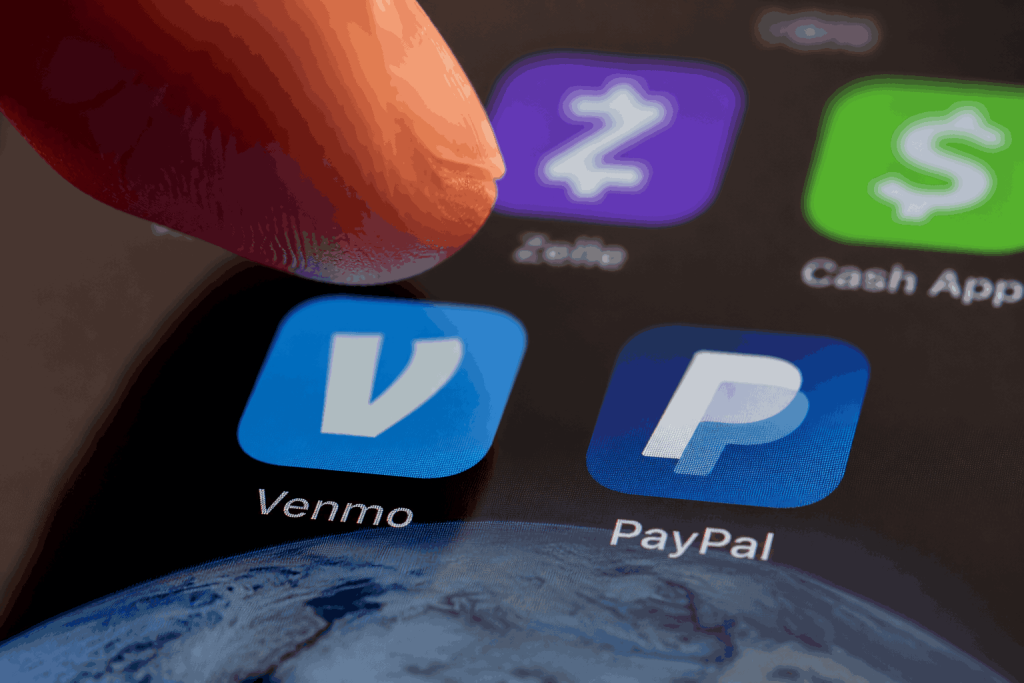
Digital payments have become an essential part of modern finance, changing how people send money, shop online, and manage everyday transactions. Two of the most recognised names in this space are Venmo vs PayPal, with both platforms playing a major role in the growth of digital payments.
Although many people compare Venmo and PayPal as separate competitors, they are actually connected. PayPal Holdings owns Venmo, meaning investors cannot buy Venmo stock directly. Instead, anyone looking to benefit from Venmo’s growth must invest in PayPal stock (NASDAQ: PYPL).
For consumers, Venmo and PayPal serve different purposes. Venmo is mainly designed for quick peer-to-peer payments, while PayPal operates as a broader digital payments platform for individuals, businesses, and online merchants.
For investors, the bigger question is whether PayPal can use Venmo’s popularity to strengthen its long-term growth and profitability.
What Is the Difference Between Venmo and PayPal?
Venmo was launched as a mobile payment app focused on simple money transfers between friends, family, and acquaintances. Its popularity grew among younger users because of its easy-to-use interface, social payment features, and convenience for splitting bills or sharing expenses.
PayPal, on the other hand, has developed into a global financial technology platform. Since launching as an online payment service, PayPal has expanded into digital wallets, merchant payment solutions, online checkout, Buy Now Pay Later services, debit cards, and other financial products.
While both platforms allow users to send and receive money, their main purposes are different.
Feature
Venmo
PayPal
Main use
Peer-to-peer payments
Consumer and merchant payments
Target users
Mainly individuals
Individuals, businesses, and retailers
Geographic reach
Primarily US market
Global markets
Key strength
Social payments and younger users
Global payment network
Stock availability
Not publicly traded
NASDAQ: PYPL
Venmo focuses on personal transactions, while PayPal has a much wider ecosystem that supports both consumers and businesses.
Which Platform Is Cheaper?
For users making simple personal transfers, Venmo can often be a lower-cost option.
Venmo generally allows users to send money using linked bank accounts or debit cards without fees for standard transfers. However, instant transfers usually include a fee, while credit card payments also carry additional charges.
PayPal offers more payment options, but its fee structure can be more complex because it supports a wider range of services, including merchant payments and international transactions.
For example, PayPal may charge fees for certain card payments and international transactions, while currency conversion costs can also affect the final amount received.
This difference reflects the platforms’ business models:
Venmo is mainly designed for convenient domestic transfers.
PayPal provides a wider range of financial services, including global payments and business solutions.
For everyday money transfers between friends, Venmo may be more straightforward. However, PayPal offers greater flexibility for users who need broader payment capabilities.
PayPal’s Stronger Global Advantage
One of PayPal’s biggest advantages over Venmo is international coverage.
Venmo is mainly available to users located in the United States, making it highly popular in the domestic market but limited globally. PayPal has built a much broader payment network, supporting users across more than 200 countries and multiple currencies.
This global reach gives PayPal several advantages:
Access to international customers
Stronger merchant relationships
More diverse revenue sources
Greater opportunities in cross-border payments
For investors, this difference is important. Venmo has strong brand recognition among US consumers, but PayPal’s international infrastructure creates a larger long-term opportunity.
Venmo vs PayPal: Which Business Is More Profitable?
When comparing profitability, PayPal remains the stronger business because of its scale and diversified revenue streams.
In 2025, PayPal processed approximately $1.79 trillion in total payment volume (TPV) and supported around 439 million active accounts globally. The company operates across approximately 200 markets, generating revenue through digital payments, merchant services, checkout solutions, and financial products.
Venmo, however, has become one of PayPal’s fastest-growing segments. The platform has expanded beyond simple money transfers by introducing products such as debit cards, instant transfers, and merchant payments.
Venmo generated around $1.7 billion in revenue in 2025, with growth of approximately 20% year-over-year. The platform has also surpassed 100 million accounts, showing strong adoption among consumers.
This creates two different strengths:
PayPal provides:
Global scale
Established profitability
Merchant relationships
Multiple revenue streams
Venmo provides:
Faster growth
Strong engagement among younger users
Future monetisation opportunities
For investors, the value of Venmo depends on whether PayPal can successfully turn its large user base into higher revenue growth.
Venmo Could Become PayPal’s Growth Engine
Venmo’s biggest opportunity is expanding beyond peer-to-peer payments.
Historically, many users viewed Venmo as a simple way to send money to friends or split expenses. However, PayPal has been working to transform Venmo into a broader financial platform.
Growth opportunities include:
Expanding Merchant Payments
Allowing more businesses to accept Venmo payments could increase transaction volume and create additional revenue opportunities.
Increasing Financial Products
Venmo debit cards, instant transfers, and other services allow PayPal to generate more value from existing users.
Reaching Younger Consumers
Venmo has built strong brand recognition among younger generations. This creates a potential pipeline of future customers as digital payments become more integrated into everyday financial activity.
However, the challenge remains monetisation. A large user base does not automatically translate into high revenue. PayPal needs to encourage users to adopt more paid services and payment products.
PayPal Stock Advantages for Investors
Since Venmo is not publicly traded, PayPal stock is the only way investors can gain exposure to both businesses.
1. Strong Digital Payment Network
PayPal remains one of the largest digital payment companies globally. Its large customer base and merchant ecosystem create a competitive advantage that smaller fintech companies may struggle to replicate.
2. Proven Profitability
Unlike many newer fintech companies focused mainly on growth, PayPal has an established business model with strong cash generation.
This allows the company to invest in technology, improve operations, and return capital to shareholders.
3. Potential Turnaround Opportunity
PayPal stock has faced pressure in recent years due to slower growth and stronger competition from companies such as Apple Pay, Google Wallet, and Block.
However, some investors view PayPal as a potential turnaround opportunity because of its large user base, strong brand, and Venmo growth potential.
The key question is whether PayPal can return to stronger growth while maintaining profitability.
Risks Facing PayPal and Venmo
Despite their advantages, both platforms face challenges.
Increasing Competition
The digital payments industry is becoming more competitive. Apple Pay benefits from strong smartphone integration, while Cash App has attracted users through investing features and financial tools.
PayPal must continue improving its products and customer experience to maintain its market position.
Slower User Growth
With hundreds of millions of users, PayPal has already achieved significant scale. Future growth will depend more on increasing revenue per customer rather than simply adding new accounts.
Venmo Monetisation Challenges
Venmo has strong user engagement, but the platform still needs to prove it can generate higher revenue from its ecosystem.
The ability to expand merchant payments and financial services will be critical for Venmo’s future contribution to PayPal.
Which One Has More Potential?
From a consumer perspective, the better option depends on individual needs.
Venmo may be better for:
Sending money to friends
Splitting bills
Quick domestic payments
PayPal may be better for:
Online shopping
International transactions
Business payments
Global financial services
From an investment perspective, PayPal offers exposure to both platforms. Venmo represents future growth potential, while PayPal provides the scale and profitability of an established global payment company.
The future success of PayPal will depend on whether it can combine Venmo’s popularity with its existing payment infrastructure while competing in an increasingly crowded fintech market.
FAQs
Is Venmo owned by PayPal?
Yes. PayPal acquired Venmo in 2013 and operates it as part of its digital payment ecosystem.
Can you buy Venmo stock?
No. Venmo is not publicly traded. Investors can only gain exposure to Venmo through PayPal stock (NASDAQ: PYPL).
Is Venmo growing faster than PayPal?
Yes. Venmo has recently grown faster than PayPal’s overall business, making it an important growth area for the company.
Is PayPal more profitable than Venmo?
Yes. PayPal generates higher revenue due to its global payment network, merchant services, and diversified business model.
Share Now
Disclaimer:This content is provided for informational purposes only and does not constitute, and should not be construed as, financial, investment, or other professional advice. No statement or opinion contained herein should be considered a recommendation by Ultima Markets or the author regarding any specific investment product, strategy, or transaction. Readers are advised not to rely solely on this material when making investment decisions and should seek independent advice where appropriate.
Thank you for visiting the Ultima Markets website. Please note that this website is intended for individuals residing in jurisdictions where access is permitted by law. Ultima and its affiliated entities do not operate in your home jurisdiction.
By clicking ‘Acknowledge’, you confirm that you are entering this website solely on your own initiative and not as a result of any specific marketing outreach. You wish to obtain information from this website based on reverse solicitation principles, in accordance with the applicable laws of your home jurisdiction.