This website is managed by Ultima Markets’ international entities, and it’s important to emphasise that they are not subject to regulation by the FCA in the UK. Therefore, you must understand that you will not have the FCA’s protection when investing through this website – for example:
You will not be guaranteed Negative Balance Protection
You will not be protected by FCA’s leverage restrictions
You will not have the right to settle disputes via the Financial Ombudsman Service (FOS)
You will not be protected by Financial Services Compensation Scheme (FSCS)
Any monies deposited will not be afforded the protection required under the FCA Client Assets Sourcebook. The level of protection for your funds will be determined by the regulations of the relevant local regulator.
Note: UK clients are kindly invited to visit https://www.ultima-markets.co.uk/. Ultima Markets UK expects to begin onboarding UK clients in accordance with FCA regulatory requirements in 2026.
If you would like to proceed and visit this website, you acknowledge and confirm the following:
1.The website is owned by Ultima Markets’ international entities and not by Ultima Markets UK Ltd, which is regulated by the FCA.
2.Ultima Markets Limited, or any of the Ultima Markets international entities, are neither based in the UK nor licensed by the FCA.
3.You are accessing the website at your own initiative and have not been solicited by Ultima Markets Limited in any way.
4.Investing through this website does not grant you the protections provided by the FCA.
5.Should you choose to invest through this website or with any of the international Ultima Markets entities, you will be subject to the rules and regulations of the relevant international regulatory authorities, not the FCA.
Ultima Markets wants to make it clear that we are duly licensed and authorised to offer the services and financial derivative products listed on our website. Individuals accessing this website and registering a trading account do so entirely of their own volition and without prior solicitation.
By confirming your decision to proceed with entering the website, you hereby affirm that this decision was solely initiated by you, and no solicitation has been made by any Ultima Markets entity.
Looking for a semiconductor etf in 2026? Compare top funds like SMH, SOXX and SOXQ, plus diversified and AI-themed options to fit you, risk and cost aim.
Top Semiconductor ETFs to Buy in 2026
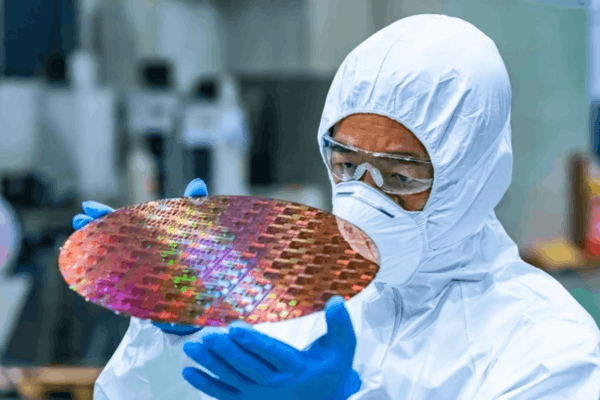
A semiconductor etf is one of the simplest ways to invest in the “chips” boom without trying to pick the single winning stock. Semiconductors sit at the heart of AI compute, data centers, smartphones, EVs, industrial automation, and networking. As AI models get larger, demand for specialized hardware keeps expanding.
But the semiconductor industry isn’t one neat category. It’s a global value chain with real bottlenecks, policy risks, and sharp cycles. That’s why choosing the “best” semiconductor etf isn’t just about past returns. It’s about deciding what part of the chip ecosystem you want exposure to.
Below is a practical, investor-friendly guide to the top semiconductor ETFs to buy for 2026, including newer options that many “best ETF” lists now include, plus a framework to pick the right fund for your portfolio.
How Semiconductor ETFs Work: The Value Chain
The semiconductor value chain spans several distinct businesses:
Designers (fabless): Companies like Nvidia and AMD focus on chip design, software ecosystems, and innovation. Their results can swing with product cycles and data-center demand.
Foundries (manufacturing): Foundries fabricate chips designed by others. This part of the chain is capital-intensive and strategically sensitive.
Equipment makers: Semiconductor tools are “picks-and-shovels” for the industry. Some tools, especially extreme ultraviolet (EUV) lithography are among the biggest chokepoints for advanced chips.
Memory: Memory can surge in demand during compute buildouts, but it is historically one of the most cyclical segments.
These chokepoints are why semiconductors can be both exciting and risky. Export controls, tariffs, and geopolitics can reshape supply chains quickly. And because a few companies often dominate the most profitable niches, many funds can become top-heavy.
That’s why it’s smart to look at concentration, weighting method, and index rules—not just the name of the ETF.
Best Semiconductor ETFs to Buy for 2026
1) VanEck Semiconductor ETF (SMH): Best “Aggressive Leaders” Semiconductor ETF
If you want a semiconductor etf that closely tracks the biggest winners in the chip ecosystem, SMH is the classic choice. It holds a relatively small basket (26 holdings), which can be a feature—not a bug—if you believe leadership will remain concentrated in a few dominant platforms.
As of Feb 2026, SMH is notably top-heavy, with Nvidia and TSMC combining for roughly 30% of the portfolio. That concentration has historically helped during periods when AI-focused leaders outperform, but it also increases drawdown risk when mega-caps correct.
Choose SMH if: you want high-conviction semiconductor exposure and can tolerate volatility. Skip SMH if: you want to reduce dependence on a few names.
2) iShares Semiconductor ETF (SOXX): Best Established “Core” Option
SOXX is one of the most widely used core semiconductor funds. Compared with SMH, its structure tends to be less extreme at the very top, offering a more balanced feel while still being growth-tilted.
As of Feb 2026 data snapshots, SOXX’s top holdings include names like Micron and Applied Materials at meaningful weights, but the “top 2” concentration is materially lower than SMH. That matters for investors who want a core position without having one stock dominate the outcome.
Choose SOXX if: you want a long-running, liquid core semiconductor ETF that is less top-heavy than SMH. Watch out for: it’s still a sector ETF so it is cyclical, volatile, and sensitive to macro shifts.
For long-term investors, fees are one of the few variables you can control. SOXQ stands out with a lower 0.19% expense ratio while still offering broad exposure to large U.S.-listed semiconductor companies.
SOXQ tracks the PHLX Semiconductor Sector Index, with a defined process: reconstitution occurs annually (September) and rebalances happen quarterly. That predictable methodology can appeal to investors who want rules-based exposure without paying a premium.
Choose SOXQ if: you want a cost-efficient, rules-based semiconductor etf for long-term holding. Watch out for: as a cap-weighted approach, it can still tilt toward mega-caps.
4) SPDR S&P Semiconductor ETF (XSD): Best for Diversification and Lower Single-Stock Risk
If you don’t like the idea that “your semiconductor ETF is secretly a single-stock bet,” XSD is the antidote. It uses an equal-weight approach across roughly 40 semiconductor stocks, spreading exposure across large-, mid-, and smaller-cap names.
Equal-weighting can cap upside when a small set of mega-caps dominates returns—but it can also help if leadership broadens, or if you want less portfolio whiplash from one name.
Choose XSD if: you want broad participation and lower concentration risk. Watch out for: smaller companies can be more volatile, and equal-weight funds may lag in narrow, mega-cap-driven rallies.
5) VanEck Fabless Semiconductor ETF (SMHX): Best for “Designers Only” Exposure
SMHX targets fabless semiconductor companies—businesses where the competitive moat is often intellectual property, software ecosystems, and innovation speed. This is a clean way to tilt toward the AI “design” winners while avoiding direct exposure to foundries and certain equipment names.
However, SMHX can be even more concentrated than broad sector funds. As of Feb 2026, Nvidia and Broadcom alone made up roughly a third of the portfolio, reflecting how dominant the largest designers have become.
Choose SMHX if: you want a focused designers-only bet within a semiconductor etf wrapper. Watch out for: concentration risk and higher sensitivity to AI/data-center cycle shifts.
6) Global X AI Semiconductor & Quantum ETF (CHPX): Best AI Compute Ecosystem “Satellite” ETF
CHPX is not a pure semiconductor-only fund. It’s built to capture the broader AI compute stack such as AI semiconductors, enabling data-center equipment, power/infrastructure angles, and even quantum exposure.
That “holistic” approach can be useful if you want more than chip designers and memory. But there are trade-offs: it’s newer, smaller, and the trading spread can be wider than giant category leaders. It also carries a higher expense ratio than core semis ETFs.
Choose CHPX if: you want a thematic AI-hardware ecosystem position as a satellite allocation. Watch out for: fund size, trading costs, and the fact it may behave differently than a classic semiconductor-only ETF.
7) Xtrackers Semiconductor Select Equity ETF (CHPS): Best Low-Fee, More Evenly Distributed Option
CHPS adds two differentiators: a very low 0.15% expense ratio and a broader, more evenly distributed portfolio (52 holdings) due to its Solactive Semiconductor ESG-screened framework.
It still holds many familiar industry names, but weights can look meaningfully different from SMH/SOXX. As of Feb 2026, top holdings such as SK Hynix and Micron were in the mid-single digits rather than double digits, reducing “one-stock dominance.”
Choose CHPS if: you want a low-fee semiconductor etf with broader holdings and more balanced weights. Watch out for: smaller AUM can mean higher bid-ask spreads than mega funds.
Quick Comparison
Stats can change as prices move and funds rebalance. Figures below reflect issuer/fact-sheet data available in Feb 2026.
ETF
Best for
Expense ratio
Holdings
Style
Concentration snapshot (Top 2)
SMH
“Industry leaders” exposure
0.35%
26
Concentrated, cap-weighted
~29.7% (NVDA + TSM)
SOXX
Large, established core option
0.34%
30
Capped/cap-weight mix
~15.8% (MU + AMAT)
SOXQ
Lower-fee core exposure
0.19%
30
Cap-weighted
Mega-cap tilt (varies)
XSD
Less single-stock risk
0.35%
~40+
Equal-weight
Top weights ~low single digits
SMHX
Designers-only tilt
0.35%
23
Fabless focus
~33.7% (NVDA + AVGO)
CHPX
AI compute “ecosystem”
0.50%
36
Thematic (AI semis + infrastructure)
~23.8% (ASML + TSM)
CHPS
Low-fee, more balanced basket
0.15%
52
Broad + ESG-screened
~12.6% (SK Hynix + MU)
How to Pick the Best Semiconductor ETF for Your Portfolio
Use this simple decision framework:
If you want the biggest winners (and accept concentration)
SMH for “industry leaders”
SMHX if you want to lean into designers specifically
If you want a mainstream core holding
SOXX for a large, established option
SOXQ for a lower-fee core approach
If you want less single-stock risk
XSD for equal-weight diversification
CHPS for lower fee + broader holdings (with a different construction approach)
If you want an AI hardware ecosystem theme
CHPX as a satellite position (not a pure semis-only ETF)
Key Risks to Know Before Buying a Semiconductor ETF
Even the best semiconductor ETFs can be volatile. Here are the risks worth stating clearly in your article:
Cyclicality: Semiconductors can swing from shortage to oversupply as capacity expands and demand cools.
Geopolitics and export controls: Tools, manufacturing, and advanced-node capacity are strategic assets. Policy headlines can reprice the sector quickly.
Concentration risk: Many funds are dominated by a few mega-caps; always check the top-10 weights.
Segment-specific cycles: Memory and certain equipment categories can surge, then retrace when supply catches up.
A sensible approach for many investors is sizing the position appropriately and treating a semiconductor etf as a sector allocation within a diversified portfolio, not the entire portfolio.
Conclusion
The “best” choice depends on what you want your semiconductor exposure to represent:
SMH = aggressive leaders, higher concentration
SOXX / SOXQ = core exposure (SOXQ wins on fees)
XSD / CHPS = more balanced weights, less single-stock dominance
SMHX = designers-only tilt
CHPX = broader AI compute ecosystem satellite
If your goal is a single, straightforward pick: choose a core fund first (SOXX or SOXQ), then add a satellite (SMHX or CHPX) only if you intentionally want more concentration or a thematic tilt.
Share Now
Disclaimer:This content is provided for informational purposes only and does not constitute, and should not be construed as, financial, investment, or other professional advice. No statement or opinion contained herein should be considered a recommendation by Ultima Markets or the author regarding any specific investment product, strategy, or transaction. Readers are advised not to rely solely on this material when making investment decisions and should seek independent advice where appropriate.
Thank you for visiting the Ultima Markets website. Please note that this website is intended for individuals residing in jurisdictions where access is permitted by law. Ultima and its affiliated entities do not operate in your home jurisdiction.
By clicking ‘Acknowledge’, you confirm that you are entering this website solely on your own initiative and not as a result of any specific marketing outreach. You wish to obtain information from this website based on reverse solicitation principles, in accordance with the applicable laws of your home jurisdiction.