This website is managed by Ultima Markets’ international entities, and it’s important to emphasise that they are not subject to regulation by the FCA in the UK. Therefore, you must understand that you will not have the FCA’s protection when investing through this website – for example:
You will not be guaranteed Negative Balance Protection
You will not be protected by FCA’s leverage restrictions
You will not have the right to settle disputes via the Financial Ombudsman Service (FOS)
You will not be protected by Financial Services Compensation Scheme (FSCS)
Any monies deposited will not be afforded the protection required under the FCA Client Assets Sourcebook. The level of protection for your funds will be determined by the regulations of the relevant local regulator.
Note: UK clients are kindly invited to visit https://www.ultima-markets.co.uk/. Ultima Markets UK expects to begin onboarding UK clients in accordance with FCA regulatory requirements in 2026.
If you would like to proceed and visit this website, you acknowledge and confirm the following:
1.The website is owned by Ultima Markets’ international entities and not by Ultima Markets UK Ltd, which is regulated by the FCA.
2.Ultima Markets Limited, or any of the Ultima Markets international entities, are neither based in the UK nor licensed by the FCA.
3.You are accessing the website at your own initiative and have not been solicited by Ultima Markets Limited in any way.
4.Investing through this website does not grant you the protections provided by the FCA.
5.Should you choose to invest through this website or with any of the international Ultima Markets entities, you will be subject to the rules and regulations of the relevant international regulatory authorities, not the FCA.
Ultima Markets wants to make it clear that we are duly licensed and authorised to offer the services and financial derivative products listed on our website. Individuals accessing this website and registering a trading account do so entirely of their own volition and without prior solicitation.
By confirming your decision to proceed with entering the website, you hereby affirm that this decision was solely initiated by you, and no solicitation has been made by any Ultima Markets entity.
Ultima Markets does not have an establishment in Singapore and does not operate from Singapore.
Ultima Markets does not provide products or services to citizens or residents of Singapore, and account applications from Singapore citizens or residents will not be accepted.
If you are a citizen or resident of Singapore, please do not open an account or use Ultima Markets’ products or services.
By selecting “Acknowledge and Continue Browsing”, you confirm that you are accessing this website on your own initiative and that your access is not the result of any direct marketing, targeted advertising, solicitation, or promotional activity by Ultima Markets.
Nothing on this website constitutes an offer, solicitation, or promotion of products or services in any jurisdiction where such activity is prohibited. You are responsible for ensuring that your access to and use of this website complies with applicable local laws and regulations.
Discover what buy signals are. Learn how to spot them and see which indicators can help you make informed trading decisions for better market strategies.
In trading, identifying the right time to enter the market is crucial to capitalising on opportunities. A buy signal is one of the primary tools traders use to determine when to purchase an asset.
Understanding these signals and how to interpret them can significantly improve your trading strategy. This article will explore what buy signals are, the key indicators used to identify them, and how you can spot these signals in the market.
What Is A Buy Signal?
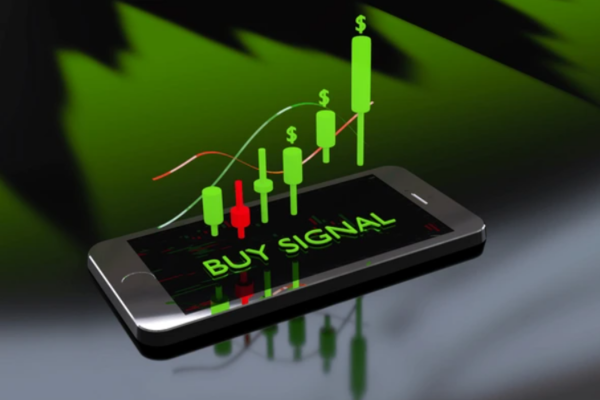
A buy signal is an indication that suggests the price of an asset is likely to rise. This is a crucial tool for traders, as it helps them determine the optimal entry point to buy an asset. Buy signals can come from a variety of sources, including:
Technical indicators
Chart patterns
Volume analysis
News or economic events
Buy signals act as a guide, helping traders navigate through market uncertainty.
How Buy Signals Work
Buy signals help traders enter the market with a higher chance of success. These signals are derived from several factors, including price action, volume, and trend indicators.
Key Sources of Buy Signals
Technical Indicators: Moving averages, RSI, MACD, and others provide real-time signals based on historical price data.
Volume Analysis: Volume confirms the strength of a price move. Increased volume on a breakout strengthens the buy signal.
Chart Patterns: Patterns like double bottoms and head-and-shoulders inversions suggest a shift in price direction.
Market Sentiment: Positive news or economic indicators, like strong earnings reports, can trigger buy signals as traders expect price increases.
How These Signals Work Together
Buy signals are often more reliable when multiple indicators align. For example, a golden cross (a short-term moving average crossing above a long-term moving average) combined with a rising RSI indicates both a trend reversal and increasing momentum.
Types of Buy Signals
There are various types of buy signals that traders rely on, depending on their strategy and trading style. Here are some of the most commonly used:
1. Moving Averages
A golden cross, where a short-term moving average crosses above a long-term moving average, is one of the most reliable buy signals. This indicates a shift from a bearish to a bullish trend.
2. Relative Strength Index (RSI)
The RSI measures whether an asset is overbought or oversold. A reading below 30 is often seen as an oversold condition, suggesting a potential buy signal as the price may be due for a rebound.
3. Moving Average Convergence Divergence (MACD)
The MACD indicator shows momentum. A MACD crossover above the signal line suggests bullish momentum, signalling a good time to buy.
4. Volume Analysis
Volume analysis is a confirmation tool. A buy signal is considered stronger when accompanied by high trading volume, indicating that the move is supported by strong market interest.
5. Chart Patterns
Chart patterns such as double bottoms and inverse head-and-shoulders typically signal trend reversals. When the price breaks above resistance after forming these patterns, it is often a signal to buy.
How to Spot Buy Signals in Real-Time
Knowing how to identify buy signals quickly is crucial for executing trades effectively. Here’s how you can spot buy signals in real time:
1. Use Multiple Indicators
To increase the reliability of buy signals, use a combination of indicators. For example, if the RSI shows oversold conditions and the MACD crosses above the signal line, you have two strong confirmations for a buy signal.
2. Look for Confirmations from Different Timeframes
Signals from different timeframes can provide confirmation. A buy signal on a shorter timeframe (e.g., 15 minutes) should ideally align with signals on longer timeframes (e.g., 1 hour or daily).
3. Monitor Market Sentiment and News
Economic data releases, earnings reports, and political events can influence market sentiment. Positive news or strong economic data may provide confirmation for a buy signal.
When to Act on Buy Signals
Timing is key when acting on buy signals. Here are some tips for making the best use of buy signals:
1. Wait for Confirmation
Don’t act on the first buy signal you see. Wait for confirmation from multiple indicators or from a break in price action. For example, if a breakout above resistance is accompanied by increasing volume, it strengthens the buy signal.
2. Watch for Trend Reversals
Many buy signals occur at trend reversal points. For example, a double bottom pattern or a head-and-shoulders reversal can provide high-conviction buy signals when the price breaks above resistance.
3. Implement Risk Management
Even with strong buy signals, it is essential to use risk management techniques. Setting stop-loss orders will help protect your position if the market moves against you.
Common Mistakes to Avoid
Buy signals are valuable, but traders should be aware of common pitfalls that can undermine their effectiveness:
Chasing Buy Signals: Jumping into a trade as soon as you see a buy signal without confirming the trend or volume can lead to losses.
Relying on One Indicator: A single buy signal is not always reliable. Always confirm with other indicators.
Ignoring Market Conditions: A buy signal in a weak market or during volatile periods may not hold. Ensure the broader market context aligns with the signal.
Conclusion
Buy signals are essential tools for traders looking to enter the market at the right time. By understanding the different types of buy signals, using a combination of indicators, and confirming signals with volume and market context, traders can improve their chances of success.
Remember, no buy signal is foolproof, and risk management is key to protecting your investments. Keep an eye on multiple indicators, use proper confirmation, and always stay informed about broader market conditions.
FAQs
What is the most reliable buy signal?
The most reliable buy signals are those confirmed by multiple indicators, such as moving averages, RSI, and volume.
How do buy signals help traders?
Buy signals help traders identify the optimal entry point to enter a market, increasing the likelihood of a profitable trade.
Can buy signals be used for long-term investments?
Yes, buy signals can be used for both short-term and long-term investments. For long-term investments, traders typically look for signals at key support levels or after major trend reversals.
Share Now
Disclaimer:This content is provided for informational purposes only and does not constitute, and should not be construed as, financial, investment, or other professional advice. No statement or opinion contained herein should be considered a recommendation by Ultima Markets or the author regarding any specific investment product, strategy, or transaction. Readers are advised not to rely solely on this material when making investment decisions and should seek independent advice where appropriate.
Thank you for visiting the Ultima Markets website. Please note that this website is intended for individuals residing in jurisdictions where access is permitted by law. Ultima and its affiliated entities do not operate in your home jurisdiction.
By clicking ‘Acknowledge’, you confirm that you are entering this website solely on your own initiative and not as a result of any specific marketing outreach. You wish to obtain information from this website based on reverse solicitation principles, in accordance with the applicable laws of your home jurisdiction.