This website is managed by Ultima Markets’ international entities, and it’s important to emphasise that they are not subject to regulation by the FCA in the UK. Therefore, you must understand that you will not have the FCA’s protection when investing through this website – for example:
You will not be guaranteed Negative Balance Protection
You will not be protected by FCA’s leverage restrictions
You will not have the right to settle disputes via the Financial Ombudsman Service (FOS)
You will not be protected by Financial Services Compensation Scheme (FSCS)
Any monies deposited will not be afforded the protection required under the FCA Client Assets Sourcebook. The level of protection for your funds will be determined by the regulations of the relevant local regulator.
Note: UK clients are kindly invited to visit https://www.ultima-markets.co.uk/. Ultima Markets UK expects to begin onboarding UK clients in accordance with FCA regulatory requirements in 2026.
If you would like to proceed and visit this website, you acknowledge and confirm the following:
1.The website is owned by Ultima Markets’ international entities and not by Ultima Markets UK Ltd, which is regulated by the FCA.
2.Ultima Markets Limited, or any of the Ultima Markets international entities, are neither based in the UK nor licensed by the FCA.
3.You are accessing the website at your own initiative and have not been solicited by Ultima Markets Limited in any way.
4.Investing through this website does not grant you the protections provided by the FCA.
5.Should you choose to invest through this website or with any of the international Ultima Markets entities, you will be subject to the rules and regulations of the relevant international regulatory authorities, not the FCA.
Ultima Markets wants to make it clear that we are duly licensed and authorised to offer the services and financial derivative products listed on our website. Individuals accessing this website and registering a trading account do so entirely of their own volition and without prior solicitation.
By confirming your decision to proceed with entering the website, you hereby affirm that this decision was solely initiated by you, and no solicitation has been made by any Ultima Markets entity.
Ultima Markets does not have an establishment in Singapore and does not operate from Singapore.
Ultima Markets does not provide products or services to citizens or residents of Singapore, and account applications from Singapore citizens or residents will not be accepted.
If you are a citizen or resident of Singapore, please do not open an account or use Ultima Markets’ products or services.
By selecting “Acknowledge and Continue Browsing”, you confirm that you are accessing this website on your own initiative and that your access is not the result of any direct marketing, targeted advertising, solicitation, or promotional activity by Ultima Markets.
Nothing on this website constitutes an offer, solicitation, or promotion of products or services in any jurisdiction where such activity is prohibited. You are responsible for ensuring that your access to and use of this website complies with applicable local laws and regulations.
The 2026 US Midterms: What They Mean for the USD, S&P 500, and Crypto
The 2026 US Midterms: What They Mean for the USD, S&P 500, and Crypto
Executive Summary
A US midterm election is a critical political event held halfway through a president’s four-year term. Scheduled for Tuesday, November 3, 2026, these elections are highly significant because they determine the balance of power in the US Congress, which directly dictates the executive branch’s ability to pass its legislative agenda.
While the presidential term remains unaffected, all 435 seats in the House of Representatives and 35 of the 100 seats in the Senate are up for election. The outcome of these races can heavily impact any policy initiatives the president wishes to implement.
Currently, the Republican party holds majorities in both chambers of Congress. Financial markets are closely watching to see if President Trump’s party can retain control of the House and Senate. The outcome will dictate the trajectory of US fiscal policy, regulatory frameworks, and geopolitical posturing—all of which directly impact global financial markets. If the opposing party captures one or both chambers, it would introduce a divided government, a scenario that historically leads to legislative gridlock.
What to Watch: Key Dynamics of the 2026 Midterms
The primary focus of this midterm is whether the incumbent party will retain unified control of both the House and the Senate, or if control will be split. A divided government often leads to legislative gridlock, where passing major policy changes becomes exceedingly difficult. This creates a significant amount of uncertainty, and financial markets notoriously dislike uncertainty.
This specific midterm is commanding intense focus due to a compounding mix of macroeconomic catalysts: the ongoing US-Iran conflict, US inflation challenges, rising Treasury yields, and mixed sentiment surrounding the AI-driven tech rally. The outcome of the midterm elections is expected to inject volatility into the market.
Here are the primary dynamics we are watching:
1. US-Iran War and Post-Midterm Middle East Tensions
Geopolitics and domestic politics are currently heavily intertwined. President Trump has signaled a pause on protracted military strikes against Iran prior to the November midterms. However, analysts and intelligence sources warn that the US and Iran could be moving toward a severe escalation immediately following the election.
Iran has recently demonstrated its capability to execute precision strikes on critical oil-routing systems, refineries, and power stations across the Persian Gulf.
Market Implication: The midterm date acts as a temporal “lid” on the conflict. Once the election concludes, the risk of renewed hostilities—and retaliatory Iranian strikes on Arab Gulf state energy infrastructure—will inject a massive geopolitical risk premium back into the markets.
2. Cryptocurrency Legislative Framework
The cryptocurrency legislative framework has been a key focus for financial markets since the beginning of the Trump tenure, which saw the digital asset sector experience a new wave of a bull market. The cryptocurrency industry has lobbied heavily during his term, and these efforts are still ongoing.
Because legislative work is currently pending, the balance of power in Congress will directly shape the committees responsible for digital asset regulation.
Market Implication: If the incumbent party maintains control, markets may anticipate a continuation of current regulatory trajectories. A divided Congress, however, could stall comprehensive crypto legislation, leaving regulation largely up to ongoing enforcement actions by agencies like the SEC and CFTC. Investors are closely monitoring key battleground races to gauge the incoming congressional appetite for establishing the US as a definitive crypto hub.
3. Risk Sentiment – Impact on US Dollar, US Bond Yield & Equities Market
Financial markets abhor uncertainty. The weeks leading up to a midterm election traditionally feature heightened volatility, defensive posturing, and reduced liquidity as institutions hesitate to take on massive risk before the political landscape is confirmed.
It is important to mention that there is no guaranteed positive or negative outcome for the dollar, bond yields, or equities solely based on whether the incumbent party wins or loses majority seats.
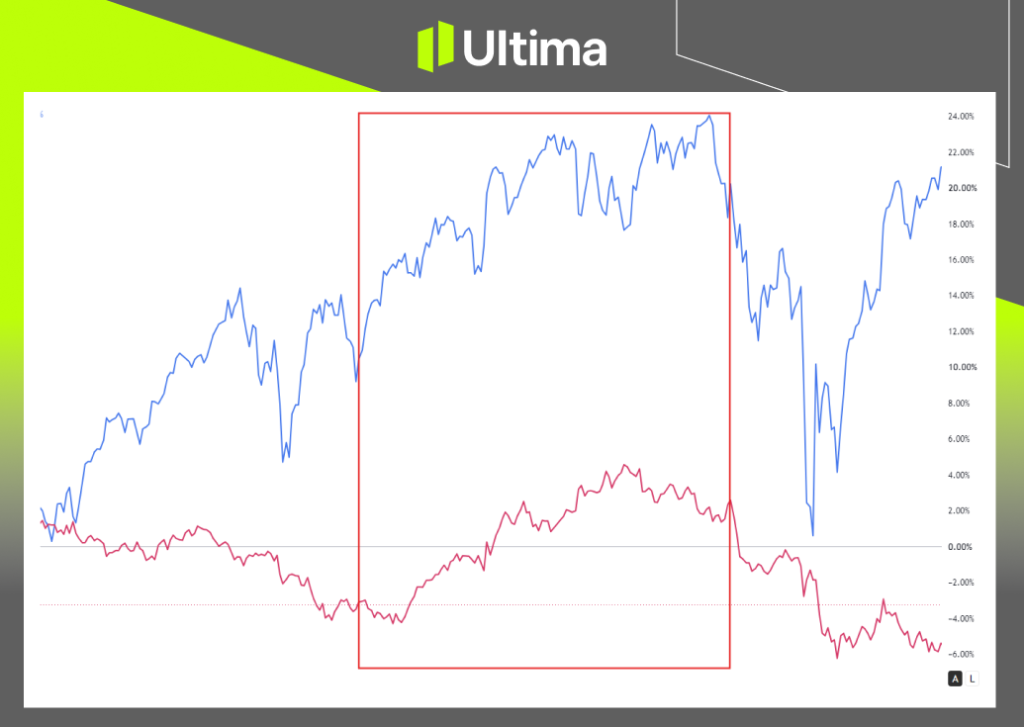
However, looking at historical trends, the period between President Trump’s past election victory and his official seating as president generally saw bullish momentum for both the US Dollar and the US equities market.
US Dollar Index (Blue) & S&P500 (Red) | Chart Source: Trading View
What is slightly different today is that the market views the current political and macroeconomic landscape as distinct from the past. Therefore, an incumbent victory may not necessarily guarantee immediate bullish behavior for the dollar or equities this time around. Conversely, if the Republican party loses a significant number of its seats, it will likely create immediate volatility, and that transition period could trigger a distinct “risk-off” environment.
Market Implication: The combination of a looming post-election Middle East conflict and domestic political polarization creates a fragile risk environment. A heavily contested election or delayed results could trigger sharp, risk-off market shocks, forcing capital out of high-beta equities and into safe-haven assets.
Market Impact: How Midterms Affect Key Assets
This brings us back to the ultimate question: how are the midterm elections going to affect key assets? The November elections will likely inject heavy volatility into three major asset classes—the US Dollar, US Equities, and Cryptocurrencies—providing the price action that active traders seek.
1. The US Dollar into November
The US Dollar Index (DXY) has recently faced overbought risks, holding near critical pivot zones of 101.00 – 102.00, marking its highest levels since April 2025. Going into the election, the dollar may remain supported by safe-haven demand tied to geopolitical tensions and electoral uncertainty.
While the Federal Reserve’s policy outlook remains the primary catalyst driving the dollar long-term, safe-haven demand will likely take the spotlight during this period.
Post-Election: If the incumbent party retains full control, expectations for continued deficit spending and strict trade policies could keep Treasury yields and the dollar elevated. Under a divided government, fiscal expansion would likely be capped, potentially softening the dollar as the market shifts its focus entirely back to the Federal Reserve’s monetary policy and inflation data.
2. US Equities – S&P 500 & Nasdaq
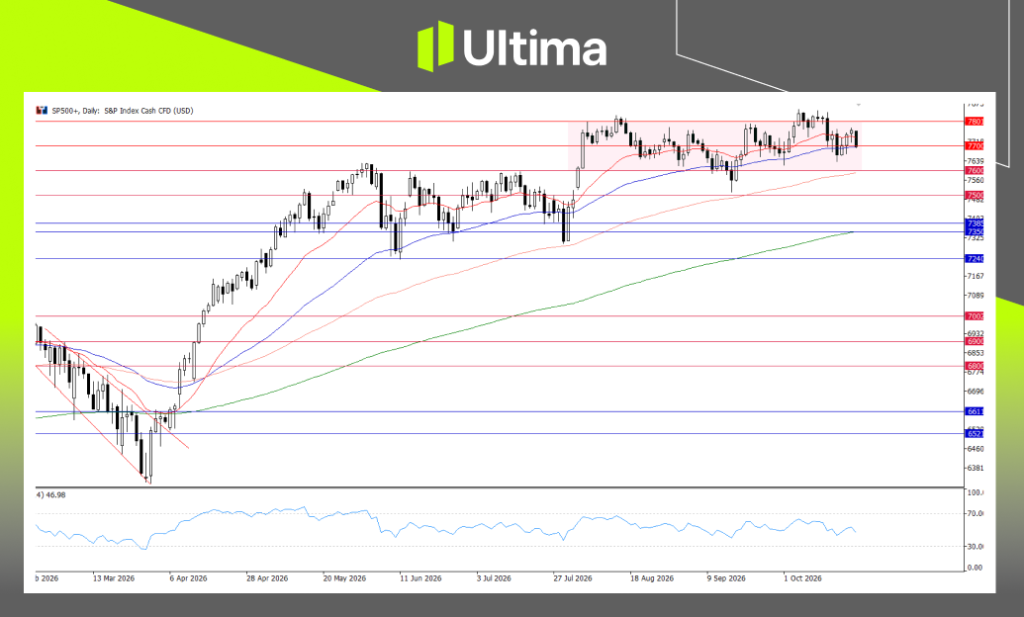
US equity benchmarks have been testing record highs, with the S&P 500 hovering near major structural support levels around 7,600 to 7,800. Markets typically underperform in the months preceding a midterm due to the fear of sudden regulatory or tax policy changes.
Pre-Election: Uncertainty is prevalent, and we will likely see a corrective market period. Given the current macro backdrop, where the equities market is largely driven by the tech sector, the upside is limited heading into the election, and we may see profit-taking amid risk aversion.
Post-Election: Historically, US equities rally strongly in the 12 months following a midterm election. This is largely due to the “gridlock premium.” Markets favor a divided government because legislative gridlock prevents extreme regulatory overhauls or corporate tax hikes. If control of Congress is split, expect a broad relief rally as corporate America benefits from a predictable, status-quo operating environment.
SP500, Daily Chart | Chart Source: Ultima Markets MT5
The S&P 500 is now hovering and stalling near its record high area, leading to nearly two months of range-bound consolidation despite a brief record-high rally. This shows one thing: market uncertainty is building up amid rising Treasury yields and shifting Fed hike bets, with pre-election uncertainty now adding another layer of resistance.
We maintain a bullish but cautious posture ahead of the pre-election period. The immediate upside is likely capped, but post-election, we could see renewed momentum, provided no other unfavorable macroeconomic factors materialize.
3. Cryptocurrencies – Can the Bull Market Return?
Cryptocurrencies remain a major focal point, particularly given President Trump’s pro-digital asset stance and the pending legislative framework mentioned above.
Pre-Election: Uncertainty may keep Bitcoin and major altcoins range-bound as institutional capital remains sidelined.
Post-Election: The removal of electoral uncertainty often serves as a bullish catalyst for risk-on assets like crypto. However, sustained momentum will depend heavily on whether Trump’s party wins the majority and whether the incoming Congress prioritizes a clear legislative framework. Additionally, if post-election geopolitical tensions spike, Bitcoin may see increased demand as a non-sovereign hedge against broader market instability.
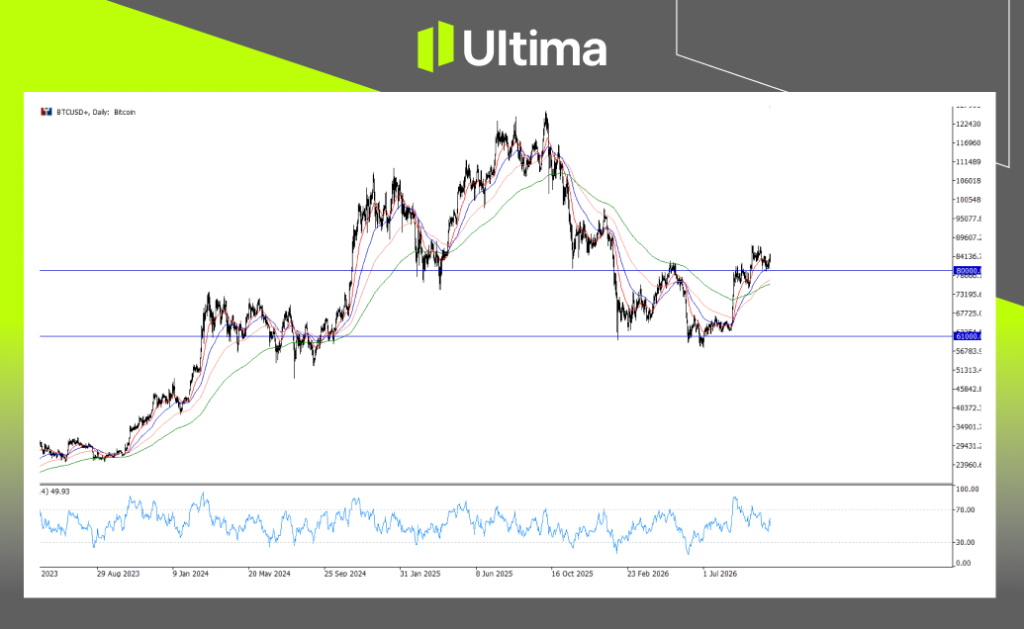
BTCUSD, Daily Chart | Source: Ultima Markets MT5
Technically, Bitcoin has set up a solid base following the prolonged bear market of the past few years, finding a bottom near the 60,000 – 61,000 zone and executing a solid breakout above 80,000.
The next question is whether digital assets have a solid catalyst to bolster the next bull market—and the establishment of a US legislative framework will be the deciding factor.
Market Impact of the 2026 Midterm Outcomes
The financial impact of the November 3, 2026, midterm elections hinges entirely on the balance of congressional power. With the Republican party currently holding majorities, markets are pricing in two distinct scenarios:
Scenario A: Incumbent Victory (Status Quo) If President Trump’s party retains its majority in both chambers, the immediate market impact will be relatively muted. Investors will price in a continuation of the current fiscal trajectory, trade policies, and pro-crypto legislative frameworks. This status quo provides stability, keeping US equities, the US Dollar, and Bitcoin on their current structural paths without severe shock.
Scenario B: Incumbent Loss (Divided Government & Volatility) If the opposing party captures one or both chambers, it will introduce a divided government and immediate legislative gridlock. This outcome will trigger a sharp spike in market volatility. The sudden shift in the political landscape would likely create a temporary “risk-off” environment, forcing capital out of high-beta equities and digital assets, and into safe-haven assets as the market rapidly reprices its fiscal and regulatory expectations.
The Bottom Line: An incumbent sweep means business as usual with minimal market shock, while a loss of the majority will inject immediate, headline-driven volatility across the US Dollar, S&P 500, and cryptocurrency markets.
Disclaimer
Comments, news, research, analysis, price, and all information contained in the article only serve as general information for readers and do not suggest any advice. Ultima Markets has taken reasonable measures to provide up-to-date information, but cannot guarantee accuracy, and may modify without notice. Ultima Markets will not be responsible for any loss incurred due to the application of the information provided.
Thank you for visiting the Ultima Markets website. Please note that this website is intended for individuals residing in jurisdictions where access is permitted by law. Ultima and its affiliated entities do not operate in your home jurisdiction.
By clicking ‘Acknowledge’, you confirm that you are entering this website solely on your own initiative and not as a result of any specific marketing outreach. You wish to obtain information from this website based on reverse solicitation principles, in accordance with the applicable laws of your home jurisdiction.