This website is managed by Ultima Markets’ international entities, and it’s important to emphasise that they are not subject to regulation by the FCA in the UK. Therefore, you must understand that you will not have the FCA’s protection when investing through this website – for example:
You will not be guaranteed Negative Balance Protection
You will not be protected by FCA’s leverage restrictions
You will not have the right to settle disputes via the Financial Ombudsman Service (FOS)
You will not be protected by Financial Services Compensation Scheme (FSCS)
Any monies deposited will not be afforded the protection required under the FCA Client Assets Sourcebook. The level of protection for your funds will be determined by the regulations of the relevant local regulator.
Note: UK clients are kindly invited to visit https://www.ultima-markets.co.uk/. Ultima Markets UK expects to begin onboarding UK clients in accordance with FCA regulatory requirements in 2026.
If you would like to proceed and visit this website, you acknowledge and confirm the following:
1.The website is owned by Ultima Markets’ international entities and not by Ultima Markets UK Ltd, which is regulated by the FCA.
2.Ultima Markets Limited, or any of the Ultima Markets international entities, are neither based in the UK nor licensed by the FCA.
3.You are accessing the website at your own initiative and have not been solicited by Ultima Markets Limited in any way.
4.Investing through this website does not grant you the protections provided by the FCA.
5.Should you choose to invest through this website or with any of the international Ultima Markets entities, you will be subject to the rules and regulations of the relevant international regulatory authorities, not the FCA.
Ultima Markets wants to make it clear that we are duly licensed and authorised to offer the services and financial derivative products listed on our website. Individuals accessing this website and registering a trading account do so entirely of their own volition and without prior solicitation.
By confirming your decision to proceed with entering the website, you hereby affirm that this decision was solely initiated by you, and no solicitation has been made by any Ultima Markets entity.
Discover what might cause a change in the value of fiat money and how inflation, interest rates, and global events could impact your purchasing power.
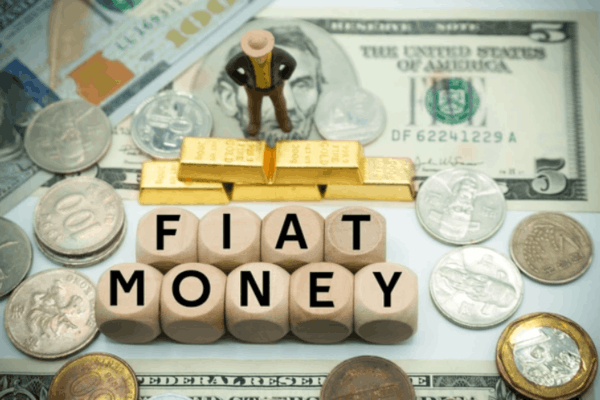
Fiat money is the currency we use every day, from paying for groceries to making investments. But unlike gold or silver, it doesn’t have any intrinsic value. Its worth comes from government authority and public trust. That raises an important question: what might cause a change in the value of fiat money?
The value of fiat money isn’t static. It fluctuates based on various factors, from inflation and interest rates to political stability and economic growth. In this article, we’ll explore the key reasons why fiat money’s value changes, both in the short term and over the long term.
What Is Fiat Money?
Fiat money is currency that is not backed by any physical commodity. Instead, its value comes from the government that issues it and from the trust people have in that currency. Common examples include the U.S. dollar, the euro, and the British pound.
Since fiat money is not backed by a tangible asset, it relies on public confidence in the currency’s ability to function as a medium of exchange. This trust, or lack thereof, plays a significant role in determining the value of fiat money.
How Is the Value of Fiat Money Measured?
The value of fiat money can be measured through two primary indicators:
Purchasing Power
Purchasing power is the measure of how much a unit of currency can buy in terms of goods and services. When inflation occurs, the value of money declines as it loses purchasing power. This means that more money is needed to purchase the same goods.
Exchange Rate
The exchange rate determines how much one currency is worth in comparison to another currency. A currency with a higher exchange rate is considered stronger. Conversely, a lower exchange rate suggests a weaker currency.
Key Factors That Affect the Value of Fiat Money
Several factors play a role in causing the value of fiat money to fluctuate:
1. Inflation
Inflation refers to the increase in the general price level of goods and services within an economy. When inflation rises, the purchasing power of fiat money decreases. This means that each unit of currency can buy fewer goods than before.
High inflation or hyperinflation can severely damage the value of a currency. A good historical example is Zimbabwe, where extreme hyperinflation led to the collapse of the Zimbabwean dollar.
2. Interest Rates
Central banks influence interest rates to manage inflation and economic growth. When interest rates rise, the currency tends to appreciate because higher rates attract foreign capital and investments.
On the other hand, when interest rates fall, the currency can weaken as investors seek higher returns elsewhere. For example, in 2022, the U.S. Federal Reserve raised interest rates to tackle rising inflation, which in turn strengthened the U.S. dollar.
3. Money Supply and Central Bank Policies
Central banks manage the money supply using various tools, including quantitative easing (QE) and open market operations. These policies can significantly impact the value of fiat money.
When a central bank increases the money supply too quickly, it can lead to inflation, thereby devaluing the currency. Conversely, reducing the money supply can cause deflation, which strengthens the currency.
For example, the Federal Reserve’s actions during the 2008 financial crisis saw a rapid increase in the money supply, raising concerns about inflation in the long term.
4. Economic Growth and Productivity
A strong economy supports a stronger currency. Economic growth, job creation, and increased consumer spending all contribute to a positive outlook for the country’s currency. The more productive an economy is, the more it can produce without increasing inflation.
Productivity is key here. This is because efficient economies experience lower inflationary pressure, which helps sustain the value of their fiat money.
5. Political Stability and Public Confidence
The value of fiat money is closely tied to the stability of the country that issues it. Political instability, corruption, and weak governance can erode confidence in a country’s currency.
For instance, Venezuela saw its currency, the bolívar, lose value during times of political and economic instability. On the other hand, countries with stable political systems and strong institutions tend to have stronger currencies.
6. Trade Balance and Foreign Demand
A country’s trade balance also affects its currency value. If a country has a trade surplus, demand for its currency increases, which can strengthen it. Conversely, if a country imports more than it exports (trade deficit), its currency may weaken due to less foreign demand.
For example, Germany and Japan tend to see their currencies appreciate because they run trade surpluses, while the U.S. often experiences currency volatility due to its trade deficit.
7. Speculation and Market Sentiment
Market sentiment and speculative activity can also cause rapid changes in the value of fiat money. Investors react to economic reports, central bank statements, or geopolitical events, causing currencies to fluctuate based on perceived risk.
For example, the announcement of a potential interest rate hike by the U.S. Federal Reserve often leads traders to speculate on the future direction of the U.S. dollar, causing short-term changes in its value.
External Shocks and Global Events
Sometimes, external shocks or global events can lead to sudden changes in the value of fiat money. Geopolitical events, natural disasters, and even pandemics can cause currencies to fluctuate rapidly.
Geopolitical Risks and Commodity Shocks
For instance, geopolitical tensions in the Middle East often lead to spikes in oil prices, which can impact the value of currencies. Countries that depend on oil imports, like India, tend to see their currency weaken when oil prices rise. Meanwhile, oil-exporting countries can see their currency appreciate.
The COVID-19 pandemic is another example, where currencies saw fluctuations due to global economic uncertainty and central bank interventions.
Conclusion
The value of fiat money is influenced by many interrelated factors, including inflation, interest rates, money supply, economic growth, and political stability. While some of these factors are predictable, others can change rapidly, making currency value more volatile.
Inflation, interest rates, and the supply of money are some of the primary drivers of change in the value of fiat money. However, factors like political instability, trade balances, and global events can also cause fluctuations.
To truly understand the changes in the value of fiat money, it’s important to consider both long-term trends and short-term influences. The more informed you are about these dynamics, the better equipped you’ll be to navigate the complexities of the global currency market.
FAQ
What causes the value of fiat money to decrease?
The value of fiat money can decrease due to inflation, excessive money supply, political instability, or poor economic performance.
Can the value of fiat money increase?
Yes, the value of fiat money can increase if inflation is controlled, interest rates rise, or the economy strengthens.
How does speculation affect fiat money?
Speculation can lead to short-term changes in currency value as traders react to news, events, and expectations about future central bank actions.
Share Now
Disclaimer:This content is provided for informational purposes only and does not constitute, and should not be construed as, financial, investment, or other professional advice. No statement or opinion contained herein should be considered a recommendation by Ultima Markets or the author regarding any specific investment product, strategy, or transaction. Readers are advised not to rely solely on this material when making investment decisions and should seek independent advice where appropriate.
Thank you for visiting the Ultima Markets website. Please note that this website is intended for individuals residing in jurisdictions where access is permitted by law. Ultima and its affiliated entities do not operate in your home jurisdiction.
By clicking ‘Acknowledge’, you confirm that you are entering this website solely on your own initiative and not as a result of any specific marketing outreach. You wish to obtain information from this website based on reverse solicitation principles, in accordance with the applicable laws of your home jurisdiction.