This website is managed by Ultima Markets’ international entities, and it’s important to emphasise that they are not subject to regulation by the FCA in the UK. Therefore, you must understand that you will not have the FCA’s protection when investing through this website – for example:
You will not be guaranteed Negative Balance Protection
You will not be protected by FCA’s leverage restrictions
You will not have the right to settle disputes via the Financial Ombudsman Service (FOS)
You will not be protected by Financial Services Compensation Scheme (FSCS)
Any monies deposited will not be afforded the protection required under the FCA Client Assets Sourcebook. The level of protection for your funds will be determined by the regulations of the relevant local regulator.
Note: UK clients are kindly invited to visit https://www.ultima-markets.co.uk/. Ultima Markets UK expects to begin onboarding UK clients in accordance with FCA regulatory requirements in 2026.
If you would like to proceed and visit this website, you acknowledge and confirm the following:
1.The website is owned by Ultima Markets’ international entities and not by Ultima Markets UK Ltd, which is regulated by the FCA.
2.Ultima Markets Limited, or any of the Ultima Markets international entities, are neither based in the UK nor licensed by the FCA.
3.You are accessing the website at your own initiative and have not been solicited by Ultima Markets Limited in any way.
4.Investing through this website does not grant you the protections provided by the FCA.
5.Should you choose to invest through this website or with any of the international Ultima Markets entities, you will be subject to the rules and regulations of the relevant international regulatory authorities, not the FCA.
Ultima Markets wants to make it clear that we are duly licensed and authorised to offer the services and financial derivative products listed on our website. Individuals accessing this website and registering a trading account do so entirely of their own volition and without prior solicitation.
By confirming your decision to proceed with entering the website, you hereby affirm that this decision was solely initiated by you, and no solicitation has been made by any Ultima Markets entity.
A trade surplus signals strength in trading, but rising currency can hurt exports and spark trade wars making smart policy moves essential.
What Is a Trade Surplus?
Key Points
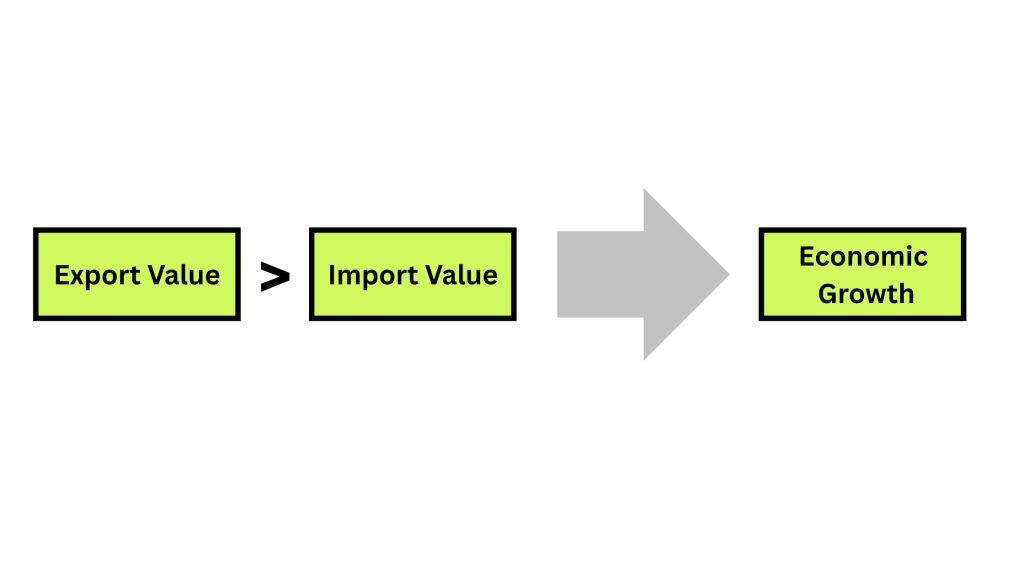
A trade surplus occurs when a country’s exports exceed its imports, creating a positive trade balance.
Surpluses can strengthen a country’s currency, boost employment, and fuel economic growth.
China recorded a record monthly trade surplus of approximately $101 billion in July 2022.
While beneficial, trade surpluses can lead to inflation, interest rate hikes, and international tensions.
Trade balance data is tracked monthly by organizations like the U.S. Bureau of Economic Analysis and national customs authorities.
What is the Definition of Trade Surplus
A trade surplus is a key indicator of international trade strength. It occurs when the total value of a nation’s exports exceeds its imports over a specified time. This results in a net inflow of foreign currency, often seen as a sign of competitiveness and global demand for domestic goods and services.
Trade Balance Formula:
Trade Balance = Exports – Imports
If the result is positive, the country has a trade surplus; if negative, it’s a trade deficit.
Trade surpluses are generally seen as a positive economic signal. They suggest strong foreign demand and a capable domestic production sector.
How Trade Surpluses Work
Trade surpluses arise when countries produce goods and services efficiently and competitively. Key drivers include:
Comparative advantage in industries like technology, manufacturing, or natural resources
Efficient production and favorable labor costs
Government support through trade incentives and infrastructure
Currency Demand and Appreciation
Foreign buyers must purchase the exporting country’s currency to pay for goods, increasing demand and often strengthening the local currency. However, in countries with managed exchange rates (e.g., China), central banks may intervene to offset these pressures.
Economic Growth Through Exports
Exports support job creation across manufacturing, agriculture, logistics, and services. As businesses scale to meet global demand, economic growth is stimulated.
Market Feedback Loops
A rising currency can eventually reduce export competitiveness and increase imports, creating a natural feedback loop that balances trade over time. Central banks may intervene with monetary policy to stabilize this effect.
Trade Surplus vs. Trade Deficit
Understanding the difference between trade surpluses and deficits reveals important insights about national economic strategies and global market dynamics.
Trade Surplus
Trade Deficit
Exports > Imports
Imports > Exports
Currency tends to strengthen
Currency may weaken
New inflow of foreign currency
Net outflow of domestic currency
Can lead to inflation pressures
Can support domestic consumption
Supports employment in export sectors
May widen consumer choices
Both surpluses and deficits can exist in strong economies. For example:
The U.S. runs trade deficits due to its reserve currency and strong consumer demand.
Germany maintains trade surpluses through high-value manufacturing exports.
Pros and Cons of a Trade Surplus
Trade surpluses generate both positive and negative effects throughout a country’s economy, creating complex relationships between international competitiveness and domestic economic conditions.
Positive Effects
Job Creation: Particularly in manufacturing and export-driven industries.
Government Revenue: Through taxes on corporate profits and trade-related activity.
Currency Strength: Increases purchasing power and global influence.
Challenges
Inflation Risks: If goods are diverted for export, domestic supply may tighten.
Higher Interest Rates: Central banks may tighten policy to curb inflation.
Currency Appreciation: Can reduce future competitiveness in export markets.
Currency Exchange Impact
Trade surpluses affect exchange rates via supply-demand mechanisms. Surpluses increase foreign demand for the local currency, usually leading to appreciation. This is more visible in floating exchange rate systems (e.g., U.S., Japan). In pegged systems, central banks use reserves or monetary tools to manage volatility.
Global Impacts of Trade Surpluses
Surpluses benefit one country but can negatively impact trading partners:
Trade deficits elsewhere may lead to job losses or deindustrialization.
Higher global prices as export demand grows.
Protectionist responses like tariffs or quotas, increasing the risk of trade wars.
Countries with Large Trade Surpluses
Several nations have established themselves as dominant exporters, consistently generating substantial trade surpluses that influence global economic patterns.
China
China had a record trade surplus of ~$101 billion in July 2022, driven by electronics, machinery, and textiles. While impressive, this was a monthly peak, not a sustained average.
Germany
A leader in high-value exports such as vehicles, precision machinery, and chemicals. Known for quality and engineering.
Others
Russia – Energy (oil and gas)
Ireland – Technology and pharmaceuticals (often driven by multinationals)
Saudi Arabia – Petroleum and petrochemicals
Singapore – Logistics and financial hub with strong re-export economy
What Drives Trade Surpluses?
Multiple economic and policy factors contribute to developing and maintaining trade surpluses, often working in combination to create sustainable competitive advantages.
Specialized Products: Unique goods/services in global demand
Currency Management: Some countries manage their exchange rates to stay competitive
Infrastructure & Logistics: Proximity to major markets, efficient ports, and transportation
Are Trade Surpluses Always Good?
Not always. While surpluses often indicate competitiveness, they can also:
Trigger trade tensions if perceived as unfair
Lead to underinvestment in domestic consumption
Cause currency overvaluation, hurting future exports
Strong economies like the U.S. and U.K. run trade deficits while benefiting from:
Global investment flows
High-value service exports
Reserve currency advantages
Sometimes, smart importing is better: acquiring capital goods, tech, or resources not efficiently produced at home.
Conclusion
A trade surplus shows that a country is exporting more than it imports, suggesting strong production, competitiveness, and global demand. While this often results in stronger currencies and job creation, it also brings challenges—like inflation, interest rate hikes, and trade tensions.
The net impact of a trade surplus depends on how it’s managed. Policymakers must consider domestic and international dynamics to ensure sustained and inclusive economic growth. In a globally connected economy, no surplus exists in isolation—it reshapes relationships, capital flows, and future competitiveness for all involved.
FAQ
What is a trade surplus?
A trade surplus occurs when a country exports more goods and services than it imports, resulting in a positive balance of trade.
Is a Trade Surplus Always Good?
A trade surplus is generally seen as positive for a country’s economy, as it indicates strong export demand. However, prolonged surpluses may also lead to trade imbalances with other nations or cause inflationary pressures.
Which Country Had the Largest Trade Surplus?
China has historically had the largest trade surplus, mainly due to its strong manufacturing sector and export-driven economy.
Can Strong Economies Run Trade Deficits?
Yes, even strong economies like the United States can run trade deficits, where imports exceed exports. A trade deficit can reflect high consumer demand and a preference for foreign goods.
How Does a Surplus Affect Currency?
A trade surplus typically strengthens a country’s currency, as foreign buyers need to purchase the local currency to pay for exports, increasing demand for it.
Share Now
Disclaimer:This content is provided for informational purposes only and does not constitute, and should not be construed as, financial, investment, or other professional advice. No statement or opinion contained herein should be considered a recommendation by Ultima Markets or the author regarding any specific investment product, strategy, or transaction. Readers are advised not to rely solely on this material when making investment decisions and should seek independent advice where appropriate.
Thank you for visiting the Ultima Markets website. Please note that this website is intended for individuals residing in jurisdictions where access is permitted by law. Ultima and its affiliated entities do not operate in your home jurisdiction.
By clicking ‘Acknowledge’, you confirm that you are entering this website solely on your own initiative and not as a result of any specific marketing outreach. You wish to obtain information from this website based on reverse solicitation principles, in accordance with the applicable laws of your home jurisdiction.