This website is managed by Ultima Markets’ international entities, and it’s important to emphasise that they are not subject to regulation by the FCA in the UK. Therefore, you must understand that you will not have the FCA’s protection when investing through this website – for example:
You will not be guaranteed Negative Balance Protection
You will not be protected by FCA’s leverage restrictions
You will not have the right to settle disputes via the Financial Ombudsman Service (FOS)
You will not be protected by Financial Services Compensation Scheme (FSCS)
Any monies deposited will not be afforded the protection required under the FCA Client Assets Sourcebook. The level of protection for your funds will be determined by the regulations of the relevant local regulator.
Note: UK clients are kindly invited to visit https://www.ultima-markets.co.uk/. Ultima Markets UK expects to begin onboarding UK clients in accordance with FCA regulatory requirements in 2026.
If you would like to proceed and visit this website, you acknowledge and confirm the following:
1.The website is owned by Ultima Markets’ international entities and not by Ultima Markets UK Ltd, which is regulated by the FCA.
2.Ultima Markets Limited, or any of the Ultima Markets international entities, are neither based in the UK nor licensed by the FCA.
3.You are accessing the website at your own initiative and have not been solicited by Ultima Markets Limited in any way.
4.Investing through this website does not grant you the protections provided by the FCA.
5.Should you choose to invest through this website or with any of the international Ultima Markets entities, you will be subject to the rules and regulations of the relevant international regulatory authorities, not the FCA.
Ultima Markets wants to make it clear that we are duly licensed and authorised to offer the services and financial derivative products listed on our website. Individuals accessing this website and registering a trading account do so entirely of their own volition and without prior solicitation.
By confirming your decision to proceed with entering the website, you hereby affirm that this decision was solely initiated by you, and no solicitation has been made by any Ultima Markets entity.
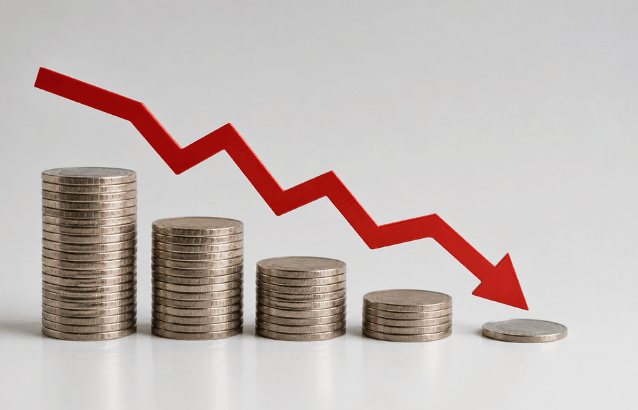
Is a recession coming? Explore the key warning signs, economic indicators, and market risks. Discover how investors can prepare for it if growth slows.
With uncertainty surrounding interest rates, inflation, and global economic growth, many investors are asking: is a recession coming? While no one can predict the future with certainty, economic data can provide important clues about whether growth is slowing or whether markets are facing increased risks.
A recession typically occurs when economic activity declines significantly for an extended period, often affecting employment, consumer spending, business investment, and financial markets. However, not every slowdown leads to a recession. Some economies can experience slower growth while avoiding a major downturn.
For investors, understanding the warning signs of a recession can help them make better decisions and prepare for different market conditions.
What Causes a Recession?
A recession usually happens when multiple parts of the economy weaken at the same time. Several factors can contribute to an economic downturn, including high interest rates, reduced consumer spending, weaker business activity, and declining confidence.
One major factor is monetary policy. When central banks raise interest rates to control inflation, borrowing becomes more expensive for households and businesses. Higher mortgage payments, loan costs, and financing expenses can reduce spending and investment, which may slow economic growth.
Inflation is another important factor. Although inflation has eased from previous highs, uncertainty around price pressures can influence interest rate decisions and consumer confidence. If inflation remains elevated for too long, central banks may keep monetary policy restrictive, increasing pressure on economic activity.
Key Signs That a Recession May Be Coming
Investors often monitor several economic indicators to determine whether recession risks are increasing.
1. Weakening Labour Market
The labour market is one of the most closely watched recession indicators. When companies become less confident about future demand, they may slow hiring or reduce their workforce.
A steady rise in unemployment, fewer job openings, and weaker wage growth can signal that businesses are becoming more cautious. Since consumer spending is closely linked to employment conditions, a weaker labour market can create additional pressure on economic growth.
2. Slower Consumer Spending
Consumer spending plays a major role in many economies. When households reduce spending due to higher costs, debt pressure, or uncertainty about the future, businesses may experience weaker sales.
Signs such as declining retail sales, lower consumer confidence, and reduced demand for non-essential goods can indicate that economic momentum is slowing.
3. Higher Borrowing Costs
Interest rates have a significant impact on economic activity. When borrowing costs remain high, companies may delay expansion plans, while consumers may reduce spending on homes, vehicles, and other large purchases.
For investors asking is a recession coming, interest rate trends are one of the most important factors to watch because monetary policy often affects the economy with a delay.
4. Weak Business Activity
Business surveys, including manufacturing and services activity data, provide insight into corporate conditions. A decline in new orders, production, and business confidence may suggest that companies are preparing for slower growth.
Falling corporate earnings can also be a warning sign, as weaker profits may indicate reduced demand and tighter financial conditions.
5. Changes in the Yield Curve
The yield curve compares interest rates on short-term and long-term bonds. Historically, an inverted yield curve, where short-term rates are higher than long-term rates, has been viewed as a potential recession warning.
However, investors should not rely on one indicator alone. Economic conditions are complex, and multiple signals should be considered together.
Reasons a Recession May Be Avoided
Although recession concerns remain, there are also reasons why the economy could continue growing.
One positive factor is strong investment in technology and artificial intelligence. AI development has increased demand for semiconductors, cloud infrastructure, and data centres, supporting growth in certain industries.
Consumer resilience is another factor. If employment remains stable and households continue spending, the economy may slow without entering a recession.
This scenario is often described as a “soft landing”, where inflation declines without causing a major economic contraction. However, achieving this balance remains challenging because policymakers must control inflation while supporting economic growth.
How Could a Recession Affect Investors?
A recession can affect different asset classes in different ways.
Stocks
Stock markets often react before an official recession begins because investors price in future economic expectations. Companies with weaker earnings outlooks may face pressure, especially in economically sensitive sectors such as consumer discretionary, industrials, and financials.
However, some companies may perform better during challenging conditions, particularly businesses with strong balance sheets, stable cash flow, and defensive characteristics.
Gold
Gold is often viewed as a safe-haven asset during periods of economic uncertainty. If investors become concerned about slower growth, financial instability, or potential interest rate cuts, demand for gold may increase.
Bonds and Interest Rates
During recessions, central banks may reduce interest rates to support economic activity. Lower rates can benefit government bonds as bond prices often move higher when yields decline.
US Dollar
The US dollar can have mixed reactions during economic uncertainty. It may strengthen when investors seek safety, but it could weaken if markets expect significant interest rate cuts.
What Should Investors Watch Next?
Rather than focusing only on whether a recession is coming, investors should monitor the key factors that influence economic conditions:
Inflation trends and central bank decisions
Employment data
Consumer spending patterns
Corporate earnings
Manufacturing and services activity
Market sentiment
Economic cycles are difficult to predict, and even experts often disagree about recession risks. A balanced approach involves understanding the data, managing risk, and avoiding decisions based solely on fear.
FAQs
Is a recession coming in 2026?
No one knows for certain. Investors should monitor economic indicators such as employment, inflation, consumer spending, and interest rates for signs of changing conditions.
What are the first signs of a recession?
Common warning signs include rising unemployment, weaker consumer spending, slower business activity, and tighter credit conditions.
Does a recession always cause a stock market crash?
No. Stock markets can fall before a recession is confirmed and may recover before the economy improves.
How can investors prepare for a recession?
Investors can prepare by diversifying their portfolio, reviewing risk exposure, and focusing on companies with strong financial positions.
Share Now
Disclaimer:This content is provided for informational purposes only and does not constitute, and should not be construed as, financial, investment, or other professional advice. No statement or opinion contained herein should be considered a recommendation by Ultima Markets or the author regarding any specific investment product, strategy, or transaction. Readers are advised not to rely solely on this material when making investment decisions and should seek independent advice where appropriate.
Thank you for visiting the Ultima Markets website. Please note that this website is intended for individuals residing in jurisdictions where access is permitted by law. Ultima and its affiliated entities do not operate in your home jurisdiction.
By clicking ‘Acknowledge’, you confirm that you are entering this website solely on your own initiative and not as a result of any specific marketing outreach. You wish to obtain information from this website based on reverse solicitation principles, in accordance with the applicable laws of your home jurisdiction.