This website is managed by Ultima Markets’ international entities, and it’s important to emphasise that they are not subject to regulation by the FCA in the UK. Therefore, you must understand that you will not have the FCA’s protection when investing through this website – for example:
You will not be guaranteed Negative Balance Protection
You will not be protected by FCA’s leverage restrictions
You will not have the right to settle disputes via the Financial Ombudsman Service (FOS)
You will not be protected by Financial Services Compensation Scheme (FSCS)
Any monies deposited will not be afforded the protection required under the FCA Client Assets Sourcebook. The level of protection for your funds will be determined by the regulations of the relevant local regulator.
Note: UK clients are kindly invited to visit https://www.ultima-markets.co.uk/. Ultima Markets UK expects to begin onboarding UK clients in accordance with FCA regulatory requirements in 2026.
If you would like to proceed and visit this website, you acknowledge and confirm the following:
1.The website is owned by Ultima Markets’ international entities and not by Ultima Markets UK Ltd, which is regulated by the FCA.
2.Ultima Markets Limited, or any of the Ultima Markets international entities, are neither based in the UK nor licensed by the FCA.
3.You are accessing the website at your own initiative and have not been solicited by Ultima Markets Limited in any way.
4.Investing through this website does not grant you the protections provided by the FCA.
5.Should you choose to invest through this website or with any of the international Ultima Markets entities, you will be subject to the rules and regulations of the relevant international regulatory authorities, not the FCA.
Ultima Markets wants to make it clear that we are duly licensed and authorised to offer the services and financial derivative products listed on our website. Individuals accessing this website and registering a trading account do so entirely of their own volition and without prior solicitation.
By confirming your decision to proceed with entering the website, you hereby affirm that this decision was solely initiated by you, and no solicitation has been made by any Ultima Markets entity.
Explore how Japan’s legendary trader BNF Takashi Kotegawa built millions using trading strategies from moving average divergence to pattern recognition.
Trading Strategy of BNF Takashi Kotegawa
Who is Takashi Kotegawa?
Takashi Kotegawa, better known as BNF or the J-Com man, is a legendary figure in Japan’s trading history. Famous for turning a small initial stake into a fortune, Kotegawa gained worldwide recognition in 2005 after profiting millions from a rare trading error.
Unlike many traders who flaunt their wealth, he became equally known for his modest lifestyle, disciplined strategies, and unique mindset that treated trading more like a skill-based challenge than a pursuit of luxury.
His journey began from trading out of his bedroom with just a few thousand dollars, to becoming one of the most successful independent traders in modern times continues to inspire investors around the world.
Early Life and Career
Takashi Kotegawa was born on March 5, 1978, in Ichikawa, Chiba. From an early age, he was curious about finance and fascinated by the potential of the stock market.
He began trading in 2001, right as the dot-com bubble collapsed and global markets slid into a prolonged bear market. Starting with only 1.6 million yen (about $13,000), he entered during one of the most volatile periods in modern financial history.
Rather than being discouraged, Kotegawa embraced the challenge. He spent hours studying charts, using stock scanners to track reversals, and refining an approach that balanced patience with discipline. Each trade became a learning experience. This early period, marked by persistence and sharp risk control, built the foundation for the success that would later make him legendary.
How Takashi Kotegawa Made Millions
The J-Com Incident
Kotegawa’s breakthrough came during the infamous Mizuho Securities trading error in December 2005. A brokerage employee made a critical mistake by placing a sell order to sell a large number of 610,000 shares of J-Com at the extremely low price of 1 yen each, instead of selling 1 share at 610,000 yen. This trading error caused the stock’s price to plummet, creating a rare opportunity.
While most investors hesitated, Kotegawa saw the opportunity instantly. Acting quickly, he bought aggressively and walked away with profits of roughly 1.7 billion yen (about $15–20 million) in a single day, all within under 10 minutes.
This spectacular win earned him the nickname “J-Com man” and turned him into a national celebrity. For several years, he appeared on Japanese TV shows and interviews, before retreating from the spotlight around 2009 to continue trading quietly.
From BNF to Kotegawa – The Online Trading Legend
Long before the J-Com incident, Kotegawa was already respected on the internet, particularly on 2channel, Japan’s largest online message board website. Posting under the pseudonym BNF, he participated in trading discussions, sharing trading strategies and market wisdom with other retail traders. His posts became legendary and are still preserved today as a kind of trading log, offering rare insight into the methods of a man who consistently outperformed the market.
Image Source: Bloomberg
Trading Philosophy of Takashi Kotegawa
Bear Market Strategy – Moving Average Divergence
Kotegawa’s early years coincided with the 2001–2002 bear market, which he credited for shaping his success. He relied on a method called moving average divergence, reportedly looking for stocks that had fallen 20 to 35 percent below their 25-day moving average. These were his buying opportunities.
Once the rebound began, he would exit when prices returned closer to the average. In certain sectors such as retail or banking, he used smaller thresholds because they tended to recover more quickly. For penny stocks, he waited for larger discounts of 35% to 65%.
This structured method allowed him to profit in a market where many others were losing.
Bull Market Strategy – Sector Correlations
In rising markets, Kotegawa shifted to pattern recognition. He tracked core companies in each sector, such as Nippon Steel or Kobe Steel, treating each stock as a financial instrument whose price movements were carefully analysed. If most of the group rallied with the Nikkei 225 but one instrument lagged behind, he would buy the laggard, expecting it to catch up.
Swing Trading vs. Day Trading
Although often called a day trader, Kotegawa’s style was closer to swing trading. He typically held positions for two to six days, sometimes longer. This balance of quick decision-making and short-term patience gave him flexibility across both bullish and bearish markets.
Tools and Technical Indicators
While moving averages were central to his strategy, Kotegawa also used Bollinger Bands and the Relative Strength Index (RSI) to identify oversold conditions. These tools helped him filter out market noise and time his entries more precisely.
Kotegawa’s Mindset and Lifestyle
Kotegawa’s philosophy toward trading was unusual. For him, it was never about showing off wealth but about the quality of execution. He often compared trading to a video game where the objective was to make the right moves, not simply to win points.
“If you care about money, you cannot successfully day trade,” he once said. “To me, losing $100,000 can feel better than making $6,000, if the losing trade was a good trade and the winning trade was a bad trade.”
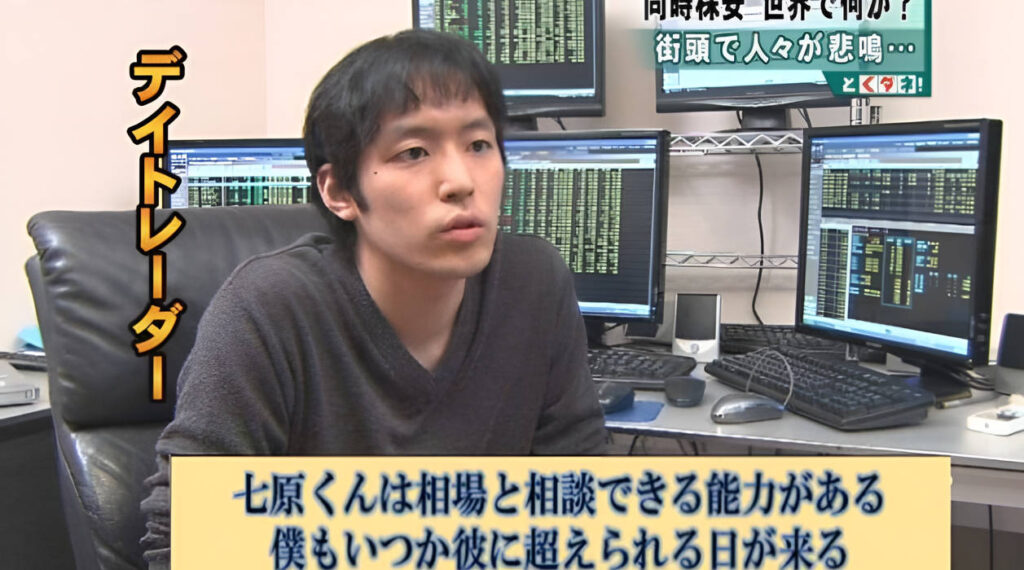
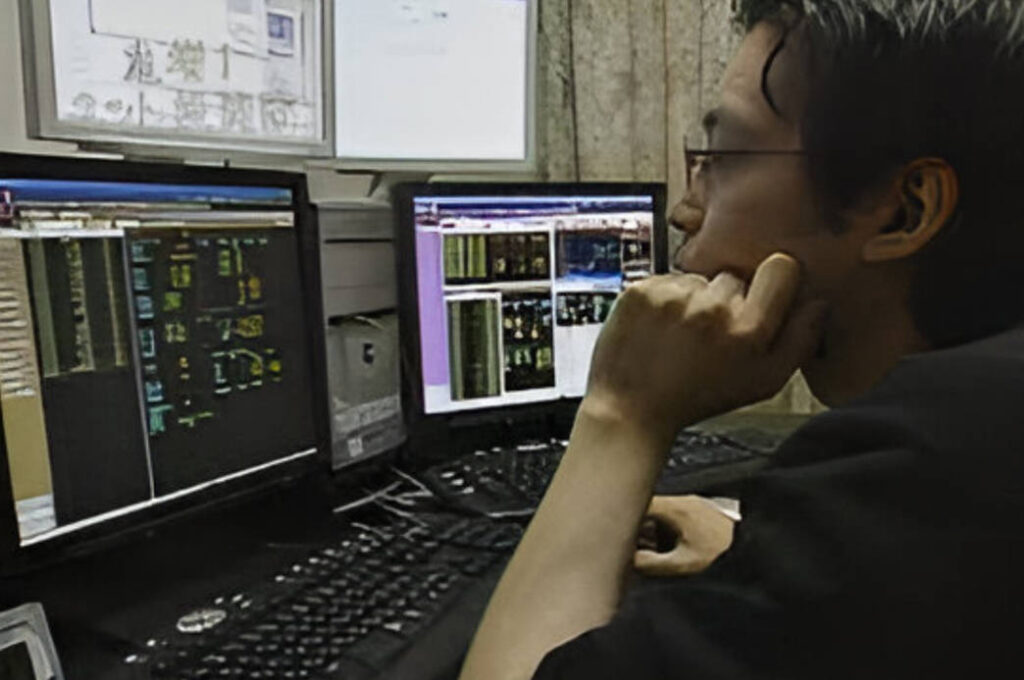
This attitude shaped his simple, disciplined lifestyle. Nicknamed the “bedroom trader,” he worked from a modest apartment with a few monitors and little distraction. He kept his meals light, often instant noodles, so he could stay focused during sessions. Instead of chasing luxury, he reinvested his wealth into assets like real estate, proving that consistency and control matter more than appearances.
Net Worth and Diversification
At his peak, Kotegawa’s fortune was estimated at over 150 million dollars. While trading provided the foundation of his wealth, he later diversified into real estate and other tangible assets to protect his capital from market downturns.
Legacy and Influence on Traders
Kotegawa’s journey, from a ¥1.6 million account to over $150 million in wealth, has made him one of the most respected traders in the world. His story is retold on forums, blogs, and YouTube videos as an example of how discipline and patience can turn a modest start into extraordinary success.
His legacy is built on four principles that outlast any market cycle:
Discipline over speculation
Risk management over reckless bets
Adaptability in both bull and bear markets
Treating trading as a skill, not a status symbol
Conclusion
Takashi Kotegawa, the man behind the names BNF and the J-Com man, is more than just a legendary trader. His story combines spectacular wins with grounded habits, disciplined strategies, and a mindset that treats trading as a skill game rather than a money chase.
For modern traders, Kotegawa’s journey is a powerful reminder that consistent profits come from strategy, discipline, and mindset — not just market luck.
Share Now
Disclaimer:This content is provided for informational purposes only and does not constitute, and should not be construed as, financial, investment, or other professional advice. No statement or opinion contained herein should be considered a recommendation by Ultima Markets or the author regarding any specific investment product, strategy, or transaction. Readers are advised not to rely solely on this material when making investment decisions and should seek independent advice where appropriate.
Thank you for visiting the Ultima Markets website. Please note that this website is intended for individuals residing in jurisdictions where access is permitted by law. Ultima and its affiliated entities do not operate in your home jurisdiction.
By clicking ‘Acknowledge’, you confirm that you are entering this website solely on your own initiative and not as a result of any specific marketing outreach. You wish to obtain information from this website based on reverse solicitation principles, in accordance with the applicable laws of your home jurisdiction.