This website is managed by Ultima Markets’ international entities, and it’s important to emphasise that they are not subject to regulation by the FCA in the UK. Therefore, you must understand that you will not have the FCA’s protection when investing through this website – for example:
You will not be guaranteed Negative Balance Protection
You will not be protected by FCA’s leverage restrictions
You will not have the right to settle disputes via the Financial Ombudsman Service (FOS)
You will not be protected by Financial Services Compensation Scheme (FSCS)
Any monies deposited will not be afforded the protection required under the FCA Client Assets Sourcebook. The level of protection for your funds will be determined by the regulations of the relevant local regulator.
Note: UK clients are kindly invited to visit https://www.ultima-markets.co.uk/. Ultima Markets UK expects to begin onboarding UK clients in accordance with FCA regulatory requirements in 2026.
If you would like to proceed and visit this website, you acknowledge and confirm the following:
1.The website is owned by Ultima Markets’ international entities and not by Ultima Markets UK Ltd, which is regulated by the FCA.
2.Ultima Markets Limited, or any of the Ultima Markets international entities, are neither based in the UK nor licensed by the FCA.
3.You are accessing the website at your own initiative and have not been solicited by Ultima Markets Limited in any way.
4.Investing through this website does not grant you the protections provided by the FCA.
5.Should you choose to invest through this website or with any of the international Ultima Markets entities, you will be subject to the rules and regulations of the relevant international regulatory authorities, not the FCA.
Ultima Markets wants to make it clear that we are duly licensed and authorised to offer the services and financial derivative products listed on our website. Individuals accessing this website and registering a trading account do so entirely of their own volition and without prior solicitation.
By confirming your decision to proceed with entering the website, you hereby affirm that this decision was solely initiated by you, and no solicitation has been made by any Ultima Markets entity.
Learn about the 3 major stock exchanges in the US, including NYSE, Nasdaq, and NYSE American, and see how each stock exchange plays a role in the market.
Which are the 3 Major Stock Exchanges in the US
If you’ve already read about the largest stock exchanges in the world, the next logical step is to look at the U.S. market more closely. In this guide, the 3 major stock exchanges in the US to know are the New York Stock Exchange (NYSE), Nasdaq, and NYSE American.
These three matter because each represents a different side of the market. The NYSE is the best-known giant with a trading floor, Nasdaq is the electronic heavyweight that helped redefine modern trading, and NYSE American serves smaller and growing companies with a different market model.
In this article, you will be able to have a practical framework for understanding how stocks are listed and traded in the United States.
What is a Stock Exchange?
A stock exchange is a regulated marketplace where securities are listed and traded. The SEC defines a national securities exchange as one registered under Section 6 of the Securities Exchange Act of 1934. That matters because exchanges are not just websites where buyers and sellers meet. They are formal market institutions with listing standards, trading rules, and oversight.
The 3 Major Stock Exchanges in the US Listed
1. New York Stock Exchange (NYSE)
The New York Stock Exchange is still the most recognizable stock exchange in the United States, and its scale is a major reason why. NYSE says its listed company network includes over 2,300 innovators, game-changers, and leaders, with $28.8 trillion in market cap. That kind of size is why the NYSE appears so often in discussions about both American markets and the largest stock exchanges worldwide.
Size, however, is only part of the story. NYSE says it is the only U.S. equities exchange that operates a trading floor and a parity/priority model. It also runs opening and closing auctions in its primarily listed symbols and uses Designated Market Makers to support fair and orderly trading.
That mix of tradition and scale helps explain why many large, established companies continue to view the NYSE as a prestige venue. It is not just a place to trade stocks. It is also a major listing destination that signals size, maturity, and visibility in the public markets.
2. Nasdaq
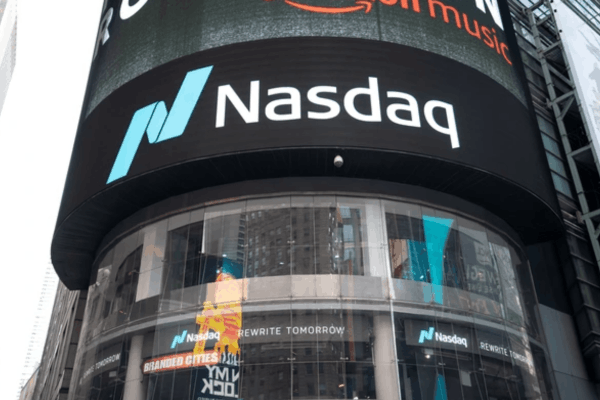
If the NYSE represents tradition, Nasdaq represents modern market design. On its official about page, Nasdaq says it pioneered the world’s first electronic exchange and today has 4,000+ company listings on its exchange. That history matters because Nasdaq helped push the market away from floor-based trading and toward the faster, screen-driven environment investors now take for granted.
Nasdaq also describes the Nasdaq Stock Exchange as the largest U.S. equities exchange venue by market share. On the same official market-services page, Nasdaq says the exchange is home to 3,300+ corporate listings and 900+ exchange-traded product listings.
It also notes that the Nasdaq Closing Cross executes about 260 million shares and $16 billion a day on average. Those figures help explain why Nasdaq is not just known for tech branding; it is also one of the most important trading engines in the U.S. market.
Nasdaq’s structure adds another layer of clarity. Its current listing guide says the Nasdaq Stock Market has three tiers: the Nasdaq Global Select Market, the Nasdaq Global Market, and the Nasdaq Capital Market.
That tiered system helps Nasdaq serve companies at different sizes and stages of growth, which is one reason it remains such a central listing venue for ambitious public companies.
3. NYSE American
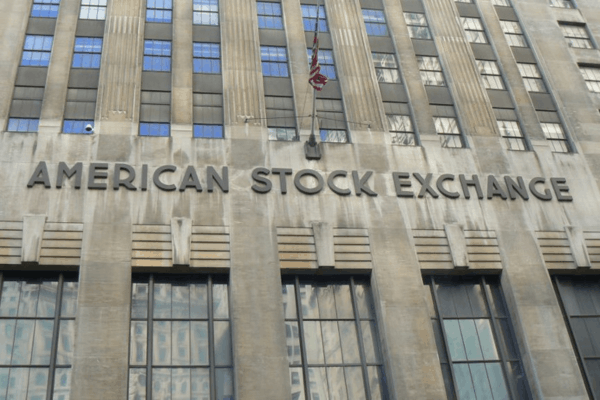
The third exchange in this U.S. trio is NYSE American, and its role is more important than many readers realize. The SEC identifies NYSE American as the former American Stock Exchange, also known as AMEX. So even though the old AMEX name still appears in search results and investor conversations, the current exchange to know is NYSE American.
NYSE says NYSE American is designed for growing companies and highlights primary listings for small-cap companies, electronic Designated Market Makers, and opening and closing auctions in primary listings.
The exchange also uses a price/time allocation model and blends features associated with both NYSE and NYSE Arca. In practical terms, NYSE American gives smaller issuers a national exchange venue built around their needs rather than asking them to compete directly with the scale and profile of the flagship NYSE.
That makes NYSE American especially useful to understand in an article like this. Without it, readers are left with only the giant-vs-giant comparison of NYSE and Nasdaq. Adding NYSE American shows that the U.S. market also has a meaningful venue for smaller-cap and emerging public companies.
How the 3 Exchanges Compare
The easiest way to remember the difference is this: NYSE is about scale and a hybrid floor-based model, Nasdaq is about electronic trading and market-share leadership, and NYSE American is about serving smaller and growing companies.
That simple contrast makes the topic much easier to understand than a long list of every registered exchange in the country.
This is also why the phrase 3 major stock exchanges in the US remains useful for readers, even though the real market structure is more crowded. Once someone understands these three, the wider ecosystem of exchanges, alternative venues, and newer entrants makes much more sense.
Why U.S. Stock Exchanges Still Matter in 2026
The classic three-exchange explanation still works, but the U.S. exchange map is getting more competitive. The SEC’s current list includes Nasdaq Texas, NYSE Texas, and Texas Stock Exchange LLC, and Nasdaq says Nasdaq Texas officially launched on March 5, 2026 as a new dual-listing venue. That does not replace the NYSE-Nasdaq-NYSE American framework for beginner readers, but it does show that the U.S. exchange landscape is evolving.
Competition is also expanding beyond listings and into trading access. ICE says the SEC approved extending NYSE Arca from 16 hours a day to 22 hours a day, five days a week. In other words, the big names in U.S. exchange trading are not standing still. They are actively competing on geography, listings, and trading-hours strategy.
Conclusion
For most readers, the clearest answer is still NYSE, Nasdaq, and NYSE American. Each exchange serves a different role, each appeals to a different kind of listed company, and together they provide the best introduction to how the U.S. stock market works.
If your audience is moving from a broader article on the largest stock exchanges into a more focused U.S. guide, this is the natural next step.
FAQs
What are the 3 major stock exchanges in the US?
The three exchanges most useful to know are the New York Stock Exchange (NYSE), Nasdaq, and NYSE American. The SEC lists many more registered exchanges, but these three provide the clearest starting point for understanding the U.S. market.
Is AMEX still a stock exchange?
The AMEX name is historical. The SEC identifies NYSE American LLC as the former American Stock Exchange, which means NYSE American is the current exchange readers should recognize.
Which is bigger, NYSE or Nasdaq?
It depends on what you mean by bigger. NYSE says its listed company network has $28.8 trillion in market cap, while Nasdaq says the Nasdaq Stock Exchange is the largest U.S. equities exchange venue by market share. So NYSE leads on listed-company scale, while Nasdaq emphasizes trading share and electronic market activity.
Share Now
Disclaimer:This content is provided for informational purposes only and does not constitute, and should not be construed as, financial, investment, or other professional advice. No statement or opinion contained herein should be considered a recommendation by Ultima Markets or the author regarding any specific investment product, strategy, or transaction. Readers are advised not to rely solely on this material when making investment decisions and should seek independent advice where appropriate.
Thank you for visiting the Ultima Markets website. Please note that this website is intended for individuals residing in jurisdictions where access is permitted by law. Ultima and its affiliated entities do not operate in your home jurisdiction.
By clicking ‘Acknowledge’, you confirm that you are entering this website solely on your own initiative and not as a result of any specific marketing outreach. You wish to obtain information from this website based on reverse solicitation principles, in accordance with the applicable laws of your home jurisdiction.