This website is managed by Ultima Markets’ international entities, and it’s important to emphasise that they are not subject to regulation by the FCA in the UK. Therefore, you must understand that you will not have the FCA’s protection when investing through this website – for example:
You will not be guaranteed Negative Balance Protection
You will not be protected by FCA’s leverage restrictions
You will not have the right to settle disputes via the Financial Ombudsman Service (FOS)
You will not be protected by Financial Services Compensation Scheme (FSCS)
Any monies deposited will not be afforded the protection required under the FCA Client Assets Sourcebook. The level of protection for your funds will be determined by the regulations of the relevant local regulator.
Note: UK clients are kindly invited to visit https://www.ultima-markets.co.uk/. Ultima Markets UK expects to begin onboarding UK clients in accordance with FCA regulatory requirements in 2026.
If you would like to proceed and visit this website, you acknowledge and confirm the following:
1.The website is owned by Ultima Markets’ international entities and not by Ultima Markets UK Ltd, which is regulated by the FCA.
2.Ultima Markets Limited, or any of the Ultima Markets international entities, are neither based in the UK nor licensed by the FCA.
3.You are accessing the website at your own initiative and have not been solicited by Ultima Markets Limited in any way.
4.Investing through this website does not grant you the protections provided by the FCA.
5.Should you choose to invest through this website or with any of the international Ultima Markets entities, you will be subject to the rules and regulations of the relevant international regulatory authorities, not the FCA.
Ultima Markets wants to make it clear that we are duly licensed and authorised to offer the services and financial derivative products listed on our website. Individuals accessing this website and registering a trading account do so entirely of their own volition and without prior solicitation.
By confirming your decision to proceed with entering the website, you hereby affirm that this decision was solely initiated by you, and no solicitation has been made by any Ultima Markets entity.
Discover the Norway currency and learn about the Norwegian krone (NOK), its history, value factors, the connection to oil and its role in global markets.
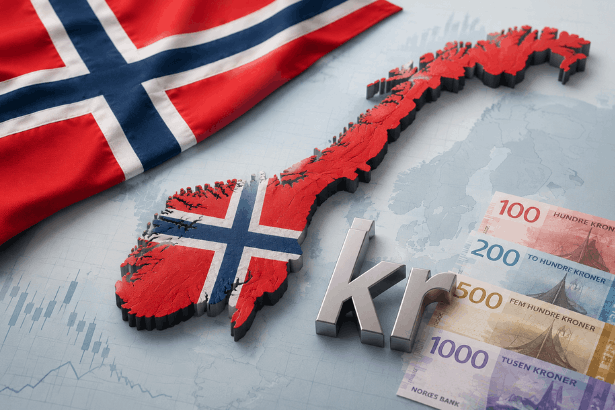
The norway currency is the Norwegian krone (NOK), the official currency used throughout Norway for daily transactions and financial activities. Introduced in 1875, the Norwegian krone remains an important currency in global markets due to Norway’s strong economy, energy exports, and independent monetary policy.
For travellers asking what currency is used in Norway, the answer is the Norwegian krone. Unlike many European countries that adopted the euro, Norway continues to use its own national currency.
The currency of norway is closely connected to factors such as oil prices, interest rates, inflation, and global investor sentiment, making it a currency worth following for both visitors and market participants.
What Is the Norway Currency?
The official norway currency is the Norwegian krone, with the international currency code NOK. The word “krone” means “crown” in Norwegian, similar to the currencies used in Denmark and Sweden.
The Norwegian krone is issued and managed by Norges Bank, which oversees monetary policy, inflation management, and financial stability.
Key facts about the Norway currency:
Category
Details
Official currency
Norwegian krone
Currency code
NOK
Currency symbol
kr
Central bank
Norges Bank
Currency system
Floating exchange rate
Introduced
1875
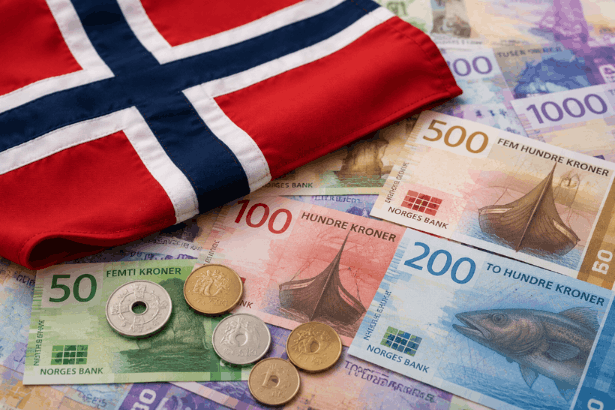
The Norwegian krone is available in both coins and banknotes. Common denominations include 1, 5, 10, and 20 kr coins, while banknotes are issued in 50, 100, 200, 500, and 1,000 kr.
Why Does Norway Use the Norwegian Krone Instead of the Euro?
Norway does not use the euro and has chosen to maintain its own currency system.
Although Norway is part of the European Economic Area (EEA), it is not a member of the European Union. Keeping its own currency allows Norway to control its monetary policy and adjust interest rates based on domestic economic conditions.
This independence gives Norges Bank greater flexibility when responding to inflation, employment trends, and economic changes. For example, interest rate adjustments can influence investment flows and affect demand for the Norwegian krone.
History of Norway Currency
The Norwegian krone was introduced in 1875 when Norway joined the Scandinavian Monetary Union together with Denmark and Sweden.
The monetary union created a shared currency framework based on the gold standard. However, after World War I, the system gradually ended, and Norway continued using its own version of the krone.
Today, the Norway currency operates under a floating exchange rate system. This means its value is determined by market forces, including supply and demand from global investors.
What Factors Affect the Value of the Norwegian Krone?
The value of the currency in norway is influenced by several economic factors. Among the most important are energy markets, interest rates, and global economic conditions.
Oil and Natural Gas Prices
One of the biggest influences on the Norwegian krone is the country’s energy sector.
Norway is one of the world’s leading exporters of oil and natural gas. As a result, changes in energy prices can have a direct impact on the country’s export revenues and economic outlook.
When oil prices rise, Norway may benefit from stronger export income, which can support demand for NOK. When energy prices decline, weaker export expectations may put pressure on the currency.
Because of this relationship, the Norwegian krone is often considered a commodity-linked currency.
Interest Rates and Norges Bank Policy
Interest rates are another major factor affecting Norway currency movements.
When Norges Bank raises interest rates, Norwegian assets may become more attractive to international investors looking for higher returns. This can increase demand for NOK.
However, interest rate decisions are also influenced by inflation and economic growth. A higher rate environment may support the currency, but policymakers must balance this against the impact on households and businesses.
For traders following the NOK, Norges Bank’s monetary policy decisions are among the key events to watch.
Global Market Sentiment
The Norwegian krone is also influenced by wider market conditions.
During periods of strong global growth, investors often favour commodity-linked currencies because demand for resources tends to increase. However, during periods of uncertainty, investors may prefer traditional safe-haven currencies such as the US dollar.
This means the NOK can experience volatility when markets react to geopolitical events, economic data, or changes in investor confidence.
Why Is the Norwegian Krone Important for Traders?
The Norway currency attracts attention from forex traders because it combines exposure to energy markets, European economic trends, and monetary policy.
Popular NOK currency pairs include:
Currency Pair
Description
NOK/USD
Norwegian krone against the US dollar
EUR/NOK
Norwegian krone against the euro
GBP/NOK
Norwegian krone against the British pound
Traders often monitor:
Oil and natural gas price movements
Norges Bank interest rate decisions
European economic performance
Global risk appetite
Understanding these factors can help traders better assess potential NOK movements. However, like all currencies, the Norwegian krone can experience volatility, so risk management remains important when trading financial markets.
What Currency Is Used in Norway for Daily Payments?
For visitors asking what currency is used in Norway, the answer is the Norwegian krone.
Although cash remains legal tender, Norway is one of the world’s most cashless societies. Most payments are made through debit cards, credit cards, and digital payment solutions.
Travelers can usually pay electronically in hotels, restaurants, and shops. However, carrying some Norwegian krone can still be useful for smaller purchases or situations where card payments are unavailable.
Key Differences of the Norway Currency vs Euro
Feature
Norwegian Krone (NOK)
Euro (EUR)
Used by
Norway
Eurozone countries
Central bank
Norges Bank
European Central Bank
Main drivers
Oil, gas, commodities
Eurozone economy
Currency policy
Independent
Shared monetary policy
The biggest difference is monetary control. Norway manages its own currency and interest rates, while eurozone countries share a common currency managed by the European Central Bank.
Conclusion
The norway currency is the Norwegian krone (NOK), a currency strongly connected to Norway’s energy exports, monetary policy, and economic strength.
While Norway has chosen not to adopt the euro, the Norwegian krone continues to play an important role in international markets. Its relationship with oil prices, interest rates, and investor sentiment makes it especially relevant for those following global currencies.
Whether you are planning a trip, studying global economies, or analysing forex markets, understanding the currency of norway provides valuable insight into one of Europe’s most unique financial systems.
FAQs
What is the currency of Norway?
The currency of Norway is the Norwegian krone (NOK), which is used for all official transactions in the country.
Does Norway use the euro?
No. Norway uses the Norwegian krone instead of the euro.
Why is the Norwegian krone linked to oil prices?
Norway is a major oil and gas exporter, so energy prices can influence its economy and currency value.
Share Now
Disclaimer:This content is provided for informational purposes only and does not constitute, and should not be construed as, financial, investment, or other professional advice. No statement or opinion contained herein should be considered a recommendation by Ultima Markets or the author regarding any specific investment product, strategy, or transaction. Readers are advised not to rely solely on this material when making investment decisions and should seek independent advice where appropriate.
Thank you for visiting the Ultima Markets website. Please note that this website is intended for individuals residing in jurisdictions where access is permitted by law. Ultima and its affiliated entities do not operate in your home jurisdiction.
By clicking ‘Acknowledge’, you confirm that you are entering this website solely on your own initiative and not as a result of any specific marketing outreach. You wish to obtain information from this website based on reverse solicitation principles, in accordance with the applicable laws of your home jurisdiction.