This website is managed by Ultima Markets’ international entities, and it’s important to emphasise that they are not subject to regulation by the FCA in the UK. Therefore, you must understand that you will not have the FCA’s protection when investing through this website – for example:
You will not be guaranteed Negative Balance Protection
You will not be protected by FCA’s leverage restrictions
You will not have the right to settle disputes via the Financial Ombudsman Service (FOS)
You will not be protected by Financial Services Compensation Scheme (FSCS)
Any monies deposited will not be afforded the protection required under the FCA Client Assets Sourcebook. The level of protection for your funds will be determined by the regulations of the relevant local regulator.
Note: UK clients are kindly invited to visit https://www.ultima-markets.co.uk/. Ultima Markets UK expects to begin onboarding UK clients in accordance with FCA regulatory requirements in 2026.
If you would like to proceed and visit this website, you acknowledge and confirm the following:
1.The website is owned by Ultima Markets’ international entities and not by Ultima Markets UK Ltd, which is regulated by the FCA.
2.Ultima Markets Limited, or any of the Ultima Markets international entities, are neither based in the UK nor licensed by the FCA.
3.You are accessing the website at your own initiative and have not been solicited by Ultima Markets Limited in any way.
4.Investing through this website does not grant you the protections provided by the FCA.
5.Should you choose to invest through this website or with any of the international Ultima Markets entities, you will be subject to the rules and regulations of the relevant international regulatory authorities, not the FCA.
Ultima Markets wants to make it clear that we are duly licensed and authorised to offer the services and financial derivative products listed on our website. Individuals accessing this website and registering a trading account do so entirely of their own volition and without prior solicitation.
By confirming your decision to proceed with entering the website, you hereby affirm that this decision was solely initiated by you, and no solicitation has been made by any Ultima Markets entity.
Wondering what time does Asia stock market open? Get exact trading hours for Tokyo, Hong Kong, Shanghai and more. Updated with key 2025–2026 market data.
What Time Does Asia Stock Market Open?
Asia is the starting gun for the global trading day. Long before European or American traders sit down at their desks, Asian exchanges are already pricing in overnight news, reacting to economic data, and setting the directional tone for markets worldwide.
If you are managing a portfolio or actively trading global instruments, knowing what time does Asia stock market open is not a minor detail. It is foundational. With eight of the world’s ten largest exchanges located in Europe or Asia, the region carries serious weight in global finance. Here is a complete breakdown of major Asian trading hours for 2025 and 2026.
The Major Asian Exchanges and Their Trading Hours
Asia does not have a single unified stock market. Each exchange operates independently across different time zones, with its own session structure, auction process, and lunch break rules. Below is a full reference table for every major exchange in the region.
Exchange
Country
Pre-Open / Auction
Continuous Trading
Close
Lunch Break
Tokyo Stock Exchange (TSE/JPX)
Japan
Order acceptance before open
9:00 AM JST
3:30 PM JST
11:30 AM to 12:30 PM
Hong Kong Stock Exchange (HKEX)
Hong Kong
9:00 AM HKT
9:30 AM HKT
4:00 PM HKT
12:00 PM to 1:00 PM
Shanghai Stock Exchange (SSE)
China
Auction 9:15 AM CST
9:30 AM CST
3:00 PM CST
11:30 AM to 1:00 PM
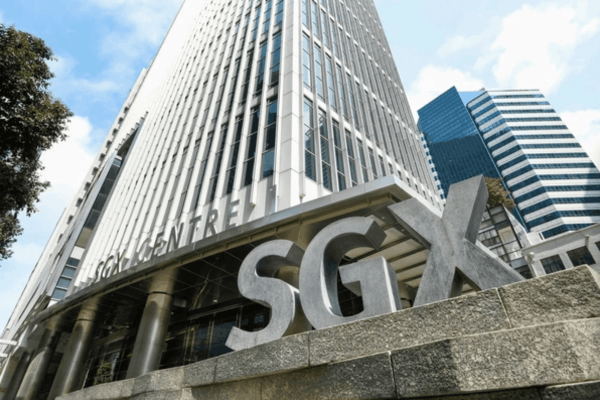
Singapore Exchange (SGX)
Singapore
Routine from 8:30 AM SGT
9:00 AM SGT
5:00 PM SGT
None
Korea Exchange (KOSPI)
South Korea
None
9:00 AM KST
3:30 PM KST
None
Taiwan Stock Exchange (TWSE)
Taiwan
Orders from 8:30 AM TWD
9:00 AM TWD
1:30 PM TWD
None
National Stock Exchange (NSE)
India
9:00 AM IST
9:15 AM IST
3:30 PM IST
None
Session Structures and Recent Rule Changes
Several exchanges have more than one start time, and this is where traders new to Asian markets can easily go wrong. In practice, there are three distinct moments worth knowing: when the exchange begins accepting orders, when the opening auction runs, and when continuous trading begins.
For most practical purposes, the continuous trading start time is what matters most, as that is when real-time price formation begins.
Hong Kong
The pre-opening session starts at 9:00 AM HKT, but continuous price discovery does not begin until 9:30 AM.
China
Both Shanghai and Shenzhen run an opening call auction from 9:15 AM before continuous trading begins at 9:30 AM CST.
India
India’s NSE opens its pre-market session at 9:00 AM IST, with the normal equity market following at 9:15 AM.
Tokyo’s Extended Hours
On 5 November 2024, the Tokyo Stock Exchange extended its cash equity session for the first time in 70 years, pushing its close from 3:00 PM to 3:30 PM JST. A new Closing Auction system now runs from 3:25 PM to 3:30 PM, modelled on mechanisms used at the London Stock Exchange and HKEX. Any trader or platform still referencing 3:00 PM JST as the TSE close is working with outdated information.
Asian Market Hours in UTC and EST
For traders working across multiple time zones, having a reliable converted reference is essential. In UTC, Tokyo opens at 12:00 AM and closes at 6:30 AM. Shanghai opens at 1:30 AM UTC and closes at 7:00 AM, while Hong Kong opens at the same time but closes later at 8:00 AM UTC. For traders in the Americas, Tokyo opens at 8:00 PM EST, with Shanghai and Hong Kong both opening at 9:30 PM EST.
Daylight Saving Time Warning
Asian exchanges observe fixed local schedules and do not adjust for daylight saving time. The United States does, meaning EST conversions shift by one hour during DST transitions in spring and autumn even though Asian market times remain unchanged. This is one of the most common sources of execution errors among retail traders.
The Midday Break: What Traders Need to Know
Many Asian exchanges pause mid-session, which can catch traders off guard. Shanghai takes the longest break at one and a half hours from 11:30 AM to 1:00 PM CST. Hong Kong pauses for one hour between 12:00 PM and 1:00 PM HKT, and Tokyo splits its day into a morning and afternoon session with a one-hour break.
These pauses reduce intraday volume and can disrupt trade momentum. India, South Korea, Taiwan and Singapore have moved away from this model entirely, running straight-through sessions to support more continuous liquidity throughout the day.
Why the Asian Open Matters
The scale of these markets is reason enough to pay attention. The Tokyo Stock Exchange holds a market capitalisation of approximately USD 8.79 trillion. HKEX averages daily turnover of around HKD 150 billion, while Shanghai regularly processes RMB 900 billion in daily volume. Tokyo’s opening hour alone accounts for over 20% of the exchange’s total daily volume.
Recent performance reinforces this further. Asian equities had a historic start to 2026, with the MSCI Asia Pacific Index rising approximately 4% in the first four trading sessions of the year, its strongest opening since records began in 1988. South Korea’s KOSPI had already surged 76% in 2025, driven by enthusiasm around artificial intelligence and semiconductor stocks.
How the Asian Session Shapes Global Markets
The Asian open bridges overnight risk between the previous US close and the next global trading day. Japan and India come online several hours before Western exchanges, meaning their early price action regularly feeds into US and UK futures before those sessions begin. The session is also the primary driver of the Japanese Yen and Australian Dollar.
When major Asian indices fall sharply, US futures frequently follow. This played out in March 2026, when the Nikkei 225 dropped 5.2% in a single session, the KOSPI fell 5.96%, and Australia’s ASX 200 declined 2.8%, its worst daily loss in 11 months, as geopolitical tensions rippled across the region ahead of the Western open.
Key Windows for Active Traders
The most active and liquid windows within the Asian session are 9:00 to 10:00 AM JST for the Tokyo open, 9:30 to 10:30 AM HKT and CST for the Hong Kong and Shanghai overlap, and 9:15 to 10:15 AM IST for India’s opening surge.
Conclusion
From Tokyo’s updated session to Singapore’s late close at 5:00 PM SGT, the Asian trading day unfolds in sequential waves, each one adding liquidity and setting the stage for Europe and the United States.
Staying current on these hours, accounting for the TSE’s 2024 reforms, and watching for seasonal DST shifts are all part of trading the Asian session properly. Always verify schedules ahead of public holidays and rely on real-time sources before every session.
FAQs
What time does Asia stock market open in GMT?
Tokyo opens at 12:00 AM GMT and closes at 6:30 AM GMT. Shanghai and Hong Kong both open at 1:30 AM GMT, closing at 7:00 AM and 8:00 AM GMT respectively.
Which Asian stock market opens first each trading day?
The Tokyo Stock Exchange opens first at 9:00 AM JST (12:00 AM GMT), making it the first major Asian exchange to react to overnight developments.
Do Asian stock markets trade after hours?
Most do not offer formal after-hours sessions. However, futures contracts on benchmarks such as the Nikkei 225 and Hang Seng continue trading outside regular hours, allowing traders to manage positions beyond the cash session.
Share Now
Disclaimer:This content is provided for informational purposes only and does not constitute, and should not be construed as, financial, investment, or other professional advice. No statement or opinion contained herein should be considered a recommendation by Ultima Markets or the author regarding any specific investment product, strategy, or transaction. Readers are advised not to rely solely on this material when making investment decisions and should seek independent advice where appropriate.
Thank you for visiting the Ultima Markets website. Please note that this website is intended for individuals residing in jurisdictions where access is permitted by law. Ultima and its affiliated entities do not operate in your home jurisdiction.
By clicking ‘Acknowledge’, you confirm that you are entering this website solely on your own initiative and not as a result of any specific marketing outreach. You wish to obtain information from this website based on reverse solicitation principles, in accordance with the applicable laws of your home jurisdiction.