This website is managed by Ultima Markets’ international entities, and it’s important to emphasise that they are not subject to regulation by the FCA in the UK. Therefore, you must understand that you will not have the FCA’s protection when investing through this website – for example:
You will not be guaranteed Negative Balance Protection
You will not be protected by FCA’s leverage restrictions
You will not have the right to settle disputes via the Financial Ombudsman Service (FOS)
You will not be protected by Financial Services Compensation Scheme (FSCS)
Any monies deposited will not be afforded the protection required under the FCA Client Assets Sourcebook. The level of protection for your funds will be determined by the regulations of the relevant local regulator.
Note: UK clients are kindly invited to visit https://www.ultima-markets.co.uk/. Ultima Markets UK expects to begin onboarding UK clients in accordance with FCA regulatory requirements in 2026.
If you would like to proceed and visit this website, you acknowledge and confirm the following:
1.The website is owned by Ultima Markets’ international entities and not by Ultima Markets UK Ltd, which is regulated by the FCA.
2.Ultima Markets Limited, or any of the Ultima Markets international entities, are neither based in the UK nor licensed by the FCA.
3.You are accessing the website at your own initiative and have not been solicited by Ultima Markets Limited in any way.
4.Investing through this website does not grant you the protections provided by the FCA.
5.Should you choose to invest through this website or with any of the international Ultima Markets entities, you will be subject to the rules and regulations of the relevant international regulatory authorities, not the FCA.
Ultima Markets wants to make it clear that we are duly licensed and authorised to offer the services and financial derivative products listed on our website. Individuals accessing this website and registering a trading account do so entirely of their own volition and without prior solicitation.
By confirming your decision to proceed with entering the website, you hereby affirm that this decision was solely initiated by you, and no solicitation has been made by any Ultima Markets entity.
Explore the largest stock exchanges globally, including the NYSE, NASDAQ, and more, and understand their significance in driving global financial markets.
Largest Stock Exchanges in the World
Stock exchanges serve as the backbone of global financial markets, offering platforms for companies to raise capital and for investors to trade stocks, bonds, and other financial assets.
While there are numerous exchanges around the world, a handful dominate the global financial landscape due to their market capitalisation, trading volume, and economic significance.
This article delves into the largest stock exchanges in the world, exploring their key characteristics, competitive strengths, and the latest market trends shaping their futures.
Key Players in the Global Financial Market
1. New York Stock Exchange (NYSE): USA
The New York Stock Exchange (NYSE) is the largest and most influential stock exchange in the world. Founded in 1792, it is synonymous with global finance, offering a marketplace for some of the world’s most prominent companies.
Market Capitalisation: ~$30–32 trillion
Number of Listed Companies: Over 2,300
Notable Listings: Apple, Microsoft, Tesla, and Walmart.
The NYSE’s scale and historical significance have cemented its position at the top of global exchanges. It operates through a combination of physical trading floors and electronic systems, a structure that allows for vast liquidity and access to capital.
The NYSE remains the go‑to platform for some of the world’s biggest Initial Public Offerings (IPOs), and its diverse range of listed sectors ranging from technology to healthcare makes it a global financial barometer.
2. NASDAQ Stock Market: USA
Following closely behind the NYSE, the NASDAQ Stock Market is the second-largest exchange globally, with a particular focus on technology and innovation. Unlike the NYSE, the NASDAQ operates fully electronically, giving it a modern edge in the financial world.
Market Capitalisation: ~$25–30 trillion
Number of Listed Companies: Over 3,000
Notable Listings: Apple, Google (Alphabet), Amazon, and Facebook.
Known for its tech dominance, the NASDAQ has become the exchange of choice for high-growth sectors, particularly tech, biotech, and internet companies. As digital assets and blockchain technologies gain traction, NASDAQ has been quick to adapt, exploring the potential of tokenised stocks and expanding into the crypto market. This adaptability positions NASDAQ as a leader in the modernisation of stock exchanges.
3. Shanghai Stock Exchange (SSE): China
The Shanghai Stock Exchange (SSE) is a key player in the Asian financial market and has grown into one of the largest stock exchanges globally, especially given China’s prominence in the global economy.
Market Capitalisation: ~$7 trillion
Number of Listed Companies: Over 1,500
Notable Listings: Alibaba, PetroChina, and ICBC.
The SSE plays a critical role in China’s economic development and is a vital source of capital for Chinese enterprises. Unlike its Western counterparts, the SSE has a higher concentration of state-owned enterprises (SOEs) and large banks, making it a unique player in global finance.
Over recent years, the SSE has made strides to attract international investment and has expanded its outreach to foreign investors looking to tap into China’s booming economy.
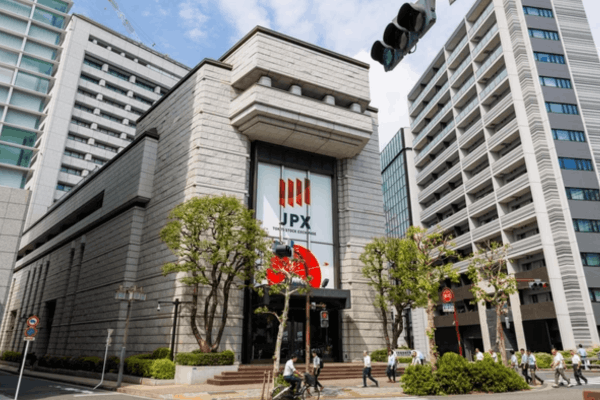
4. Japan Exchange Group (TSE): Japan
The Japan Exchange Group (TSE), which operates the Tokyo Stock Exchange, is one of the oldest and largest exchanges in Asia. It is pivotal in shaping the financial landscape in Japan and remains an essential player in the global market.
Market Capitalisation: ~$6.5 trillion
Number of Listed Companies: Over 3,800
Notable Listings: Toyota, Sony, Mitsubishi, and Honda.
The TSE is renowned for its robust infrastructure and diverse range of sectors, from auto manufacturing to electronics. Its technological advancements have made it a leader in Asia and continue to make it an attractive destination for international investors seeking stable and diversified investment opportunities.
5. National Stock Exchange (NSE): India
India’s National Stock Exchange (NSE) has rapidly risen in the ranks, establishing itself as one of the largest exchanges globally, particularly in terms of market volume.
Market Capitalisation: ~$5–6 trillion
Number of Listed Companies: Over 1,500
Notable Listings: Reliance Industries, Tata Consultancy Services (TCS), and Infosys.
The NSE is not only India’s largest stock exchange but also one of the fastest-growing exchanges in the world. Its focus on technology and innovation, along with its role in driving India’s economic expansion, makes it a critical player in the emerging market space.
As the Indian economy grows, the NSE’s market capitalisation continues to increase, positioning it as an increasingly important global exchange.
6. Euronext: Europe
Euronext operates across several European countries, including France, the Netherlands, Portugal, and Belgium, making it the largest exchange in Europe by market capitalisation.
Market Capitalisation: ~$5 trillion
Number of Listed Companies: Over 1,500
Notable Listings: L’Oréal, Unilever, ASML, and Volkswagen.
Euronext’s cross-border structure enables it to serve as a bridge between Europe and other global markets, attracting investors from around the world. It offers a wide range of products and services and has become the primary exchange for many European blue-chip companies.
As Europe continues to develop its financial markets, Euronext plays a central role in driving economic growth and offering liquidity to European businesses.
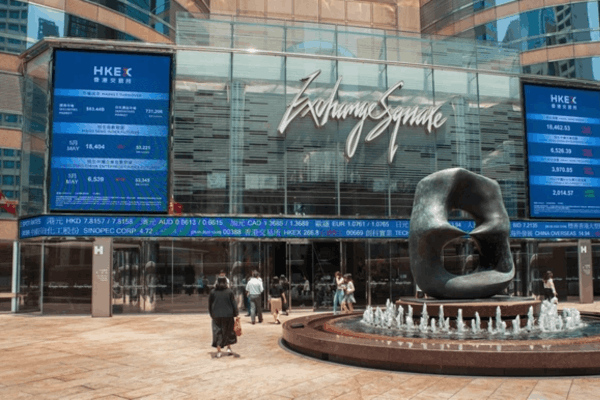
7. Hong Kong Exchanges and Clearing (HKEX)
The Hong Kong Exchanges and Clearing (HKEX) is an essential link between China and global investors, serving as a critical financial hub in Asia.
Market Capitalisation: ~$5 trillion
Number of Listed Companies: Over 2,500
Notable Listings: Alibaba, HSBC, and Tencent.
As Hong Kong is an international financial centre, HKEX offers a platform that connects global capital to China’s growth story. The exchange continues to innovate, launching products like equity‑linked notes and exploring crypto‑related instruments, ensuring that it remains a top destination for international investors.
8. Shenzhen Stock Exchange (SZSE): China
The Shenzhen Stock Exchange (SZSE), like the SSE, is a major exchange in China, but it focuses more on growth companies and technology-driven sectors.
Market Capitalisation: ~$4.4 trillion
Number of Listed Companies: Over 2,000
Notable Listings: Ping An Insurance, BYD, and Midea.
SZSE has a distinct profile compared to the SSE, with more focus on smaller and innovative companies in sectors like technology and biotech. It is seen as a hotspot for high-growth enterprises, particularly in the tech and consumer sectors.
This emphasis on innovation makes SZSE an attractive destination for investors seeking to capitalise on China’s burgeoning tech scene.
9. London Stock Exchange (LSE): UK
The London Stock Exchange (LSE) has long been one of the most important financial markets globally. It provides a platform for companies from a diverse range of sectors and serves as a gateway for international capital.
Market Capitalisation: ~$3.8 trillion
Number of Listed Companies: Over 2,000
Notable Listings: HSBC, BP, Unilever, and GlaxoSmithKline.
The LSE is known for its diverse range of listed companies and its role in facilitating global investment in UK and European companies.
Despite competition from exchanges in Asia and North America, the LSE remains a major hub for institutional investors and continues to adapt by integrating technology and innovation into its trading infrastructure.
10. Toronto Stock Exchange (TSX): Canada
The Toronto Stock Exchange (TSX) may not be as well-known globally, but it plays an important role in the Canadian economy, particularly for natural resource industries.
Market Capitalisation: ~$3.4 trillion
Number of Listed Companies: Over 1,500
Notable Listings: Royal Bank of Canada, Suncor Energy, and Barrick Gold.
The TSX is the go-to exchange for resource companies in Canada, including those in mining, energy, and natural resources. Despite its focus on these sectors, the exchange offers a diversified set of assets and continues to be an essential platform for investors looking to access the Canadian market.
Market Trends Shaping Stock Exchanges
The landscape of stock exchanges is evolving. Several trends are shaping the future of these exchanges:
Digital Transformation and Blockchain: Many exchanges, like NASDAQ and the NYSE, are exploring blockchain technology and digital assets as they adapt to a rapidly changing financial landscape.
Cross-Border Listings and Partnerships: Exchanges like Euronext and HKEX are benefiting from strategic mergers and partnerships that enhance their global reach and market offerings.
Sustainability and ESG Initiatives: With growing investor interest in sustainability, exchanges are incorporating Environmental, Social, and Governance (ESG) criteria into their offerings, particularly in sectors like tech and green energy.
Conclusion
The world’s largest stock exchanges are pivotal in driving economic growth and shaping the global financial market. From the dominance of the NYSE and NASDAQ in the United States to the growing influence of exchanges in Asia, these exchanges provide crucial platforms for investment and capital raising. As technological advancements and new market trends continue to shape the financial landscape, the role of stock exchanges will remain central to the global economy.
FAQs
What is the largest stock exchange by market capitalisation?
The New York Stock Exchange (NYSE) is the largest stock exchange globally by market capitalisation.
What is the difference between the NYSE and NASDAQ?
The NYSE operates a combination of physical trading floors and electronic systems, while the NASDAQ is entirely electronic. The NYSE has a broader range of traditional industries, while the NASDAQ focuses more on technology and growth sectors.
Why are stock exchanges important for global markets?
Stock exchanges provide a platform for companies to raise capital and for investors to trade securities, driving economic growth, liquidity, and transparency across financial markets.
Share Now
Disclaimer:This content is provided for informational purposes only and does not constitute, and should not be construed as, financial, investment, or other professional advice. No statement or opinion contained herein should be considered a recommendation by Ultima Markets or the author regarding any specific investment product, strategy, or transaction. Readers are advised not to rely solely on this material when making investment decisions and should seek independent advice where appropriate.
Thank you for visiting the Ultima Markets website. Please note that this website is intended for individuals residing in jurisdictions where access is permitted by law. Ultima and its affiliated entities do not operate in your home jurisdiction.
By clicking ‘Acknowledge’, you confirm that you are entering this website solely on your own initiative and not as a result of any specific marketing outreach. You wish to obtain information from this website based on reverse solicitation principles, in accordance with the applicable laws of your home jurisdiction.