On April 2, U.S. President Donald Trump announced a comprehensive “reciprocal” tariff plan, referred to as “Liberation Day,” aimed at addressing trade imbalances and promoting domestic manufacturing.
The “Liberation Day” Tariffs
The Trump administration has unveiled reciprocal tariffs on all nations, including its closest trade partners, asserting that these measures are necessary to protect American industries and workers from unfair foreign competition.
Key Components of the “Liberation Day” Tariff Policy:
- Baseline Tariff: A universal 10% tariff will be imposed on all imports into the United States, effective April 5.
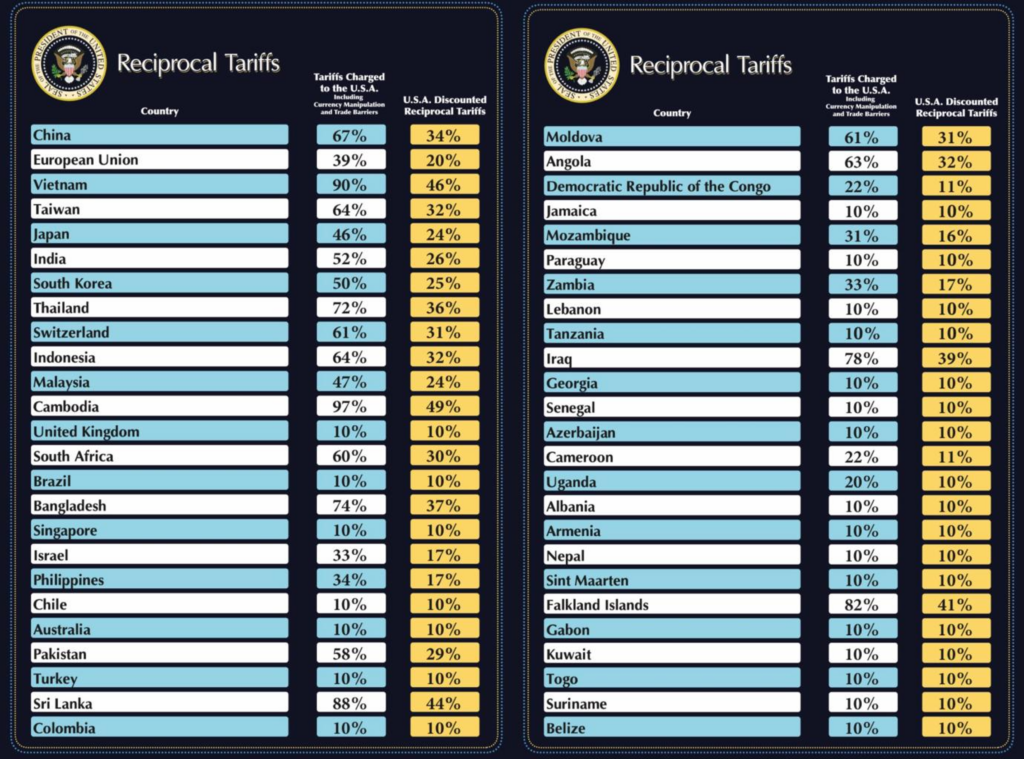
- Reciprocal Tariffs: Higher, country-specific tariffs will target nations with significant trade surpluses or perceived unfair trade practices, taking effect on April 9.
- Automobile Tariffs: An additional 25% tariff will be applied to all imported automobiles, effective immediately.
(Reciprocal Tariff Chart; Source: The White House)
The “Liberation Day” tariffs represent a significant shift in U.S. trade policy, with the administration emphasizing economic independence and the protection of domestic industries. The full impact of these measures will become clearer as international responses unfold.
International Reaction
The announcement has elicited mixed reactions. Allied nations such as Australia and the UK have expressed concerns over the potential economic impact and are exploring diplomatic avenues to address the tariffs. Meanwhile, some affected nations are considering retaliatory measures.
Economists also warn that the tariffs could lead to increased consumer prices and inflation in the U.S., while also prompting retaliatory trade actions from affected countries, potentially escalating into broader trade conflicts.
Gold Surged to Another Record High
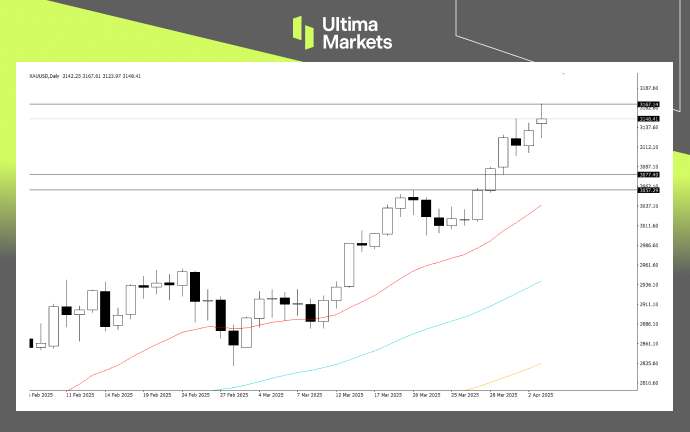
Gold, deemed a safe-haven asset, surged to another record high as market concerns over a potential broader trade war intensified. The metal reached $3,167 per ounce following the announcement before experiencing a minor pullback.
(Gold, 4-H Chart; Source: Ultima Markets MT4)
Meanwhile, the U.S. dollar, as measured by the Dollar Index (DXY), sank to a seven-month low as investors flocked to safe-haven assets. The Japanese yen and Swiss franc, both considered safe-haven currencies, strengthened against the U.S. dollar.
Disclaimer
Comments, news, research, analysis, price, and all information contained in the article only serve as general information for readers and do not suggest any advice. Ultima Markets has taken reasonable measures to provide up-to-date information, but cannot guarantee accuracy, and may modify without notice. Ultima Markets will not be responsible for any loss incurred due to the application of the information provided.