The Bank of England (BoE) voted 7–2 to keep the Bank Rate unchanged at 4.00% in its September meeting. Two members preferred an immediate 25bps cut to 3.75%, highlighting growing divisions within the Monetary Policy Committee (MPC).
Alongside the rate decision, the BoE announced a slower pace of quantitative tightening (QT), reducing its annual gilt holdings rundown from £100 billion to £70 billion.
The composition of sales will shift, with fewer long-dated gilts and more short- and medium-term maturities, aimed at easing recent volatility in bond markets.
BoE Statement Highlights
- Inflation: CPI stood at 3.8% in August, expected to tick higher in September before resuming its decline. The Bank warned that inflation risks remain tilted to the upside, particularly through wage and price-setting dynamics.
- Growth & Labour Market: Economic activity remains weak, unemployment is edging higher, and wage growth is easing gradually—signals of emerging slack in the economy.
- Policy Guidance: The BoE stressed that monetary policy is “not on a pre-set path”, reaffirming that any cuts will be gradual and careful, contingent on sustained disinflation.
Governor Andrew Bailey’s Comments
Governor Andrew Bailey reinforced a cautious stance, saying the UK is “not out of the woods yet” on inflation. He noted that while markets have understood cuts will come slowly, the timing and pace remain uncertain.
On QT, Bailey acknowledged the need to avoid unnecessary disruption in long-dated gilt markets, justifying the decision to rebalance sales toward shorter maturities.
Market & GBPUSD Reaction
Sterling dipped further after the announcement, with investors interpreting the slower QT and dissenting rate-cut votes as a dovish shift. However, sticky inflation and Bailey’s cautious tone limited downside pressure.
- Supportive Factors: Elevated inflation and a cautious BoE keep rate-cut expectations restrained, lending some support to GBP.
- Downside Risks: Signs of weak growth, labour market slack, and internal dissent could fuel expectations of earlier easing, undermining sterling over the medium term.
Technical Outlook on GBPUSD
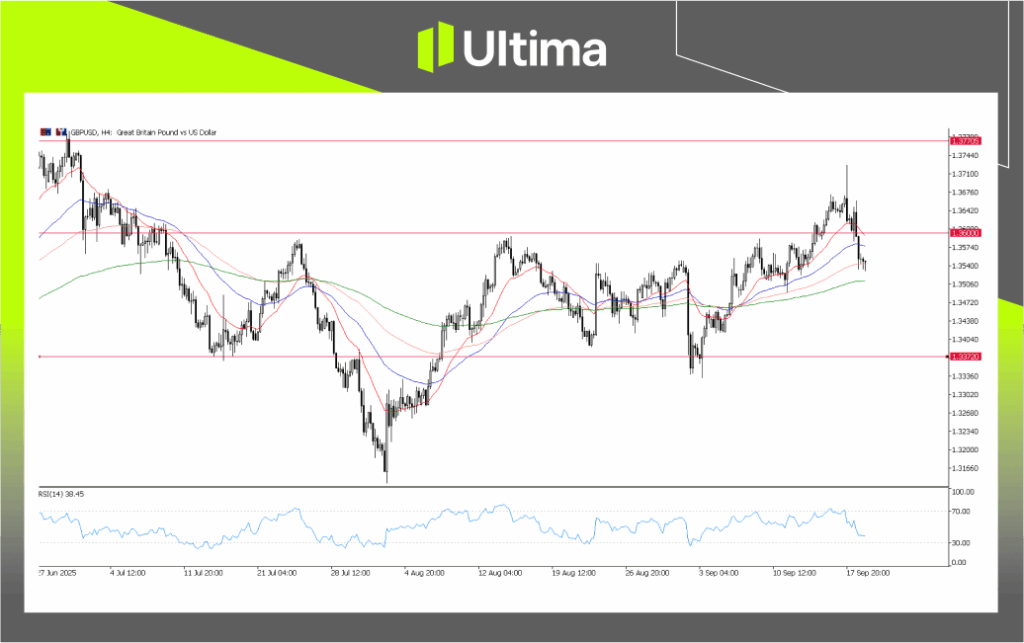
GBPUSD, H4 Chart Analysis | Source: Ultima Market MT5
The GBPUSD extended its downside following the BoE decision, with the pair failing to hold above the 1.3600 key level, signalling weakening momentum.
From a technical perspective, if GBPUSD continues to trade below 1.3600, the pair is likely to remain pressured toward the downside or locked in range-bound trading in the near term.
The next decisive move will largely depend on upcoming inflation and labour market data, which are set to shape sentiment and policy expectations.
Disclaimer
Comments, news, research, analysis, price, and all information contained in the article only serve as general information for readers and do not suggest any advice. Ultima Markets has taken reasonable measures to provide up-to-date information, but cannot guarantee accuracy, and may modify without notice. Ultima Markets will not be responsible for any loss incurred due to the application of the information provided.