The Bank of England (BoE) has lowered its benchmark interest rate by 25 basis points to 4.00%, the fifth consecutive cut since mid-2024, in a closely contested 5–4 vote that highlighted growing divisions within the Monetary Policy Committee (MPC).
While the move aims to support the UK’s slowing economy, the narrow margin underscores heightened caution among policymakers as inflation risks resurface.
Key Takeaways:
- BoE rate cut: Base rate reduced from 4.25% to 4.00%
- MPC split: Four members voted to keep rates unchanged
- Inflation risk: CPI currently at 3.6%, expected to rise toward 4.0% in Q3
- Economic backdrop: Q2 GDP grew by just 0.1%; labor market softening
Policy Context and Justification
In the accompanying statement, BoE Governor Andrew Bailey acknowledged easing wage pressures and signs of economic weakness as primary reasons behind the cut.
However, he stressed that monetary policy “must remain data-dependent and forward-looking” amid ongoing risks to inflation stemming from global energy prices and food supply disruptions.
The BoE now expects inflation to rise temporarily in the second half of 2025 due to higher fuel and food costs, before resuming a downward trend into 2026. This inflationary uptick has fueled caution among MPC members, four of whom dissented and favored maintaining the rate at 4.25%.
Outlook for Future Policy
The split decision signals that further rate cuts may be more limited or delayed. Markets reacted by slightly paring expectations for additional easing before year-end. Swaps pricing now suggests only one more 25bps cut is likely in 2025.
“We are likely to see only another 25 bps cut this year, provided if Q3 inflation come below the central bank projection”, said Shawn Lee, Ultima Market Senior Analyst.
Economic Data Paints Mixed Picture
Recent macro data has reinforced a picture of a fragile UK economy:
- Q2 GDP expanded by just 0.1%, suggesting stagnation.
- The unemployment rate ticked higher to 4.4%, and real wage growth has softened.
- Business investment and consumer spending are showing signs of fatigue amid tighter credit conditions.
Still, the BoE maintains that the UK is not heading into a deep recession, with modest growth expected to resume in 2026 if inflation moderates and real incomes stabilize.
Quantitative Tightening and Market Impact
In a separate technical note, the BoE revised upwards its estimates on the impact of Quantitative Tightening (QT), suggesting that its reduction of gilt holdings has likely pushed 10-year yields up by 15–25 basis points.
Although the bank has not signaled a change in QT pace, the acknowledgment of stronger market effects points to growing sensitivity among policymakers about liquidity conditions in gilt markets.
Market Reaction: GBP Strengthen on Hawkish Cut
The British Pound strengthen against the US Dollar and Euro following the decision, with traders viewing the vote split and inflation projection as a hawkish cut signal.
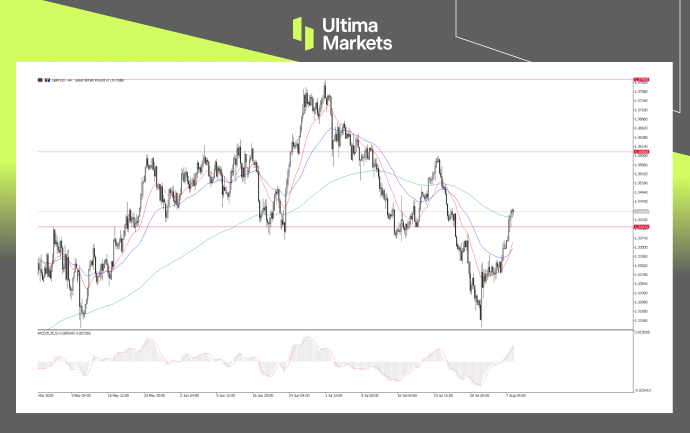
GBPUSD, 4-H Chart Analysis | Source: Ultima market MT5
The British Pound (GBP) staged rebound against the U.S. Dollar on post BoE meeting, with GBP/USD reclaiming the 1.3400 handle, despite recent bearish momentum triggered by soft UK macro data and mixed sentiment following the Bank of England’s rate cut.
The pair’s move back above 1.3400 is seen by some traders as a sign of restoring buying interest, especially amid a pullback in broader US dollar consolidation. However, analysts remain cautious about the sustainability of this recovery.
“Pound strength was boosted by a hawkish tone from the BoE, but whether it can hold is questionable, given the UK economy remains under pressure,” said Shawn Lee.
Disclaimer
Comments, news, research, analysis, price, and all information contained in the article only serve as general information for readers and do not suggest any advice. Ultima Markets has taken reasonable measures to provide up-to-date information, but cannot guarantee accuracy, and may modify without notice. Ultima Markets will not be responsible for any loss incurred due to the application of the information provided.