This website is managed by Ultima Markets’ international entities, and it’s important to emphasise that they are not subject to regulation by the FCA in the UK. Therefore, you must understand that you will not have the FCA’s protection when investing through this website – for example:
You will not be guaranteed Negative Balance Protection
You will not be protected by FCA’s leverage restrictions
You will not have the right to settle disputes via the Financial Ombudsman Service (FOS)
You will not be protected by Financial Services Compensation Scheme (FSCS)
Any monies deposited will not be afforded the protection required under the FCA Client Assets Sourcebook. The level of protection for your funds will be determined by the regulations of the relevant local regulator.
Note: UK clients are kindly invited to visit https://www.ultima-markets.co.uk/. Ultima Markets UK expects to begin onboarding UK clients in accordance with FCA regulatory requirements in 2026.
If you would like to proceed and visit this website, you acknowledge and confirm the following:
1.The website is owned by Ultima Markets’ international entities and not by Ultima Markets UK Ltd, which is regulated by the FCA.
2.Ultima Markets Limited, or any of the Ultima Markets international entities, are neither based in the UK nor licensed by the FCA.
3.You are accessing the website at your own initiative and have not been solicited by Ultima Markets Limited in any way.
4.Investing through this website does not grant you the protections provided by the FCA.
5.Should you choose to invest through this website or with any of the international Ultima Markets entities, you will be subject to the rules and regulations of the relevant international regulatory authorities, not the FCA.
Ultima Markets wants to make it clear that we are duly licensed and authorised to offer the services and financial derivative products listed on our website. Individuals accessing this website and registering a trading account do so entirely of their own volition and without prior solicitation.
By confirming your decision to proceed with entering the website, you hereby affirm that this decision was solely initiated by you, and no solicitation has been made by any Ultima Markets entity.
Ultima Markets does not have an establishment in Singapore and does not operate from Singapore.
Ultima Markets does not provide products or services to citizens or residents of Singapore, and account applications from Singapore citizens or residents will not be accepted.
If you are a citizen or resident of Singapore, please do not open an account or use Ultima Markets’ products or services.
By selecting “Acknowledge and Continue Browsing”, you confirm that you are accessing this website on your own initiative and that your access is not the result of any direct marketing, targeted advertising, solicitation, or promotional activity by Ultima Markets.
Nothing on this website constitutes an offer, solicitation, or promotion of products or services in any jurisdiction where such activity is prohibited. You are responsible for ensuring that your access to and use of this website complies with applicable local laws and regulations.
PPI 記錄生產者收到的價格,CPI 記錄消費者支付的價格。同一個商品從出廠到貨架,中間的分銷成本與零售利潤只進 CPI,不進 PPI,所以兩邊讀出的通膨可以不一致。(推薦閱讀:CPI公佈對金融市場有何影響?)
居住成本是兩邊差別最大的地方:房租在 CPI 籃子裡權重高,在 PPI 裡權重很小。CPI 的月度變化因此常被居住項目主導,而 PPI 對居住成本幾乎不敏感。
2. 覆蓋範圍的三處差別
• 進口商品不在 PPI 統計範圍內,進口價格由 BLS 的國際價格項目單獨發布;進口商品的價格變化會進 CPI。
• 稅負與分銷環節不進 PPI:貨架上的批發零售加價與消費稅只出現在 CPI 一側。
• CPI 只裝消費籃子,PPI 還統計企業購買的材料、設備與建築,以及出口與政府購買。
3. 兩邊為什麼會不同步
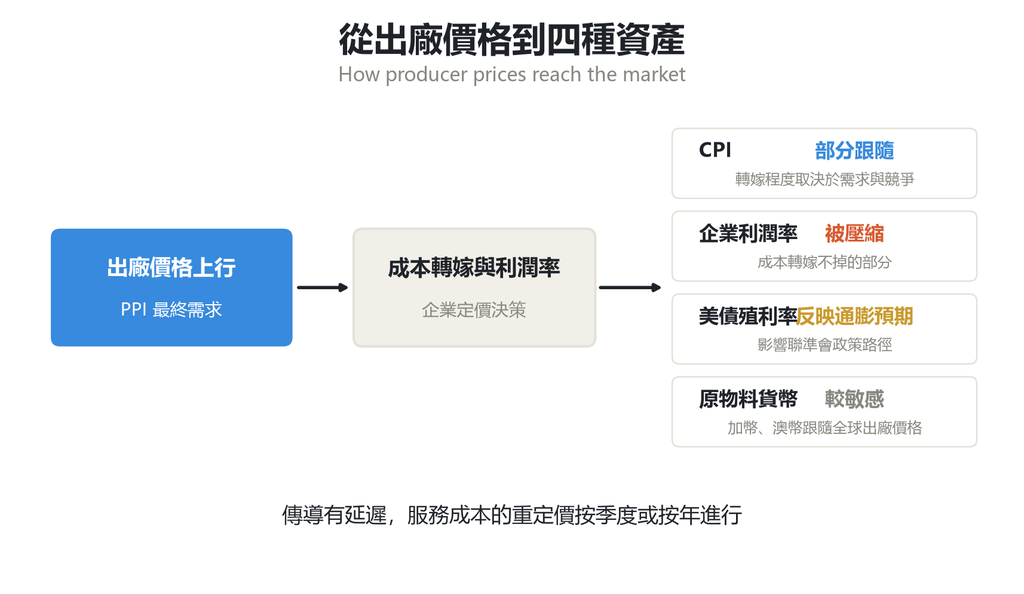
PPI 上行、CPI 平穩的組合經常出現。上游漲價之後,企業可以自己吸收成本,也可以把成本轉嫁到售價,轉嫁多少取決於競爭格局與需求強弱。舉例:原油漲價之後,如果零售端競爭激烈、需求疲軟,加油站可能只把一部分成本加進油價,其餘由煉廠與零售商的利潤吸收。反過來,CPI 上漲時 PPI 也可能平穩,因為漲幅可能全部來自分銷環節。(推薦閱讀:CPI是什么?一文看懂消费者物价指数怎么算、怎么看、如何影响美元黄金与美股)
PPI 是成本側的觀察,消費價格還取決於需求與利潤率。歷史上 PPI 與 CPI 月度方向不一致的月份並不少見,把 PPI 當成 CPI 的預告來交易,容易誤判。
對股票投資,PPI 還有另一層含義:出廠價格漲幅跟不上成本漲幅時,企業利潤率被壓縮,財報季判斷盈餘質量時要結合 PPI 一起看。
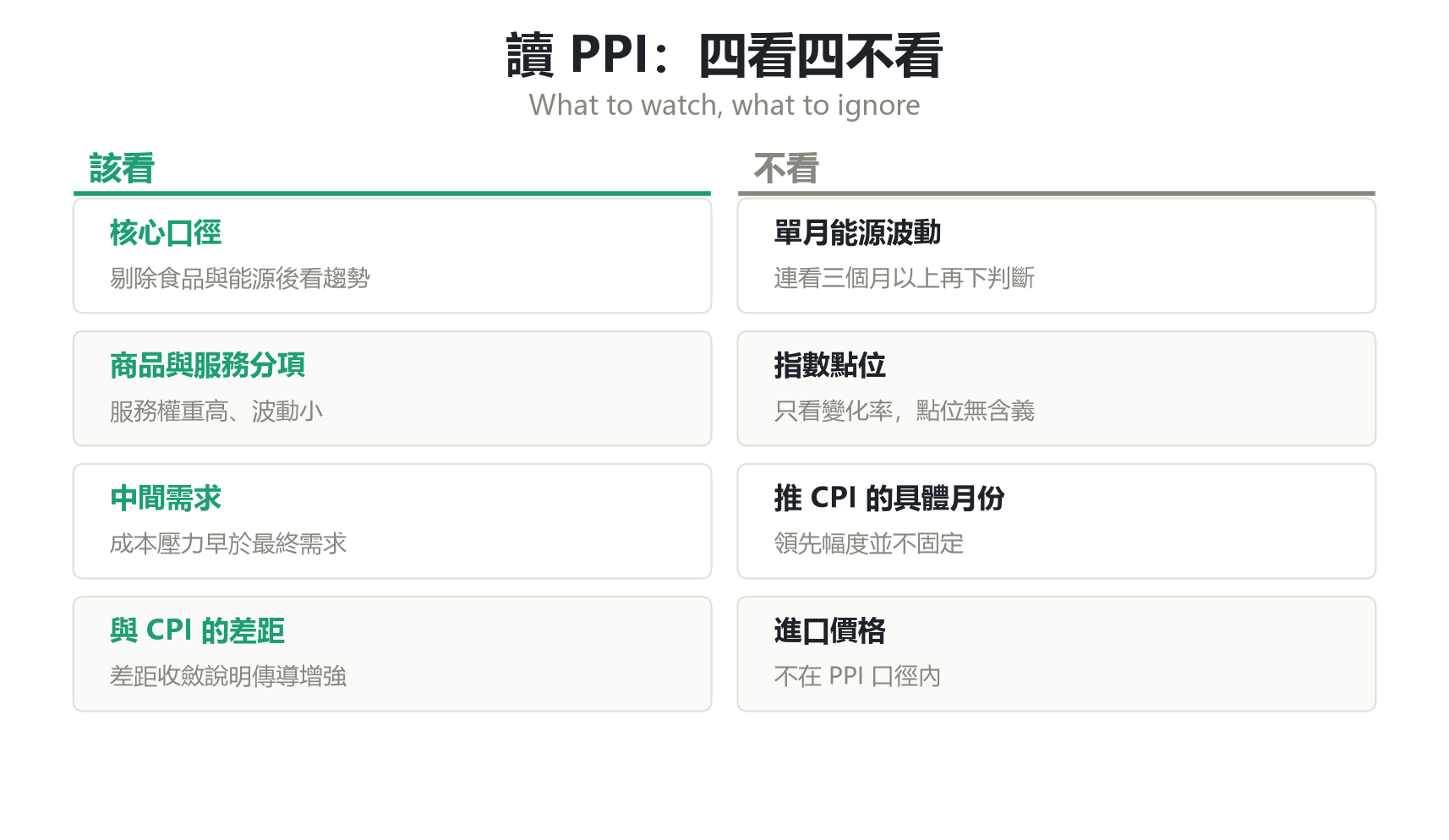
讀 PPI 的四看四不看清單
總結
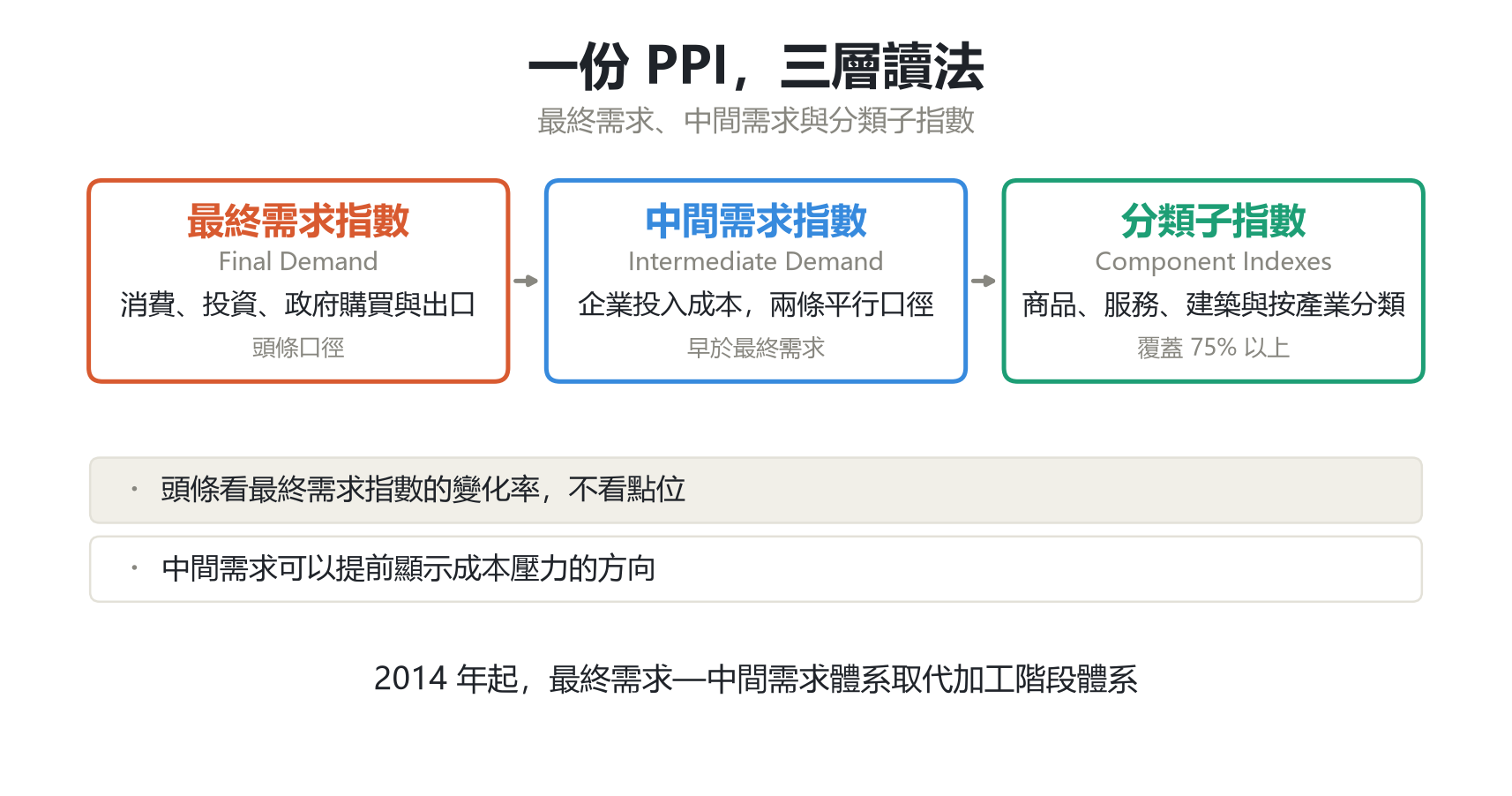
PPI 衡量生產者出廠價格,頭條看最終需求指數,趨勢看核心口徑,成本壓力看中間需求。想在數據公布前後練習判讀,可以用Ultima Markets的MT5模擬帳戶,跟蹤美元與金價在發布時點的反應,再對照正文列出的觀察清單逐項核對。當您準備好進行實際操作時,可考慮隨即開立真實帳戶,審慎進行投資佈局。您也能透過Ultima Markets訂閱電子書,或是參加Ultima教育學院講座,免費學習更多投資技巧。
FAQ
Q1:PPI 和 CPI 有什麼區別?
PPI 記生產者收到的價格,CPI 記消費者支付的價格。PPI 不含進口價格與分銷環節,CPI 只覆蓋消費籃子。
Thank you for visiting the Ultima Markets website. Please note that this website is intended for individuals residing in jurisdictions where accessing is permitted by law. Ultima and its affiliated entities do not operate in your home jurisdictions.
By clicking on ''Acknowledge'', you confirm that you are entering this website solely based on your initiative and not as a result of any specific marketing outreach. You wish to obtain information from this website based on reverse solicitation principles, in accordance with the applicable laws of your home jurisdiction.