This website is managed by Ultima Markets’ international entities, and it’s important to emphasise that they are not subject to regulation by the FCA in the UK. Therefore, you must understand that you will not have the FCA’s protection when investing through this website – for example:
You will not be guaranteed Negative Balance Protection
You will not be protected by FCA’s leverage restrictions
You will not have the right to settle disputes via the Financial Ombudsman Service (FOS)
You will not be protected by Financial Services Compensation Scheme (FSCS)
Any monies deposited will not be afforded the protection required under the FCA Client Assets Sourcebook. The level of protection for your funds will be determined by the regulations of the relevant local regulator.
Note: UK clients are kindly invited to visit https://www.ultima-markets.co.uk/. Ultima Markets UK expects to begin onboarding UK clients in accordance with FCA regulatory requirements in 2026.
If you would like to proceed and visit this website, you acknowledge and confirm the following:
1.The website is owned by Ultima Markets’ international entities and not by Ultima Markets UK Ltd, which is regulated by the FCA.
2.Ultima Markets Limited, or any of the Ultima Markets international entities, are neither based in the UK nor licensed by the FCA.
3.You are accessing the website at your own initiative and have not been solicited by Ultima Markets Limited in any way.
4.Investing through this website does not grant you the protections provided by the FCA.
5.Should you choose to invest through this website or with any of the international Ultima Markets entities, you will be subject to the rules and regulations of the relevant international regulatory authorities, not the FCA.
Ultima Markets wants to make it clear that we are duly licensed and authorised to offer the services and financial derivative products listed on our website. Individuals accessing this website and registering a trading account do so entirely of their own volition and without prior solicitation.
By confirming your decision to proceed with entering the website, you hereby affirm that this decision was solely initiated by you, and no solicitation has been made by any Ultima Markets entity.
Ultima Markets does not have an establishment in Singapore and does not operate from Singapore.
Ultima Markets does not provide products or services to citizens or residents of Singapore, and account applications from Singapore citizens or residents will not be accepted.
If you are a citizen or resident of Singapore, please do not open an account or use Ultima Markets’ products or services.
By selecting “Acknowledge and Continue Browsing”, you confirm that you are accessing this website on your own initiative and that your access is not the result of any direct marketing, targeted advertising, solicitation, or promotional activity by Ultima Markets.
Nothing on this website constitutes an offer, solicitation, or promotion of products or services in any jurisdiction where such activity is prohibited. You are responsible for ensuring that your access to and use of this website complies with applicable local laws and regulations.
War-Time Asset Allocation: Long Gold, Caution on Oil, and the “Death” of the Treasury Hedge
War-Time Asset Allocation: Long Gold, Caution on Oil, and the “Death” of the Treasury Hedge
By Ultima Markets
The joint US-Israeli “decapitation strike” against Iran has violently reset the global geopolitical risk premium. As risk aversion spikes, markets are witnessing a paradigm shift that could redefine financial correlations for the remainder of 2026.
For investors navigating this volatility, the old playbook is obsolete. Ultima Markets dissects the current “War-Time Investment Guide” to identify where true safety lies and where fatal risks are hiding.
I. The New Safe Haven Paradigm: Bonds are Broken
The most defining characteristic of this crisis is the simultaneous surge in inflation expectations and a revaluation of traditional safe havens.
Gold & King Dollar Reign Supreme
Gold has cemented its status as the ultimate store of value, shattering ceilings to trade above $5,400 per ounce—near historic highs.
Simultaneously, the US Dollar Index (DXY) has staged a fierce rally, erasing all of February’s losses. The Long Gold/Long USD trade has become the consensus consensus “flight-to-safety” position for institutional capital.
The Bond Market Failure
Crucially, US Treasuries—historically the bedrock of defensive portfolios—have failed to offer protection.
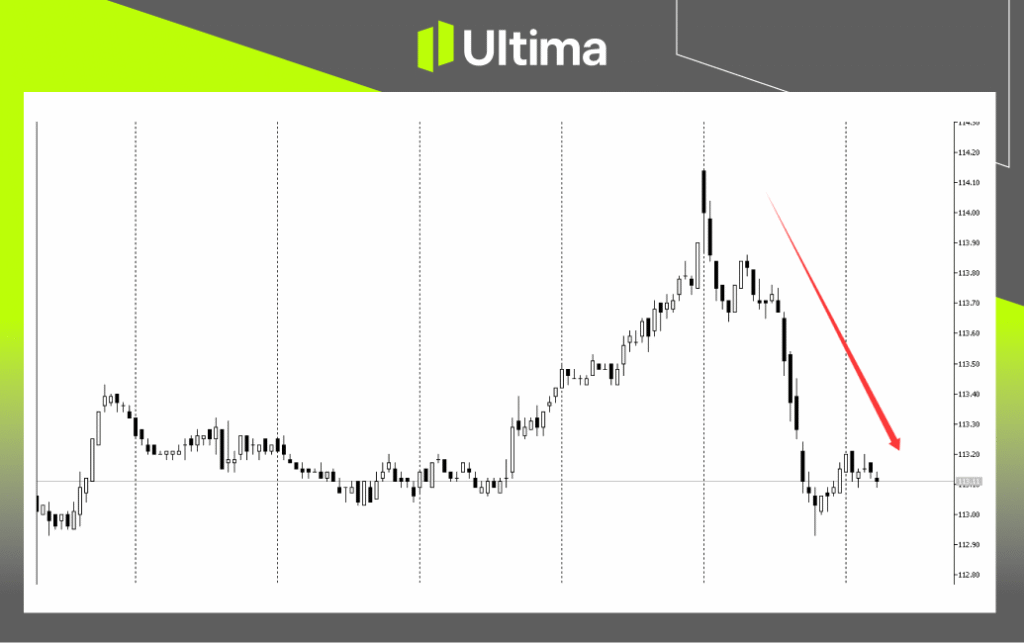
The 10-year Treasury note price opened high in the short term, but plummeted as inflation expectations drove prices sharply lower. (Source: Ultima Markets MT5)
Stagflation Fears: With European natural gas prices exploding over 30% in a single day, global inflation expectations are unanchored.
Yield Spike: Instead of falling, yields on US, UK, and German sovereign debt are rising (prices falling) as the market prices in a stagflationary shock.
Conclusion: Long-duration government bonds are currently a source of volatility, not a portfolio ballast.
II. The Primary Risk Vector: The Strait of Hormuz
Before hunting for alpha, investors must quantify the tail risk. The entire market narrative now hinges on a single choke point: The Strait of Hormuz.
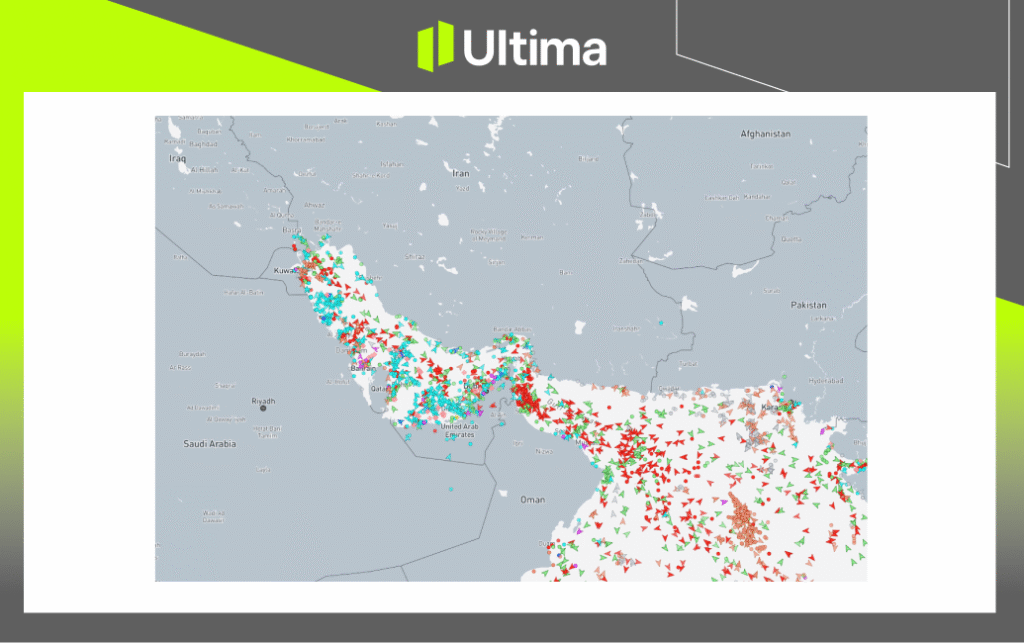
(Traffic conditions in the Strait of Hormuz)
With the Iranian Revolutionary Guard Corps (IRGC) declaring a blockade and reports of tanker disruptions, the crude market is on a knife-edge.
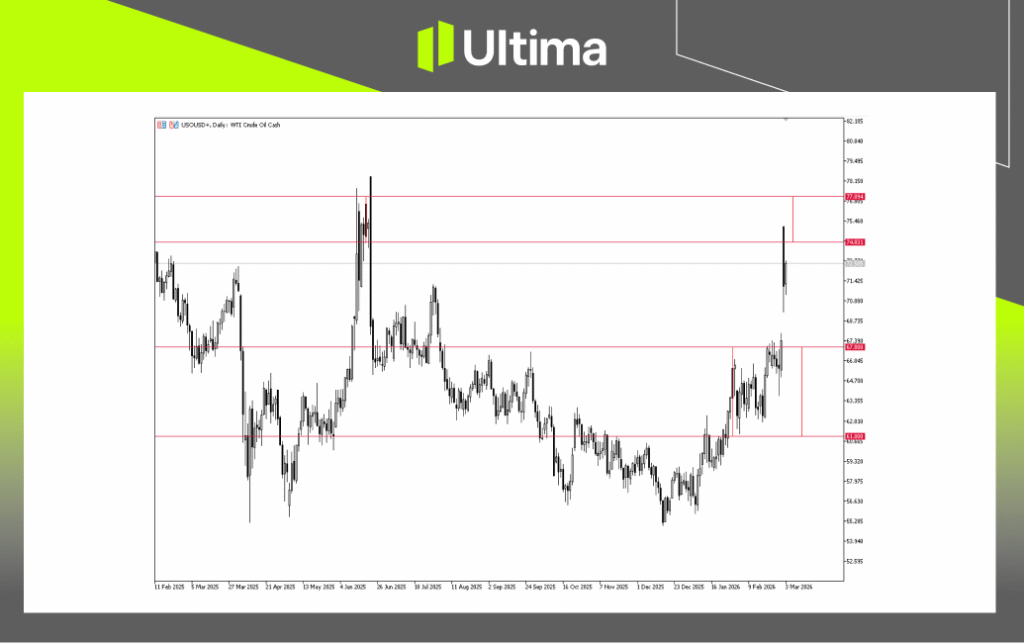
(After breaking through the $67 resistance level, the key resistance for WTI crude oil lies around $74 to $77.)
Scenario A: The “Soft” Blockade (Base Case)
If the disruption remains a “harassment” campaign or is resolved quickly:
Supply Buffer: OPEC+ holds over 2.8 million barrels per day (bpd) of spare capacity and has confirmed production hikes for April.
Price Target: Any supply gap can be filled. WTI Crude likely consolidates below $80, with key resistance zones between $74 and $77.
Scenario B: The “Hard” Blockade (Tail Risk)
A total cessation of regional exports would be catastrophic, potentially sending crude vertical toward $100 or even a localized spike to $200.
The Reality Check
Intelligence suggests the US-Israeli airstrikes specifically degraded Iranian naval capabilities. Furthermore, there is currently no evidence of naval mines being deployed.
Mining operations imply months of disruption; the current situation resembles an “ambiguous blockade” via rhetoric and skirmishes rather than a physical seal.
III. Strategic Implications: The “True” Hedge
Given the binary outcome of the energy war, how should portfolios be positioned?
1. Stick to “True” Safe Havens (Gold & USD)
Gold: Remains the primary hedge against geopolitical escalation. The path of least resistance remains higher in the initial conflict phase.
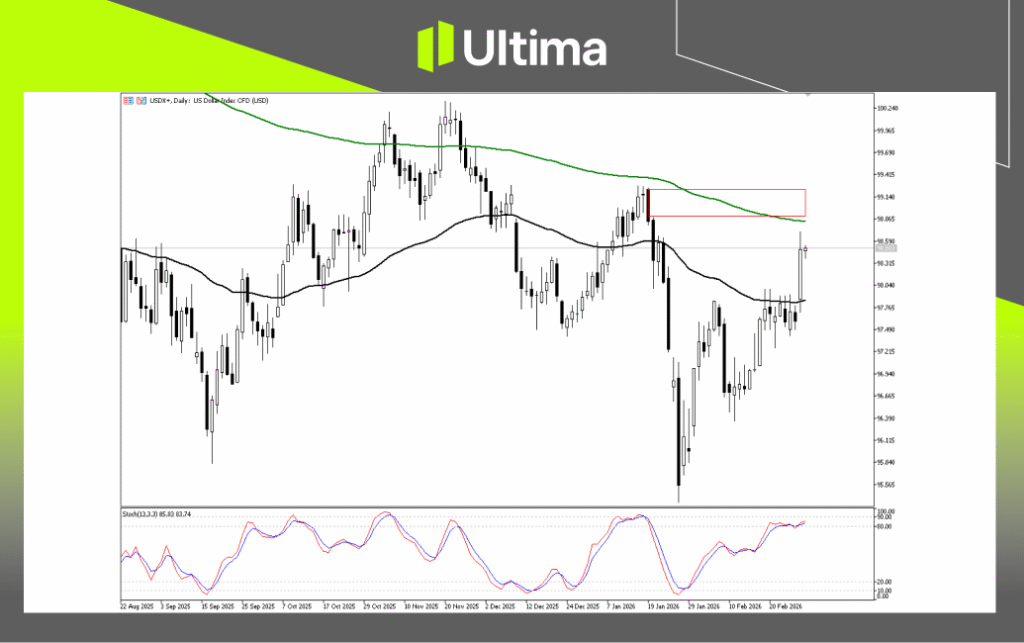
USD: Even if the DXY has rebounded to technical resistance (near the 200-day moving average and the FVG lower boundary), the macro trend favors the dollar.
The Dollar Index rebounded to the vicinity of the green 200-day moving average and the lower edge of the FVG . (Source: Ultima Markets MT5)
The Liquidity Squeeze Risk: If the conflict widens, triggering cross-asset margin calls, we could see a “dash for cash.” In this liquidity vacuum, the USD will outperform all other assets.
2. Central Bank Policy Shift
Soaring energy costs will force the ECB and BOE to aggressively dial back rate cut expectations. This amounts to a global liquidity drain.
Warning: Do not anticipate a “Fed Put” immediately. The inflationary impulse of war ties the hands of central bankers.
3. Smart Beta: Buying the Dip on Fundamentals
While short-term sentiment is toxic, the fundamental outlook for 2026 remains robust for specific assets.
Watch List: Copper (industrial demand), AUD (commodity proxy), and equities in Japan and South Korea.
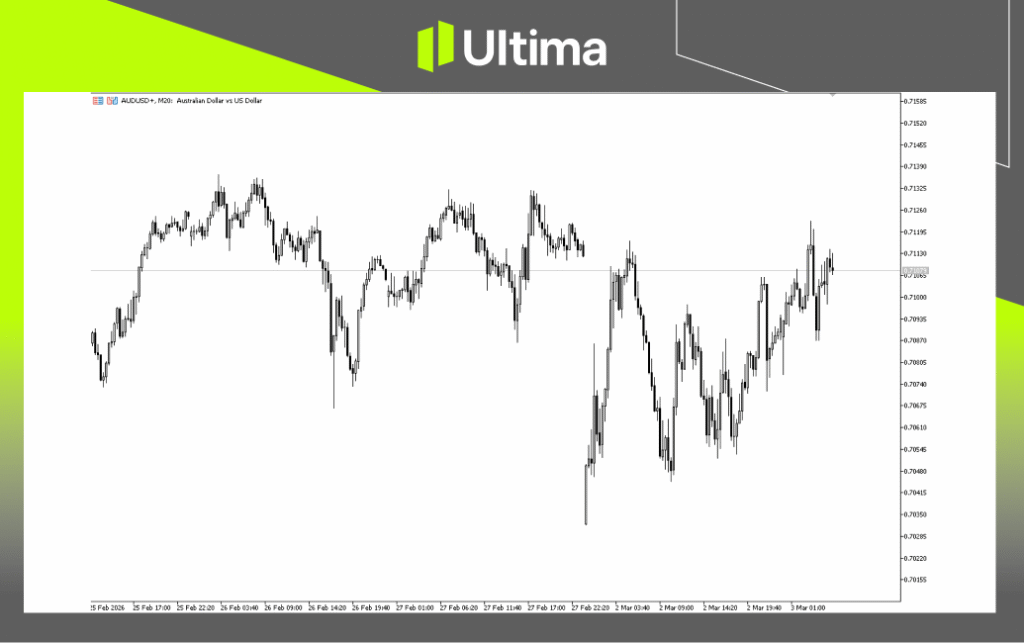
The AUD/USD recouped Monday’s gap down. (Source: Ultima Markets MT5)
Strategy: Use the current panic-induced sell-off to accumulate positions in these assets at a discount, particularly as the AUD/USD pair closes recent gaps.
Summary
Do not blindly buy the dip in Oil. The geopolitical premium is high, and volatility is lethal. instead, focus on Gold availability and USD liquidity, while waiting for the dust to settle before entering structurally strong markets like Copper and Asian equities.
Thank you for visiting the Ultima Markets website. Please note that this website is intended for individuals residing in jurisdictions where access is permitted by law. Ultima and its affiliated entities do not operate in your home jurisdiction.
By clicking ‘Acknowledge’, you confirm that you are entering this website solely on your own initiative and not as a result of any specific marketing outreach. You wish to obtain information from this website based on reverse solicitation principles, in accordance with the applicable laws of your home jurisdiction.