Important Information
This website is managed by Ultima Markets’ international entities, and it’s important to emphasise that they are not subject to regulation by the FCA in the UK. Therefore, you must understand that you will not have the FCA’s protection when investing through this website – for example:
- You will not be guaranteed Negative Balance Protection
- You will not be protected by FCA’s leverage restrictions
- You will not have the right to settle disputes via the Financial Ombudsman Service (FOS)
- You will not be protected by Financial Services Compensation Scheme (FSCS)
- Any monies deposited will not be afforded the protection required under the FCA Client Assets Sourcebook. The level of protection for your funds will be determined by the regulations of the relevant local regulator.
Note: UK clients are kindly invited to visit https://www.ultima-markets.co.uk/. Ultima Markets UK expects to begin onboarding UK clients in accordance with FCA regulatory requirements in 2026.
If you would like to proceed and visit this website, you acknowledge and confirm the following:
- 1.The website is owned by Ultima Markets’ international entities and not by Ultima Markets UK Ltd, which is regulated by the FCA.
- 2.Ultima Markets Limited, or any of the Ultima Markets international entities, are neither based in the UK nor licensed by the FCA.
- 3.You are accessing the website at your own initiative and have not been solicited by Ultima Markets Limited in any way.
- 4.Investing through this website does not grant you the protections provided by the FCA.
- 5.Should you choose to invest through this website or with any of the international Ultima Markets entities, you will be subject to the rules and regulations of the relevant international regulatory authorities, not the FCA.
Ultima Markets wants to make it clear that we are duly licensed and authorised to offer the services and financial derivative products listed on our website. Individuals accessing this website and registering a trading account do so entirely of their own volition and without prior solicitation.
By confirming your decision to proceed with entering the website, you hereby affirm that this decision was solely initiated by you, and no solicitation has been made by any Ultima Markets entity.
I confirm my intention to proceed and enter this website Please direct me to the website operated by Ultima Markets , regulated by the FCA in the United Kingdom
Ultima Markets App
Trade Anytime, Anywhere





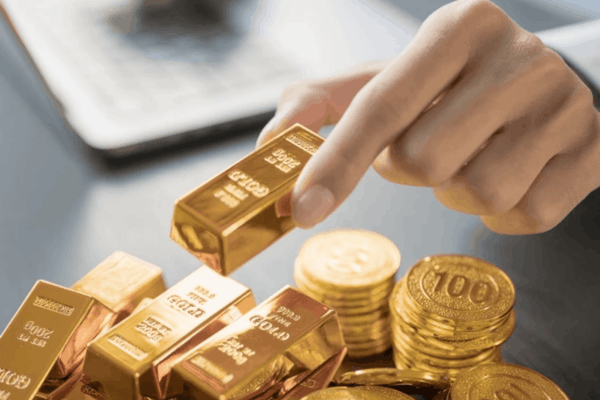
Will Gold Price Increase After Its Recent Fall?
Gold’s dramatic price movements in recent weeks have left many investors questioning its future direction. After reaching a historic high of $5,594.8 per ounce on January 29, 2026, gold faced a sharp 9% drop in a single day. The price briefly dipped below $4,700 per ounce, marking its largest daily decline since 1980.
However, just as quickly as it fell, the precious metal rebounded, climbing by 5.4%, breaking through the $5,000 mark once again. With gold now trading well below its peak, many are asking: will gold price increase again in the coming months?
The answer isn’t clear-cut, but there are strong arguments for gold’s continued rise despite the volatility. The key drivers of gold’s price, including macroeconomic factors, geopolitical uncertainty, and central bank demand, remain in place, supporting a positive outlook. However, the path forward will likely involve heightened volatility and market fluctuations.
What Triggered Gold’s Recent Fall?
The sudden drop in gold’s price was driven by a combination of overextension, policy changes, and speculative momentum. Let’s break down the factors that contributed to the steep decline.
1. Policy Shifts and a Stronger Dollar
Gold’s rise in late 2025 and early 2026 was largely driven by the expectation of a dovish Federal Reserve. However, the nomination of Kevin Warsh as the next Federal Reserve Chairman by President Trump caused a shift in market expectations.
Investors started pricing in a tighter monetary policy, which strengthened the US dollar and increased interest rate expectations. Both of these negatively impact gold.
2. Profit-Taking After a Rapid Surge
Gold’s price had surged to record highs, and when the rally became unsustainable, profit-taking set in. After such a parabolic move, the market is often left “crowded,” with many investors trying to exit at the same time. When a correction finally came, it was swift and deep.
3. Margin Calls and Forced Selling
Another factor exacerbating the drop was forced liquidation. As gold prices surged, many traders took on leveraged positions. When the price dropped sharply, margin calls were triggered, leading to forced selling. This cascade of sell orders pushed the price down further. According to TD Securities, the forced sales in precious metals “likely ran their course,” and the market should stabilise as volatility decreases.
Gold’s Rebound: What Drove the Recovery?
While the drop was steep, the subsequent rebound was equally impressive. Gold quickly regained much of its lost value, breaking above the $5,000 level. Here’s why that happened:
1. Bargain-Hunting and Investor Sentiment
After the sharp drop, many investors saw an opportunity to buy gold at a discounted price. As the risk-on sentiment returned to the market, investors quickly jumped in, pushing the price back up. Gold rose by 2.1% in early trading on February 3, 2026, after a 6% gain the day before.
2. A Softer Dollar and Macroeconomic Risk
Gold tends to do well when the US dollar weakens, as it becomes cheaper for buyers holding other currencies. A weaker dollar during the recovery phase allowed gold to climb, as it typically drives demand for the yellow metal.
Additionally, geopolitical risk and economic uncertainty continued to drive interest in gold as a safe haven.
3. Central Bank and Institutional Demand
Despite the recent volatility, central bank demand for gold remains strong. The World Gold Council reports that central banks bought 863 tonnes of gold in 2025, a historically high figure. This structural demand provides a solid base for gold prices, as central banks view gold as a hedge against inflation and currency risk.
Will Gold Price Increase in the Coming Months?
Looking ahead, the outlook for gold is positive but comes with some risks and uncertainty. Several factors support a continued upward trajectory for gold, but investors should be prepared for price swings and market volatility.

The Bullish Case: Why Gold Could Rise
There are several strong reasons why gold might continue to increase in the coming months:
1. Continued Central Bank Demand
Central banks are not slowing down their purchases of gold. According to the World Gold Council, 95% of central banks expect their gold reserves to increase over the next year. This demand provides a solid floor for the price of gold, supporting its long-term outlook.
2. Investment Demand and ETF Inflows
Gold-backed ETFs saw record inflows of $89 billion in 2025, indicating continued investor interest in gold. If geopolitical risks and inflation concerns persist, these flows are likely to continue, driving gold higher.
3. Geopolitical and Economic Risk
Gold has historically performed well during periods of economic uncertainty and geopolitical instability. With concerns over inflation, global debt levels, and regional instability, gold remains a safe haven for investors seeking to protect their portfolios from market turmoil.
4. Bullish Price Predictions
Many major financial institutions remain bullish on gold. Deutsche Bank has reaffirmed its forecast, predicting that gold could rally to $6,000 an ounce by the end of 2026.
The Bearish Case: What Could Stop Gold From Rising?
Despite the positive outlook, there are some risks that could limit gold’s upside in the near term:
1. Stronger Dollar and Higher Yields
If the US economy strengthens and the Federal Reserve signals that interest rates will remain high for an extended period, the dollar could strengthen, and yields could rise, both of which would weigh on gold. Higher rates make gold less attractive relative to yield-bearing assets.
2. Reflation or Risk-On Sentiment
If the global economy enters a period of economic reflation or a risk-on environment, where investors shift their focus to equities and higher-risk assets, gold could face downward pressure. In such a scenario, investors may pull back from gold in favor of riskier investments that offer higher returns.
3. Volatility and Market Uncertainty
As we’ve seen in the last few weeks, gold can experience extreme volatility, and forced sales can trigger significant drops. Although volatility can present buying opportunities, it may also deter short-term retail investors from jumping back into the market until things stabilise.
What to Watch Over the Coming Months
If you’re wondering whether gold will continue to rise, here are the key factors to watch in the coming months:
- Dollar strength or weakness: A weaker dollar generally benefits gold.
- Interest rate expectations: Falling rates or the expectation of rate cuts would be bullish for gold.
- ETF and investment flows: Continued inflows into gold-backed ETFs would support higher prices.
- Central bank purchases: Central banks’ buying activity is crucial for supporting gold’s long-term outlook.
- Geopolitical and economic risk: Gold tends to rise when global risks increase.
- Leverage and margin conditions: Volatility driven by margin calls could create further fluctuations.
Will Gold Price Increase Now?
Gold’s recent drop and rebound have illustrated the asset’s inherent volatility, but the underlying demand drivers for gold such as central bank purchases, investment demand, and geopolitical risks remain strong.

The most realistic expectation is that gold will continue to rise in the coming months, but not without price swings and volatility along the way.
If you’re considering investing in gold, it’s important to stay informed about the key drivers and be prepared for potential market fluctuations. As the macroeconomic landscape evolves, gold will likely continue to serve as a safe haven for investors seeking protection from inflation and economic uncertainty.
FAQ
Gold dropped sharply due to profit-taking, stronger U.S. dollar, and forced selling after rapid price gains. The drop was the biggest since 1980, but a rebound followed as investors seized the opportunity to buy at lower prices.
The long-term outlook for gold is positive, driven by central bank demand and geopolitical risks, though volatility is expected in the short term.
A stronger U.S. dollar tends to lower gold prices, while a weaker dollar makes gold cheaper and can drive prices up.
Disclaimer: This content is provided for informational purposes only and does not constitute, and should not be construed as, financial, investment, or other professional advice. No statement or opinion contained here in should be considered a recommendation by Ultima Markets or the author regarding any specific investment product, strategy, or transaction. Readers are advised not to rely solely on this material when making investment decisions and should seek independent advice where appropriate.
Latest Articles

FOLLOW US






Ultima Markets is a member of The Financial Commission, an international independent body responsible for resolving disputes in the Forex and CFD markets.

All clients of Ultima Markets are protected under insurance coverage provided by Willis Towers Watson (WTW), a global insurance brokerage established in 1828, with claims eligibility up to US$1,000,000 per account.

Ultima Markets is the first United CFD broker to be part of the United Nations Global Compact.
FOLLOW US
TRADE WITH US
RISK DISCLOSURE
Risk Warning:
Trading leveraged financial products, including Contracts for Difference (CFDs), carries a high level of risk and may result in losses exceeding your initial investment. These products are not suitable for all investors and should only be traded with funds you can afford to lose. You do not own or have any rights to the underlying assets of these derivatives (e.g., entitlement to dividends). Please ensure you fully understand the associated risks. Before trading, consider your level of experience, investment objectives, and seek independent financial advice if necessary. Refer to our legal documents and disclosures before making any trading decisions.
General Advice Warning:
The information provided on this website is general in nature and does not take into account your personal objectives, financial situation, or needs. Before acting on any advice, you should assess its appropriateness in light of your individual circumstances and consult our legal documentation.
Regional Restrictions:
The information and services on this website are not intended for residents of certain jurisdictions, including but not limited to the United States, United Kingdom, Singapore, and any jurisdictions subject to international sanctions. For further information, please contact our customer support team.
Regulatory Information:
Ultima Markets is a trading name shared amongst multiple entities operating in various jurisdictions. These following entities are authorised to operate under the Ultima Markets brand and trademarks.
-
Ultima Markets UK Limited, reference number 470325, is authorised and regulated by the Financial Conduct Authority (FCA). Registered address: 1 Blossom Yard, Fourth Floor, London, E1 6RS, UNITED KINGDOM.
-
Ultima Markets Ltd is authorised and regulated by the Financial Services Commission (FSC) of Mauritius as a Full-Service Investment Dealer (excluding Underwriting), under licence number GB 23201593.
Registered address: 2nd Floor, The Catalyst, 40 Silicon Avenue, Ebene Cybercity, 72201, Mauritius.
-
Ultima Markets EU OÜ, incorporated in Estonia with registry code 17134727. Registered address: Harju maakond, Tallinn, Kristiine linnaosa, Seebi tn 1-1501, 11316. This entity does not offer regulated financial products or provide trading services.

Copyright © 2026 Ultima Markets Ltd. All rights reserved.
-

Messenger


Continue on Messenger
Take the conversation to your Messenger account. You can return anytime.
Scan the QR code and then send the message that appears in your Messenger.
Open Messenger on this device.
-

Instagram

Continue on Instagram
Take the conversation to your Instagram account. You can return anytime.
Scan the QR code to open Instagram. Follow @ultima_markets to send a DM.
Open Instagram on this device.
-

Live Chat
-

