Important Information
This website is managed by Ultima Markets’ international entities, and it’s important to emphasise that they are not subject to regulation by the FCA in the UK. Therefore, you must understand that you will not have the FCA’s protection when investing through this website – for example:
- You will not be guaranteed Negative Balance Protection
- You will not be protected by FCA’s leverage restrictions
- You will not have the right to settle disputes via the Financial Ombudsman Service (FOS)
- You will not be protected by Financial Services Compensation Scheme (FSCS)
- Any monies deposited will not be afforded the protection required under the FCA Client Assets Sourcebook. The level of protection for your funds will be determined by the regulations of the relevant local regulator.
Note: UK clients are kindly invited to visit https://www.ultima-markets.co.uk/. Ultima Markets UK expects to begin onboarding UK clients in accordance with FCA regulatory requirements in 2026.
If you would like to proceed and visit this website, you acknowledge and confirm the following:
- 1.The website is owned by Ultima Markets’ international entities and not by Ultima Markets UK Ltd, which is regulated by the FCA.
- 2.Ultima Markets Limited, or any of the Ultima Markets international entities, are neither based in the UK nor licensed by the FCA.
- 3.You are accessing the website at your own initiative and have not been solicited by Ultima Markets Limited in any way.
- 4.Investing through this website does not grant you the protections provided by the FCA.
- 5.Should you choose to invest through this website or with any of the international Ultima Markets entities, you will be subject to the rules and regulations of the relevant international regulatory authorities, not the FCA.
Ultima Markets wants to make it clear that we are duly licensed and authorised to offer the services and financial derivative products listed on our website. Individuals accessing this website and registering a trading account do so entirely of their own volition and without prior solicitation.
By confirming your decision to proceed with entering the website, you hereby affirm that this decision was solely initiated by you, and no solicitation has been made by any Ultima Markets entity.
I confirm my intention to proceed and enter this website Please direct me to the website operated by Ultima Markets , regulated by the FCA in the United Kingdom
Ultima Markets App
Trade Anytime, Anywhere





Will a US Housing Crash Happen in 2026?
The U.S. housing market is no stranger to volatility, with past events like the 2008 financial crisis leaving lasting scars on the economy. In recent years, concerns about a potential housing crash have resurfaced, driven by rising mortgage rates, economic uncertainty, and changes in home affordability.
As we move further into 2026, many wonder: is another housing crash looming, or is the market simply adjusting to a new normal? Let’s dive into the key factors driving this potential downturn, analyse the mechanics behind it, and assess what the future holds.
What Is a Housing Crash?
A housing crash refers to a sharp and sustained decline in property values, often accompanied by an increase in foreclosures and reduced market activity.
Such crashes are typically driven by a variety of factors, including oversupply, economic recessions, and poor lending practices. The most infamous U.S. housing crash occurred in 2008, triggered by the subprime mortgage crisis, which caused a global financial meltdown.
Fast forward to 2026, and the U.S. housing market faces a fresh set of challenges that could lead to a downturn. However, the conditions today are different from those leading up to the 2008 crash, and the potential for a crash, while real, might not be as dire as many fear.
The Mechanics of a Housing Crash
Several key factors contribute to a housing crash. Understanding these can shed light on the current risks in the market:
1. Rising Mortgage Rates
One of the most significant triggers for a housing crash is rising mortgage rates.

In recent months, mortgage rates have climbed significantly as the Federal Reserve continues to raise interest rates to combat inflation.
Higher mortgage rates increase the cost of borrowing, making homeownership less affordable for many prospective buyers. When fewer people can afford homes, demand decreases, leading to falling home prices.
This slowdown in demand, coupled with higher costs, can quickly lead to a correction or even a full housing crash, especially in markets that are heavily reliant on new buyers.
2. Home Price Overvaluation
Home prices in many parts of the U.S. have risen at an unsustainable pace over the past decade. The rapid price increases, particularly in suburban and rural areas, have made homes unaffordable for a significant portion of the population. As home prices become overvalued relative to income levels, the market risks a bubble that could eventually burst.

When this bubble pops, the result is often a housing crash, where home prices plummet, and many homeowners find themselves underwater, owing more than their homes are worth. This can lead to an increase in foreclosures and a flood of homes on the market, further depressing prices.
3. Economic Recession
A broader economic slowdown can have a significant impact on the housing market. As the economy contracts, unemployment rises, and consumer spending decreases. This affects demand for housing as potential buyers hold off on purchasing homes, and existing homeowners struggle to keep up with mortgage payments.
In a recessionary environment, the housing market can experience a sharp correction as affordability becomes even more strained.
The combination of rising unemployment and lower consumer confidence can lead to a housing crash as the economic pressures mount.
4. Speculative Investment and Overbuilding
During periods of rapid price growth, the housing market often attracts speculative investors who buy properties with the hope that prices will continue to rise.
While speculative behavior can drive prices higher in the short term, it can also contribute to a housing crash when these investors begin to sell off properties in panic, leading to an oversupply of homes and a subsequent price decline.
In addition, overbuilding during boom periods can lead to a surplus of homes that exceeds demand, further contributing to a market correction.
5. Declining Affordability
As home prices rise, they increasingly outpace wage growth, making it more difficult for average buyers to enter the market. This affordability crisis has been brewing for years, with many buyers struggling to find homes within their budget.
When the market reaches a tipping point, where the majority of people can no longer afford homes, demand drops significantly.
This decline in demand, coupled with the rising costs of homeownership, can spark a housing crash as sellers lower prices to attract buyers.
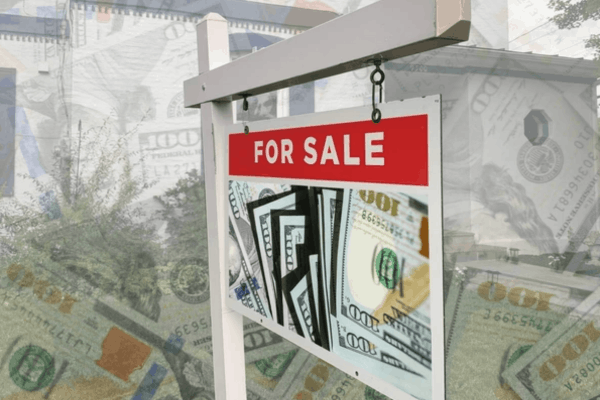
The Current US Housing Market: A Softening or A Crash?
In 2026, the U.S. housing market is showing signs of both strength and vulnerability. On one hand, inventory remains low in many markets, supporting prices even as demand softens.
On the other hand, rising mortgage rates and declining affordability are putting downward pressure on the market. Here are a few key observations:
- Home Price Growth Has Slowed: According to recent data, home prices have leveled off in many areas, with some cities even seeing slight declines. This slowdown, while not a crash, indicates a potential correction is underway.
- High Mortgage Rates Impacting Demand: Mortgage rates have risen to their highest levels in over a decade, making it more difficult for buyers to afford homes. As a result, many prospective buyers are either postponing their purchases or opting for smaller homes.
- Affordability Crisis Deepening: As home prices remain high and wages fail to keep pace, many would-be buyers are increasingly priced out of the market. This is especially true in high-demand markets like California and New York, where median home prices have skyrocketed in recent years.
The Likelihood of a Housing Crash in 2026
While many of the signs are pointing toward a slowdown, the current data does not suggest a full-blown housing crash like that of 2008. However, the market is likely to experience a period of correction, with home prices stabilising or declining in some areas as mortgage rates and affordability continue to strain the market.
A housing crash is more likely in regions that have experienced rapid price increases and where speculative investment is high. On the other hand, markets with more balanced growth and lower levels of speculation may see a gentler correction without a sharp decline in prices.
What Does This Mean for Buyers and Sellers?
For buyers, this could be an opportunity to enter the market as price growth slows. However, with higher mortgage rates and affordability still a challenge, prospective buyers should be prepared for a more competitive market and consider waiting for further price adjustments in the coming months.
For sellers, now may be a good time to take advantage of any remaining equity before prices fall further. Sellers who can afford to wait may see better conditions in the future, but those looking to sell in the short term may need to adjust their expectations regarding pricing.
Conclusion
In summary, while the risk of a housing crash in the U.S. is real, the current market conditions point more toward a soft landing rather than a steep decline. Rising mortgage rates, price overvaluation, and declining affordability are all factors contributing to a market correction.
However, with inventory still low in many areas and demand holding up in certain markets, it’s unlikely that the market will experience a crash on the scale of 2008.
FAQ
A housing crash is caused by factors like rising mortgage rates, overvalued home prices, economic downturns, and reduced affordability.
While a crash isn’t certain, the US housing market is facing pressures from high mortgage rates and affordability issues, which may lead to a market correction.
Buy within your budget, focus on long-term affordability, avoid speculative investments, and stay informed about market trends.
Disclaimer: This content is provided for informational purposes only and does not constitute, and should not be construed as, financial, investment, or other professional advice. No statement or opinion contained here in should be considered a recommendation by Ultima Markets or the author regarding any specific investment product, strategy, or transaction. Readers are advised not to rely solely on this material when making investment decisions and should seek independent advice where appropriate.
Latest Articles



FOLLOW US






Ultima Markets is a member of The Financial Commission, an international independent body responsible for resolving disputes in the Forex and CFD markets.

All clients of Ultima Markets are protected under insurance coverage provided by Willis Towers Watson (WTW), a global insurance brokerage established in 1828, with claims eligibility up to US$1,000,000 per account.

Ultima Markets is the first United CFD broker to be part of the United Nations Global Compact.
FOLLOW US
TRADE WITH US
RISK DISCLOSURE
Risk Warning:
Trading leveraged financial products, including Contracts for Difference (CFDs), carries a high level of risk and may result in losses exceeding your initial investment. These products are not suitable for all investors and should only be traded with funds you can afford to lose. You do not own or have any rights to the underlying assets of these derivatives (e.g., entitlement to dividends). Please ensure you fully understand the associated risks. Before trading, consider your level of experience, investment objectives, and seek independent financial advice if necessary. Refer to our legal documents and disclosures before making any trading decisions.
General Advice Warning:
The information provided on this website is general in nature and does not take into account your personal objectives, financial situation, or needs. Before acting on any advice, you should assess its appropriateness in light of your individual circumstances and consult our legal documentation.
Regional Restrictions:
The information and services on this website are not intended for residents of certain jurisdictions, including but not limited to the United States, United Kingdom, Singapore, and any jurisdictions subject to international sanctions. For further information, please contact our customer support team.
Regulatory Information:
Ultima Markets is a trading name shared amongst multiple entities operating in various jurisdictions. These following entities are authorised to operate under the Ultima Markets brand and trademarks.
-
Ultima Markets UK Limited, reference number 470325, is authorised and regulated by the Financial Conduct Authority (FCA). Registered address: 1 Blossom Yard, Fourth Floor, London, E1 6RS, UNITED KINGDOM.
-
Ultima Markets Ltd is authorised and regulated by the Financial Services Commission (FSC) of Mauritius as a Full-Service Investment Dealer (excluding Underwriting), under licence number GB 23201593.
Registered address: 2nd Floor, The Catalyst, 40 Silicon Avenue, Ebene Cybercity, 72201, Mauritius.
-
Ultima Markets EU OÜ, incorporated in Estonia with registry code 17134727. Registered address: Harju maakond, Tallinn, Kristiine linnaosa, Seebi tn 1-1501, 11316. This entity does not offer regulated financial products or provide trading services.

Copyright © 2026 Ultima Markets Ltd. All rights reserved.
-

Messenger


Continue on Messenger
Take the conversation to your Messenger account. You can return anytime.
Scan the QR code and then send the message that appears in your Messenger.
Open Messenger on this device.
-

Instagram

Continue on Instagram
Take the conversation to your Instagram account. You can return anytime.
Scan the QR code to open Instagram. Follow @ultima_markets to send a DM.
Open Instagram on this device.
-

Live Chat
-

