This website is managed by Ultima Markets’ international entities, and it’s important to emphasise that they are not subject to regulation by the FCA in the UK. Therefore, you must understand that you will not have the FCA’s protection when investing through this website – for example:
You will not be guaranteed Negative Balance Protection
You will not be protected by FCA’s leverage restrictions
You will not have the right to settle disputes via the Financial Ombudsman Service (FOS)
You will not be protected by Financial Services Compensation Scheme (FSCS)
Any monies deposited will not be afforded the protection required under the FCA Client Assets Sourcebook. The level of protection for your funds will be determined by the regulations of the relevant local regulator.
Note: UK clients are kindly invited to visit https://www.ultima-markets.co.uk/. Ultima Markets UK expects to begin onboarding UK clients in accordance with FCA regulatory requirements in 2026.
If you would like to proceed and visit this website, you acknowledge and confirm the following:
1.The website is owned by Ultima Markets’ international entities and not by Ultima Markets UK Ltd, which is regulated by the FCA.
2.Ultima Markets Limited, or any of the Ultima Markets international entities, are neither based in the UK nor licensed by the FCA.
3.You are accessing the website at your own initiative and have not been solicited by Ultima Markets Limited in any way.
4.Investing through this website does not grant you the protections provided by the FCA.
5.Should you choose to invest through this website or with any of the international Ultima Markets entities, you will be subject to the rules and regulations of the relevant international regulatory authorities, not the FCA.
Ultima Markets wants to make it clear that we are duly licensed and authorised to offer the services and financial derivative products listed on our website. Individuals accessing this website and registering a trading account do so entirely of their own volition and without prior solicitation.
By confirming your decision to proceed with entering the website, you hereby affirm that this decision was solely initiated by you, and no solicitation has been made by any Ultima Markets entity.
Ultima Markets does not have an establishment in Singapore and does not operate from Singapore.
Ultima Markets does not provide products or services to citizens or residents of Singapore, and account applications from Singapore citizens or residents will not be accepted.
If you are a citizen or resident of Singapore, please do not open an account or use Ultima Markets’ products or services.
By selecting “Acknowledge and Continue Browsing”, you confirm that you are accessing this website on your own initiative and that your access is not the result of any direct marketing, targeted advertising, solicitation, or promotional activity by Ultima Markets.
Nothing on this website constitutes an offer, solicitation, or promotion of products or services in any jurisdiction where such activity is prohibited. You are responsible for ensuring that your access to and use of this website complies with applicable local laws and regulations.
Discover what the currency of South Africa is, how to trade the Rand (ZAR) in forex, and key tips for trading USD/ZAR pairs profitably.
What Is the Currency of South Africa?
South Africa’s official currency is the South African Rand (ZAR). Recognized by the symbol “R”, it is issued and regulated by the South African Reserve Bank (SARB). The Rand is a free-floating currency and plays a significant role in global emerging markets.
Overview of the South African Rand
The Rand’s importance extends beyond South Africa’s borders. As a regional anchor currency, it is also accepted in countries such as Namibia, Lesotho, and Eswatini (formerly Swaziland). These nations either use the Rand directly or peg their local currencies to it at a 1:1 ratio, simplifying cross-border trade and economic coordination within the Common Monetary Area (CMA).
Moreover, many South African corporations operate in neighboring countries, effectively making the Rand a practical business currency across Southern Africa. Its cross-border usage enhances liquidity and makes it one of the most influential currencies on the continent.
Introduced in 1961, the South African Rand replaced the South African pound. It derives its name from the Witwatersrand, the ridge where Johannesburg’s gold deposits were discovered. The Rand is subdivided into 100 cents and is known for its volatility, often influenced by political developments, commodity prices, and interest rate decisions.
Currency Code: ZAR
The ISO currency code for the South African Rand is ZAR, which comes from the Dutch “Zuid-Afrikaanse Rand”.
South African Banknotes and Coins
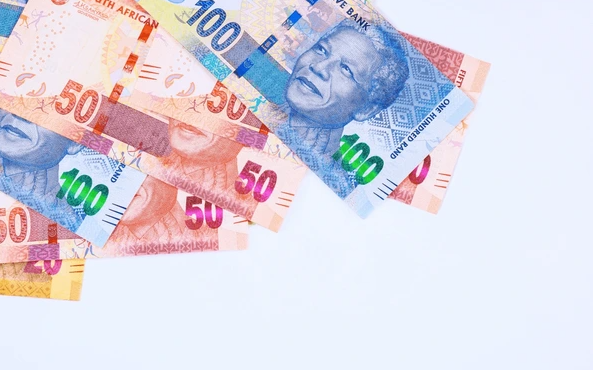
The physical currency of South Africa is well-designed to reflect the nation’s rich heritage, cultural pride, and biodiversity. Issued by the South African Reserve Bank, both banknotes and coins are widely used across the country for daily transactions, from small retail purchases to large-scale commercial exchanges.
The security features embedded in South African currency make counterfeiting extremely difficult, ensuring confidence in cash transactions. The design of both notes and coins also serves an educational and unifying role, celebrating national icons like Nelson Mandela and the Big Five wildlife species.
Banknotes
The South African Rand is available in the following denominations:
R10
R20
R50
R100
R200
These notes feature the image of Nelson Mandela on the front and images of South Africa’s “Big Five” animals on the back: Lion, Leopard, Elephant, Rhinoceros, and Buffalo.
Coins
Coins in circulation include:
10c
20c
50c
R1
R2
R5
South African coins are widely accepted and often used in daily transactions.
Currency of South Africa in Forex Trading
The ZAR is one of the most traded currencies among emerging markets. It is especially popular among forex traders due to its high volatility and strong correlation with gold prices. The South African economy is commodity-driven, so movements in precious metals like gold and platinum often affect the Rand’s value.
Popular ZAR Currency Pairs
Some of the most commonly traded ZAR currency pairs include:
USD/ZAR – U.S. Dollar vs. South African Rand
EUR/ZAR – Euro vs. South African Rand
GBP/ZAR – British Pound vs. South African Rand
ZAR/JPY – South African Rand vs. Japanese Yen
These pairs are known for their wide price swings, offering both opportunities and risks for traders.
South African Currency Rand to USD
The USD/ZAR is one of the most volatile forex pairs. Factors such as U.S. monetary policy, South African inflation data, and commodity exports all play a role in the exchange rate. Traders monitor this pair closely for breakout opportunities.
Best Time to Trade USD/ZAR
The optimal time to trade USD/ZAR is during the overlap of the London and New York sessions (14:00 to 18:00 SAST). This is when both markets are active, resulting in higher volatility and tighter spreads.
How to Trade ZAR in Forex
Trading the South African Rand (ZAR) in the forex market requires a clear understanding of both global and local economic dynamics. Here’s a more detailed guide to get started:
Choose a Forex Broker
Select a forex broker that offers access to ZAR currency pairs. Make sure the broker provides competitive spreads, a robust trading platform, and essential tools like economic calendars and technical indicators.
Understand the Market Drivers
The ZAR is heavily influenced by:
Commodity prices (especially gold and platinum)
South African political stability
Monetary policy from the South African Reserve Bank (SARB)
Global risk sentiment and U.S. dollar movements
Staying updated with these factors will help you make informed trading decisions.
Use Technical and Fundamental Analysis
Technical analysis: Use charts, support and resistance levels, trendlines, and indicators like RSI, MACD, and Bollinger Bands to analyze price movement.
Fundamental analysis: Track macroeconomic indicators such as GDP, inflation, employment data, and commodity exports that affect ZAR.
Apply Risk Management Strategies
ZAR pairs are known for high volatility. Protect your capital by:
Using stop-loss and take-profit orders
Keeping position sizes manageable
Avoiding over-leveraging, especially in thin market hours
Practice with a Demo Account
Before going live, practice your strategies with a demo account. This helps build confidence and test systems in real-time conditions without risking real money.
Monitor Market Sentiment
Use tools like the Commitment of Traders (COT) report or news sentiment indicators to gauge market positioning on ZAR.
Start Small and Scale Up
Once you’re comfortable, start trading ZAR with small positions. As you gain experience, you can scale your trades according to your risk appetite and market understanding.
Conclusion
The currency of South Africa, the South African Rand (ZAR), is not only essential for local transactions but also plays a vital role in the global forex market. With its link to commodities and economic indicators, it offers unique opportunities for informed traders.
Whether you’re visiting South Africa, analyzing emerging markets, or exploring forex trading, understanding the Rand is crucial for making educated decisions.
Stay ahead in the forex markets with Ultima Markets, your trusted partner for expert trading strategies and insights.
Share Now
Disclaimer:This content is provided for informational purposes only and does not constitute, and should not be construed as, financial, investment, or other professional advice. No statement or opinion contained herein should be considered a recommendation by Ultima Markets or the author regarding any specific investment product, strategy, or transaction. Readers are advised not to rely solely on this material when making investment decisions and should seek independent advice where appropriate.
Thank you for visiting the Ultima Markets website. Please note that this website is intended for individuals residing in jurisdictions where access is permitted by law. Ultima and its affiliated entities do not operate in your home jurisdiction.
By clicking ‘Acknowledge’, you confirm that you are entering this website solely on your own initiative and not as a result of any specific marketing outreach. You wish to obtain information from this website based on reverse solicitation principles, in accordance with the applicable laws of your home jurisdiction.