
Ultima Markets App
Trade Anytime, Anywhere





Important Information
This website is managed by Ultima Markets’ international entities, and it’s important to emphasise that they are not subject to regulation by the FCA in the UK. Therefore, you must understand that you will not have the FCA’s protection when investing through this website – for example:
- You will not be guaranteed Negative Balance Protection
- You will not be protected by FCA’s leverage restrictions
- You will not have the right to settle disputes via the Financial Ombudsman Service (FOS)
- You will not be protected by Financial Services Compensation Scheme (FSCS)
- Any monies deposited will not be afforded the protection required under the FCA Client Assets Sourcebook. The level of protection for your funds will be determined by the regulations of the relevant local regulator.
Note: Ultima Markets is currently developing a dedicated website for UK clients and expects to onboard UK clients under FCA regulations in 2026.
If you would like to proceed and visit this website, you acknowledge and confirm the following:
- 1.The website is owned by Ultima Markets’ international entities and not by Ultima Markets UK Ltd, which is regulated by the FCA.
- 2.Ultima Markets Limited, or any of the Ultima Markets international entities, are neither based in the UK nor licensed by the FCA.
- 3.You are accessing the website at your own initiative and have not been solicited by Ultima Markets Limited in any way.
- 4.Investing through this website does not grant you the protections provided by the FCA.
- 5.Should you choose to invest through this website or with any of the international Ultima Markets entities, you will be subject to the rules and regulations of the relevant international regulatory authorities, not the FCA.
Ultima Markets wants to make it clear that we are duly licensed and authorised to offer the services and financial derivative products listed on our website. Individuals accessing this website and registering a trading account do so entirely of their own volition and without prior solicitation.
By confirming your decision to proceed with entering the website, you hereby affirm that this decision was solely initiated by you, and no solicitation has been made by any Ultima Markets entity.
I confirm my intention to proceed and enter this website Please direct me to the website operated by Ultima Markets , regulated by the FCA in the United Kingdom

What Is the Currency in India?
If you are asking what is the currency in india, the official answer is the Indian Rupee. The international currency code is INR, the symbol is ₹, and 1 rupee equals 100 paise.
You will see this question in many forms, especially when people plan travel, send money, or compare exchange rates. So in this guide, we will answer what is the currency in India, then walk you through the notes and coins you will actually use, what “legal tender” means, and how payments work in modern India.
The Indian Rupee
To keep it simple, what is the currency in india comes down to one name: the Indian Rupee.
- Currency name: Indian Rupee
- Currency code: INR
- Currency symbol: ₹
- Subunit: 100 paise = 1 rupee
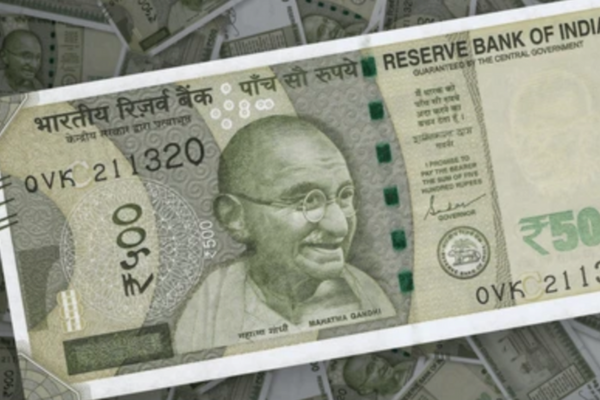
In daily life, most prices are shown with the rupee symbol, like ₹500. In banking apps, exchange platforms, and international transfers, you will usually see INR.
Who Issues Currency in India
India’s central bank, the Reserve Bank of India (RBI), is the official authority that issues banknotes and publishes public guidance on Indian currency. This is why RBI FAQs are the most reliable source when you want confirmation on what is valid and what has changed.
If your goal is accuracy, this is the key point that strengthens an article answering what is the currency in india.
Banknotes You Will See in India
Most purchases in India involve banknotes, especially if you are paying in cash at markets, smaller shops, or for transport. RBI’s currency FAQs cover India’s notes and common questions around them.
In day to day spending, the most common notes people use are:
- ₹10
- ₹20
- ₹50
- ₹100
- ₹200
- ₹500
The ₹2000 Note and What It Means Today
Many people searching what is the currency in india also worry about one specific note, the ₹2000.
RBI announced the withdrawal of ₹2000 banknotes from circulation, but it also clearly stated that ₹2000 banknotes will continue to be legal tender.
What this means in practice is straightforward. You may still come across a ₹2000 note, and it is not automatically “invalid.” However, many people prefer smaller notes for convenience, and RBI has provided specific deposit and exchange options through its official guidance.
A Quick Note on Old ₹500 and ₹1000 Notes
If you find older ₹500 and ₹1000 notes from the pre 2016 series, RBI explains that their legal tender status was withdrawn after November 8, 2016. In short, they are not used for normal payments today.
Coins and Paise in India
Now that you know what is the currency in india, it helps to understand how the rupee breaks down. One rupee equals 100 paise, but paise coins are not common in everyday shopping compared with rupee coins.
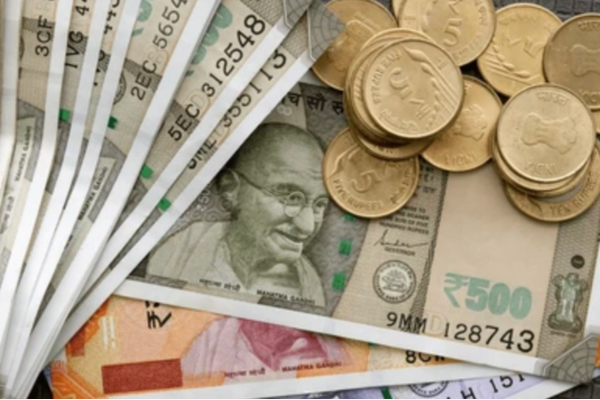
A useful detail that improves real world accuracy is that coin acceptance can have legal tender limits per transaction. This matters because some shops may refuse large quantities of coins.
RBI’s public guidance explains that:
- Coins of ₹1 and above are legal tender up to ₹1,000 in a single transaction
- 50 paise coins are legal tender up to ₹10 in a single transaction
For most readers, the takeaway is simple. Coins are valid, but carrying small notes is often easier for daily spending.
How People Pay in India Today
When readers search what is the currency in india, they are often really asking, “How will I pay when I am there?” India is a mix of cash, cards, and QR based payments.
Cash
Cash is still widely used for:
- small shops and street markets
- tips
- local transport in some areas
If you are travelling, keeping a few smaller notes like ₹10, ₹20, ₹50, and ₹100 usually makes payments smoother.
Cards
Cards are common in hotels, malls, larger restaurants, and many retail chains. Your experience will depend on where you are, so it is best to have a mix of card access and cash for smaller purchases.
UPI and QR Payments
UPI is a major part of daily payments in India. Many merchants accept QR payments.
For inbound travellers, NPCI describes UPI ONE WORLD as a prepaid payment instrument linked to UPI for visitors. It is designed for inbound travellers and can be issued based on passport and valid visa, then used for merchant transactions across the country.
This is a strong modern addition because it connects the currency basics to how money actually moves in India today.
Bringing Money Into India and Declaring Cash
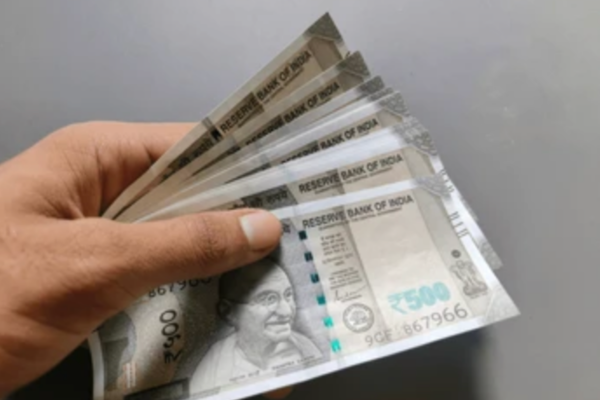
The Reserve Bank of India states that residents returning to India can bring in Indian currency notes up to ₹25,000 (with specific conditions depending on where they are arriving from).
RBI also notes that certain non residents visiting India may bring in Indian notes up to ₹25,000 under specific entry conditions, including airport entry requirements.
For foreign currency, RBI’s guidance explains that foreign exchange can be brought in freely, but you must declare it if currency notes or travellers cheques exceed USD 10,000, or if foreign currency notes alone exceed USD 5,000.
Quick FAQ
What is the currency in India?
The currency in India is the Indian Rupee, with currency code INR and symbol ₹. One rupee equals 100 paise.
Is the ₹2000 note still valid?
Yes. RBI states that ₹2000 banknotes continue to be legal tender even though they were withdrawn from circulation.
Are old ₹500 and ₹1000 notes valid?
RBI explains that older ₹500 and ₹1000 notes issued up to November 8, 2016 had their legal tender status withdrawn, so they are not used for normal transactions today.
What does INR stand for?
INR is the international currency code for the Indian Rupee used in banking and FX markets.
Conclusion
India’s currency is more than a label on a price tag. For traders, the rupee sits at the intersection of local policy signals, global USD moves, and the real flow of money through trade and corporate hedging.
If you keep an eye on the RBI’s communication, key macro releases, and shifts in risk sentiment, you will read INR headlines with far more clarity. From there, it becomes easier to choose the right instrument, time your attention around liquidity windows, and manage risk with context instead of guesswork.
Disclaimer: This content is provided for informational purposes only and does not constitute, and should not be construed as, financial, investment, or other professional advice. No statement or opinion contained here in should be considered a recommendation by Ultima Markets or the author regarding any specific investment product, strategy, or transaction. Readers are advised not to rely solely on this material when making investment decisions and should seek independent advice where appropriate.
Latest Articles



FOLLOW US






Ultima Markets is a member of The Financial Commission, an international independent body responsible for resolving disputes in the Forex and CFD markets.

All clients of Ultima Markets are protected under insurance coverage provided by Willis Towers Watson (WTW), a global insurance brokerage established in 1828, with claims eligibility up to US$1,000,000 per account.

Ultima Markets is the first United CFD broker to be part of the United Nations Global Compact.
FOLLOW US
TRADE WITH US
RISK DISCLOSURE
Risk Warning:
Trading leveraged financial products, including Contracts for Difference (CFDs), carries a high level of risk and may result in losses exceeding your initial investment. These products are not suitable for all investors and should only be traded with funds you can afford to lose. You do not own or have any rights to the underlying assets of these derivatives (e.g., entitlement to dividends). Please ensure you fully understand the associated risks. Before trading, consider your level of experience, investment objectives, and seek independent financial advice if necessary. Refer to our legal documents and disclosures before making any trading decisions.
General Advice Warning:
The information provided on this website is general in nature and does not take into account your personal objectives, financial situation, or needs. Before acting on any advice, you should assess its appropriateness in light of your individual circumstances and consult our legal documentation.
Regional Restrictions:
The information and services on this website are not intended for residents of certain jurisdictions, including but not limited to the United States, United Kingdom, Singapore, and any jurisdictions subject to international sanctions. For further information, please contact our customer support team.
Regulatory Information:
Ultima Markets is a trading name shared amongst multiple entities operating in various jurisdictions. These following entities are authorised to operate under the Ultima Markets brand and trademarks.
-
Ultima Markets UK Limited, reference number 470325, is authorised and regulated by the Financial Conduct Authority (FCA). Registered address: 1 Blossom Yard, Fourth Floor, London, E1 6RS, UNITED KINGDOM.
-
Ultima Markets Ltd is authorised and regulated by the Financial Services Commission (FSC) of Mauritius as a Full-Service Investment Dealer (excluding Underwriting), under licence number GB 23201593.
Registered address: 2nd Floor, The Catalyst, 40 Silicon Avenue, Ebene Cybercity, 72201, Mauritius.

Copyright © 2025 Ultima Markets Ltd. All rights reserved.
-

Messenger


Continue on Messenger
Take the conversation to your Messenger account. You can return anytime.
Scan the QR code and then send the message that appears in your Messenger.
Open Messenger on this device.
-

Instagram

Continue on Instagram
Take the conversation to your Instagram account. You can return anytime.
Scan the QR code to open Instagram. Follow @ultima_markets to send a DM.
Open Instagram on this device.
-

Live Chat
-

