Important Information
This website is managed by Ultima Markets’ international entities, and it’s important to emphasise that they are not subject to regulation by the FCA in the UK. Therefore, you must understand that you will not have the FCA’s protection when investing through this website – for example:
- You will not be guaranteed Negative Balance Protection
- You will not be protected by FCA’s leverage restrictions
- You will not have the right to settle disputes via the Financial Ombudsman Service (FOS)
- You will not be protected by Financial Services Compensation Scheme (FSCS)
- Any monies deposited will not be afforded the protection required under the FCA Client Assets Sourcebook. The level of protection for your funds will be determined by the regulations of the relevant local regulator.
Note: UK clients are kindly invited to visit https://www.ultima-markets.co.uk/. Ultima Markets UK expects to begin onboarding UK clients in accordance with FCA regulatory requirements in 2026.
If you would like to proceed and visit this website, you acknowledge and confirm the following:
- 1.The website is owned by Ultima Markets’ international entities and not by Ultima Markets UK Ltd, which is regulated by the FCA.
- 2.Ultima Markets Limited, or any of the Ultima Markets international entities, are neither based in the UK nor licensed by the FCA.
- 3.You are accessing the website at your own initiative and have not been solicited by Ultima Markets Limited in any way.
- 4.Investing through this website does not grant you the protections provided by the FCA.
- 5.Should you choose to invest through this website or with any of the international Ultima Markets entities, you will be subject to the rules and regulations of the relevant international regulatory authorities, not the FCA.
Ultima Markets wants to make it clear that we are duly licensed and authorised to offer the services and financial derivative products listed on our website. Individuals accessing this website and registering a trading account do so entirely of their own volition and without prior solicitation.
By confirming your decision to proceed with entering the website, you hereby affirm that this decision was solely initiated by you, and no solicitation has been made by any Ultima Markets entity.
I confirm my intention to proceed and enter this website Please direct me to the website operated by Ultima Markets , regulated by the FCA in the United Kingdom
Ultima Markets App
Trade Anytime, Anywhere





What Is the Big 5 Stock? Who Are They?
In the world of investing, few companies have had the enduring dominance and influence of The Big 5 stock. They are namely Apple, Microsoft, Amazon, Alphabet (Google), and Meta.
These companies have not only shaped the technology sector but also the global economy. As we move into 2026, the landscape is changing. Emerging players like Nvidia, a surge in AI investments, and shifting investor expectations are reshaping The Big 5’s dominance.
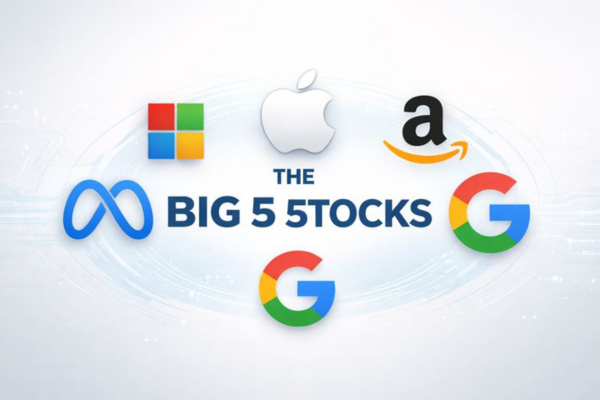
The Big 5 Tech Giants
While often confused with FAANG stocks, the Big 5 represent a smaller segment of the Magnificent Seven, focusing on key companies that are shaping the future of technology, but excluding others like Tesla and Nvidia that are part of the broader group.
1. Apple: A Stronghold in Consumer Tech and Services
Apple remains one of the most valuable companies in the world, with iconic products like the iPhone, MacBooks, and Apple Watches. But by 2026, Apple’s business has evolved significantly.
Its services division, including iCloud, Apple Music, and the App Store, is growing faster than hardware sales, becoming a major revenue stream. Additionally, the company’s investments in augmented reality (AR) are positioning it for future success, especially as AR becomes an essential part of the user experience.
Key Strengths in 2026:
- Expansion of services like iCloud, Apple Music, and the App Store.
- Leadership in AR and wearables.
- Strong global brand loyalty, driving consistent consumer demand.
2. Microsoft: Navigating Challenges Amid AI Growth
Microsoft continues to be a leader in cloud computing through Azure, and software with Office 365 and LinkedIn. However, as we enter 2026, Microsoft’s aggressive investment in AI has led to both optimism and skepticism.
While AI spending has increased significantly, investor reactions have been mixed, especially following disappointing growth in Azure despite hefty investments in AI infrastructure. While Microsoft remains a dominant player, its ability to deliver tangible results from AI investments is under scrutiny.
Key Strengths in 2026:
- Dominance in cloud computing with Azure.
- Solid financials from its software and subscription products.
- Ongoing investments in AI and machine learning.
Challenges:
- AI investments facing scrutiny as investors demand clear returns.
- Slower-than-expected growth in cloud services.
3. Amazon: E-Commerce Titan and Cloud Leader
Amazon has been a global e-commerce leader for over a decade, and by 2026, it has diversified further. Amazon Web Services (AWS) continues to be a dominant force in cloud computing, while Amazon is also expanding its footprint in AI, smart home technology, and streaming media with Amazon Prime Video. These diverse investments allow Amazon to stay ahead in both technology and retail sectors.
Key Strengths in 2026:
- Continued dominance in global e-commerce and logistics.
- AWS remains a leader in cloud computing.
- Expanding into AI, smart home technology, and digital media.
4. Alphabet: A Search Giant Leading Innovation
Alphabet (Google) continues to lead the search engine and digital advertising markets. In 2026, however, Alphabet’s focus has expanded significantly.
The company is investing heavily in AI, autonomous vehicles through Waymo, and cloud computing with Google Cloud. Alphabet is also exploring opportunities in healthcare, which positions it as one of the most diversified tech companies in the world.
Key Strengths in 2026:
- Leadership in search and digital advertising.
- Expansion into AI, autonomous vehicles, and healthcare.
- Growth in Google Cloud.
5. Meta: A New Era with the Metaverse and AI
Meta, previously Facebook, has undergone a dramatic transformation. No longer just a social media giant, Meta is investing heavily in the metaverse and virtual reality (VR), primarily through its Oculus platform.
In 2026, Meta combines its social media dominance with next-gen technologies, including AI and VR, positioning itself as a long-term contender in the evolving tech landscape.
Despite concerns about the profitability of its metaverse initiatives, Meta’s investments in artificial intelligence and immersive technology make it a significant player for the future.
Key Strengths in 2026:
- Dominance in social media platforms (Facebook, Instagram, WhatsApp).
- Heavy investments in VR and the metaverse.
- Increasing focus on artificial intelligence to enhance user experiences.
Challenges:
- High costs associated with developing the metaverse.
- Ongoing regulatory scrutiny on its social media platforms.
The Emergence of New Players: Nvidia
While The Big 5 stocks remain dominant, Nvidia has emerged as a new leader in the tech space. Known for its graphics processing units (GPUs), Nvidia has capitalised on the surging demand for AI and machine learning infrastructure.
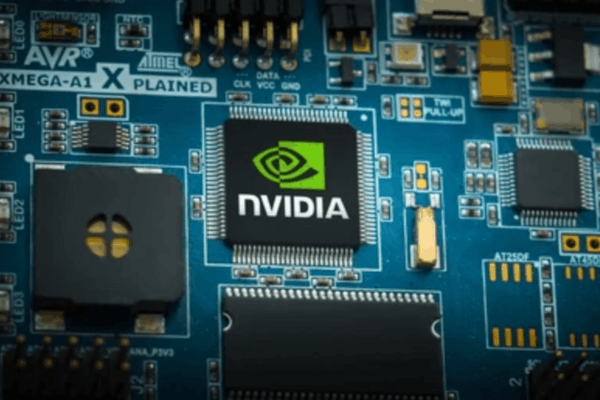
In 2026, Nvidia has surpassed Microsoft and Apple in market cap, signaling the growing importance of AI and hardware technologies. Nvidia’s dominance in the AI hardware space positions it as a leader in powering next-generation AI systems across industries.
Key Strengths in 2026:
- Leading the AI hardware space with GPUs.
- High demand from industries developing AI-driven technologies, including automotive, healthcare, and data centers.
- A clear leader in the semiconductor market.
Why The Big 5 Still Matter
Despite the rise of new players like Nvidia, The Big 5 Stock still remains central to the stock market’s performance. Together, these tech giants continue to dominate major indices, like the S&P 500, influencing everything from investor sentiment to global economic trends.
As these companies pursue new opportunities in AI, cloud computing, and other emerging technologies, their leadership will likely continue to drive market growth. However, their ability to adapt to rapidly evolving technologies and navigate regulatory challenges will determine their continued market dominance.
For Investors:
While the Big 5 stocks continue to offer growth potential, the rise of emerging competitors like Nvidia signals the need for diversification within the tech sector. Investors must monitor how these companies innovate and adapt to the changing technological landscape.

The Big 5 Stock in 2026
As we move into 2026, the Big 5 stocks of Apple, Microsoft, Amazon, Alphabet, and Meta will remain critical to the global economy. These companies continue to innovate and lead the way in AI, cloud computing, and digital transformation.
However, Nvidia’s rise shows that the competitive landscape is changing. Investors looking to stay ahead of the curve should not only keep an eye on the Big 5 stock, but also recognise the changing dynamics and the rise of new tech leaders.
FAQ
The Big 5 stocks are five dominant companies in the tech sector: Apple, Microsoft, Amazon, Alphabet (Google), and Meta.
These companies are leaders in their industries, consistently innovating and shaping global markets, which makes them highly valuable to investors.
Nvidia’s rise in AI and semiconductors has reshaped the tech landscape, presenting new competition to the Big 5 stocks, particularly in AI hardware and infrastructure.
Disclaimer: This content is provided for informational purposes only and does not constitute, and should not be construed as, financial, investment, or other professional advice. No statement or opinion contained here in should be considered a recommendation by Ultima Markets or the author regarding any specific investment product, strategy, or transaction. Readers are advised not to rely solely on this material when making investment decisions and should seek independent advice where appropriate.
Latest Articles

FOLLOW US






Ultima Markets is a member of The Financial Commission, an international independent body responsible for resolving disputes in the Forex and CFD markets.

All clients of Ultima Markets are protected under insurance coverage provided by Willis Towers Watson (WTW), a global insurance brokerage established in 1828, with claims eligibility up to US$1,000,000 per account.

Ultima Markets is the first United CFD broker to be part of the United Nations Global Compact.
FOLLOW US
TRADE WITH US
RISK DISCLOSURE
Risk Warning:
Trading leveraged financial products, including Contracts for Difference (CFDs), carries a high level of risk and may result in losses exceeding your initial investment. These products are not suitable for all investors and should only be traded with funds you can afford to lose. You do not own or have any rights to the underlying assets of these derivatives (e.g., entitlement to dividends). Please ensure you fully understand the associated risks. Before trading, consider your level of experience, investment objectives, and seek independent financial advice if necessary. Refer to our legal documents and disclosures before making any trading decisions.
General Advice Warning:
The information provided on this website is general in nature and does not take into account your personal objectives, financial situation, or needs. Before acting on any advice, you should assess its appropriateness in light of your individual circumstances and consult our legal documentation.
Regional Restrictions:
The information and services on this website are not intended for residents of certain jurisdictions, including but not limited to the United States, United Kingdom, Singapore, and any jurisdictions subject to international sanctions. For further information, please contact our customer support team.
Regulatory Information:
Ultima Markets is a trading name shared amongst multiple entities operating in various jurisdictions. These following entities are authorised to operate under the Ultima Markets brand and trademarks.
-
Ultima Markets UK Limited, reference number 470325, is authorised and regulated by the Financial Conduct Authority (FCA). Registered address: 1 Blossom Yard, Fourth Floor, London, E1 6RS, UNITED KINGDOM.
-
Ultima Markets Ltd is authorised and regulated by the Financial Services Commission (FSC) of Mauritius as a Full-Service Investment Dealer (excluding Underwriting), under licence number GB 23201593.
Registered address: 2nd Floor, The Catalyst, 40 Silicon Avenue, Ebene Cybercity, 72201, Mauritius.

Copyright © 2026 Ultima Markets Ltd. All rights reserved.
-

Messenger


Continue on Messenger
Take the conversation to your Messenger account. You can return anytime.
Scan the QR code and then send the message that appears in your Messenger.
Open Messenger on this device.
-

Instagram

Continue on Instagram
Take the conversation to your Instagram account. You can return anytime.
Scan the QR code to open Instagram. Follow @ultima_markets to send a DM.
Open Instagram on this device.
-

Live Chat
-

