
Ultima Markets App
Trade Anytime, Anywhere





Important Information
This website is managed by Ultima Markets’ international entities, and it’s important to emphasise that they are not subject to regulation by the FCA in the UK. Therefore, you must understand that you will not have the FCA’s protection when investing through this website – for example:
- You will not be guaranteed Negative Balance Protection
- You will not be protected by FCA’s leverage restrictions
- You will not have the right to settle disputes via the Financial Ombudsman Service (FOS)
- You will not be protected by Financial Services Compensation Scheme (FSCS)
- Any monies deposited will not be afforded the protection required under the FCA Client Assets Sourcebook. The level of protection for your funds will be determined by the regulations of the relevant local regulator.
Note: Ultima Markets is currently developing a dedicated website for UK clients and expects to onboard UK clients under FCA regulations in 2026.
If you would like to proceed and visit this website, you acknowledge and confirm the following:
- 1.The website is owned by Ultima Markets’ international entities and not by Ultima Markets UK Ltd, which is regulated by the FCA.
- 2.Ultima Markets Limited, or any of the Ultima Markets international entities, are neither based in the UK nor licensed by the FCA.
- 3.You are accessing the website at your own initiative and have not been solicited by Ultima Markets Limited in any way.
- 4.Investing through this website does not grant you the protections provided by the FCA.
- 5.Should you choose to invest through this website or with any of the international Ultima Markets entities, you will be subject to the rules and regulations of the relevant international regulatory authorities, not the FCA.
Ultima Markets wants to make it clear that we are duly licensed and authorised to offer the services and financial derivative products listed on our website. Individuals accessing this website and registering a trading account do so entirely of their own volition and without prior solicitation.
By confirming your decision to proceed with entering the website, you hereby affirm that this decision was solely initiated by you, and no solicitation has been made by any Ultima Markets entity.
I confirm my intention to proceed and enter this website Please direct me to the website operated by Ultima Markets , regulated by the FCA in the United Kingdom

What Does Yield Mean in Trading?
If you’re involved in trading, you’ve probably encountered the term “yield” often. But what does yield mean in the context of trading? Simply put, yield refers to the income generated from an investment, typically expressed as a percentage of its price.
Understanding what yield means is crucial for any trader looking to assess the income potential of their trades, whether in stocks, bonds, forex, or real estate. In this article, we’ll break down what yield means and why it’s such a vital concept in trading.
Understanding What is Yield in Trading
In the context of trading, yield refers to the income generated from a trade or investment, expressed as a percentage of the capital invested. Yield is often associated with income-producing assets like stocks and bonds, but it can also apply to any asset class where you earn a return on your investment.

Unlike total return, which also includes capital gains or losses from price changes, yield focuses primarily on the income or cash flow generated by the asset. This could be in the form of dividends, interest, or rental income from real estate or other trading instruments.
Types of Yield in Trading
Now that we know what does yield mean, let’s explore the different types of yield that traders encounter in various asset classes:
1. Dividend Yield (For Stock Trading)
In stock trading, yield often refers to dividend yield. This is the percentage of a stock’s price that it pays out to investors as dividends each year. For income-focused traders, this can be a key factor when selecting stocks to trade.
Formula:
Dividend Yield = (Annual Dividends per Share ÷ Price per Share) × 100
For example, if a stock pays $4 per share in dividends annually, and its price is $100, the dividend yield is 4%. This means for every dollar invested, the trader would earn 4% in dividends annually.
Dividend yield is particularly important for traders looking for regular income from their positions, especially when they use dividend-paying stocks in a more active trading strategy.
2. Bond Yield (For Fixed Income Trading)
In bond trading, yield refers to the return a trader can expect from a bond investment. It is a key factor for those who trade in fixed-income instruments, as it indicates how much interest income a bond will generate relative to its price.
Current Yield Formula:
Current Yield = (Annual Coupon Payment ÷ Bond Price) × 100
For instance, if a bond pays an annual coupon of $50 and is priced at $1,000, the current yield would be 5%.
Traders often focus on bond yield to assess the income potential of their bond investments. However, many traders also pay attention to Yield to Maturity (YTM), which accounts for both the coupon payments and any capital gains or losses from changes in bond prices.
3. Rental Yield (For Real Estate Traders)
In real estate trading, rental yield is the income generated from renting out a property, relative to its market value. This is a key metric for real estate traders who are looking to earn income from property, rather than relying solely on capital appreciation.
Formula:
Rental Yield = (Annual Rent ÷ Property Value) × 100
For example, if a property earns $12,000 annually in rent and is valued at $200,000, the rental yield would be 6%.
Real estate traders use rental yield to gauge how much passive income they can earn from their property investments. It’s a vital metric for evaluating income generation in both long-term and short-term property trades.
Yield vs. Total Return in Trading
It’s important to note that yield only measures the income component of a trade, not the total return. Total return includes both the income (yield) and any capital gains or losses from changes in the asset’s price.
For instance, a stock may have a 3% dividend yield, but if its price appreciates by 10% over the same period, the total return on the trade would be 13%. This makes total return a more comprehensive measure of how a trade or investment performs.
For traders, this means that while yield is important for assessing regular income from an asset, capital appreciation or price movements are just as crucial to determining the overall performance of a trade.
Why Yield Matters in Trading
Yield is a valuable metric for traders because it helps assess the income potential of a trade. In trading, income isn’t just about selling at a higher price than you bought; it also includes the ongoing payments you receive from dividends, interest, or rental income. For example, traders who actively trade dividend stocks will focus heavily on yield to ensure they’re earning regular income, especially if they employ a short-term or swing trading strategy.
Traders may also use yield to compare different assets. A high-yielding asset might be attractive, but it’s important to remember that higher yield can often come with higher risk. For example, high-yield bonds or stocks with large dividend yields may indicate that the asset is in a financially precarious position, making it more volatile.
The Relationship Between Yield and Risk in Trading
In trading, there is a direct relationship between yield and risk. Generally, the higher the yield, the higher the risk associated with the trade. Let’s look at a few scenarios:
- High-Yield Bonds and Stocks: High-yield investments, such as junk bonds or stocks with exceptionally high dividend yields, can be enticing because of the income they provide. However, these high yields often come with higher risk. Either the issuer’s creditworthiness is low, or the stock is struggling, which could lead to price volatility or dividend cuts.
- Low-Yield, High-Quality Assets: In contrast, low-yield investments like government bonds are often seen as safer, but they provide lower returns. These assets can be appealing for risk-averse traders, but they might not generate as much income compared to higher-yielding, higher-risk assets.
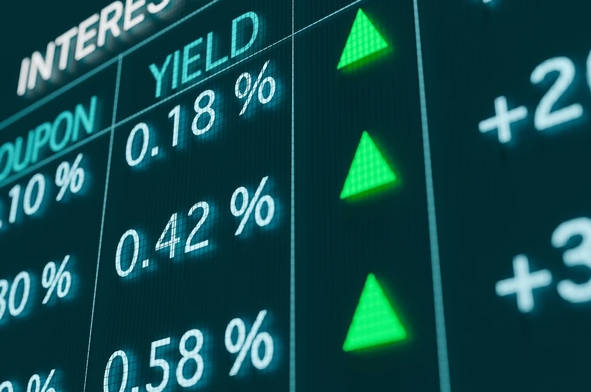
As a trader, it’s essential to balance the potential yield with the risk profile of the asset to ensure it aligns with your overall trading strategy.
Recent Market Trends and Yield in Trading
In 2025, there has been a noticeable shift in global trading trends, particularly regarding yield:
- Rising Bond Yields: In response to inflation concerns and economic uncertainty, global bond yields have been climbing. This increase has made bond markets more attractive to traders looking for fixed income, especially in the face of lower equity returns.
- Shifts in Equity Yield: In the stock market, dividend yields have been a focus for income traders, as companies with strong fundamentals and sustainable payouts become more desirable. However, the increase in market volatility has made some dividend stocks more risky, causing traders to seek more stable, low-yield alternatives.
These trends highlight how yield is not just a theoretical concept. It’s actively shaped by the broader market environment, economic conditions, and investor sentiment.
Conclusion
Understanding what yield means is a key component of successful trading. By focusing on the income generated from investments, traders can better assess the potential returns from their trades.
However, yield is just one part of the puzzle. A comprehensive approach that considers both yield and total return allows traders to make more informed, balanced decisions.
As markets evolve, staying adaptable and informed will help you navigate the dynamic landscape of trading with confidence.
Disclaimer: This content is provided for informational purposes only and does not constitute, and should not be construed as, financial, investment, or other professional advice. No statement or opinion contained here in should be considered a recommendation by Ultima Markets or the author regarding any specific investment product, strategy, or transaction. Readers are advised not to rely solely on this material when making investment decisions and should seek independent advice where appropriate.
Latest Articles



FOLLOW US






Ultima Markets is a member of The Financial Commission, an international independent body responsible for resolving disputes in the Forex and CFD markets.

All clients of Ultima Markets are protected under insurance coverage provided by Willis Towers Watson (WTW), a global insurance brokerage established in 1828, with claims eligibility up to US$1,000,000 per account.

Ultima Markets is the first United CFD broker to be part of the United Nations Global Compact.
FOLLOW US
TRADE WITH US
RISK DISCLOSURE
Risk Warning:
Trading leveraged financial products, including Contracts for Difference (CFDs), carries a high level of risk and may result in losses exceeding your initial investment. These products are not suitable for all investors and should only be traded with funds you can afford to lose. You do not own or have any rights to the underlying assets of these derivatives (e.g., entitlement to dividends). Please ensure you fully understand the associated risks. Before trading, consider your level of experience, investment objectives, and seek independent financial advice if necessary. Refer to our legal documents and disclosures before making any trading decisions.
General Advice Warning:
The information provided on this website is general in nature and does not take into account your personal objectives, financial situation, or needs. Before acting on any advice, you should assess its appropriateness in light of your individual circumstances and consult our legal documentation.
Regional Restrictions:
The information and services on this website are not intended for residents of certain jurisdictions, including but not limited to the United States, United Kingdom, Singapore, and any jurisdictions subject to international sanctions. For further information, please contact our customer support team.
Regulatory Information:
Ultima Markets is a trading name shared amongst multiple entities operating in various jurisdictions. These following entities are authorised to operate under the Ultima Markets brand and trademarks.
-
Ultima Markets UK Limited, reference number 470325, is authorised and regulated by the Financial Conduct Authority (FCA). Registered address: 1 Blossom Yard, Fourth Floor, London, E1 6RS, UNITED KINGDOM.
-
Ultima Markets Ltd is authorised and regulated by the Financial Services Commission (FSC) of Mauritius as a Full-Service Investment Dealer (excluding Underwriting), under licence number GB 23201593.
Registered address: 2nd Floor, The Catalyst, 40 Silicon Avenue, Ebene Cybercity, 72201, Mauritius.

Copyright © 2025 Ultima Markets Ltd. All rights reserved.
-

Messenger


Continue on Messenger
Take the conversation to your Messenger account. You can return anytime.
Scan the QR code and then send the message that appears in your Messenger.
Open Messenger on this device.
-

Instagram

Continue on Instagram
Take the conversation to your Instagram account. You can return anytime.
Scan the QR code to open Instagram. Follow @ultima_markets to send a DM.
Open Instagram on this device.
-

Live Chat
-

