This website is managed by Ultima Markets’ international entities, and it’s important to emphasise that they are not subject to regulation by the FCA in the UK. Therefore, you must understand that you will not have the FCA’s protection when investing through this website – for example:
You will not be guaranteed Negative Balance Protection
You will not be protected by FCA’s leverage restrictions
You will not have the right to settle disputes via the Financial Ombudsman Service (FOS)
You will not be protected by Financial Services Compensation Scheme (FSCS)
Any monies deposited will not be afforded the protection required under the FCA Client Assets Sourcebook. The level of protection for your funds will be determined by the regulations of the relevant local regulator.
Note: UK clients are kindly invited to visit https://www.ultima-markets.co.uk/. Ultima Markets UK expects to begin onboarding UK clients in accordance with FCA regulatory requirements in 2026.
If you would like to proceed and visit this website, you acknowledge and confirm the following:
1.The website is owned by Ultima Markets’ international entities and not by Ultima Markets UK Ltd, which is regulated by the FCA.
2.Ultima Markets Limited, or any of the Ultima Markets international entities, are neither based in the UK nor licensed by the FCA.
3.You are accessing the website at your own initiative and have not been solicited by Ultima Markets Limited in any way.
4.Investing through this website does not grant you the protections provided by the FCA.
5.Should you choose to invest through this website or with any of the international Ultima Markets entities, you will be subject to the rules and regulations of the relevant international regulatory authorities, not the FCA.
Ultima Markets wants to make it clear that we are duly licensed and authorised to offer the services and financial derivative products listed on our website. Individuals accessing this website and registering a trading account do so entirely of their own volition and without prior solicitation.
By confirming your decision to proceed with entering the website, you hereby affirm that this decision was solely initiated by you, and no solicitation has been made by any Ultima Markets entity.
Ultima Markets does not have an establishment in Singapore and does not operate from Singapore.
Ultima Markets does not provide products or services to citizens or residents of Singapore, and account applications from Singapore citizens or residents will not be accepted.
If you are a citizen or resident of Singapore, please do not open an account or use Ultima Markets’ products or services.
By selecting “Acknowledge and Continue Browsing”, you confirm that you are accessing this website on your own initiative and that your access is not the result of any direct marketing, targeted advertising, solicitation, or promotional activity by Ultima Markets.
Nothing on this website constitutes an offer, solicitation, or promotion of products or services in any jurisdiction where such activity is prohibited. You are responsible for ensuring that your access to and use of this website complies with applicable local laws and regulations.
The currency of Puerto Rico is the US Dollar (USD). Learn what drives the dollar and how it impacts forex trading. Trade USD pairs with Ultima Markets today.
What Currency Does Puerto Rico Use?
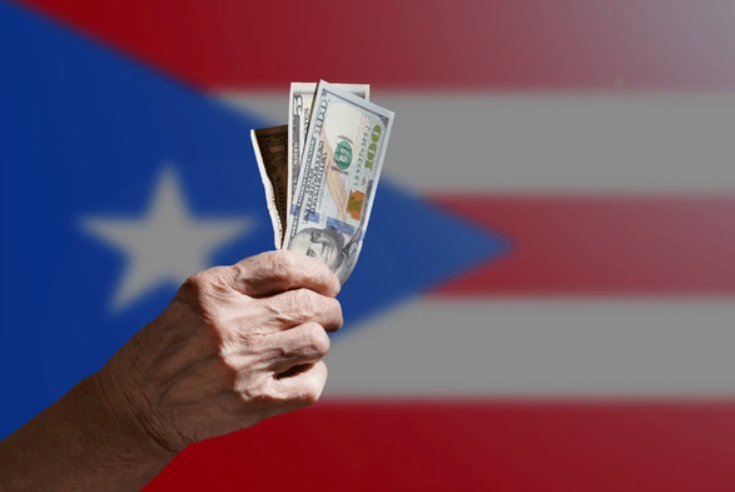
The currency of Puerto Rico is the United States Dollar (USD), the same dollar used across all 50 American states. Puerto Rico became a U.S. territory in 1898 following the Spanish-American War, and from that point on, the island adopted the US Dollar as its official currency, replacing the Puerto Rican peso that had been in use under Spanish colonial rule.
Today, Puerto Rico has no central bank of its own. The U.S. Federal Reserve governs its monetary policy, and all currency in circulation, every bill, every coin is identical to what you’d find in Miami, Chicago, or Los Angeles.
That means:
A $20 bill works the same in San Juan as it does in Manhattan
ATMs dispense standard US currency
All prices are listed in dollars, not in any local denomination
There is nothing special about the dollars used in Puerto Rico. They are American dollars, plain and simple.
Did Puerto Rico Have Its Own Currency Before the US Dollar?
Yes, Puerto Rico had its own currency before the US Dollar. Before 1898, Puerto Rico was under Spanish colonial rule and used the Puerto Rican peso as its official currency. The peso was introduced in 1895 and was subdivided into 100 centavos.
When the United States took control of Puerto Rico following the Spanish-American War in 1898, the transition didn’t happen overnight. For a brief period, both the Puerto Rican peso and the US Dollar circulated side by side. Then in 1899, the US officially replaced the peso with the dollar at a fixed conversion rate of 1 USD = 1 Puerto Rican peso, effectively wiping out the local currency entirely. Before the Spanish introduced the peso, Puerto Rico used Spanish colonial currencies for centuries, including:
Spanish reales, the dominant currency across all Spanish colonies in the Americas
Spanish escudos used for gold denominations
Macuquina coins roughly minted coins common in colonial trade
The peso itself had a very short life, just four years before the dollar took over permanently. It’s why older generations still use the word “peso” informally when talking about dollars today. The memory of that currency never fully disappeared, even though the currency itself did.
What Drives the US Dollar (Puerto Rico’s Currency)
U.S. Federal Reserve Interest Rate Decisions
This is the single biggest driver. When the Fed raises rates, the dollar strengthens, higher yields attract global capital into USD assets. When the Fed cuts, the dollar weakens. Every Fed meeting, every press conference, every dot plot release moves currency markets.
U.S. Economic Data
Key reports that move the dollar:
Non-Farm Payrolls (NFP), monthly jobs report, one of the most watched releases in forex
CPI (Consumer Price Index), inflation data directly influences Fed decisions
GDP Growth, strong growth = strong dollar, generally
Retail Sales, reflects consumer spending health
Inflation
High inflation erodes purchasing power and typically weakens a currency, unless the central bank responds aggressively with rate hikes, which then strengthens it. The relationship between inflation and the dollar is one of the most important dynamics in forex trading.
Geopolitical Risk and Global Uncertainty
The USD is the world’s safe-haven currency. When wars break out, financial crises hit, or markets panic, investors buy dollars. This is why the dollar often strengthens during global turmoil even when the U.S. itself is not directly involved.
U.S. Trade Balance and Current Account
When the U.S. imports more than it exports, more dollars flow out of the country, putting downward pressure on the dollar over time. A shrinking trade deficit tends to support USD strength.
Market Risk Sentiment (Risk-On / Risk-Off)
Risk-off = investors sell risky assets, buy USD, dollar strengthens
Risk-on = investors buy equities and high-yield assets, sell USD, dollar weakens
U.S. Government Debt and Fiscal Policy
Heavy government borrowing can raise concerns about long-term dollar credibility. Markets watch U.S. debt ceiling debates and deficit levels as signals of fiscal health.
Dollar Index (DXY)
The DXY measures the dollar against a basket of six major currencies such as EUR, JPY, GBP, CAD, SEK, CHF. Most forex traders watch DXY as a quick gauge of overall dollar strength or weakness before trading individual USD pairs.
Driver
Impact
Fed rate hike
Strengthens USD
Fed rate cut
Weakens USD
High inflation (uncontrolled)
Weakens USD
Strong NFP / GDP data
Strengthens USD
Global crisis / risk-off
Strengthens USD
Large trade deficit
Weakens USD over time
Rising U.S. debt concerns
Weakens USD long-term
5 Key Pairs Every Forex Trader Should Know
Since the currency of Puerto Rico is the USD and the USD is the world’s most traded currency. Here are the major pairs worth understanding as a forex or CFD trader:
EUR/USD: The Most Liquid Pair in the World
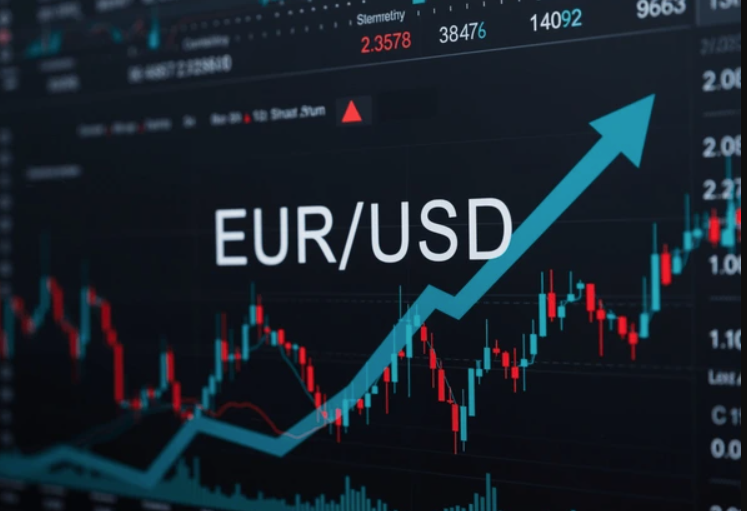
This pair represents the two largest currency blocs on the planet. It accounts for nearly 23% of daily global forex volume. Policy divergence between the European Central Bank (ECB) and the U.S. Federal Reserve is the primary driver of long-term direction.
GBP/USD: Pound Sterling vs. the Dollar
Commonly called “Cable,” this pair is heavily influenced by UK economic data, Bank of England decisions, and broader risk sentiment. It tends to be more volatile than EUR/USD and offers frequent short-term trading opportunities.
USD/JPY: The Risk Barometer
The yen is a traditional safe-haven currency. When global risk sentiment sours, USD/JPY often falls as investors buy yen. When markets are confident, the pair tends to rise. The Bank of Japan’s historically loose monetary policy has made this pair particularly active in recent years.
USD/CHF: Dollar vs. Swiss Franc
Another safe-haven pair. The Swiss franc, like the yen, tends to strengthen during market stress. USD/CHF often moves inversely to EUR/USD due to the close relationship between the euro and franc.
AUD/USD and USD/CAD: Commodity Currency Pairs
The Australian and Canadian dollars are closely tied to commodity prices such as iron ore and coal for AUD, oil for CAD. These pairs offer a direct way to trade the intersection of currency markets and commodity markets.
Conclusion
The currency of Puerto Rico is the US Dollar and that single fact connects a small Caribbean island to the most powerful currency in the world. From the Federal Reserve’s rate decisions to global risk sentiment, every force that drives the USD affects Puerto Rico’s economy just as it affects your trading portfolio.
Understanding how the dollar works, what drives it, and how it moves against other major currencies is not just useful knowledge, it is the foundation of every serious forex trading strategy. The dollar is everywhere. Knowing how to trade it makes all the difference.
At Ultima Markets, we give traders of all levels access to the world’s most liquid forex and CFD markets including all major USD pairs, commodities, indices, and more. With tight spreads, fast execution, and a platform built for serious trading, Ultima Markets is where currency knowledge meets real market opportunity. Open a Live Account with Ultima Markets Today and Start Trading the USD.
FAQs
What is the currency of Puerto Rico?
The currency of Puerto Rico is the US Dollar (USD). As a U.S. territory, Puerto Rico uses the same dollar as the American mainland.
Does Puerto Rico have its own currency or exchange rate?
No. Puerto Rico does not have its own currency or exchange rate. The island uses the US Dollar and its monetary policy is controlled entirely by the U.S. Federal Reserve.
How does Fed policy affect USD forex pairs?
When the Federal Reserve raises interest rates, the USD typically strengthens as global capital flows into dollar assets. When the Fed cuts rates, the USD weakens as investors seek higher returns elsewhere. This directly impacts every major USD pair such as EUR/USD, GBP/USD, USD/JPY, and more.
Share Now
Disclaimer:This content is provided for informational purposes only and does not constitute, and should not be construed as, financial, investment, or other professional advice. No statement or opinion contained herein should be considered a recommendation by Ultima Markets or the author regarding any specific investment product, strategy, or transaction. Readers are advised not to rely solely on this material when making investment decisions and should seek independent advice where appropriate.
Thank you for visiting the Ultima Markets website. Please note that this website is intended for individuals residing in jurisdictions where access is permitted by law. Ultima and its affiliated entities do not operate in your home jurisdiction.
By clicking ‘Acknowledge’, you confirm that you are entering this website solely on your own initiative and not as a result of any specific marketing outreach. You wish to obtain information from this website based on reverse solicitation principles, in accordance with the applicable laws of your home jurisdiction.