This website is managed by Ultima Markets’ international entities, and it’s important to emphasise that they are not subject to regulation by the FCA in the UK. Therefore, you must understand that you will not have the FCA’s protection when investing through this website – for example:
You will not be guaranteed Negative Balance Protection
You will not be protected by FCA’s leverage restrictions
You will not have the right to settle disputes via the Financial Ombudsman Service (FOS)
You will not be protected by Financial Services Compensation Scheme (FSCS)
Any monies deposited will not be afforded the protection required under the FCA Client Assets Sourcebook. The level of protection for your funds will be determined by the regulations of the relevant local regulator.
Note: UK clients are kindly invited to visit https://www.ultima-markets.co.uk/. Ultima Markets UK expects to begin onboarding UK clients in accordance with FCA regulatory requirements in 2026.
If you would like to proceed and visit this website, you acknowledge and confirm the following:
1.The website is owned by Ultima Markets’ international entities and not by Ultima Markets UK Ltd, which is regulated by the FCA.
2.Ultima Markets Limited, or any of the Ultima Markets international entities, are neither based in the UK nor licensed by the FCA.
3.You are accessing the website at your own initiative and have not been solicited by Ultima Markets Limited in any way.
4.Investing through this website does not grant you the protections provided by the FCA.
5.Should you choose to invest through this website or with any of the international Ultima Markets entities, you will be subject to the rules and regulations of the relevant international regulatory authorities, not the FCA.
Ultima Markets wants to make it clear that we are duly licensed and authorised to offer the services and financial derivative products listed on our website. Individuals accessing this website and registering a trading account do so entirely of their own volition and without prior solicitation.
By confirming your decision to proceed with entering the website, you hereby affirm that this decision was solely initiated by you, and no solicitation has been made by any Ultima Markets entity.
What currency does Ireland use? Euro or Pound? Learn why Ireland uses the Euro, not the Pound, and how this impacts forex trading and EUR/GBP analysis.
What Currency Does Ireland Use? Euro or Pound?
Ireland uses the Euro (EUR, €) as its official currency. It adopted the Euro in 1999 for non-cash transactions and introduced Euro coins and banknotes in 2002, replacing the Irish Pound (Punt). The British Pound (GBP) is only used in Northern Ireland, not in the Republic of Ireland.
This transition aligned Ireland with other European Union member states in the Eurozone, enhancing cross-border trade and eliminating currency conversion risks within Europe.
What Does Ireland Money Look Like?
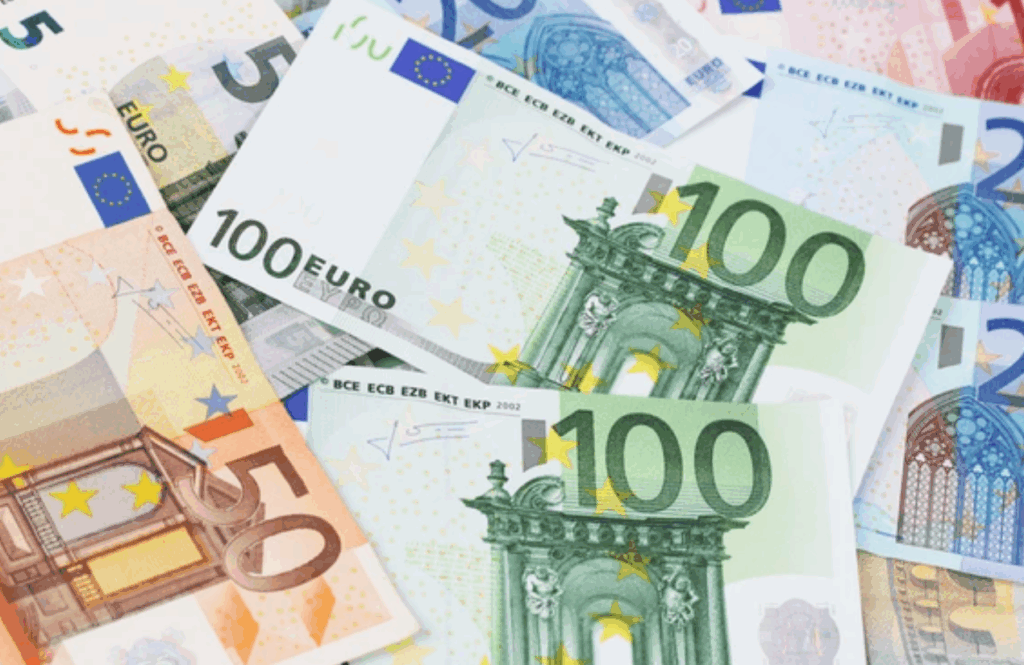
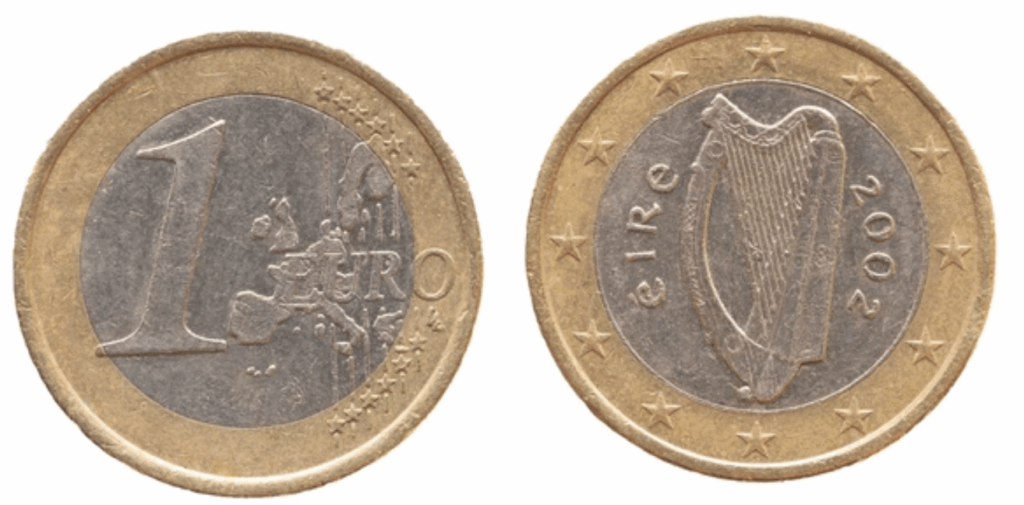
Ireland’s currency, like all Eurozone countries, follows a standardized design for banknotes but allows national customization for coins:
Euro coins in Ireland feature the Celtic harp, Ireland’s traditional symbol.
Coins are inscribed with the word “Éire” (Ireland in Irish) and the year of issue.
Euro banknotes have the same design throughout all Eurozone countries, with architectural themes representing Europe’s cultural history.
This shared design maintains Eurozone cohesion while allowing Irish identity to be expressed on coinage.
What Currency Did Ireland Use Before the Euro?
Before adopting the Euro, Ireland used the Irish Pound, also known as the Punt (IEP):
The Irish Pound was introduced in 1928, shortly after independence from the UK.
It was pegged to the British Pound at a 1:1 exchange rate until 1979.
Ireland joined the European Monetary System in 1979, breaking the peg and laying the groundwork for Euro adoption.
On January 1, 1999, the exchange rate was fixed at 1 Euro = 0.787564 IEP.
Euro coins and notes replaced the Irish Pound on January 1, 2002, and the Punt ceased to be legal tender on February 9, 2002.
The Central Bank of Ireland still redeems old Irish Pound notes and coins at fixed rates, offering value to collectors and citizens holding outdated currency.
What Drives Ireland’s Currency? Key Forex Insights
Although Ireland shares the Euro with 19 other countries, several unique economic forces influence Ireland’s currency value in global forex markets:
ECB Monetary Policy The European Central Bank (ECB) sets interest rates and monetary policy for all Eurozone countries, including Ireland. Changes in interest rates, quantitative easing, or inflation targets affect the Euro’s strength in pairs like EUR/USD and EUR/GBP.
Ireland’s Trade Performance Ireland is a highly export-oriented economy, with leading sectors including pharmaceuticals, tech (home to Apple, Google, Meta), and medical devices. Strong export surpluses typically support Euro stability.
US and UK Economic Indicators Because Ireland trades heavily with both the United States and the United Kingdom, major economic data like US inflation, Federal Reserve interest rates, and UK GDP figures can move Euro-based forex pairs.
Eurozone Inflation Trends If inflation rises sharply in large Eurozone economies like Germany or France, the ECB may tighten policy, leading to appreciation in the Euro and impacting Irish competitiveness in exports.
Popular Forex Pair: EUR/GBP and More
Since Ireland uses the Euro and is closely linked to the UK, traders often monitor the EUR/GBP pair. This cross reflects:
The impact of post-Brexit policies
Divergences between UK and Eurozone interest rates
Shifts in economic sentiment on both sides
Other popular forex pairs involving Ireland’s currency include:
EUR/USD – Most traded pair globally, heavily influenced by Fed vs ECB.
EUR/JPY – A risk sentiment indicator often used in carry trades.
EUR/AUD – Reflects Eurozone vs commodity-driven economies.
These pairs offer high liquidity and tight spreads, making them ideal for both short-term scalpers and long-term forex investors.
Why Doesn’t Ireland Use the British Pound?
Although geographically close and economically connected to the UK, Ireland chose not to use the British Pound due to:
Its independent monetary policy, separate since 1928.
Membership in the European Union and Eurozone.
Economic alignment with continental Europe, not post-Brexit Britain.
Reduced foreign exchange risks in EU trade due to a shared currency.
This monetary independence allows Ireland to benefit from the economic power of the Euro while maintaining national financial identity.
Conclusion
In conclusion, the Republic of Ireland uses the Euro, not the Pound. Since joining the Eurozone, Ireland has benefited from greater monetary stability, deeper EU trade integration, and consistent central bank policy via the European Central Bank (ECB). The Irish Pound (Punt) was officially retired in 2002.
For traders, Ireland’s Euro-based economy presents strategic opportunities especially in pairs like EUR/GBP and EUR/USD, which are influenced by ECB and Bank of England decisions, post-Brexit trade shifts, and global economic data.
At Ultima Markets, we provide expert analysis and advanced tools to help traders navigate Euro-related currency pairs with precision. Whether you’re watching inflation trends, ECB policy signals, or UK economic releases, our real-time market insights and technical setups can help you trade smarter.
Share Now
Disclaimer:This content is provided for informational purposes only and does not constitute, and should not be construed as, financial, investment, or other professional advice. No statement or opinion contained herein should be considered a recommendation by Ultima Markets or the author regarding any specific investment product, strategy, or transaction. Readers are advised not to rely solely on this material when making investment decisions and should seek independent advice where appropriate.
Thank you for visiting the Ultima Markets website. Please note that this website is intended for individuals residing in jurisdictions where access is permitted by law. Ultima and its affiliated entities do not operate in your home jurisdiction.
By clicking ‘Acknowledge’, you confirm that you are entering this website solely on your own initiative and not as a result of any specific marketing outreach. You wish to obtain information from this website based on reverse solicitation principles, in accordance with the applicable laws of your home jurisdiction.