This website is managed by Ultima Markets’ international entities, and it’s important to emphasise that they are not subject to regulation by the FCA in the UK. Therefore, you must understand that you will not have the FCA’s protection when investing through this website – for example:
You will not be guaranteed Negative Balance Protection
You will not be protected by FCA’s leverage restrictions
You will not have the right to settle disputes via the Financial Ombudsman Service (FOS)
You will not be protected by Financial Services Compensation Scheme (FSCS)
Any monies deposited will not be afforded the protection required under the FCA Client Assets Sourcebook. The level of protection for your funds will be determined by the regulations of the relevant local regulator.
Note: UK clients are kindly invited to visit https://www.ultima-markets.co.uk/. Ultima Markets UK expects to begin onboarding UK clients in accordance with FCA regulatory requirements in 2026.
If you would like to proceed and visit this website, you acknowledge and confirm the following:
1.The website is owned by Ultima Markets’ international entities and not by Ultima Markets UK Ltd, which is regulated by the FCA.
2.Ultima Markets Limited, or any of the Ultima Markets international entities, are neither based in the UK nor licensed by the FCA.
3.You are accessing the website at your own initiative and have not been solicited by Ultima Markets Limited in any way.
4.Investing through this website does not grant you the protections provided by the FCA.
5.Should you choose to invest through this website or with any of the international Ultima Markets entities, you will be subject to the rules and regulations of the relevant international regulatory authorities, not the FCA.
Ultima Markets wants to make it clear that we are duly licensed and authorised to offer the services and financial derivative products listed on our website. Individuals accessing this website and registering a trading account do so entirely of their own volition and without prior solicitation.
By confirming your decision to proceed with entering the website, you hereby affirm that this decision was solely initiated by you, and no solicitation has been made by any Ultima Markets entity.
Looking for high-risk, high-reward stocks? See the top 10 most volatile stocks and how traders profit from big daily price swings.
What Are The Most Volatile Stocks?
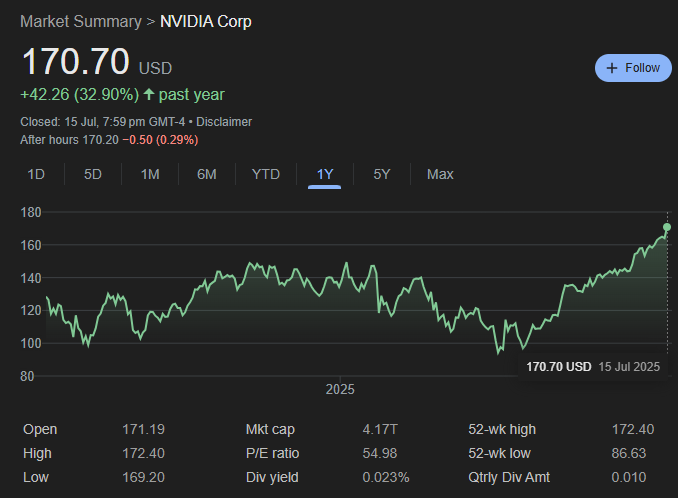
The most volatile stocks are those that experience large price swings within short timeframes, often due to earnings, news, or sector momentum. As of 2025, highly volatile stocks include NVIDIA (NVDA), Tesla (TSLA), GameStop (GME), AMC, and Marathon Digital (MARA), favored by day traders for their rapid movement and trading volume.
What Does Most Volatile Mean in Stocks
The term “most volatile” in stocks refers to shares that experience the largest price swings either upward or downward over a short period of time. These movements can occur within minutes, hours, or days, making them especially attractive to active traders.
In technical terms, stock volatility is measured by:
Average True Range (ATR) – Shows the average price range a stock moves per day.
Beta – Indicates how a stock moves compared to the broader market (e.g., S&P 500). A beta above 1.5 is considered highly volatile.
Implied Volatility (IV) – Predicts how much the market expects the stock to move in the future, often used in options trading.
For example, a stock like Tesla (TSLA) can swing 5%–10% intraday, while a stable utility stock may only move 1% or less. Traders consider such volatile stocks high-risk, high-reward opportunities, ideal for day trading or momentum-based strategies.
Top 10 Most Volatile Stocks for Day Trading (as of July 2025)
Volatile stocks are prized by day traders because they offer large price swings, high trading volume, and market-moving catalysts. Below are 10 of the most volatile stocks for day trading in 2025, and why they consistently show aggressive movement:
Tesla Inc. (TSLA) Tesla’s stock is extremely sensitive to CEO statements, earnings surprises, EV sector sentiment, and even macro news like interest rates. The combination of hype, retail interest, and global visibility makes TSLA prone to 5–10% intraday swings.
NVIDIA Corp. (NVDA) As a leader in AI chips and GPUs, NVDA reacts sharply to AI sector momentum, tech earnings, and NVIDIA-specific guidance. Large funds and retail traders both pile in, creating fast moves during earnings seasons and macro events.
GameStop Corp. (GME) GME remains a meme stock icon. It can skyrocket or plunge based on social media sentiment, short squeeze speculation, or Reddit-driven hype. Volatility is often disconnected from fundamentals, making it dangerous but highly tradable.
AMC Entertainment Holdings (AMC) Like GME, AMC is influenced by retail-driven trading, high short interest, and frequent news-related catalysts (debt deals, stock offerings). Sudden double-digit intraday swings are common.
Coinbase Global Inc. (COIN) COIN tracks crypto market movement, especially Bitcoin and Ethereum. When crypto spikes or crashes, COIN often mirrors those moves. In addition, regulatory headlines add extra volatility, especially in the U.S. market.
Marathon Digital Holdings (MARA) As a Bitcoin mining company, MARA’s price is directly correlated with crypto performance. It tends to amplify Bitcoin moves—gaining or losing more than BTC on a percentage basis. High speculative interest fuels extreme intraday volume.
Riot Platforms (RIOT) Similar to MARA, RIOT is exposed to Bitcoin mining volatility, but also reacts to blockchain news, mining difficulty updates, and regulatory pressure. Traders favor it for crypto-related scalping setups.
Lucid Group (LCID) As a speculative EV stock, LCID trades on delivery numbers, earnings misses, and capital concerns. Its relatively low float and high short interest can lead to violent squeezes and flushes intraday.
Palantir Technologies (PLTR) PLTR sees wild swings from government contract announcements, AI integration, and public sector tech trends. It draws both retail and institutional attention, making it a common target for momentum trading.
Bumble Inc. (BMBL) Bumble is less predictable but often spikes due to earnings surprises, merger rumors, or changes in tech sentiment. Low float and heavy options activity also contribute to large price movements in short timeframes.
Stock
Sector
Avg Daily Range
Reason for Volatility
NVDA (NVIDIA)
Tech
5–8%
AI & chip sector momentum
TSLA (Tesla)
EV
4–7%
Earnings volatility, CEO moves
MARA (Marathon Digital)
Crypto Mining
6–10%
Bitcoin correlation
RIOT (Riot Platforms)
Crypto Mining
5–9%
Crypto exposure
GME (GameStop)
Retail/Meme
8–15%
Retail trader hype
AMC (AMC Entertainment)
Entertainment
7–12%
Meme trading and news events
LCID (Lucid Group)
EV
5–9%
Weak delivery numbers
PLTR (Palantir)
Tech
4–6%
Government contracts and AI rumors
COIN (Coinbase)
Crypto Exchange
6–8%
Regulatory headlines
BMBL (Bumble)
Tech
5–7%
Earnings and M&A speculation
Why Trade the Most Volatile Stocks
For day traders and short-term investors, the most volatile stocks present the best opportunities to generate quick profits because they move. Here’s why many traders specifically seek out volatile stocks:
Faster Profit Potential
Volatile stocks can move 5% to 20% within a single trading session. This speed of movement allows skilled traders to capitalize on quick price swings using strategies like:
Scalping: Taking advantage of small moves multiple times a day
Momentum trading: Riding a trend after a breakout or news event
Gap and go setups: Trading stocks that gap up/down at the open
Unlike stable blue-chip stocks, volatile names offer immediate opportunity for profit especially when using leverage.
Clear Technical Setups
Highly volatile stocks often follow predictable technical patterns, such as:
Breakouts from key levels (e.g., support/resistance)
Reversals at overbought/oversold zones (e.g., RSI extremes)
Volume spikes confirming price direction
These patterns give traders precise entry and exit points, essential for consistent gains.
Catalyst-Driven Moves
The most volatile stocks often react to news catalysts like earnings reports, regulatory approvals, or sector-related headlines. These events create sharp price movements in short timeframes, which traders can plan around.
For example:
TSLA jumps after strong delivery numbers
COIN surges or drops with Bitcoin
AMC moves wildly on retail interest or capital news
Traders follow such catalysts to exploit predictable reactions in stock price.
High Liquidity and Tight Spreads
Top volatile stocks like TSLA, NVDA, or COIN trade with high daily volume, which means:
Faster execution
Lower slippage
Narrow bid-ask spreads
This makes them ideal for day trading strategies that require fast entries and exits.
Increased Leverage Opportunity
Many brokers offer margin trading and leverage on volatile stocks. While this increases risk, it also allows experienced traders to amplify gains especially on short-term trades with defined risk.
How to Find the Most Volatile Stocks
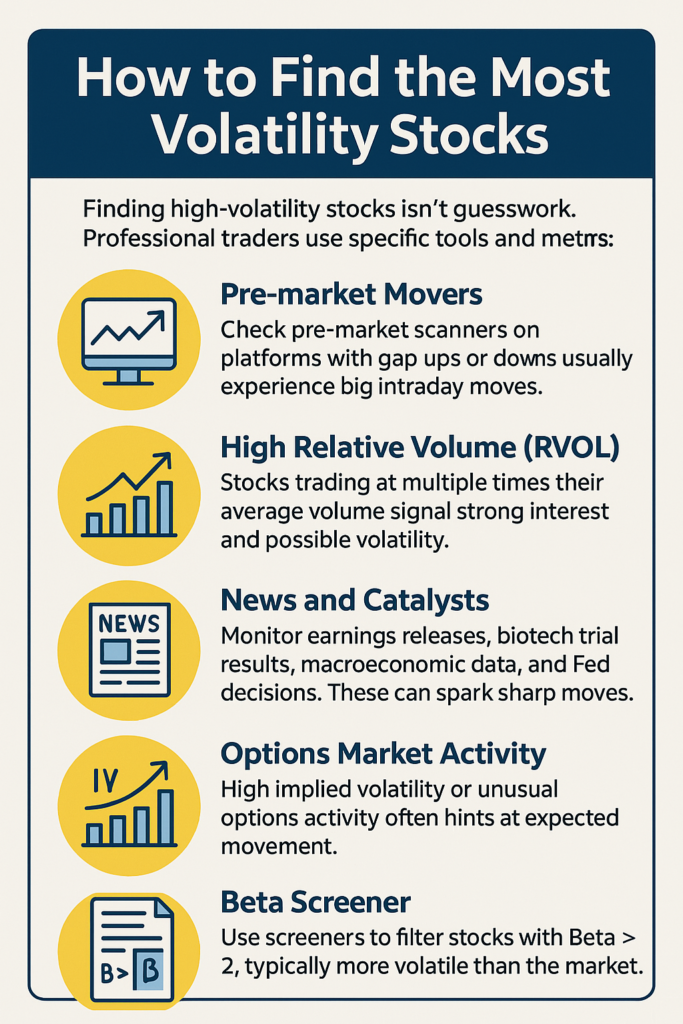
Finding high-volatility stocks isn’t guesswork. Professional traders use specific tools and metrics:
Pre-market Movers Check pre-market scanners on platforms with gap ups or downs usually experience big intraday moves.
High Relative Volume (RVOL) Stocks trading at multiple times their average volume signal strong interest and possible volatility.
News and Catalysts Monitor earnings releases, biotech trial results, macroeconomic data, and Fed decisions. These can spark sharp moves.
Options Market Activity High implied volatility or unusual options activity often hints at expected movement.
Beta Screener Use screeners to filter stocks with Beta > 2, typically more volatile than the market.
Are Volatile Stocks Risky?
Yes, volatile are risky but risk is manageable with the right tools. Traders who follow a strategy and risk management plan can thrive in high-volatility environments. These stocks are not ideal for long-term investors seeking stability, but they are essential weapons in a trader’s playbook.
Conclusion
So, what are the most volatile stocks? They’re the ones that move sharply offering both high risk and high reward. Traders flock to them for potential profits, especially during earnings, news releases, or sector-wide events.
Whether you’re a scalper looking for morning momentum or a swing trader playing catalyst setups, volatile stocks offer endless opportunity as long as you trade with discipline. Trade the most volatile stocks with precision. Trade with Ultima Markets.
Share Now
Disclaimer:This content is provided for informational purposes only and does not constitute, and should not be construed as, financial, investment, or other professional advice. No statement or opinion contained herein should be considered a recommendation by Ultima Markets or the author regarding any specific investment product, strategy, or transaction. Readers are advised not to rely solely on this material when making investment decisions and should seek independent advice where appropriate.
Thank you for visiting the Ultima Markets website. Please note that this website is intended for individuals residing in jurisdictions where access is permitted by law. Ultima and its affiliated entities do not operate in your home jurisdiction.
By clicking ‘Acknowledge’, you confirm that you are entering this website solely on your own initiative and not as a result of any specific marketing outreach. You wish to obtain information from this website based on reverse solicitation principles, in accordance with the applicable laws of your home jurisdiction.