This website is managed by Ultima Markets’ international entities, and it’s important to emphasise that they are not subject to regulation by the FCA in the UK. Therefore, you must understand that you will not have the FCA’s protection when investing through this website – for example:
You will not be guaranteed Negative Balance Protection
You will not be protected by FCA’s leverage restrictions
You will not have the right to settle disputes via the Financial Ombudsman Service (FOS)
You will not be protected by Financial Services Compensation Scheme (FSCS)
Any monies deposited will not be afforded the protection required under the FCA Client Assets Sourcebook. The level of protection for your funds will be determined by the regulations of the relevant local regulator.
Note: UK clients are kindly invited to visit https://www.ultima-markets.co.uk/. Ultima Markets UK expects to begin onboarding UK clients in accordance with FCA regulatory requirements in 2026.
If you would like to proceed and visit this website, you acknowledge and confirm the following:
1.The website is owned by Ultima Markets’ international entities and not by Ultima Markets UK Ltd, which is regulated by the FCA.
2.Ultima Markets Limited, or any of the Ultima Markets international entities, are neither based in the UK nor licensed by the FCA.
3.You are accessing the website at your own initiative and have not been solicited by Ultima Markets Limited in any way.
4.Investing through this website does not grant you the protections provided by the FCA.
5.Should you choose to invest through this website or with any of the international Ultima Markets entities, you will be subject to the rules and regulations of the relevant international regulatory authorities, not the FCA.
Ultima Markets wants to make it clear that we are duly licensed and authorised to offer the services and financial derivative products listed on our website. Individuals accessing this website and registering a trading account do so entirely of their own volition and without prior solicitation.
By confirming your decision to proceed with entering the website, you hereby affirm that this decision was solely initiated by you, and no solicitation has been made by any Ultima Markets entity.
Discover the main types of unemployment, how they’re measured, and why understanding them is vital for analysing global economic health and labour trends.
Unemployment is one of the most important indicators of a country’s economic health. It measures how many people who are able and willing to work cannot find employment. Economists, governments, and investors track unemployment trends to understand whether an economy is expanding, stagnating, or contracting.
But unemployment isn’t one-dimensional. Different types of unemployment exist, each revealing a distinct problem or transition in the labour market. Understanding these differences helps policymakers and individuals respond appropriately.
How Unemployment Is Measured
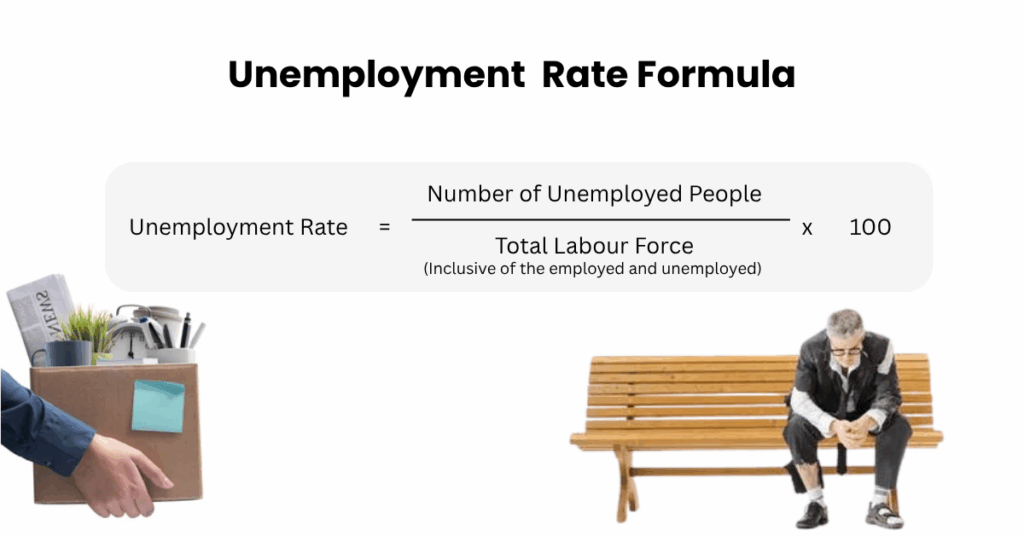
The most common way to measure unemployment is through the unemployment rate, which is the percentage of the labour force that is without work but actively seeking employment.
For example, if 10 million people are unemployed out of a total labour force of 500 million, the unemployment rate is 2%.
The labour force includes people aged 15 and above who are either working or actively looking for work. Those who are not seeking work (such as students, retirees, or discouraged workers) are excluded from this measurement.
Global institutions such as the International Labour Organization (ILO) and World Bank compile this data to compare unemployment trends between countries.
Why Unemployment Matters to the Economy
High unemployment generally signals economic weakness, while very low unemployment can indicate an overheated economy and rising inflation. It affects:
Households, through loss of income and financial insecurity.
Governments, through reduced tax revenues and higher welfare spending.
Businesses, through changes in consumer spending and labour costs.
Different types of unemployment have different implications and policy responses. For instance, frictional unemployment is natural and short-term, while structural unemployment can persist for years if left unaddressed.
The Main Types of Unemployment
1. Frictional Unemployment
Frictional unemployment arises when people are temporarily between jobs or entering the labour force for the first time.
Cause: Job search periods, career changes, relocation, or new graduates entering the market.
Impact: Usually short-term and not harmful. It is a sign of a dynamic economy where people can move freely between opportunities.
Example: A marketing executive leaves a company to find a better-paying role; during the transition, they’re unemployed.
2. Structural Unemployment
Structural unemployment happens when workers’ skills don’t match available jobs or when industries decline.
Cause: Technological progress, automation, outsourcing, or changing consumer demand.
Impact: Often long-term because reskilling or relocation is required.
Example: Coal miners losing jobs as economies shift to renewable energy; their skills may not transfer directly to new sectors.
3. Cyclical (Demand-Deficient) Unemployment
Cyclical unemployment results from economic downturns when demand for goods and services falls.
Cause: Recession, financial crises, inflation shocks, or pandemic disruptions.
Impact: Widespread job losses that usually recover when the economy improves.
Example: During the 2020 global pandemic, travel, tourism, and retail sectors faced massive layoffs due to reduced consumer demand.
4. Seasonal Unemployment
Seasonal unemployment occurs when jobs are available only at certain times of the year.
Cause: Seasonal industries such as agriculture, tourism, construction, or retail.
Impact: Predictable and recurring; workers may find temporary or alternative work during off-seasons.
Example: Farm workers hired for harvest season or resort staff employed during summer.
5. Other Types of Unemployment
Classical (or Real-Wage) Unemployment: Occurs when wages are kept above market-clearing levels (e.g., due to high minimum wages or strong labour unions), discouraging employers from hiring.
Technological Unemployment: A form of structural unemployment caused by automation and AI replacing certain human tasks.
Underemployment: When individuals work part-time or in roles below their qualifications.
Long-Term Unemployment: When individuals remain unemployed for 27 weeks or more, often leading to skill erosion and difficulty re-entering the labour market.
Measuring Hidden Unemployment
Traditional unemployment figures don’t always show the full picture. Economists also monitor:
Labour Force Participation Rate (LFPR): Measures the share of working-age people who are either employed or seeking employment.
Underemployment Rate: Captures workers who are employed part-time but want full-time jobs.
Discouraged Workers: Those who have stopped looking for work but would take a job if offered. They are not counted in the official unemployment rate.
Together, these indicators offer a more complete view of how effectively an economy is using its human resources.
Current Global Trends
According to the International Labour Organization (ILO), the global unemployment rate stood at around 5% in 2024, slightly below pre-pandemic levels. However, patterns differ widely:
Advanced economies are seeing tight labour markets but rising skill mismatches.
Developing economies face higher structural and underemployment challenges.
Automation and AI are reshaping job requirements faster than education systems can adapt.
Long-term trends show that while unemployment rates may fluctuate, labour market inequality and skills polarisation are becoming more pressing issues than simple job shortages.
Policy Solutions Based on Type
Type
Typical Solutions
Frictional
Improve job-matching systems, job portals, and career services.
Structural
Invest in reskilling, STEM education, and worker mobility.
Cyclical
Stimulate demand through fiscal and monetary policy.
Seasonal
Support alternative employment or income during off-seasons.
Technological
Encourage innovation while funding retraining and digital literacy programmes.
Effective policy requires identifying which type of unemployment dominates. The same solution cannot fix all.
Conclusion
Unemployment is more than just a statistic. It is a mirror of how efficiently economies adapt to change. By understanding the different types of unemployment and how they are measured, we gain insight into the forces shaping modern labour markets.
Frictional and seasonal unemployment are natural signs of movement, while structural and cyclical forms highlight deeper weaknesses. As technology and globalisation reshape industries, the key challenge is ensuring that workers aren’t left behind through continuous learning, inclusive growth, and adaptable economic policies.
Disclaimer: This content is provided for informational purposes only and does not constitute, and should not be construed as, financial, investment, or other professional advice. No statement or opinion contained here in should be considered a recommendation by Ultima Markets or the author regarding any specific investment product, strategy, or transaction. Readers are advised not to rely solely on this material when making investment decisions and should seek independent advice where appropriate.
Thank you for visiting the Ultima Markets website. Please note that this website is intended for individuals residing in jurisdictions where access is permitted by law. Ultima and its affiliated entities do not operate in your home jurisdiction.
By clicking ‘Acknowledge’, you confirm that you are entering this website solely on your own initiative and not as a result of any specific marketing outreach. You wish to obtain information from this website based on reverse solicitation principles, in accordance with the applicable laws of your home jurisdiction.