
Ultima Markets App
Trade Anytime, Anywhere





Important Information
This website is managed by Ultima Markets’ international entities, and it’s important to emphasise that they are not subject to regulation by the FCA in the UK. Therefore, you must understand that you will not have the FCA’s protection when investing through this website – for example:
- You will not be guaranteed Negative Balance Protection
- You will not be protected by FCA’s leverage restrictions
- You will not have the right to settle disputes via the Financial Ombudsman Service (FOS)
- You will not be protected by Financial Services Compensation Scheme (FSCS)
- Any monies deposited will not be afforded the protection required under the FCA Client Assets Sourcebook. The level of protection for your funds will be determined by the regulations of the relevant local regulator.
Note: Ultima Markets is currently developing a dedicated website for UK clients and expects to onboard UK clients under FCA regulations in 2026.
If you would like to proceed and visit this website, you acknowledge and confirm the following:
- 1.The website is owned by Ultima Markets’ international entities and not by Ultima Markets UK Ltd, which is regulated by the FCA.
- 2.Ultima Markets Limited, or any of the Ultima Markets international entities, are neither based in the UK nor licensed by the FCA.
- 3.You are accessing the website at your own initiative and have not been solicited by Ultima Markets Limited in any way.
- 4.Investing through this website does not grant you the protections provided by the FCA.
- 5.Should you choose to invest through this website or with any of the international Ultima Markets entities, you will be subject to the rules and regulations of the relevant international regulatory authorities, not the FCA.
Ultima Markets wants to make it clear that we are duly licensed and authorised to offer the services and financial derivative products listed on our website. Individuals accessing this website and registering a trading account do so entirely of their own volition and without prior solicitation.
By confirming your decision to proceed with entering the website, you hereby affirm that this decision was solely initiated by you, and no solicitation has been made by any Ultima Markets entity.
I confirm my intention to proceed and enter this website Please direct me to the website operated by Ultima Markets , regulated by the FCA in the United Kingdom

What Are the G7 Currencies in the World?
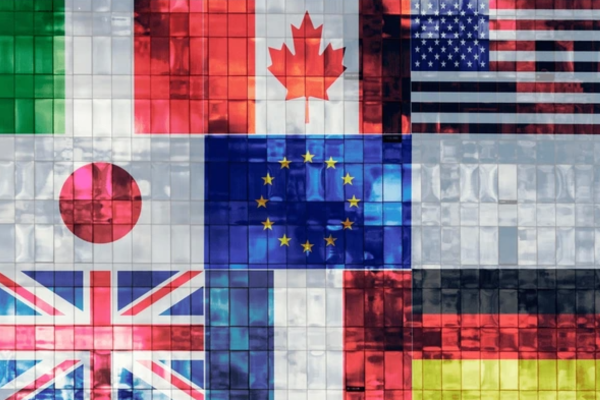
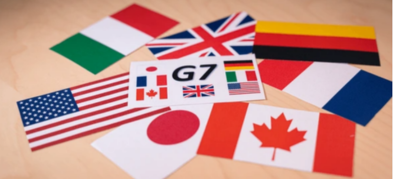
The Group of Seven (G7) is an alliance of the world’s most advanced economies, consisting of the United States, the United Kingdom, Canada, Japan, France, Germany, and Italy. These countries collectively represent some of the largest economies globally. Their currencies are referred to as G7 currencies are among the most influential in the world.
In this article, we’ll explore the significance of G7 currencies, their roles in global finance and forex trading, and the factors that drive their value. Additionally, we’ll clarify common misunderstandings about what “G7 currencies” really means in both official and trading contexts.
What Are G7 Currencies?
At first glance, the term G7 currencies can create confusion. Some may think it refers to the seven most traded currencies globally. Others might assume it includes every country in the G7. However, the truth is simpler and more nuanced.
In the official sense, G7 currencies refer to the currencies of the seven G7 member countries. This includes:
- United States: U.S. Dollar (USD)
- United Kingdom: British Pound (GBP)
- Canada: Canadian Dollar (CAD)
- Japan: Japanese Yen (JPY)
- France: Euro (EUR)
- Germany: Euro (EUR)
- Italy: Euro (EUR)
So, while there are seven countries in the G7, only five unique currencies are used. The Euro (EUR) is shared by France, Germany, and Italy, creating the five-currency list of USD, GBP, CAD, JPY, and EUR.
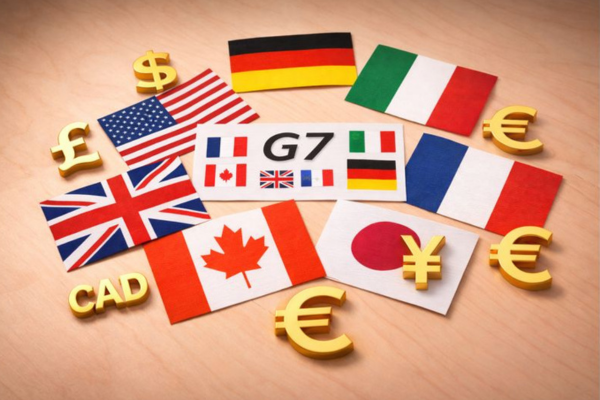
However, in the context of forex trading, “G7 currencies” is sometimes used more loosely. Traders often expand this list to include the Australian Dollar (AUD) and Swiss Franc (CHF), two of the most traded currencies despite the fact that Australia and Switzerland are not G7 members.
This is why you may see the term “G7” occasionally used to describe the seven most traded currencies in the forex market, rather than strictly referring to the G7 member nations.
Profiles of G7 Currencies
Here’s a deeper look at the key currencies involved, including insights into why they matter in global trading:
1. U.S. Dollar (USD)
The U.S. Dollar (USD) is the most traded currency globally, constituting about 88% of all forex trades. As the world’s reserve currency, it is used in around nine out of ten forex transactions. The USD is crucial for pricing commodities like oil and gold, making it the anchor currency for global trade.
The strength of the USD is driven by the size of the U.S. economy, its financial stability, and its dominance in international finance. Recent interest rate hikes by the U.S. Federal Reserve have reinforced the dollar’s strength, making U.S. assets attractive to foreign investors.
2. Euro (EUR)
The Euro (EUR) is the official currency of 19 countries within the European Union, including three G7 members: France, Germany, and Italy. Despite the challenges faced by the EU, such as political uncertainty and economic slowdowns, the Euro remains the second-most traded currency globally.
The Euro plays a significant role in global trade and finance. When European Central Bank (ECB) policies change, the global market takes notice, as the Euro is widely used for pricing and trading many international goods and services.
3. Japanese Yen (JPY)
The Japanese Yen (JPY) is the third-most traded currency in the world. Known for its safe-haven status, the Yen is often sought by investors during times of global instability. Japan’s ultra-low interest rates also make the Yen an important currency in carry trades, where investors borrow in low-interest currencies to invest in higher-yielding assets.
In recent years, the Yen has faced challenges due to Japan’s stagnant economy and the Bank of Japan’s policies, but it still remains a key player in global forex markets.
4. British Pound (GBP)
The British Pound (GBP) is one of the oldest and most influential currencies still in use. It is highly liquid and reacts strongly to decisions made by the Bank of England and UK economic data. The Pound’s volatility, particularly after Brexit, makes it a key currency for traders who monitor political and economic shifts closely.
Despite challenges, the GBP remains a crucial currency in forex trading, with pairs like GBP/USD being heavily traded.
5. Canadian Dollar (CAD)
The Canadian Dollar (CAD), also known as the Loonie, is closely linked to the price of oil. As a major oil exporter, Canada’s economy is heavily impacted by fluctuations in energy prices. When oil prices rise, the CAD often strengthens, and vice versa. This makes the Canadian Dollar highly sensitive to global commodity price movements.
6. Australian Dollar (AUD)
Though not part of the G7, the Australian Dollar (AUD) is a major currency in the forex market. It is strongly tied to the price of metals and commodities due to Australia’s resource-rich economy. Additionally, the AUD is heavily influenced by economic developments in China, as Australia is a major trading partner.
7. Swiss Franc (CHF)
The Swiss Franc (CHF) is another non-G7 currency that plays a significant role in forex markets. Switzerland’s stability, low inflation, and neutral political stance make the CHF a preferred choice during times of market turmoil. The Swiss Franc tends to appreciate during crises, making it a key safe-haven currency.
G7 Currency Pairs in Forex
In forex trading, currencies are always traded in pairs. The most important G7 currency pairs include:
- EUR/USD: The most liquid and frequently traded pair in the world.
- USD/JPY: A key pair for forex traders, especially during periods of risk-off sentiment.
- GBP/USD: Known for its volatility, this pair is highly liquid.
- USD/CAD: Reflects fluctuations in global oil prices.
Other significant cross pairs include EUR/GBP and EUR/JPY.
When traders use the term “G7 currencies,” they might also be referring to other major currencies like the AUD/USD and USD/CHF, adding to the liquidity and trading volume of the market.
How G7 Currencies Shape the Global Economy
The G7 currencies are not just symbols of their countries. They have real power in shaping global economic dynamics. These currencies are used to:
- Set global trade terms: Most international contracts are priced in USD, EUR, or GBP.
- Manage central bank reserves: Many countries hold large quantities of G7 currencies to stabilise their own economies and protect against exchange rate fluctuations.
- Influence commodity prices: The pricing of key commodities such as oil and gold is done in U.S. Dollars, making the strength of the dollar critical to global pricing structures.
When central banks like the U.S. Federal Reserve or the European Central Bank adjust interest rates or implement new policies, the effects ripple through the global economy. Forex traders, businesses, and governments closely monitor these changes, as they influence money flows and exchange rates.
Conclusion
The G7 currencies of USD, GBP, CAD, JPY, and EUR are central to the functioning of global markets. While the term “G7 currencies” can refer to different things in various contexts, it typically covers the five unique currencies of the G7 nations.
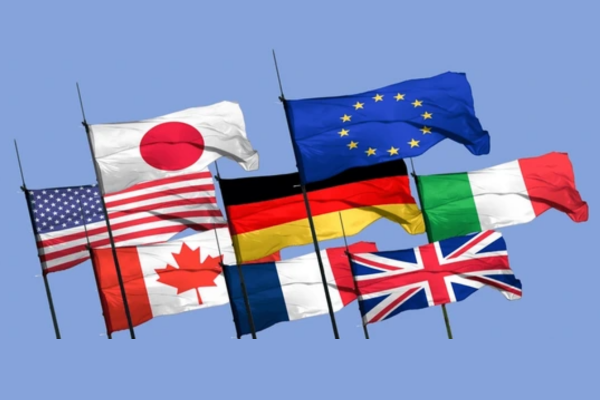
They influence everything from global trade to forex trading, with movements driven by economic policies, interest rates, and market sentiment. Understanding these currencies can give you a clearer view of global economic trends and help you make informed decisions in the forex market.
FAQ
The official G7 currencies are USD, GBP, CAD, JPY, and EUR (shared by France, Germany, and Italy).
CNY is not part of the G7 currencies because China is not a member of the G7, which consists of seven advanced economies. The G7 currencies reflect the economic alignment and policies of these countries, which China does not share.
The U.S. Dollar (USD) is the most traded currency globally, making up nearly 88% of all forex transactions.
The Euro and U.S. Dollar dominate global trade and investment, influencing commodities and international finance.
Disclaimer: This content is provided for informational purposes only and does not constitute, and should not be construed as, financial, investment, or other professional advice. No statement or opinion contained here in should be considered a recommendation by Ultima Markets or the author regarding any specific investment product, strategy, or transaction. Readers are advised not to rely solely on this material when making investment decisions and should seek independent advice where appropriate.
Latest Articles
FOLLOW US






Ultima Markets is a member of The Financial Commission, an international independent body responsible for resolving disputes in the Forex and CFD markets.

All clients of Ultima Markets are protected under insurance coverage provided by Willis Towers Watson (WTW), a global insurance brokerage established in 1828, with claims eligibility up to US$1,000,000 per account.

Ultima Markets is the first United CFD broker to be part of the United Nations Global Compact.
FOLLOW US
TRADE WITH US
RISK DISCLOSURE
Risk Warning:
Trading leveraged financial products, including Contracts for Difference (CFDs), carries a high level of risk and may result in losses exceeding your initial investment. These products are not suitable for all investors and should only be traded with funds you can afford to lose. You do not own or have any rights to the underlying assets of these derivatives (e.g., entitlement to dividends). Please ensure you fully understand the associated risks. Before trading, consider your level of experience, investment objectives, and seek independent financial advice if necessary. Refer to our legal documents and disclosures before making any trading decisions.
General Advice Warning:
The information provided on this website is general in nature and does not take into account your personal objectives, financial situation, or needs. Before acting on any advice, you should assess its appropriateness in light of your individual circumstances and consult our legal documentation.
Regional Restrictions:
The information and services on this website are not intended for residents of certain jurisdictions, including but not limited to the United States, United Kingdom, Singapore, and any jurisdictions subject to international sanctions. For further information, please contact our customer support team.
Regulatory Information:
Ultima Markets is a trading name shared amongst multiple entities operating in various jurisdictions. These following entities are authorised to operate under the Ultima Markets brand and trademarks.
-
Ultima Markets UK Limited, reference number 470325, is authorised and regulated by the Financial Conduct Authority (FCA). Registered address: 1 Blossom Yard, Fourth Floor, London, E1 6RS, UNITED KINGDOM.
-
Ultima Markets Ltd is authorised and regulated by the Financial Services Commission (FSC) of Mauritius as a Full-Service Investment Dealer (excluding Underwriting), under licence number GB 23201593.
Registered address: 2nd Floor, The Catalyst, 40 Silicon Avenue, Ebene Cybercity, 72201, Mauritius.

Copyright © 2026 Ultima Markets Ltd. All rights reserved.
-

Messenger


Continue on Messenger
Take the conversation to your Messenger account. You can return anytime.
Scan the QR code and then send the message that appears in your Messenger.
Open Messenger on this device.
-

Instagram

Continue on Instagram
Take the conversation to your Instagram account. You can return anytime.
Scan the QR code to open Instagram. Follow @ultima_markets to send a DM.
Open Instagram on this device.
-

Live Chat
-

