
Ultima Markets App
Trade Anytime, Anywhere





Important Information
This website is managed by Ultima Markets’ international entities, and it’s important to emphasise that they are not subject to regulation by the FCA in the UK. Therefore, you must understand that you will not have the FCA’s protection when investing through this website – for example:
- You will not be guaranteed Negative Balance Protection
- You will not be protected by FCA’s leverage restrictions
- You will not have the right to settle disputes via the Financial Ombudsman Service (FOS)
- You will not be protected by Financial Services Compensation Scheme (FSCS)
- Any monies deposited will not be afforded the protection required under the FCA Client Assets Sourcebook. The level of protection for your funds will be determined by the regulations of the relevant local regulator.
Note: Ultima Markets is currently developing a dedicated website for UK clients and expects to onboard UK clients under FCA regulations in 2026.
If you would like to proceed and visit this website, you acknowledge and confirm the following:
- 1.The website is owned by Ultima Markets’ international entities and not by Ultima Markets UK Ltd, which is regulated by the FCA.
- 2.Ultima Markets Limited, or any of the Ultima Markets international entities, are neither based in the UK nor licensed by the FCA.
- 3.You are accessing the website at your own initiative and have not been solicited by Ultima Markets Limited in any way.
- 4.Investing through this website does not grant you the protections provided by the FCA.
- 5.Should you choose to invest through this website or with any of the international Ultima Markets entities, you will be subject to the rules and regulations of the relevant international regulatory authorities, not the FCA.
Ultima Markets wants to make it clear that we are duly licensed and authorised to offer the services and financial derivative products listed on our website. Individuals accessing this website and registering a trading account do so entirely of their own volition and without prior solicitation.
By confirming your decision to proceed with entering the website, you hereby affirm that this decision was solely initiated by you, and no solicitation has been made by any Ultima Markets entity.
I confirm my intention to proceed and enter this website Please direct me to the website operated by Ultima Markets , regulated by the FCA in the United Kingdom

Understanding What Is Float in Stocks
If you have ever asked what is float in stocks, you are really asking a supply question: how many shares are actually available for the public to trade right now. That number often explains why some stocks trade smoothly while others can swing sharply on the same burst of buying or selling.
So, what is float in stocks in plain terms? Stock float is the portion of a company’s outstanding shares that is available for public trading, after subtracting shares that are restricted or closely held.
What Does Float Mean in Stocks
Think of float as the stock’s tradable share pool.
When you buy, someone else sells. When you sell, someone else buys. Most days, traders are just exchanging shares inside that same pool, which is why trading activity itself does not change the float. Float usually changes because of corporate actions, such as issuing new shares or unlocking restricted shares.

Float vs Shares Outstanding vs Authorised Shares
These terms sound similar, but they answer different questions.
| Term | What It Means | What It Tells You |
| Authorised Shares | The maximum shares the company is allowed to issue | A legal limit, not what is trading |
| Shares Outstanding | Shares currently issued and held by all shareholders | Used for market cap and dilution checks |
| Float | Shares available for public trading | Helps explain liquidity and volatility |
A simple way to remember it is that shares outstanding includes everyone whereas float focuses on what can realistically trade.
How Float Connects to IPOs
When a company goes public through an IPO, it releases shares to the market. That helps create the initial pool that the public can trade.
But float is not always “the IPO share count”. Over time, float is affected by insider holdings, restrictions, lockups expiring, and later share issuance. A more reliable definition is still the core one: shares available for public trading.
Why Float Matters to Traders
Now that what is float in stocks is clear, the next step is understanding why it matters in real trading. Float can shape how easily a stock trades and how strongly it reacts when demand suddenly changes.
Low Float and Supply Demand
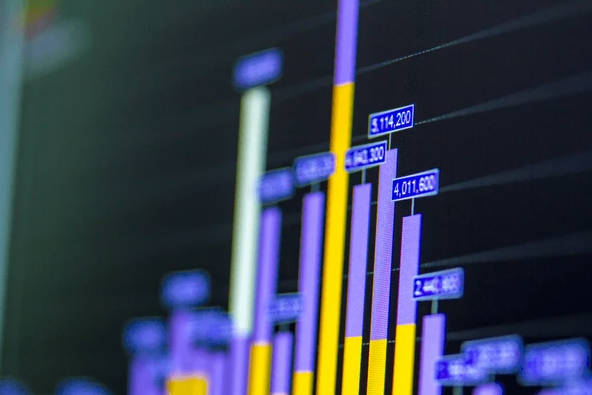
If a stock has a low float, there are fewer shares available to meet demand. When buying interest spikes, the imbalance between supply and demand can push prices around much faster. Investopedia notes that lower float is often associated with higher volatility, while higher float tends to be more stable.
High Float and Thicker Trading
With a high float, there are usually more shares available across many price levels. In practical terms, that can mean tighter bid ask spreads and more depth on the order book, which often makes price movements feel smoother (though not guaranteed).
A Practical Rule of Thumb Traders Use
Some day traders use float filters (for example, focusing on stocks under a certain float size) because they are looking for sharper moves. Treat any threshold as a personal trading preference, not a market rule.
Float and Catalysts: Why the Combination Matters
Float alone does not create volatility. It sets the stage by defining how many shares are realistically available to trade.
The real trigger is often a catalyst, such as earnings, a major contract, a product announcement, or other news that changes market interest. When that catalyst drives demand into a smaller float, prices can react more aggressively because there are fewer shares available to absorb buying pressure. This “float plus catalyst” idea helps explain why some stocks gap up and keep running while others fade quickly.
To estimate float, many traders use a simple formula:
Float = Shares Outstanding − Shares Not Freely Tradable
Here, “not freely tradable” typically includes restricted shares and shares held by insiders or other large holders, which is why some sources define float as shares outstanding minus those holdings.
How Float Can Change Over Time
The transcript highlights the big three, and they are worth including in any article because they answer the question readers always ask next.
Share Buybacks
When a company buys back shares, the share count can fall, which can reduce tradable supply depending on how shares are handled.
Secondary Offerings
When a company sells additional shares after the IPO, the share count can rise, increasing float and potentially diluting existing shareholders.
Stock Splits and Reverse Splits
A split increases the number of shares (and usually lowers the price per share proportionally). A reverse split does the opposite. These actions change the share count, which can change reported float, even though the company’s underlying value does not automatically change just because the shares were divided differently.
Public Float and Why It Matters in Filings
You will also see the term public float used in regulatory contexts, and it can be more specific than everyday “float”.
The SEC explains that a company can qualify as a smaller reporting company if it has public float of less than $250 million, or if it has less than $100 million in annual revenues and either no public float or public float of less than $700 million.
That is one reason “float” shows up beyond trading conversations. It can affect reporting obligations and how companies are categorised.
Why Exchanges and Index Providers Care About Float
Float also matters at the market structure level.
Exchange Listing Standards Use Public Distribution
For example, the NYSE’s initial listing distribution standards include requirements such as 1.1 million publicly held shares and $40 million market value of publicly held shares (for IPO or spin off pathways), and it excludes certain concentrated holdings from what counts as publicly held.
Nasdaq’s rules define “Publicly Held Shares” as shares not held by officers, directors, or beneficial owners of more than 10 percent.
Index Providers Use Free Float
Index providers often use free float concepts so indices reflect what is realistically investable.
MSCI defines free float as the proportion of shares outstanding deemed available for purchase in the public equity markets.
FTSE Russell notes its equity indices are adjusted to include only shares available to the public, often referred to as free float.
Why Thin Floats Are Under Scrutiny
Float has also become part of a broader market integrity discussion.

In December 2025, Reuters reported that Nasdaq proposed a rule to give it more discretion to block IPOs that could be vulnerable to manipulation, following patterns seen in thinly traded small cap listings.
Earlier in 2025, Reuters also reported Nasdaq proposals that included raising minimum market value of public float requirements in certain listing standards.
A separate real world example is Naturgy, where Reuters reported the company sold a stake to increase free float and improve index eligibility.
Conclusion
So, what is float in stocks really telling you? It shows how many shares are actually available for public trading, which can shape liquidity, spreads, and how sharply price reacts when demand suddenly changes. A smaller float can make moves feel faster, especially when a catalyst hits, while a larger float often supports smoother trading.
Before you judge any stock’s “volatility potential,” check the float alongside volume and recent news so you understand the trading environment you’re stepping into.
Disclaimer: This content is provided for informational purposes only and does not constitute, and should not be construed as, financial, investment, or other professional advice. No statement or opinion contained here in should be considered a recommendation by Ultima Markets or the author regarding any specific investment product, strategy, or transaction. Readers are advised not to rely solely on this material when making investment decisions and should seek independent advice where appropriate.
Latest Articles


FOLLOW US






Ultima Markets is a member of The Financial Commission, an international independent body responsible for resolving disputes in the Forex and CFD markets.

All clients of Ultima Markets are protected under insurance coverage provided by Willis Towers Watson (WTW), a global insurance brokerage established in 1828, with claims eligibility up to US$1,000,000 per account.

Ultima Markets is the first United CFD broker to be part of the United Nations Global Compact.
FOLLOW US
TRADE WITH US
RISK DISCLOSURE
Risk Warning:
Trading leveraged financial products, including Contracts for Difference (CFDs), carries a high level of risk and may result in losses exceeding your initial investment. These products are not suitable for all investors and should only be traded with funds you can afford to lose. You do not own or have any rights to the underlying assets of these derivatives (e.g., entitlement to dividends). Please ensure you fully understand the associated risks. Before trading, consider your level of experience, investment objectives, and seek independent financial advice if necessary. Refer to our legal documents and disclosures before making any trading decisions.
General Advice Warning:
The information provided on this website is general in nature and does not take into account your personal objectives, financial situation, or needs. Before acting on any advice, you should assess its appropriateness in light of your individual circumstances and consult our legal documentation.
Regional Restrictions:
The information and services on this website are not intended for residents of certain jurisdictions, including but not limited to the United States, United Kingdom, Singapore, and any jurisdictions subject to international sanctions. For further information, please contact our customer support team.
Regulatory Information:
Ultima Markets is a trading name shared amongst multiple entities operating in various jurisdictions. These following entities are authorised to operate under the Ultima Markets brand and trademarks.
-
Ultima Markets UK Limited, reference number 470325, is authorised and regulated by the Financial Conduct Authority (FCA). Registered address: 1 Blossom Yard, Fourth Floor, London, E1 6RS, UNITED KINGDOM.
-
Ultima Markets Ltd is authorised and regulated by the Financial Services Commission (FSC) of Mauritius as a Full-Service Investment Dealer (excluding Underwriting), under licence number GB 23201593.
Registered address: 2nd Floor, The Catalyst, 40 Silicon Avenue, Ebene Cybercity, 72201, Mauritius.

Copyright © 2025 Ultima Markets Ltd. All rights reserved.
-

Messenger


Continue on Messenger
Take the conversation to your Messenger account. You can return anytime.
Scan the QR code and then send the message that appears in your Messenger.
Open Messenger on this device.
-

Instagram

Continue on Instagram
Take the conversation to your Instagram account. You can return anytime.
Scan the QR code to open Instagram. Follow @ultima_markets to send a DM.
Open Instagram on this device.
-

Live Chat
-

