Important Information
This website is managed by Ultima Markets’ international entities, and it’s important to emphasise that they are not subject to regulation by the FCA in the UK. Therefore, you must understand that you will not have the FCA’s protection when investing through this website – for example:
- You will not be guaranteed Negative Balance Protection
- You will not be protected by FCA’s leverage restrictions
- You will not have the right to settle disputes via the Financial Ombudsman Service (FOS)
- You will not be protected by Financial Services Compensation Scheme (FSCS)
- Any monies deposited will not be afforded the protection required under the FCA Client Assets Sourcebook. The level of protection for your funds will be determined by the regulations of the relevant local regulator.
Note: UK clients are kindly invited to visit https://www.ultima-markets.co.uk/. Ultima Markets UK expects to begin onboarding UK clients in accordance with FCA regulatory requirements in 2026.
If you would like to proceed and visit this website, you acknowledge and confirm the following:
- 1.The website is owned by Ultima Markets’ international entities and not by Ultima Markets UK Ltd, which is regulated by the FCA.
- 2.Ultima Markets Limited, or any of the Ultima Markets international entities, are neither based in the UK nor licensed by the FCA.
- 3.You are accessing the website at your own initiative and have not been solicited by Ultima Markets Limited in any way.
- 4.Investing through this website does not grant you the protections provided by the FCA.
- 5.Should you choose to invest through this website or with any of the international Ultima Markets entities, you will be subject to the rules and regulations of the relevant international regulatory authorities, not the FCA.
Ultima Markets wants to make it clear that we are duly licensed and authorised to offer the services and financial derivative products listed on our website. Individuals accessing this website and registering a trading account do so entirely of their own volition and without prior solicitation.
By confirming your decision to proceed with entering the website, you hereby affirm that this decision was solely initiated by you, and no solicitation has been made by any Ultima Markets entity.
I confirm my intention to proceed and enter this website Please direct me to the website operated by Ultima Markets , regulated by the FCA in the United Kingdom
Ultima Markets App
Trade Anytime, Anywhere





Understanding What Are Common Stocks
Common stocks are shares that represent ownership in a company. When you buy common stock, you become a shareholder, meaning you own a small portion of the business and can benefit if the company grows over time.
Common stock is the type of stock most investors are referring to when they say they “own stocks.” It often comes with voting rights, may provide dividends, and offers the potential for capital gains if the share price rises.
It also carries risk: if a company fails and its assets are liquidated, common stockholders are typically last in line to receive any remaining proceeds.
What Are Common Stocks?
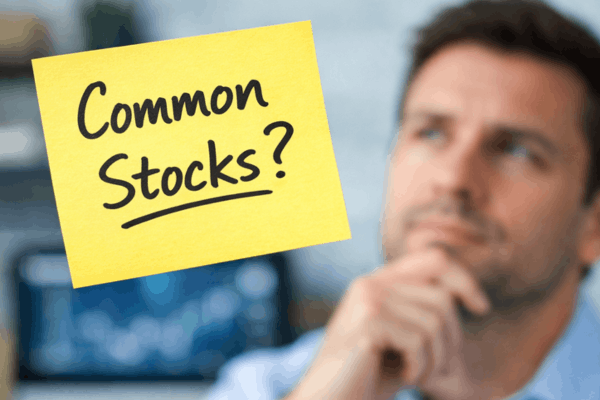
A simple way to define common stock is:
Common stock is an equity security that gives investors partial ownership in a corporation, with potential voting rights and the possibility of dividends.
While specific rights can vary by company and share class, common stock is generally associated with these core features:
Ownership in the business
Common shareholders own a portion of the company. The percentage depends on how many shares you own compared with the total number of shares outstanding.
Voting rights
Common stock often includes the right to vote on certain corporate matters, such as electing the board of directors. Voting rules differ across companies, especially when multiple share classes exist.
Dividends
Some companies distribute part of their profits to shareholders as dividends. Common stock may receive dividends, but dividend payments are not required and can change over time.
Last claim in liquidation
If the company goes bankrupt and its assets are liquidated, common stockholders generally receive proceeds only after bondholders and preferred stockholders have been paid.
How Common Stocks Work
Companies issue stock as a way to raise capital by funding growth, investing in new products, expanding into new markets, or improving their financial position. Once shares exist, they can be bought and sold by investors in public markets.
From an investor’s perspective, the stock market sets a price for each share based on what buyers and sellers believe the company is worth. That price can move quickly because it reflects not only current results, but also expectations about the future.
Common factors that influence stock prices include:
- Earnings and revenue growth
- Profitability and cash flow
- Competitive pressure and market share
- Interest rates and inflation
- Investor sentiment and economic conditions
What Common Shareholders Receive
Common stock ownership can come with several benefits, but it’s important to understand what is typical versus what is guaranteed.
Voting participation
Many common shares allow shareholders to vote on important decisions (often through proxy voting). Voting power is typically proportional to shares owned, though some companies use share structures that assign different voting rights to different classes of common stock.
Potential dividends
Dividends can provide a stream of income, but companies are not obligated to pay them. Businesses may choose to reinvest profits instead, especially if they are focused on expansion.
Liquidity in public markets
Common stock in publicly traded companies can usually be bought and sold quickly during market hours through a brokerage account, which is one reason it is a popular investment vehicle.
How Investors Make Money From Common Stocks
Investors generally earn returns from common stock in two ways:
1) Capital appreciation
If a company grows and the market values it more highly, the stock price may rise. When investors sell shares for more than they paid, the difference is a capital gain.
2) Dividends
When a company pays dividends, shareholders may receive periodic cash payments. Dividends can be taken as income or reinvested to purchase more shares.
Total return: the complete picture
In practice, long-term performance is best understood as total return, which combines price changes and dividends.
Historical data illustrates why dividends still matter in long-run outcomes. S&P Dow Jones Indices research notes that since 1926, dividends have contributed approximately 31% of the S&P 500’s total return, with the remainder largely coming from capital appreciation.
To put long-term stock market performance into context, Investopedia’s analysis reports that since 1957, the S&P 500 has delivered an average annual return of about 10.56%, and that figure drops to about 6.69% after adjusting for inflation.
Risks of Common Stocks
Common stocks can be powerful for long-term investing, but they carry real risks that investors should understand.
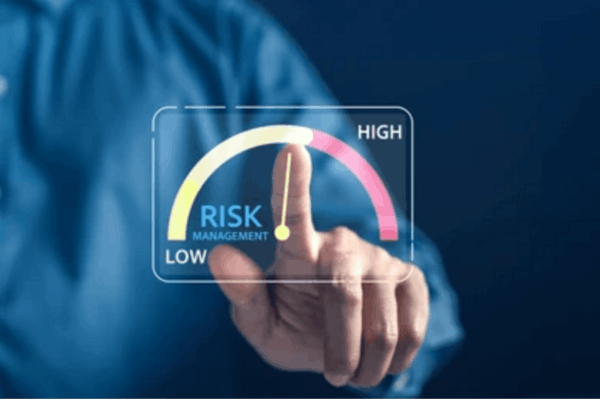
Price volatility
Stock prices can rise and fall sharply in response to news, earnings reports, and economic shifts. Even strong companies can experience significant drawdowns.
Business risk
A company’s future is uncertain. Competition, regulation, technological change, customer demand, and management decisions can all affect performance.
Dividend uncertainty
Dividend-paying companies can reduce or suspend dividends, especially during economic stress or when cash is needed for other priorities.
Bankruptcy and liquidation risk
If a company fails and its assets are liquidated, common stockholders are typically last in line behind bondholders and preferred stockholders.
In some cases, that means common shareholders may receive nothing.
Common Stock vs Preferred Stock vs Bonds
Common stock is often compared with preferred stock and bonds because each sits differently in the corporate capital structure.
| Feature | Common Stock | Preferred Stock | Bonds |
| What it represents | Ownership (equity) | Ownership with income-like features (equity) | A loan to the issuer (debt) |
| Voting rights | Often yes | Usually no | No |
| Payout type | Possible dividends | Often fixed/priority dividends | Interest payments |
| Priority in liquidation | Lowest | Higher than common | Higher than stocks |
| Upside potential | Typically highest | Often more limited | Typically limited |
Preferred stock generally has dividend priority over common stock and usually comes with higher priority in liquidation than common stockholders.
Bonds sit above both types of stock in priority because bondholders are creditors.
How to Buy Common Stocks
Most investors buy common stock through a brokerage account. A typical process looks like this:
- Open a brokerage account.
- Deposit funds.
- Research the company and locate the stock by name or ticker symbol.
- Choose an order type (commonly market or limit).
- Place the trade and monitor the investment over time.
Many investors also choose diversified approaches such as index funds or ETFs rather than relying on the performance of a single company.
Conclusion
So what are common stocks? Common stocks are shares that represent ownership in a company. They often include voting rights, may pay dividends, and can generate returns through long-term price appreciation. At the same time, common stocks can be volatile, and common shareholders are typically last in line if a company is liquidated.
Understanding how common stock works along with the roles of dividends, total return, share structure, and risk helps investors make clearer decisions about how to include stocks in a portfolio.

FAQs
In everyday usage, “stocks” often refers to common stocks. However, companies can also issue preferred stock, which has different dividend and priority features.
No. Common stock may pay dividends, but dividends are not guaranteed and depend on company policy and board decisions.
Common shareholders take more risk, especially because they are last in liquidation priority. This is one reason common stocks can offer higher upside when companies grow.
Disclaimer: This content is provided for informational purposes only and does not constitute, and should not be construed as, financial, investment, or other professional advice. No statement or opinion contained here in should be considered a recommendation by Ultima Markets or the author regarding any specific investment product, strategy, or transaction. Readers are advised not to rely solely on this material when making investment decisions and should seek independent advice where appropriate.
Latest Articles



FOLLOW US






Ultima Markets is a member of The Financial Commission, an international independent body responsible for resolving disputes in the Forex and CFD markets.

All clients of Ultima Markets are protected under insurance coverage provided by Willis Towers Watson (WTW), a global insurance brokerage established in 1828, with claims eligibility up to US$1,000,000 per account.

Ultima Markets is the first United CFD broker to be part of the United Nations Global Compact.
FOLLOW US
TRADE WITH US
RISK DISCLOSURE
Risk Warning:
Trading leveraged financial products, including Contracts for Difference (CFDs), carries a high level of risk and may result in losses exceeding your initial investment. These products are not suitable for all investors and should only be traded with funds you can afford to lose. You do not own or have any rights to the underlying assets of these derivatives (e.g., entitlement to dividends). Please ensure you fully understand the associated risks. Before trading, consider your level of experience, investment objectives, and seek independent financial advice if necessary. Refer to our legal documents and disclosures before making any trading decisions.
General Advice Warning:
The information provided on this website is general in nature and does not take into account your personal objectives, financial situation, or needs. Before acting on any advice, you should assess its appropriateness in light of your individual circumstances and consult our legal documentation.
Regional Restrictions:
The information and services on this website are not intended for residents of certain jurisdictions, including but not limited to the United States, United Kingdom, Singapore, and any jurisdictions subject to international sanctions. For further information, please contact our customer support team.
Regulatory Information:
Ultima Markets is a trading name shared amongst multiple entities operating in various jurisdictions. These following entities are authorised to operate under the Ultima Markets brand and trademarks.
-
Ultima Markets UK Limited, reference number 470325, is authorised and regulated by the Financial Conduct Authority (FCA). Registered address: 1 Blossom Yard, Fourth Floor, London, E1 6RS, UNITED KINGDOM.
-
Ultima Markets Ltd is authorised and regulated by the Financial Services Commission (FSC) of Mauritius as a Full-Service Investment Dealer (excluding Underwriting), under licence number GB 23201593.
Registered address: 2nd Floor, The Catalyst, 40 Silicon Avenue, Ebene Cybercity, 72201, Mauritius.
-
Ultima Markets EU OÜ, incorporated in Estonia with registry code 17134727. Registered address: Harju maakond, Tallinn, Kristiine linnaosa, Seebi tn 1-1501, 11316. This entity does not offer regulated financial products or provide trading services.

Copyright © 2026 Ultima Markets Ltd. All rights reserved.
-

Messenger


Continue on Messenger
Take the conversation to your Messenger account. You can return anytime.
Scan the QR code and then send the message that appears in your Messenger.
Open Messenger on this device.
-

Instagram

Continue on Instagram
Take the conversation to your Instagram account. You can return anytime.
Scan the QR code to open Instagram. Follow @ultima_markets to send a DM.
Open Instagram on this device.
-

Live Chat
-

