
Ultima Markets App
Trade Anytime, Anywhere





Important Information
This website is managed by Ultima Markets’ international entities, and it’s important to emphasise that they are not subject to regulation by the FCA in the UK. Therefore, you must understand that you will not have the FCA’s protection when investing through this website – for example:
- You will not be guaranteed Negative Balance Protection
- You will not be protected by FCA’s leverage restrictions
- You will not have the right to settle disputes via the Financial Ombudsman Service (FOS)
- You will not be protected by Financial Services Compensation Scheme (FSCS)
- Any monies deposited will not be afforded the protection required under the FCA Client Assets Sourcebook. The level of protection for your funds will be determined by the regulations of the relevant local regulator.
Note: Ultima Markets is currently developing a dedicated website for UK clients and expects to onboard UK clients under FCA regulations in 2026.
If you would like to proceed and visit this website, you acknowledge and confirm the following:
- 1.The website is owned by Ultima Markets’ international entities and not by Ultima Markets UK Ltd, which is regulated by the FCA.
- 2.Ultima Markets Limited, or any of the Ultima Markets international entities, are neither based in the UK nor licensed by the FCA.
- 3.You are accessing the website at your own initiative and have not been solicited by Ultima Markets Limited in any way.
- 4.Investing through this website does not grant you the protections provided by the FCA.
- 5.Should you choose to invest through this website or with any of the international Ultima Markets entities, you will be subject to the rules and regulations of the relevant international regulatory authorities, not the FCA.
Ultima Markets wants to make it clear that we are duly licensed and authorised to offer the services and financial derivative products listed on our website. Individuals accessing this website and registering a trading account do so entirely of their own volition and without prior solicitation.
By confirming your decision to proceed with entering the website, you hereby affirm that this decision was solely initiated by you, and no solicitation has been made by any Ultima Markets entity.
I confirm my intention to proceed and enter this website Please direct me to the website operated by Ultima Markets , regulated by the FCA in the United Kingdom

The Money Symbols Around the World
Currency symbols are more than just shorthand representations of monetary value; they play a crucial role in global finance, forex trading, and daily transactions. Having money symbols around the world help us quickly identify currencies in a world of varied economic systems.
They often reflect a country’s history, culture, and values, offering insight into the nation’s identity. Understanding currency symbols is key for navigating international trade, travel, and finance.
In this article, we’ll explore the most recognizable money symbols around the world, their origins, and how they continue to influence today’s global economy.
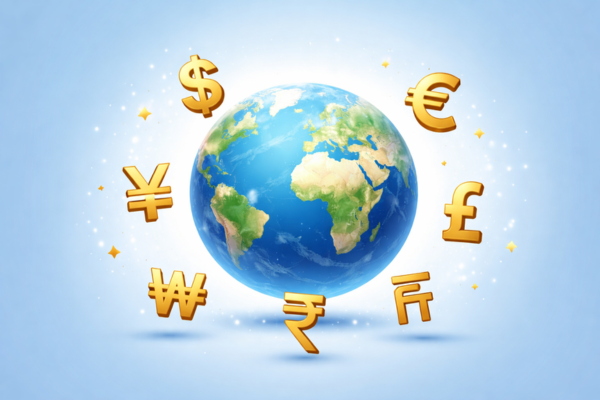
Top Money Symbols Around the World
1. Dollar Sign ($) – United States of America
The dollar sign ($) is arguably the most globally recognized money symbol, representing the US dollar and several other currencies. It originated from the Spanish peso, used widely in trade in the Americas. Over time, the symbol evolved from the abbreviation “Ps” for pesos, with the “P” eventually disappearing, leaving the “S” stacked over a line, giving us the dollar sign.
While the dollar sign represents the United States dollar (USD), it is also used by countries like Canada (CAD), Australia (AUD), and New Zealand (NZD). The dollar sign’s global recognition speaks to the US dollar’s dominance in world trade and finance.
2. Euro (€) – European Union
The euro (€) is the official currency of the Eurozone, which includes 19 of the 27 European Union member countries. The euro symbol reflects European unity, with the “E” for Europe encircled by two horizontal lines, representing stability and strength.
Since its introduction in 1999, the euro has become the second most traded currency in the world. Its symbol reflects Europe’s central role in the global economy, providing economic cohesion across member states.
3. Yen (¥) – Japan
The yen (¥) symbol, used for both the Japanese yen (JPY) and Chinese yuan (CNY), is derived from the kanji character “円” (en), which means “circle.” The two horizontal lines crossing the symbol represent the government’s control over its currency and its stability.
As one of the most traded currencies globally, the yen plays a significant role in international markets, especially in Asia. The yen’s symbol is synonymous with Japan’s economic power and global influence.
4. Pound (£) – United Kingdom
The British pound (£), the oldest currency still in use today, has its roots in the Latin word “libra,” meaning “pound weight.” The vertical lines in the symbol are believed to represent the letter “L” for libra.
The pound has played a central role in British economic history, and its symbol continues to signify the UK’s financial prominence. Despite political and economic shifts, the pound remains one of the world’s most traded currencies.
5. Rupee (₹) – India
India’s rupee (₹) symbol, officially adopted in 2010, is a blend of the Roman “R” and the Devanagari “र” (ra) script. The two horizontal lines across the symbol represent India’s national flag, symbolizing unity.
The rupee’s design mirrors India’s growing global economic influence and reflects the country’s modern aspirations, as it continues to play an important role in global trade and finance.
6. Won (₩) – South Korea
Introduced in 1945, the South Korean won (₩) symbol is derived from the “W” in “won.” The two horizontal lines through the “W” represent stability and control over the currency.
As South Korea continues to expand its influence in technology and manufacturing, the won’s symbol has become increasingly recognized internationally, signaling the nation’s economic strength.
7. Peso ($ or Ps) – Mexico and Latin America
The peso is used in several Latin American countries, including Mexico, Argentina, and the Philippines. In Mexico, it is often represented by the “$” symbol, though “Ps” is sometimes used in other regions to avoid confusion with the US dollar.
The peso continues to be vital in the financial transactions of Latin America, and its symbol is essential for identifying the currency in trade and investment contexts.
8. Franc (Fr) – Switzerland and France
The franc (Fr) has long been associated with stability, especially in Switzerland, where the Swiss franc (CHF) is considered a “safe haven” currency. The symbol “Fr” comes from the word “franc,” which referred to free men or territories under the French king in medieval Europe.
Switzerland’s strong banking system and financial stability have helped maintain the franc’s reputation as a stable currency.
9. Ringgit (RM) – Malaysia
The Malaysian ringgit (RM) symbol incorporates the letter “R” for “ringgit,” derived from the Malay word for “jagged,” reflecting the traditional design of coins. Introduced in 1975, the ringgit plays a significant role in Southeast Asia’s economy.
The ringgit’s symbol is a representation of Malaysia’s unique position in the global marketplace.
10. Lira (₺) – Turkey
The Turkish lira (₺) symbol, introduced in 2012, incorporates the letter “L” with a visual representation of the ancient currency system of the Ottoman Empire. The lira’s symbol reflects Turkey’s rich cultural and economic history.
While the lira has experienced fluctuations, its symbol remains a significant part of Turkey’s identity in the financial world.
Currency Symbol Placement
The placement of currency symbols can vary widely across the world, reflecting cultural traditions and practical conventions. In many English-speaking countries like the United States, Canada, and Australia, the symbol is placed before the amount (e.g., $100, CA$100). This convention is also followed by the Indian rupee (₹500).
In contrast, many European countries that use the euro place the symbol after the amount (e.g., 50€ in France). These differences highlight cultural and linguistic influences on the formatting of currency.
Being aware of these conventions is crucial for businesses and individuals dealing with international trade, travel, or digital transactions, ensuring clarity and avoiding confusion in cross-border dealings.
The Modern Evolution of Currency Symbols
Currency symbols are evolving to meet the needs of modern economies. For instance, Saudi Arabia introduced a new symbol for its riyal () in 2025, blending traditional Arabic calligraphy with modern financial aspirations. This demonstrates that currency symbols are not static, they adapt to both cultural shifts and the demands of global commerce.
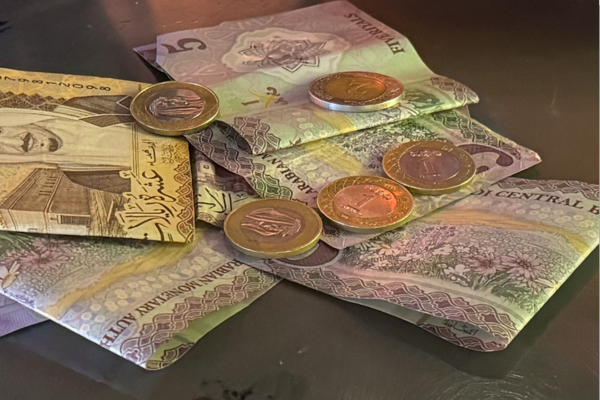
While some currencies rely on their three-letter ISO 4217 codes (like EUR, USD), which are used in formal transactions and international banking, symbols are commonly used in daily commerce, marketing, and price tags. Understanding both symbols and currency codes is essential for accurate financial communication.
Money Symbols in Today’s Economy
Currency symbols are more than just a way to represent money, they embody a nation’s economic history, identity, and global influence. The money symbols around the world provide a simple way to identify currencies in everyday transactions, and understanding them is key to navigating international trade, travel, and finance.
FAQ
Some countries use the same currency symbol, like the dollar sign ($) or peso ($), to reflect historical ties or similarities in currency systems. Currency codes like USD and MXN are often used to distinguish between them in international trade.
ISO codes are three-letter abbreviations for currencies (e.g., USD for US Dollar, EUR for Euro). You can find them on financial websites.
Use ISO codes for international transactions and currency symbols for local pricing and consumer-facing contexts.
Disclaimer: This content is provided for informational purposes only and does not constitute, and should not be construed as, financial, investment, or other professional advice. No statement or opinion contained here in should be considered a recommendation by Ultima Markets or the author regarding any specific investment product, strategy, or transaction. Readers are advised not to rely solely on this material when making investment decisions and should seek independent advice where appropriate.
Latest Articles
FOLLOW US






Ultima Markets is a member of The Financial Commission, an international independent body responsible for resolving disputes in the Forex and CFD markets.

All clients of Ultima Markets are protected under insurance coverage provided by Willis Towers Watson (WTW), a global insurance brokerage established in 1828, with claims eligibility up to US$1,000,000 per account.

Ultima Markets is the first United CFD broker to be part of the United Nations Global Compact.
FOLLOW US
TRADE WITH US
RISK DISCLOSURE
Risk Warning:
Trading leveraged financial products, including Contracts for Difference (CFDs), carries a high level of risk and may result in losses exceeding your initial investment. These products are not suitable for all investors and should only be traded with funds you can afford to lose. You do not own or have any rights to the underlying assets of these derivatives (e.g., entitlement to dividends). Please ensure you fully understand the associated risks. Before trading, consider your level of experience, investment objectives, and seek independent financial advice if necessary. Refer to our legal documents and disclosures before making any trading decisions.
General Advice Warning:
The information provided on this website is general in nature and does not take into account your personal objectives, financial situation, or needs. Before acting on any advice, you should assess its appropriateness in light of your individual circumstances and consult our legal documentation.
Regional Restrictions:
The information and services on this website are not intended for residents of certain jurisdictions, including but not limited to the United States, United Kingdom, Singapore, and any jurisdictions subject to international sanctions. For further information, please contact our customer support team.
Regulatory Information:
Ultima Markets is a trading name shared amongst multiple entities operating in various jurisdictions. These following entities are authorised to operate under the Ultima Markets brand and trademarks.
-
Ultima Markets UK Limited, reference number 470325, is authorised and regulated by the Financial Conduct Authority (FCA). Registered address: 1 Blossom Yard, Fourth Floor, London, E1 6RS, UNITED KINGDOM.
-
Ultima Markets Ltd is authorised and regulated by the Financial Services Commission (FSC) of Mauritius as a Full-Service Investment Dealer (excluding Underwriting), under licence number GB 23201593.
Registered address: 2nd Floor, The Catalyst, 40 Silicon Avenue, Ebene Cybercity, 72201, Mauritius.

Copyright © 2026 Ultima Markets Ltd. All rights reserved.
-

Messenger


Continue on Messenger
Take the conversation to your Messenger account. You can return anytime.
Scan the QR code and then send the message that appears in your Messenger.
Open Messenger on this device.
-

Instagram

Continue on Instagram
Take the conversation to your Instagram account. You can return anytime.
Scan the QR code to open Instagram. Follow @ultima_markets to send a DM.
Open Instagram on this device.
-

Live Chat
-

