
Ultima Markets App
Trade Anytime, Anywhere





Important Information
This website is managed by Ultima Markets’ international entities, and it’s important to emphasise that they are not subject to regulation by the FCA in the UK. Therefore, you must understand that you will not have the FCA’s protection when investing through this website – for example:
- You will not be guaranteed Negative Balance Protection
- You will not be protected by FCA’s leverage restrictions
- You will not have the right to settle disputes via the Financial Ombudsman Service (FOS)
- You will not be protected by Financial Services Compensation Scheme (FSCS)
- Any monies deposited will not be afforded the protection required under the FCA Client Assets Sourcebook. The level of protection for your funds will be determined by the regulations of the relevant local regulator.
Note: Ultima Markets is currently developing a dedicated website for UK clients and expects to onboard UK clients under FCA regulations in 2026.
If you would like to proceed and visit this website, you acknowledge and confirm the following:
- 1.The website is owned by Ultima Markets’ international entities and not by Ultima Markets UK Ltd, which is regulated by the FCA.
- 2.Ultima Markets Limited, or any of the Ultima Markets international entities, are neither based in the UK nor licensed by the FCA.
- 3.You are accessing the website at your own initiative and have not been solicited by Ultima Markets Limited in any way.
- 4.Investing through this website does not grant you the protections provided by the FCA.
- 5.Should you choose to invest through this website or with any of the international Ultima Markets entities, you will be subject to the rules and regulations of the relevant international regulatory authorities, not the FCA.
Ultima Markets wants to make it clear that we are duly licensed and authorised to offer the services and financial derivative products listed on our website. Individuals accessing this website and registering a trading account do so entirely of their own volition and without prior solicitation.
By confirming your decision to proceed with entering the website, you hereby affirm that this decision was solely initiated by you, and no solicitation has been made by any Ultima Markets entity.
I confirm my intention to proceed and enter this website Please direct me to the website operated by Ultima Markets , regulated by the FCA in the United Kingdom

STRF Stock Outlook: What’s the Next Move?
STRF stock has become a popular search because it sits in a very specific spot in Strategy’s (formerly known as MicroStrategy) capital stack. It is not the same as MSTR common stock, and it is not a Bitcoin ETF either. STRF is a preferred share built for income, but it is issued by a company whose balance sheet narrative is still heavily linked to Bitcoin and capital markets activity.
This guide breaks down what STRF stock is, what the dividend terms look like, what has been moving the price, and what market commentators are watching next.

What Is the STRF Stock?
STRF is Strategy’s 10% Series A Perpetual Strife Preferred Stock. “Preferred” means it generally sits above common shareholders for dividends and liquidation distributions, based on the terms in the prospectus. “Perpetual” means there is no maturity date.
Strategy presents STRF as its senior most perpetual preferred stock and frames it as long duration senior credit style exposure rather than a high beta equity position.
STRF Stock Price And Yield Snapshot
As of the latest available quote feed, STRF traded around $103.54.
Because STRF is a fixed dividend preferred, readers usually want the practical translation: what does today’s price imply for yield?
- STRF’s dividend rate is 10% on a $100 stated amount, which is $10 per share per year if paid as scheduled.
- At roughly $103.54, the simple current yield works out to about 9.7% ($10 divided by $103.54), before taxes and fees.
That is the core trade off for most preferred shares. When the market price rises above par, the effective yield falls. When price drops, the effective yield rises.
STRF Dividend Rate Payment Dates And Record Dates
STRF accumulates cumulative dividends at 10.00% per year on the $100 stated amount, payable quarterly in arrears.
The prospectus terms outline a standard quarterly schedule:
- Payment dates: March 31, June 30, September 30, December 31
- Record dates: March 15, June 15, September 15, December 15
Strategy’s STRF page lists the next upcoming dates:
- Next record date: March 15, 2026
- Next payout date: March 31, 2026
If you are adding a short dividend history paragraph, one useful detail is that early payments can look slightly irregular because of launch timing. Dividend trackers show a larger first payment followed by normal quarterly amounts.
Key Terms That Make STRF Different
Many quote pages stop at “10% dividend”. STRF’s filings include features that matter when markets turn risk off.
Cumulative Dividends With A Step Up Penalty
If STRF dividends are not paid on a scheduled payment date, additional amounts can accrue on the unpaid dividends and compound quarterly, with the rate stepping up over time, subject to a stated maximum.
The simple takeaway is that STRF is structured to make missed dividends increasingly expensive for the issuer.
Deferral Framework
The filings describe a process if a dividend is not declared by the record date, including a notice of deferral concept and a stated intention to use commercially reasonable efforts to raise proceeds over a defined period to address deferred amounts, subject to legal limits.
This is not a guarantee of payment, but it is a clearer framework than many high yield preferred issues provide.
Seniority In Strategy’s Preferred Stack
Barron’s and Strategy’s disclosures describe STRF as senior to Strategy’s other listed preferred(s) and to the common stock in the priority structure for dividends and liquidation distributions.
For readers comparing tickers, that senior positioning is one reason STRF is often discussed as the more defensive way to get Strategy exposure.
What Has Been Moving STRF Stock Recently
STRF is designed to be less volatile than MSTR common stock, but it can still reprice when the market reassesses Strategy’s cost of capital and perceived balance sheet risk.
The headlines that have mattered most recently tend to fall into three buckets.
Bitcoin And Strategy Balance Sheet Perception
Strategy’s equity has historically traded like a levered Bitcoin proxy, and market commentary has highlighted how crypto treasury stocks can enter a negative feedback loop when digital asset prices fall and investor confidence in funding cycles weakens.
Even if STRF is not a direct Bitcoin bet, those same risk perceptions can widen required yields for Strategy issued securities.
Index Methodology Risk
In December 2025, reporting highlighted an MSCI consultation on whether companies with very large digital asset holdings should remain eligible for certain indices, with the consultation scheduled to conclude on January 15, 2026.
For MSTR, the concern is potential passive selling and reduced index linked demand. For STRF, the relevance is second order: if common equity demand weakens, Strategy’s overall financing environment can tighten, which is one factor the market prices into preferred risk.
Ongoing Issuance And Supply
Strategy has used at the market programs and preferred issuance as part of its broader financing approach. Its filings disclose significant capacity and activity for STRF issuance, which matters because increased supply can pressure the trading price even when the coupon stays fixed.

STRF Stock Outlook
Traditional sell side analyst coverage tends to focus more on MSTR common stock than on preferred tickers like STRF, so much of the most actionable public commentary comes from market columns and credit focused discussion rather than standard price target notes.
Here are the points that show up most consistently in recent coverage.
The Preferred Case For STRF
Barron’s has argued that while Strategy’s common stock can look intimidating during drawdowns, the preferred structure can be worth a look for investors who understand the issuer risks and want cash yield rather than equity upside.
In late 2025, Barron’s referenced STRF trading below par around the mid 90s at one point, implying a yield above 10%.
Earlier Barron’s coverage of STRF’s launch also framed it as a way to gain exposure with lower risk than equity, while noting that the company’s core operating earnings profile is not the typical foundation for preferred dividends, which is why the structure and asset coverage debate matters.
Credit And Liquidity Focus
In early January 2026 coverage, Barron’s highlighted the broader pressure on crypto treasury companies and noted Strategy’s credit risk framing, including reference to a speculative grade rating and the importance of cash preservation and liquidity management as the cycle cooled.
For STRF holders, this is the most useful lens. The near term outlook tends to be less about whether MSTR rallies tomorrow and more about whether Strategy maintains enough financial flexibility to keep preferred dividends current through volatile periods.
What Could Improve The Outlook
The most common constructive catalysts discussed in coverage are:
- Stabilisation or recovery in crypto prices, which improves balance sheet optics and market confidence in funding cycles
- Clear outcomes on index methodology questions, which can reduce headline uncertainty around passive demand
- Continued emphasis on liquidity and funding discipline, which tends to support preferred pricing more than aggressive expansion
Conclusion
STRF stock is best viewed as a high yield preferred issued by Strategy, designed for income and positioned above common equity in the capital stack. Its appeal is straightforward: a fixed 10% dividend rate with structural features intended to discourage missed payments.
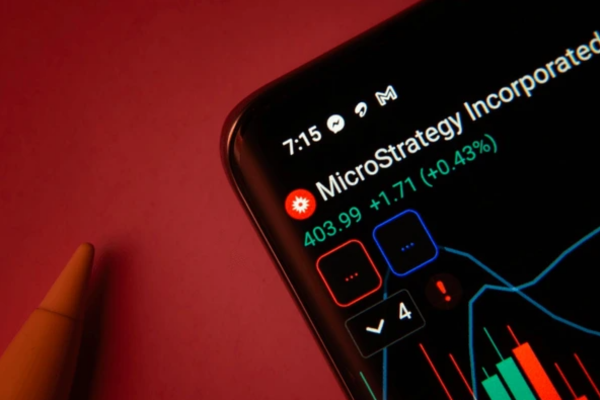
The outlook depends less on equity style narratives and more on the same fundamentals that drive preferred pricing everywhere: liquidity, funding conditions, and market confidence in the issuer during volatile periods.
Recent commentary has been clear that Strategy’s common stock can face sharp drawdowns when the crypto treasury cycle weakens, which is exactly why STRF is often discussed as the more defensive way to access the name, as long as investors treat the yield as compensation for issuer and cycle risk, not as a guarantee.
STRF is Strategy’s 10% perpetual preferred stock focused on dividend income. MSTR is the common stock and tends to move more with Bitcoin and equity sentiment.
Strategy lists the next STRF record date as March 15, 2026, with the payout date on March 31, 2026, subject to declaration.
STRF often reacts to interest rate expectations, Strategy balance sheet and funding headlines, preferred share issuance, and broader Bitcoin driven risk sentiment.
Disclaimer: This content is provided for informational purposes only and does not constitute, and should not be construed as, financial, investment, or other professional advice. No statement or opinion contained here in should be considered a recommendation by Ultima Markets or the author regarding any specific investment product, strategy, or transaction. Readers are advised not to rely solely on this material when making investment decisions and should seek independent advice where appropriate.
Latest Articles



FOLLOW US






Ultima Markets is a member of The Financial Commission, an international independent body responsible for resolving disputes in the Forex and CFD markets.

All clients of Ultima Markets are protected under insurance coverage provided by Willis Towers Watson (WTW), a global insurance brokerage established in 1828, with claims eligibility up to US$1,000,000 per account.

Ultima Markets is the first United CFD broker to be part of the United Nations Global Compact.
FOLLOW US
TRADE WITH US
RISK DISCLOSURE
Risk Warning:
Trading leveraged financial products, including Contracts for Difference (CFDs), carries a high level of risk and may result in losses exceeding your initial investment. These products are not suitable for all investors and should only be traded with funds you can afford to lose. You do not own or have any rights to the underlying assets of these derivatives (e.g., entitlement to dividends). Please ensure you fully understand the associated risks. Before trading, consider your level of experience, investment objectives, and seek independent financial advice if necessary. Refer to our legal documents and disclosures before making any trading decisions.
General Advice Warning:
The information provided on this website is general in nature and does not take into account your personal objectives, financial situation, or needs. Before acting on any advice, you should assess its appropriateness in light of your individual circumstances and consult our legal documentation.
Regional Restrictions:
The information and services on this website are not intended for residents of certain jurisdictions, including but not limited to the United States, United Kingdom, Singapore, and any jurisdictions subject to international sanctions. For further information, please contact our customer support team.
Regulatory Information:
Ultima Markets is a trading name shared amongst multiple entities operating in various jurisdictions. These following entities are authorised to operate under the Ultima Markets brand and trademarks.
-
Ultima Markets UK Limited, reference number 470325, is authorised and regulated by the Financial Conduct Authority (FCA). Registered address: 1 Blossom Yard, Fourth Floor, London, E1 6RS, UNITED KINGDOM.
-
Ultima Markets Ltd is authorised and regulated by the Financial Services Commission (FSC) of Mauritius as a Full-Service Investment Dealer (excluding Underwriting), under licence number GB 23201593.
Registered address: 2nd Floor, The Catalyst, 40 Silicon Avenue, Ebene Cybercity, 72201, Mauritius.

Copyright © 2026 Ultima Markets Ltd. All rights reserved.
-

Messenger


Continue on Messenger
Take the conversation to your Messenger account. You can return anytime.
Scan the QR code and then send the message that appears in your Messenger.
Open Messenger on this device.
-

Instagram

Continue on Instagram
Take the conversation to your Instagram account. You can return anytime.
Scan the QR code to open Instagram. Follow @ultima_markets to send a DM.
Open Instagram on this device.
-

Live Chat
-

