Important Information
This website is managed by Ultima Markets’ international entities, and it’s important to emphasise that they are not subject to regulation by the FCA in the UK. Therefore, you must understand that you will not have the FCA’s protection when investing through this website – for example:
- You will not be guaranteed Negative Balance Protection
- You will not be protected by FCA’s leverage restrictions
- You will not have the right to settle disputes via the Financial Ombudsman Service (FOS)
- You will not be protected by Financial Services Compensation Scheme (FSCS)
- Any monies deposited will not be afforded the protection required under the FCA Client Assets Sourcebook. The level of protection for your funds will be determined by the regulations of the relevant local regulator.
Note: UK clients are kindly invited to visit https://www.ultima-markets.co.uk/. Ultima Markets UK expects to begin onboarding UK clients in accordance with FCA regulatory requirements in 2026.
If you would like to proceed and visit this website, you acknowledge and confirm the following:
- 1.The website is owned by Ultima Markets’ international entities and not by Ultima Markets UK Ltd, which is regulated by the FCA.
- 2.Ultima Markets Limited, or any of the Ultima Markets international entities, are neither based in the UK nor licensed by the FCA.
- 3.You are accessing the website at your own initiative and have not been solicited by Ultima Markets Limited in any way.
- 4.Investing through this website does not grant you the protections provided by the FCA.
- 5.Should you choose to invest through this website or with any of the international Ultima Markets entities, you will be subject to the rules and regulations of the relevant international regulatory authorities, not the FCA.
Ultima Markets wants to make it clear that we are duly licensed and authorised to offer the services and financial derivative products listed on our website. Individuals accessing this website and registering a trading account do so entirely of their own volition and without prior solicitation.
By confirming your decision to proceed with entering the website, you hereby affirm that this decision was solely initiated by you, and no solicitation has been made by any Ultima Markets entity.
I confirm my intention to proceed and enter this website Please direct me to the website operated by Ultima Markets , regulated by the FCA in the United Kingdom
Ultima Markets App
Trade Anytime, Anywhere





SpaceX IPO 2026: What Investors Should Know
The SpaceX IPO story has sharpened in recent weeks, not because SpaceX has filed to go public, but because private market pricing has moved again in a big way. In mid December 2025, Reuters reported SpaceX launched an insider share sale that values the company at about $800 billion, with shares offered at $421 and up to $2.56 billion available in the transaction.
That matters for anyone tracking a potential SpaceX IPO in 2026, and it also matters for Alphabet shareholders. Alphabet is one of SpaceX’s early outside investors, so a future listing could make the value of that stake far more visible to markets.
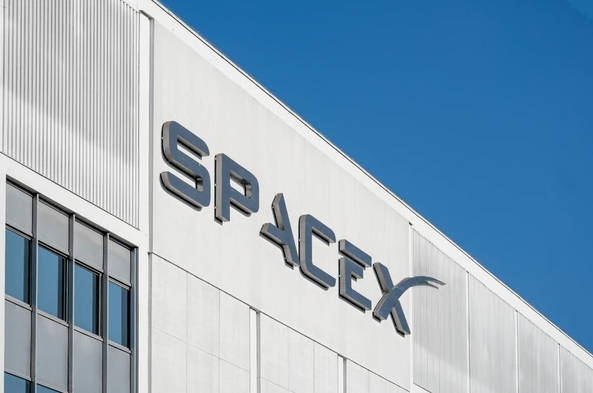
Why SpaceX Might Go Public in 2026
The clearest datapoint right now is the secondary sale. According to Reuters, SpaceX CFO Bret Johnsen told shareholders the company is preparing for a possible IPO in 2026, while also stressing that timing and valuation are still uncertain and dependent on execution and market conditions.
A few key takeaways from the latest reporting:
- Valuation reset: the reported $800 billion level is a major step up versus earlier private market pricing. Reuters also noted discussion of a sale that would value SpaceX at $800 billion, roughly double a more recent $400 billion secondary valuation.
- Capital raising potential: Reports say the IPO could raise more than $25 billion as early as June 2026, if it happens.
- This is not an IPO yet: the current move is a private share sale, which can boost liquidity for employees and existing shareholders while signalling demand ahead of any public offering.
In other words, a SpaceX IPO is still a “maybe”, but the company’s own communications are now more explicit about the pathway than before.
What is Driving the SpaceX Valuation

Starlink Has Become A Core Business Line
A major reason investors are willing to price SpaceX like an infrastructure company is Starlink’s scale.
Reuters reported this week that Starlink is serving over 8 million users across more than 150 markets, and demand for user terminals continues to pull in a large supply chain. It is referenced that Starlink is reporting 8 million global subscribers in separate coverage tied to Europe’s satellite internet landscape.
Starship And Launch Cadence Still Matter
Starship remains the long term wildcard, but SpaceX’s ability to execute at high launch frequency keeps reinforcing the investment case. SpaceX has set a record with 134 Falcon launches in 2024 and is aiming to exceed that with 170 launches in 2025.
Regulation And Competition Are Part Of The Story
Europe is also watching Starlink closely. In late November 2025, Reuters reported Starlink secured a long term licence in France, while Amazon’s satellite internet licence faced a legal challenge there, reflecting growing scrutiny and competition in the sector.
What Elon Musk Has Said About Going Public
Musk’s clearest IPO framing has historically been about Starlink, not SpaceX as a whole.
He has said Starlink would go public once its cash flow is reasonably predictable. Later, he said Starlink reached breakeven cash flow, which some investors read as one step closer to the “predictable cash flow” threshold needed for an eventual listing.
That does not automatically mean an IPO is imminent. But it explains why markets keep circling back to the same idea: if SpaceX wants a public market story that can survive quarterly scrutiny, Starlink is the obvious foundation.
Why Are Traders Looking At Alphabet?
The reason is simple. If SpaceX goes public, Alphabet’s stake could become one of the most valuable non core holdings inside a public company.
The Original Investment
In 2015, Google and Fidelity invested about $1 billion in SpaceX, and SpaceX said they would collectively own just under 10 percent.
Many market write ups estimate Google’s portion at roughly $900 million for about a 7.4 percent stake at the time.
Alphabet does not routinely publish a current ownership percentage, and later funding rounds can dilute earlier stakes, so treat any single percentage today as an estimate rather than a confirmed number.
Alphabet Has Already Seen Meaningful Paper Gains
According to Bloomberg, Alphabet reported results in April 2025 that included an $8 billion unrealised gain tied to a private company investment, widely understood in subsequent reporting to be SpaceX.
That matters for one simple reason: the market has already seen that SpaceX valuation changes can become financially material in headlines around Alphabet’s earnings.
A Quick Valuation Scenario
If you use the 7.4% estimate as a simple illustration:
- At $800 billion, that stake implies about $59.2 billion of value (before dilution and lockup considerations).
- At a speculative $1.5 trillion IPO valuation, it implies about $111 billion.
This is why some investors call SpaceX a “hidden asset” inside Alphabet.
Risks And What Could Delay A SpaceX IPO
Even with momentum, it is worth staying realistic.
- SpaceX itself has flagged that an IPO is still uncertain, including timing and valuation.
- Some analysts have highlighted the tension between a public market investor base and Musk’s Mars focus, including the cost and risk of heavy R and D programmes.
- Valuation expectations are lofty, and any stumble in execution or market risk appetite can push the window out.
Conclusion
SpaceX remains one of the most exciting companies in the world. With its groundbreaking technologies, strong financials, and rapid revenue growth, SpaceX is well-positioned for a successful IPO in 2026.
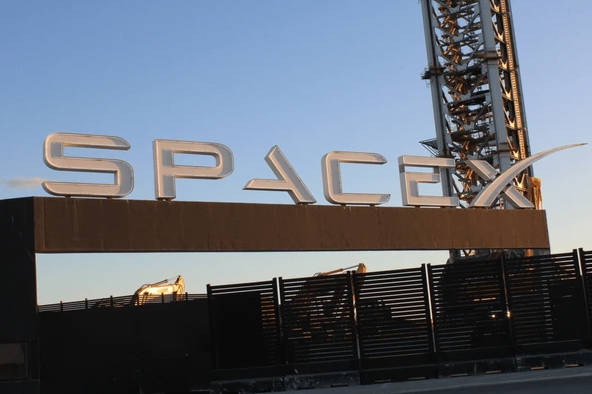
For traders watching public markets, Alphabet is a practical angle. Its early SpaceX investment has already produced meaningful paper gains, and a future IPO could make that value easier for the market to see, compare, and price.
Disclaimer: This content is provided for informational purposes only and does not constitute, and should not be construed as, financial, investment, or other professional advice. No statement or opinion contained here in should be considered a recommendation by Ultima Markets or the author regarding any specific investment product, strategy, or transaction. Readers are advised not to rely solely on this material when making investment decisions and should seek independent advice where appropriate.
Latest Articles



FOLLOW US






Ultima Markets is a member of The Financial Commission, an international independent body responsible for resolving disputes in the Forex and CFD markets.

All clients of Ultima Markets are protected under insurance coverage provided by Willis Towers Watson (WTW), a global insurance brokerage established in 1828, with claims eligibility up to US$1,000,000 per account.

Ultima Markets is the first United CFD broker to be part of the United Nations Global Compact.
FOLLOW US
TRADE WITH US
RISK DISCLOSURE
Risk Warning:
Trading leveraged financial products, including Contracts for Difference (CFDs), carries a high level of risk and may result in losses exceeding your initial investment. These products are not suitable for all investors and should only be traded with funds you can afford to lose. You do not own or have any rights to the underlying assets of these derivatives (e.g., entitlement to dividends). Please ensure you fully understand the associated risks. Before trading, consider your level of experience, investment objectives, and seek independent financial advice if necessary. Refer to our legal documents and disclosures before making any trading decisions.
General Advice Warning:
The information provided on this website is general in nature and does not take into account your personal objectives, financial situation, or needs. Before acting on any advice, you should assess its appropriateness in light of your individual circumstances and consult our legal documentation.
Regional Restrictions:
The information and services on this website are not intended for residents of certain jurisdictions, including but not limited to the United States, United Kingdom, Singapore, and any jurisdictions subject to international sanctions. For further information, please contact our customer support team.
Regulatory Information:
Ultima Markets is a trading name shared amongst multiple entities operating in various jurisdictions. These following entities are authorised to operate under the Ultima Markets brand and trademarks.
-
Ultima Markets UK Limited, reference number 470325, is authorised and regulated by the Financial Conduct Authority (FCA). Registered address: 1 Blossom Yard, Fourth Floor, London, E1 6RS, UNITED KINGDOM.
-
Ultima Markets Ltd is authorised and regulated by the Financial Services Commission (FSC) of Mauritius as a Full-Service Investment Dealer (excluding Underwriting), under licence number GB 23201593.
Registered address: 2nd Floor, The Catalyst, 40 Silicon Avenue, Ebene Cybercity, 72201, Mauritius.
-
Ultima Markets EU OÜ, incorporated in Estonia with registry code 17134727. Registered address: Harju maakond, Tallinn, Kristiine linnaosa, Seebi tn 1-1501, 11316. This entity does not offer regulated financial products or provide trading services.

Copyright © 2026 Ultima Markets Ltd. All rights reserved.
-

Messenger


Continue on Messenger
Take the conversation to your Messenger account. You can return anytime.
Scan the QR code and then send the message that appears in your Messenger.
Open Messenger on this device.
-

Instagram

Continue on Instagram
Take the conversation to your Instagram account. You can return anytime.
Scan the QR code to open Instagram. Follow @ultima_markets to send a DM.
Open Instagram on this device.
-

Live Chat
-

