
Ultima Markets App
Trade Anytime, Anywhere





Important Information
This website is managed by Ultima Markets’ international entities, and it’s important to emphasise that they are not subject to regulation by the FCA in the UK. Therefore, you must understand that you will not have the FCA’s protection when investing through this website – for example:
- You will not be guaranteed Negative Balance Protection
- You will not be protected by FCA’s leverage restrictions
- You will not have the right to settle disputes via the Financial Ombudsman Service (FOS)
- You will not be protected by Financial Services Compensation Scheme (FSCS)
- Any monies deposited will not be afforded the protection required under the FCA Client Assets Sourcebook. The level of protection for your funds will be determined by the regulations of the relevant local regulator.
Note: Ultima Markets is currently developing a dedicated website for UK clients and expects to onboard UK clients under FCA regulations in 2026.
If you would like to proceed and visit this website, you acknowledge and confirm the following:
- 1.The website is owned by Ultima Markets’ international entities and not by Ultima Markets UK Ltd, which is regulated by the FCA.
- 2.Ultima Markets Limited, or any of the Ultima Markets international entities, are neither based in the UK nor licensed by the FCA.
- 3.You are accessing the website at your own initiative and have not been solicited by Ultima Markets Limited in any way.
- 4.Investing through this website does not grant you the protections provided by the FCA.
- 5.Should you choose to invest through this website or with any of the international Ultima Markets entities, you will be subject to the rules and regulations of the relevant international regulatory authorities, not the FCA.
Ultima Markets wants to make it clear that we are duly licensed and authorised to offer the services and financial derivative products listed on our website. Individuals accessing this website and registering a trading account do so entirely of their own volition and without prior solicitation.
By confirming your decision to proceed with entering the website, you hereby affirm that this decision was solely initiated by you, and no solicitation has been made by any Ultima Markets entity.
I confirm my intention to proceed and enter this website Please direct me to the website operated by Ultima Markets , regulated by the FCA in the United Kingdom

Recession vs Depression: Key Differences
In the realm of economics, the terms “recession” and “depression” are often used interchangeably. However, they recession vs depression both refer to different levels of economic downturn, each with distinct characteristics, severity, and duration. While a recession is a normal part of the economic cycle, a depression is rare and much more severe.
Understanding the differences between these two phases is crucial as they significantly impact individuals, businesses, and the global economy. This article explores the key differences between a recession vs depression, their causes, and how they affect businesses and individuals.
What Is a Recession?
A recession is a period of economic decline, typically defined by two consecutive quarters of negative GDP growth. This means that the economy is shrinking, and various indicators such as consumer spending, industrial production, and employment also show signs of slowdown.
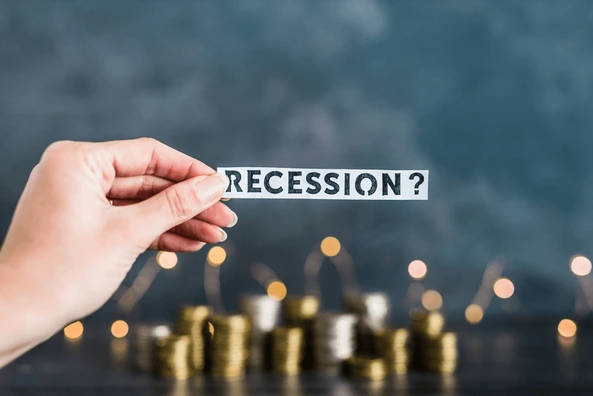
Recessions are often triggered by a mix of factors. This includes economic shocks, high inflation, or an external crisis. While they can be challenging for individuals and businesses, recessions are a normal part of the business cycle, with the economy eventually rebounding.
Key Characteristics of a Recession:
- Duration: Recessions typically last from a few months to up to two years.
- Economic Indicators: In addition to negative GDP growth, recessions are marked by rising unemployment, reduced consumer spending, and slowing industrial production.
- Causes: Recessions can be caused by various factors such as high inflation, external economic shocks, or financial market corrections. For example, The Great Recession of 2008 was triggered by the collapse of the housing bubble, causing a massive financial crisis and significant contraction in global economic activity.
Despite their severity, recessions are often self-correcting. Governments and central banks usually step in with fiscal stimulus or monetary easing to help revive the economy, making them less disruptive in the long run.
What Is a Depression?
A depression is a much more severe and prolonged downturn than a recession. Unlike a recession, which might last only a year or two, a depression can last several years and involves a sharp and sustained decline in economic activity. Depressions are rare, but when they occur, their effects can be catastrophic for individuals, businesses, and governments worldwide.

Key Characteristics of a Depression:
- Duration: Depressions last much longer than recessions, often several years.
- Economic Indicators: A depression is marked by a sharp decline in GDP (often by more than 10%), widespread unemployment (often exceeding 20%), and deflation, where prices actually decrease rather than increase.
- Causes: Depressions often arise from severe systemic failures, such as a major banking collapse, excessive national debt, or deep political instability. The Great Depression of the 1930s is the most well-known example, where the global economy contracted by about 30% and unemployment in the U.S. reached 25%.
While recessions are part of the regular economic cycle, depressions represent a breakdown of the economic system that requires a much longer and more painful recovery process.
Key Differences of Recession vs Depression
The primary difference between a recession vs depression is the severity and duration of the economic downturn. While both terms describe economic contractions, the impact of a depression is much more severe and long-lasting.
| Feature | Recession | Depression |
| Duration | A few months to a couple of years | Several years |
| GDP Growth | Moderate contraction | Severe contraction, often >10% |
| Unemployment | Rises, but typically not extreme | Exceeds 20%, often with long-lasting effects |
| Economic Impact | Temporary slowdown, some businesses may survive | Widespread and prolonged hardship, massive closures |
A recession typically involves a temporary slowdown in economic activity, whereas a depression signifies a massive and prolonged collapse that deeply affects society for years.
Are We in a Recession or Depression Now?
As of 2025, many economies, particularly in the U.S. and Europe, are experiencing economic slowdowns characterized by inflationary pressures, slowing growth, and rising unemployment. However, current conditions do not qualify as a depression.
Recession Indicators:
- Growth Slowdown: Many economies have shown signs of recession in the form of declining GDP growth. For example, the U.S. economy has faced shrinking output in some sectors and has seen a reduction in industrial activity and consumer spending.
- Unemployment: While unemployment rates have risen, they are still far below the levels seen during depressions. Unemployment is hovering around 4.5% in major economies like the U.S., indicating stress but not yet crisis levels.
- Inflation: Central banks, including the Federal Reserve, have been actively adjusting interest rates to combat high inflation, which is another indicator of economic pressure, but not enough to signal a full-scale depression.
Although the global economy is facing challenges, governments and central banks are responding with fiscal stimulus, monetary interventions, and social safety nets. These measures aim to avoid the depression scenario, where recovery would require years of aggressive intervention.
Can a Recession Lead to a Depression?
While not all recessions lead to depressions, it is possible for a recession to deepen and evolve into a depression if recovery efforts fail or if systemic failures worsen. The Great Depression started as a regular economic downturn, but several factors like the stock market crash of 1929, the collapse of banks, and poor governmental response caused it to spiral into a global crisis.
However, more recent recessions, such as the 2008 financial crisis, did not evolve into depressions despite initial fears. The intervention of governments and central banks, such as massive stimulus packages and interest rate cuts, helped stabilize the global economy and prevent a depression.
Role of Government and Monetary Policy
Governments and central banks play a critical role in managing both recessions and depressions. During a recession, fiscal stimulus (e.g., government spending on infrastructure, tax cuts) and monetary easing (e.g., lowering interest rates) are commonly used to stimulate economic activity and restore confidence.
In contrast, during a depression, government intervention is more aggressive, often involving large-scale bailouts, nationalization of failing banks, and other measures to stabilize the financial system.
The Great Depression saw such interventions in the form of the New Deal, a series of programs designed to provide relief, recovery, and reform.
Navigating Economic Downturns
Understanding the differences between recession vs depression is essential for individuals, businesses, and policymakers. While both refer to economic downturns, the recession is typically shorter and less severe, while a depression is much deeper and longer-lasting.

By recognizing the signs of an impending recession, such as declining GDP and rising unemployment, individuals and businesses can take steps to mitigate the effects. Depressions, while rare, require much more significant and long-term interventions, and preparation for any economic downturn is always prudent.
In both cases, resilience, adaptability, and informed decision-making are key to weathering economic uncertainty.
Disclaimer: This content is provided for informational purposes only and does not constitute, and should not be construed as, financial, investment, or other professional advice. No statement or opinion contained here in should be considered a recommendation by Ultima Markets or the author regarding any specific investment product, strategy, or transaction. Readers are advised not to rely solely on this material when making investment decisions and should seek independent advice where appropriate.
Latest Articles



FOLLOW US






Ultima Markets is a member of The Financial Commission, an international independent body responsible for resolving disputes in the Forex and CFD markets.

All clients of Ultima Markets are protected under insurance coverage provided by Willis Towers Watson (WTW), a global insurance brokerage established in 1828, with claims eligibility up to US$1,000,000 per account.

Ultima Markets is the first United CFD broker to be part of the United Nations Global Compact.
FOLLOW US
TRADE WITH US
RISK DISCLOSURE
Risk Warning:
Trading leveraged financial products, including Contracts for Difference (CFDs), carries a high level of risk and may result in losses exceeding your initial investment. These products are not suitable for all investors and should only be traded with funds you can afford to lose. You do not own or have any rights to the underlying assets of these derivatives (e.g., entitlement to dividends). Please ensure you fully understand the associated risks. Before trading, consider your level of experience, investment objectives, and seek independent financial advice if necessary. Refer to our legal documents and disclosures before making any trading decisions.
General Advice Warning:
The information provided on this website is general in nature and does not take into account your personal objectives, financial situation, or needs. Before acting on any advice, you should assess its appropriateness in light of your individual circumstances and consult our legal documentation.
Regional Restrictions:
The information and services on this website are not intended for residents of certain jurisdictions, including but not limited to the United States, United Kingdom, Singapore, and any jurisdictions subject to international sanctions. For further information, please contact our customer support team.
Regulatory Information:
Ultima Markets is a trading name shared amongst multiple entities operating in various jurisdictions. These following entities are authorised to operate under the Ultima Markets brand and trademarks.
-
Ultima Markets UK Limited, reference number 470325, is authorised and regulated by the Financial Conduct Authority (FCA). Registered address: 1 Blossom Yard, Fourth Floor, London, E1 6RS, UNITED KINGDOM.
-
Ultima Markets Ltd is authorised and regulated by the Financial Services Commission (FSC) of Mauritius as a Full-Service Investment Dealer (excluding Underwriting), under licence number GB 23201593.
Registered address: 2nd Floor, The Catalyst, 40 Silicon Avenue, Ebene Cybercity, 72201, Mauritius.

Copyright © 2025 Ultima Markets Ltd. All rights reserved.
-

Messenger


Continue on Messenger
Take the conversation to your Messenger account. You can return anytime.
Scan the QR code and then send the message that appears in your Messenger.
Open Messenger on this device.
-

Instagram

Continue on Instagram
Take the conversation to your Instagram account. You can return anytime.
Scan the QR code to open Instagram. Follow @ultima_markets to send a DM.
Open Instagram on this device.
-

Live Chat
-

