This website is managed by Ultima Markets’ international entities, and it’s important to emphasise that they are not subject to regulation by the FCA in the UK. Therefore, you must understand that you will not have the FCA’s protection when investing through this website – for example:
You will not be guaranteed Negative Balance Protection
You will not be protected by FCA’s leverage restrictions
You will not have the right to settle disputes via the Financial Ombudsman Service (FOS)
You will not be protected by Financial Services Compensation Scheme (FSCS)
Any monies deposited will not be afforded the protection required under the FCA Client Assets Sourcebook. The level of protection for your funds will be determined by the regulations of the relevant local regulator.
Note: UK clients are kindly invited to visit https://www.ultima-markets.co.uk/. Ultima Markets UK expects to begin onboarding UK clients in accordance with FCA regulatory requirements in 2026.
If you would like to proceed and visit this website, you acknowledge and confirm the following:
1.The website is owned by Ultima Markets’ international entities and not by Ultima Markets UK Ltd, which is regulated by the FCA.
2.Ultima Markets Limited, or any of the Ultima Markets international entities, are neither based in the UK nor licensed by the FCA.
3.You are accessing the website at your own initiative and have not been solicited by Ultima Markets Limited in any way.
4.Investing through this website does not grant you the protections provided by the FCA.
5.Should you choose to invest through this website or with any of the international Ultima Markets entities, you will be subject to the rules and regulations of the relevant international regulatory authorities, not the FCA.
Ultima Markets wants to make it clear that we are duly licensed and authorised to offer the services and financial derivative products listed on our website. Individuals accessing this website and registering a trading account do so entirely of their own volition and without prior solicitation.
By confirming your decision to proceed with entering the website, you hereby affirm that this decision was solely initiated by you, and no solicitation has been made by any Ultima Markets entity.
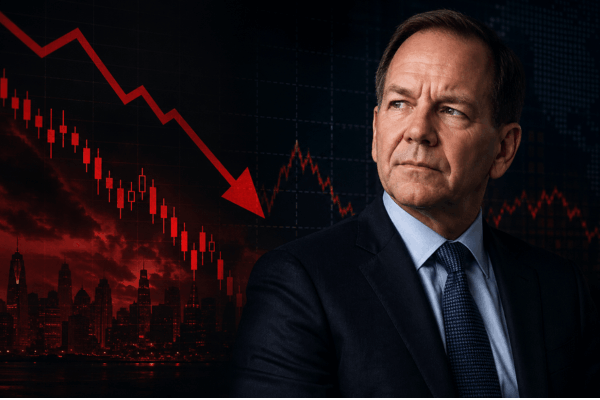
Are we heading towards the next stock market crash? Experts predict a downturn in 2026-2027. Find out what could trigger it and how to prepare for it.
As we move further into 2026, many investors are asking whether the next stock market crash is on the horizon. Recently, predictions from well-known figures such as Robert Kiyosaki and Paul Tudor Jones have raised alarms, suggesting that a significant downturn could be imminent.
These warnings are not limited to individual forecasters. Major financial institutions like Goldman Sachs, J.P. Morgan, and Morgan Stanley have also expressed concerns about elevated risks in the market.
In this article, we explore the factors that could lead to the next stock market crash, the predictions from top analysts, and how investors can prepare for the possibility of a downturn.
Robert Kiyosaki: A Coming Market Crisis
Robert Kiyosaki, the author of Rich Dad Poor Dad, has long been vocal about the possibility of a major financial crisis. His next stock market crash prediction specifically points to 2026-2027 as the likely period for a downturn.
Kiyosaki believes that market crashes are inevitable and that they present opportunities for those who are prepared to purchase quality assets at discounted prices during times of economic distress. In a recent post, Kiyosaki stated: “A massive market crash could come in 2026-2027. The coming crash may turn out to be another Great Depression.”
However, instead of focusing solely on the risks, he views a crash as a chance for savvy investors to seize valuable opportunities. His viewpoint is clear: “In every market crash of 1987, 2000, 2008, 2015, 2019, and 2022; I did not become poorer, I became richer.”
For Kiyosaki, buying assets like gold, silver, and bitcoin during a market decline is a key strategy for building wealth.
Paul Tudor Jones: A Historical Pattern of Market Cycles
Another prominent figure, Paul Tudor Jones, shares concerns about the next stock market crash prediction. Known for accurately predicting the 1987 crash, Jones believes that the market is due for a correction.
He suggests that mean reversion, a historical pattern where markets reset every 10 years, could trigger the next crash. According to Jones, the high stock valuations and economic conditions set the stage for a potential downturn in the next few years.
High Stock Valuations and Potential Risks
Jones highlights that U.S. stock market valuations are currently at historically high levels, with the stock market to GDP ratio surpassing 250%. This is significantly higher than the ratios seen during previous downturns, such as 2000 (170%) and 1929 (65%). With such inflated valuations, Jones predicts that long-term gains will be hard to achieve, and a substantial market drop is a real possibility in the coming years.
Key Triggers for the Next Market Crash
Jones also points to the expiration of lockup periods for upcoming IPOs as a potential trigger for the next stock market crash. When insiders are allowed to sell their shares, it can flood the market with stock, driving prices down. This was observed during the 2000 dot-com bubble, and the same could happen with companies like SpaceX, Chime, and Stripe, which are expected to go public soon.
The Economic Impact of a Market Crash
If the next stock market crash were to occur, its economic consequences could be severe. Jones believes that a 35% market drop could lead to a sharp reduction in tax revenue from capital gains, which would further worsen the fiscal deficit.
The bursting of bubbles in sectors like technology and real estate could also lead to job losses and reduced consumer spending, adding to the economic slowdown.
Potential Consequences of a Market Crash
Decline in Tax Revenue: A market drop would decrease capital gains tax revenue, adding to the budget deficit.
Economic Slowdown: The collapse of speculative sectors like tech and real estate could lead to widespread job losses.
Global Repercussions: A U.S. market crash could cause a ripple effect, negatively impacting global economies.
Analyst Predictions and Potential Risks
The next stock market crash prediction is not limited to Kiyosaki and Jones. Prominent financial institutions, such as Goldman Sachs, J.P. Morgan, and Morgan Stanley, have also raised concerns about the possibility of a market correction.
Goldman Sachs: Caution Amid Relief Rally
Goldman Sachs analysts have pointed out that, while markets have recently seen a relief rally, the risks of a downturn are still high. According to Goldman, the rally has obscured broader economic risks like inflation, geopolitical instability, and energy price volatility. All of which could contribute to the next stock market crash.
J.P. Morgan: Recession Probability and Caution
J.P. Morgan has assigned a 35% probability to the occurrence of a U.S. and global recession by 2026, indicating a potential for market stress in the near future. Their research suggests that persistent inflation and geopolitical risks are likely to weigh on market growth, creating the conditions for a potential downturn.
Morgan Stanley: Mixed Outlook
While Morgan Stanley acknowledges the risks of a stock market correction, the firm is more optimistic about the technology sector, particularly artificial intelligence.
Despite high valuations, they argue that strong corporate earnings, especially in the AI and tech space, could support the market in the short term. However, they still anticipate shallow pullbacks as the market faces challenges ahead.
Bank of England: Overvalued Markets
Sarah Breeden, Deputy Governor for Financial Stability at the Bank of England, has warned that global stock markets are overvalued and could be set to fall. Her comments align with concerns about market overheating and the potential risks associated with elevated valuations and geopolitical uncertainty.
Should Investors Be Worried?
With warnings from prominent figures like Kiyosaki and Jones, as well as analysts from major financial institutions, it’s clear that the next stock market crash prediction is not just speculation. It is based on observable market trends and historical patterns.
While some analysts remain cautious but optimistic, the risks of a downturn are undeniable, especially with high stock valuations, geopolitical instability, and potential economic slowdowns.
How to Prepare for a Market Crash
To protect themselves from the risks of a next stock market crash, investors can take several steps:
Diversification: Hold a diversified portfolio across various asset classes such as stocks, bonds, precious metals, and real estate to reduce exposure to any single sector.
Alternative Investments: Consider gold, bitcoin, and real estate, which often perform well during market downturns.
Long-Term Perspective: Avoid panic selling and stick to long-term investment goals.
Monitor Key Indicators: Keep an eye on inflation rates, central bank policies, and economic data that could signal a shift in market conditions.
The Role of Diversification and Alternative Assets
Diversification is one of the best strategies to mitigate risks during periods of uncertainty. By holding a mix of assets, you can reduce your exposure to any single sector.
Furthermore, alternative investments like gold, bitcoin, and real estate can help protect your portfolio against a market downturn.
Conclusion
Are we heading towards the next stock market crash? While no one can predict the exact timing of a downturn, the warnings from Kiyosaki, Jones, and institutional analysts suggest that the risks are real. Elevated stock valuations, geopolitical uncertainty, and economic pressures point to the possibility of a significant correction in the near future.
As both Kiyosaki and Jones suggest, a market crash can also be an opportunity to buy valuable assets at discounted prices. By preparing in advance, diversifying your portfolio, and focusing on long-term goals, you can better navigate the uncertainty and potentially benefit when the market recovers.
FAQs
What causes stock market crashes?
Stock market crashes are usually caused by overvalued stocks, economic downturns, and unforeseen global events. These factors create conditions where prices fall sharply.
How can I prepare for a market crash?
To prepare for a crash, diversify your investments across different asset classes and consider holding alternative assets like gold and bitcoin. Focus on long-term investment goals and avoid panic selling during volatility.
Can a market crash be beneficial for investors?
While a market crash can result in short-term losses, it also presents an opportunity to purchase quality assets at discounted prices. For long-term investors, this can lead to significant gains when the market rebounds.
Share Now
Disclaimer:This content is provided for informational purposes only and does not constitute, and should not be construed as, financial, investment, or other professional advice. No statement or opinion contained herein should be considered a recommendation by Ultima Markets or the author regarding any specific investment product, strategy, or transaction. Readers are advised not to rely solely on this material when making investment decisions and should seek independent advice where appropriate.
Thank you for visiting the Ultima Markets website. Please note that this website is intended for individuals residing in jurisdictions where access is permitted by law. Ultima and its affiliated entities do not operate in your home jurisdiction.
By clicking ‘Acknowledge’, you confirm that you are entering this website solely on your own initiative and not as a result of any specific marketing outreach. You wish to obtain information from this website based on reverse solicitation principles, in accordance with the applicable laws of your home jurisdiction.