This website is managed by Ultima Markets’ international entities, and it’s important to emphasise that they are not subject to regulation by the FCA in the UK. Therefore, you must understand that you will not have the FCA’s protection when investing through this website – for example:
You will not be guaranteed Negative Balance Protection
You will not be protected by FCA’s leverage restrictions
You will not have the right to settle disputes via the Financial Ombudsman Service (FOS)
You will not be protected by Financial Services Compensation Scheme (FSCS)
Any monies deposited will not be afforded the protection required under the FCA Client Assets Sourcebook. The level of protection for your funds will be determined by the regulations of the relevant local regulator.
Note: UK clients are kindly invited to visit https://www.ultima-markets.co.uk/. Ultima Markets UK expects to begin onboarding UK clients in accordance with FCA regulatory requirements in 2026.
If you would like to proceed and visit this website, you acknowledge and confirm the following:
1.The website is owned by Ultima Markets’ international entities and not by Ultima Markets UK Ltd, which is regulated by the FCA.
2.Ultima Markets Limited, or any of the Ultima Markets international entities, are neither based in the UK nor licensed by the FCA.
3.You are accessing the website at your own initiative and have not been solicited by Ultima Markets Limited in any way.
4.Investing through this website does not grant you the protections provided by the FCA.
5.Should you choose to invest through this website or with any of the international Ultima Markets entities, you will be subject to the rules and regulations of the relevant international regulatory authorities, not the FCA.
Ultima Markets wants to make it clear that we are duly licensed and authorised to offer the services and financial derivative products listed on our website. Individuals accessing this website and registering a trading account do so entirely of their own volition and without prior solicitation.
By confirming your decision to proceed with entering the website, you hereby affirm that this decision was solely initiated by you, and no solicitation has been made by any Ultima Markets entity.
Discover how Long Short Equity works, key performance metrics like Alpha, Beta, and Sharpe Ratio, and how this strategy can generate consistent returns.
What is Long Short Equity?
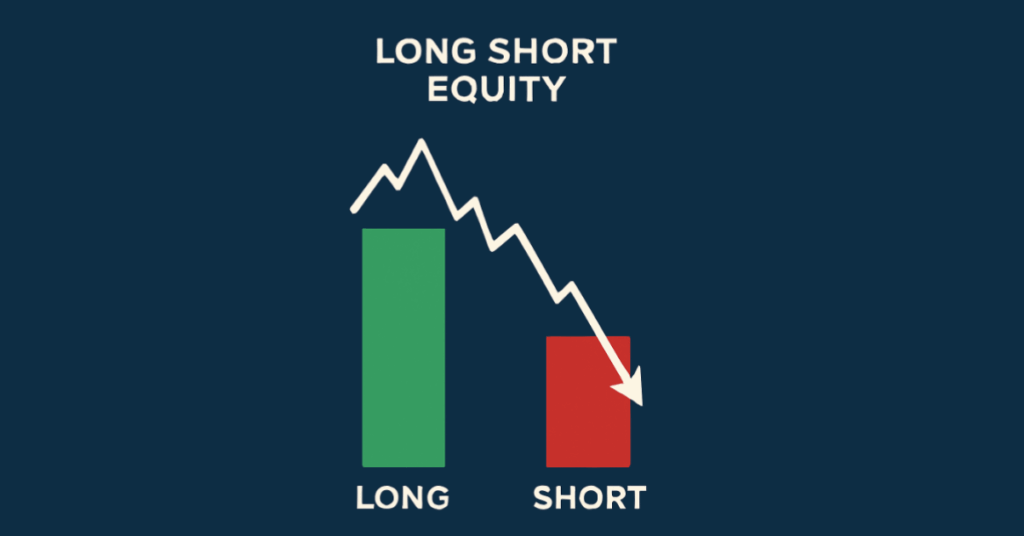
Long Short Equity is an investment strategy commonly used by hedge funds where the investor takes both long (buy) and short (sell) positions in stocks. The goal is to generate returns by profiting from the price movements of both undervalued and overvalued stocks, while minimizing overall market exposure. This strategy is market-neutral, aiming to reduce risk from broad market movements and generate profits regardless of whether the market goes up or down.
How Does Long Short Equity Work?
In a Long Short Equity strategy, hedge funds buy stocks that they believe are undervalued (long positions) and simultaneously sell stocks they believe are overvalued (short positions). By balancing the two, this strategy attempts to neutralize market risk while targeting consistent returns.
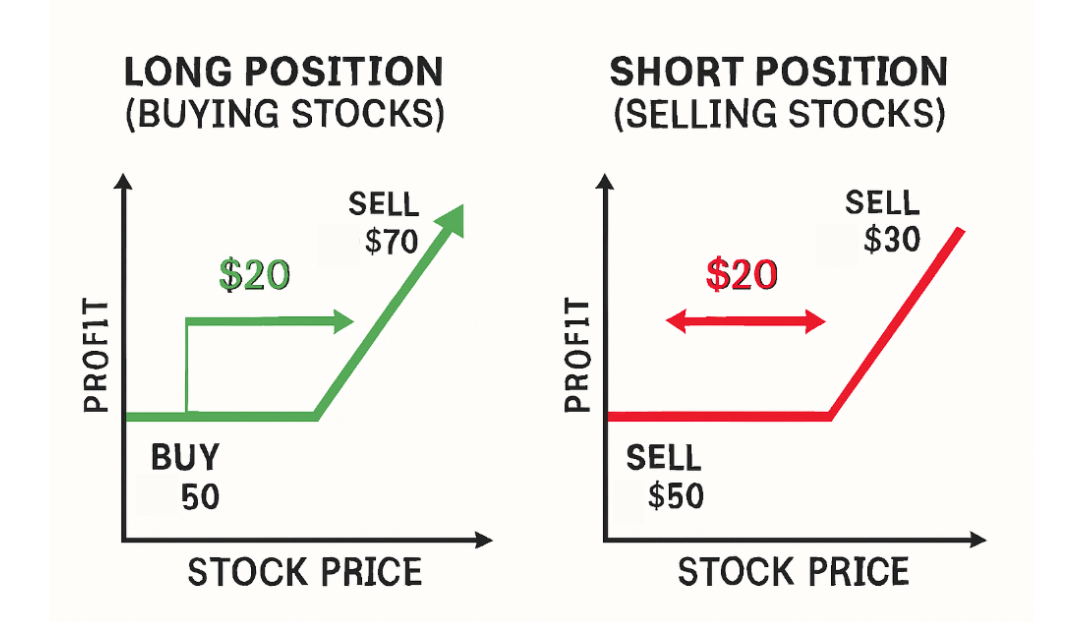
Long Positions (Buying Stocks)
In a long position, you buy stocks that you believe are undervalued or will increase in price.
For example, you buy shares of Company A at $50, thinking the stock price will rise. If the stock goes up to $70, you sell it, making a profit of $20 per share.
Short Positions (Selling Stocks)
In a short position, you borrow stocks from someone else and sell them at the current market price, hoping the stock’s price will go down.
For example, you borrow shares of Company B (currently priced at $50) and sell them. Later, the stock price drops to $30, so you buy back the shares at $30 and return them, making a profit of $20 per share.
The idea is that by balancing the long and short positions, you can profit regardless of whether the market goes up or down.
Why Do Investors Use Long Short Equity?
Hedge Against Market Risk: The strategy helps protect against major market movements. If the overall market goes down, shorting overvalued stocks can help offset losses from long positions.
Profit in Both Directions: If you choose the right stocks, you can make money in both rising and falling markets. This makes it appealing for investors looking to make consistent returns in all market conditions.
Example Scenario:
Imagine a market where stocks are moving up and down. You buy shares of Company A (long position) because you believe it will do well. At the same time, you short shares of Company B (short position) because you believe the stock is overvalued and its price will fall.
If Company A’s stock goes up, you make money from your long position. If Company B’s stock goes down, you make money from your short position. Both positions allow you to benefit from different market conditions.
Advantages of Long Short Equity
Market Neutrality
One of the key advantages of Long Short Equity is its ability to be market-neutral. This means that the strategy can profit regardless of whether the broader market is going up or down. By hedging risk through short positions, this strategy reduces the correlation with the overall market, providing stability to a portfolio during volatile times.
Diversification and Risk Reduction
Long Short Equity offers the opportunity to diversify a portfolio. Investors can hold long positions in some stocks while hedging risk with short positions in others. This dual approach helps reduce overall portfolio volatility, making it an attractive option for those seeking to minimize risk.
Potential for Alpha Generation
Skilled fund managers who execute Long Short Equity strategies effectively can generate alpha, returns that exceed market benchmarks. By identifying undervalued stocks to go long on and overvalued stocks to short, hedge funds can outperform market averages and create value beyond general market trends.
Risks of Long Short Equity
Short Squeeze: If a stock you’ve shorted suddenly rises in price, you could lose money quickly. This is called a short squeeze.
Leverage: Sometimes, investors use borrowed money to amplify returns, which also increases potential losses.
Complexity: It requires a good understanding of the market and the ability to correctly identify which stocks to buy or short.
Long Short Equity Performance Metrics
Alpha helps you understand if the strategy is generating returns beyond what would be expected based on the risk taken. Beta measures the portfolio’s sensitivity to the market, helping investors assess whether the strategy is more or less volatile than the market. Sharpe Ratio tells you if the returns are worth the risk taken, providing a risk-adjusted performance measure.
Alpha
Alpha represents the excess return of a portfolio compared to a benchmark (like the overall market) after accounting for risk. It’s often used to measure how much value a portfolio manager is adding (or subtracting) relative to a market index.
If a portfolio has an alpha of +2, it means the portfolio has generated 2% more return than expected based on its risk and market movements.
An alpha of 0 means the portfolio has performed in line with the expected return based on its risk.
A negative alpha indicates that the portfolio has underperformed relative to the market or its benchmark.
Positive alpha means the portfolio is doing well, outperforming the market after adjusting for risk.
Negative alpha suggests underperformance, meaning the portfolio isn’t delivering returns that justify the level of risk taken.
Beta
Beta measures the volatility or risk of a portfolio in comparison to the market. It indicates how much the portfolio’s value moves relative to changes in the overall market.
A beta of 1 means the portfolio’s movements are in line with the market. If the market goes up by 10%, the portfolio will likely go up by 10% as well.
A beta less than 1 means the portfolio is less volatile than the market. If the beta is 0.5, for example, a 10% market rise would result in a 5% increase in the portfolio’s value.
A beta greater than 1 means the portfolio is more volatile than the market. A beta of 1.5 means the portfolio would likely rise by 15% if the market rises by 10%.
Investors use beta to understand how sensitive a portfolio is to market movements. If you want a low-risk portfolio, you might look for a portfolio with a beta less than 1.
For Long Short Equity strategies, beta helps assess how much the portfolio’s returns are driven by market movements versus the individual stocks being targeted in long and short positions.
Sharpe Ratio
The Sharpe Ratio measures the risk-adjusted return of an investment. It tells investors whether the returns from an investment are due to smart decisions or excessive risk-taking. The higher the Sharpe ratio, the better the portfolio’s return relative to the risk it has taken.
A Sharpe ratio of 1 means the investment has generated 1 unit of return for every unit of risk.
A Sharpe ratio greater than 1 is considered good, as it indicates the portfolio has generated more return for the risk taken.
A Sharpe ratio less than 1 suggests the portfolio may not be compensating investors sufficiently for the level of risk taken.
The Sharpe ratio helps investors determine whether an investment is worth the risk. A higher Sharpe ratio means the portfolio is more efficient, generating a higher return for each unit of risk.
For Long Short Equity, the Sharpe ratio is a key metric to assess if the strategy is rewarding the investor appropriately for the level of risk involved in going long and short on stocks.
Conclusion
Incorporating Long Short Equity strategies into your investment approach can be an effective way to manage risk while generating consistent returns in both rising and falling markets. This strategy allows investors to profit from both sides of the market, buying undervalued stocks (long positions) and selling overvalued stocks (short positions), all while maintaining a market-neutral stance.
At Ultima Markets, we understand the importance of risk management and offer a platform that empowers investors with the tools needed for effective Long Short Equity strategies. By providing access to advanced trading features and a wide range of financial instruments, we support traders in making informed, data-driven decisions.
Whether you’re a beginner or an experienced trader, Ultima Markets offers the expertise, flexibility, and security needed to implement a strategy like Long Short Equity effectively. Our commitment to regulatory compliance and industry standards ensures that you can trade with confidence, knowing that your investments are in safe hands.
Share Now
Disclaimer:This content is provided for informational purposes only and does not constitute, and should not be construed as, financial, investment, or other professional advice. No statement or opinion contained herein should be considered a recommendation by Ultima Markets or the author regarding any specific investment product, strategy, or transaction. Readers are advised not to rely solely on this material when making investment decisions and should seek independent advice where appropriate.
Thank you for visiting the Ultima Markets website. Please note that this website is intended for individuals residing in jurisdictions where access is permitted by law. Ultima and its affiliated entities do not operate in your home jurisdiction.
By clicking ‘Acknowledge’, you confirm that you are entering this website solely on your own initiative and not as a result of any specific marketing outreach. You wish to obtain information from this website based on reverse solicitation principles, in accordance with the applicable laws of your home jurisdiction.