This website is managed by Ultima Markets’ international entities, and it’s important to emphasise that they are not subject to regulation by the FCA in the UK. Therefore, you must understand that you will not have the FCA’s protection when investing through this website – for example:
You will not be guaranteed Negative Balance Protection
You will not be protected by FCA’s leverage restrictions
You will not have the right to settle disputes via the Financial Ombudsman Service (FOS)
You will not be protected by Financial Services Compensation Scheme (FSCS)
Any monies deposited will not be afforded the protection required under the FCA Client Assets Sourcebook. The level of protection for your funds will be determined by the regulations of the relevant local regulator.
Note: UK clients are kindly invited to visit https://www.ultima-markets.co.uk/. Ultima Markets UK expects to begin onboarding UK clients in accordance with FCA regulatory requirements in 2026.
If you would like to proceed and visit this website, you acknowledge and confirm the following:
1.The website is owned by Ultima Markets’ international entities and not by Ultima Markets UK Ltd, which is regulated by the FCA.
2.Ultima Markets Limited, or any of the Ultima Markets international entities, are neither based in the UK nor licensed by the FCA.
3.You are accessing the website at your own initiative and have not been solicited by Ultima Markets Limited in any way.
4.Investing through this website does not grant you the protections provided by the FCA.
5.Should you choose to invest through this website or with any of the international Ultima Markets entities, you will be subject to the rules and regulations of the relevant international regulatory authorities, not the FCA.
Ultima Markets wants to make it clear that we are duly licensed and authorised to offer the services and financial derivative products listed on our website. Individuals accessing this website and registering a trading account do so entirely of their own volition and without prior solicitation.
By confirming your decision to proceed with entering the website, you hereby affirm that this decision was solely initiated by you, and no solicitation has been made by any Ultima Markets entity.
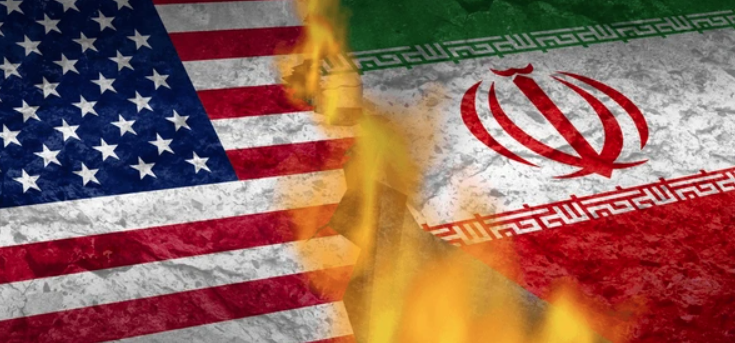
Is now a good time to buy stocks with the Iran war shaking global markets? Here's an up-to-date look at what's happening and what investors are doing now.
Yes, it can still be a good time to buy stocks during a war but timing and strategy matter. Long-term investors with a 3–5 year horizon have historically been rewarded for staying in the market through geopolitical crises. Short-term traders, however, should wait for the initial volatility to settle before deploying fresh capital. Yes for the long-term investor, not yet for the active trader. During the current U.S.-Iran war in 2026, major analysts including Barclays and Goldman Sachs are urging caution in the immediate term while keeping a positive long-term outlook intact.
If you’re someone with a long-term horizon for years, not months, the historical record is actually pretty reassuring. Major geopolitical shocks, even wars, have rarely derailed bull markets for long. The key question isn’t whether this conflict is bad. It clearly is. The question is whether it fundamentally breaks the economic story that’s been driving markets since 2022.
That story is strong corporate earnings, AI-driven productivity growth, falling interest rates hasn’t changed yet. Wells Fargo still has the S&P 500 at 7,500 by end-2026 as their base case. The bull market fundamentals remain intact, even if this week is going to be rough.
But if you’re an active trader or someone thinking about deploying fresh capital right now, the more relevant advice comes from Barclays: this is too early to buy the dip. Markets need time to assess how long this lasts, whether the Strait of Hormuz gets properly disrupted, and whether Iran’s promised retaliation escalates or fizzles. Buying before that picture clears is a gamble on timing, not a strategy. The smarter move, whether you’re a long-term investor or a short-term trader, watch the Strait of Hormuz updates closely over the next 48 to 72 hours. That’s where the real answer to this question lives right now.
How the Iran War Is Impacting the Stock Market in 2026
On Saturday, February 28, 2026, the United States and Israel launched coordinated military strikes on Iran in what the Trump administration called “Operation Epic Fury.” By Sunday morning, Ayatollah Ali Khamenei was dead, oil was surging past $80 a barrel, and stock futures had already started bleeding red.
Markets have gotten pretty good at shrugging off global tension over the past few years. Trump’s tariff announcements, flare-ups in the South China Sea, the brief Israeli strike on Iranian nuclear facilities last June, markets absorbed all of it and kept climbing. Investors got used to the pattern: scary headline, two-day dip, quick recovery. This time feels different. And it’s not just because of the scale of the strikes.
CNBC analysts described this conflict as carrying “far greater market consequences than the recent run of geopolitical flare-ups.” Barclays’ Ajay Rajadhyaksha put it plainly in a note to clients, the tail risk of a sustained conflict is higher now than it was in 2024 or 2025, and this is not the moment to rush in and buy any dip. Markets simply haven’t had time to properly price what’s happening. When analysts at Barclays, Goldman Sachs, and Citi are all saying the same thing, slow down, it’s worth listening.
Stock Market Data Right Now: What the Numbers Are Saying
By Sunday night, U.S. stock futures told the story pretty clearly. Dow futures had dropped over 500 points, down roughly 1%. S&P 500 futures were off about 1% as well, with the Nasdaq following close behind. Asian markets opened Monday in the red, Japan’s Nikkei slid 1.2%, Hong Kong’s Hang Seng fell 1.15%, and broader Asian shares dropped 1.4%.
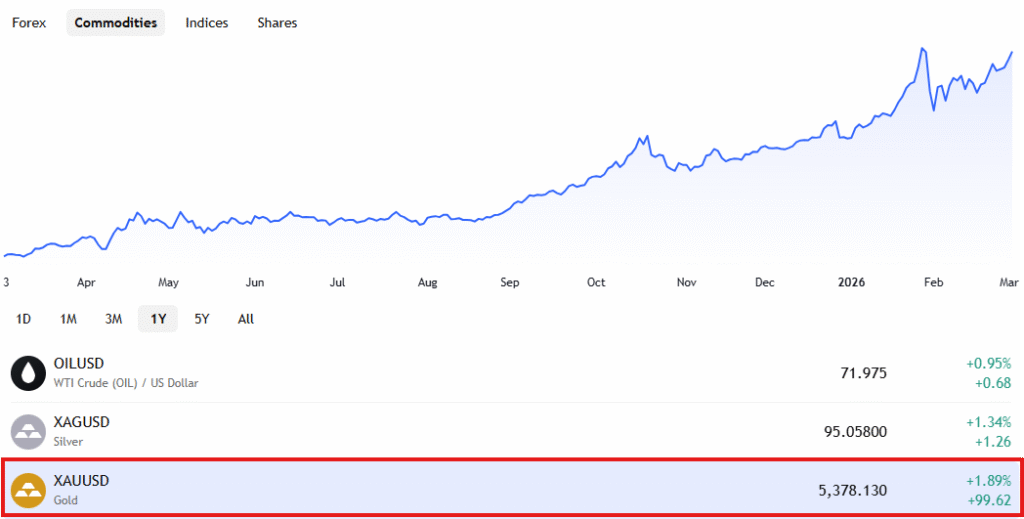
Meanwhile, money was moving fast into anything considered safe. The U.S. dollar surged. The Swiss franc climbed. Gold futures jumped 2%, with spot gold sitting at around $5,334 per troy ounce. Treasuries saw heavy inflows.
Oil was the loudest signal of all. Brent crude spiked roughly 13% in early trading, pushing toward $80 a barrel, up from $72.87 on Friday. Iran is OPEC’s fourth-largest oil producer, and with the country’s leadership structure now in chaos after Khamenei’s death, nobody really knows who’s making decisions over there right now.
Why the Strait of Hormuz Is the Biggest Risk to Oil Prices and Stocks
The Strait of Hormuz is a narrow waterway between the Persian Gulf and the Arabian Sea. About one-fifth of all the world’s seaborne oil passes through it every single day. Iran controls the northern coastline. And the Islamic Revolutionary Guard Corps has already warned ships that passage is no longer permitted, backing that up by striking three oil tankers with missiles on Sunday.
Hundreds of tankers are already sitting stationary near the strait. Tanker owners, oil majors, and trading houses started suspending shipments through the area on Saturday. Greece’s shipping ministry told vessels to avoid the Persian Gulf, the Gulf of Oman, and the strait entirely.
If Iran manages to meaningfully disrupt traffic through Hormuz for any extended period, analysts believe oil could hit $100 per barrel. Most of the oil flowing through that strait goes to China, India, Japan, and South Korea. The knock-on effects for inflation, interest rates, and global growth would be significant and equity markets would feel all of it.
Goldman Sachs strategist Dominic Wilson made this point clearly, the stock market’s reaction won’t hinge on the war headlines themselves, but on how durable any energy shock turns out to be. A short disruption is one thing. A prolonged blockade is something else entirely.
Best Stocks and Sectors to Watch During the Iran War
Defense Stocks
Lockheed Martin (NYSE: LMT) is the name coming up most consistently across Wall Street right now. It’s the world’s largest pure-play defense contractor, and it just secured a $9.8 billion contract for Patriot PAC-3 missile interceptors, the largest in its Missiles and Fire Control history. Iran’s ballistic missile capabilities are what drove demand for THAAD and Patriot systems in the first place, and those systems are now in active use, not just readiness mode. J.P. Morgan has an overweight rating with price targets ranging up to $500. Its current backlog stands at a record $194 billion. Watch for emergency Congressional defense supplemental bills that could fast-track PAC-3 and THAAD production, that’s the catalyst that could push LMT meaningfully higher from here.
RTX Corp (NYSE: RTX) is another standout. RTX makes Tomahawk cruise missiles, the AN/TPY-2 radar system, and co-developed Israel’s Iron Dome with their Israeli partners. These aren’t products waiting to be deployed, they’re actively being used right now. Analysts at Zacks and Investing.com have documented a clear pattern of RTX shares rising during every major prior U.S.-Iran escalation. The stock recently closed near its 52-week high at around $145.87 and carries a strong financial health score from InvestingPro. Watch for new international orders from Gulf states, the UAE and Bahrain are now actively facing drone swarms and will be looking to restock air defense systems urgently.
Northrop Grumman (NYSE: NOC) leads on the B-21 Raider stealth bomber and the Sentinel ICBM program, both Pentagon priorities that align directly with the current threat environment. Morgan Stanley rates NOC overweight with a $408 price target, and the stock has already outperformed the S&P 500 by over 33% in the past year. Watch for major 2026 contract award announcements across the B-21, F/A-XX, and Golden Dome projects.
Energy Stocks: Direct Oil Price Exposure
Chevron (NYSE: CVX) is the most widely cited U.S. oil major for this environment. It has a stake in the Leviathan gas field offshore Israel, putting it at the direct intersection of the conflict geographically. Analysts have a fair value estimate of $187.57 against a recent price of around $148, implying over 26% upside. The stock is already up roughly 20% year-to-date and carries a dividend yield that makes it attractive for income investors too. Watch oil price movements, every sustained $10 increase in Brent crude adds billions to Chevron’s annual earnings.
Exxon Mobil (NYSE: XOM) is the largest U.S. oil major by scale, producing over 4 million barrels of oil equivalent per day from operations in Guyana, the Permian Basin, and beyond. It trades at a forward P/E of around 11x with a dividend yield near 3.5% and ongoing buybacks which makes it a value play as well as a geopolitical trade. Both Chevron and Exxon are benefiting directly from the war-driven risk premium being built into crude prices right now.
BP (NYSE: BP) rounds out the energy picture from a European angle. It yields over 5%, trades at a forward P/E under 9x, and its trading desk and refining margins tend to widen sharply when crude spikes. BP completed $2.5 billion in buybacks in Q4 2025 and has guided for 4% annual dividend growth. It’s the kind of stock that offers both geopolitical upside and income support while you wait.
Gold Stocks: Safe-Haven Amplifiers
Alamos Gold (NYSE: AGI) hit an all-time high of $54.19 on March 1, the day after the strikes began, and carries an AI score of 77, a buy signal based on strong revenue growth, rising employee business sentiment, and growing brand interest. It operates mines in Canada and Mexico, meaning it has no direct geopolitical exposure of its own, while benefiting fully from gold’s price surge. Watch the $5,200 per troy ounce gold level, if gold sustains above that threshold, AGI is likely to see a significant liquidity rush from institutional investors.
Barrick Gold (NYSE: GOLD) is one of the world’s largest gold miners and provides broad, liquid exposure to gold price movements. Gold has historically risen 15% or more during major geopolitical crises, and with spot gold already at $5,334 per troy ounce, the miners are running ahead of the metal itself which is exactly what happens in a genuine fear-driven rally.
Start Trading Stocks and CFDs Through Market Volatility
For traders who want to move quickly and take positions in both directions as this situation develops, CFD trading is particularly well-suited to the current environment.
Unlike buying stocks outright, a CFD lets you take a position on whether a market like oil, gold, indices, individual stocks, goes up or down. In a week where some assets are surging and others are falling hard, that flexibility matters. You can go long on oil and gold-related positions while simultaneously shorting equity indices or sectors you think are overexposed to the conflict. You can react in real time to ceasefire signals, Strait of Hormuz updates, or any diplomatic breakthrough between Washington and Tehran.
Ultima Markets gives you real-time access to oil CFDs, gold, global stocks, forex pairs, and equity indices, all from one place, with competitive spreads and execution you can rely on even when markets are moving fast. Open your account today and position yourself for what comes next.
FAQs
Is now a good time to buy stocks during the Iran war?
Yes, but with caution. Long-term investors with a 3–5 year horizon should stay invested, stocks recovered after 73% of armed conflicts since World War II. Short-term traders should wait for volatility to settle before deploying fresh capital.
Should I sell my stocks because of the Iran war?
No, for most long-term investors, panic selling during a war is historically the wrong move.
What happens to the stock market during a war?
Stocks typically drop around 10% in the first few days of a conflict, then recover. LPL Research found markets hit bottom within 22 days on average and fully recovered within 47 days. The economy’s health matters more than the war itself.
Share Now
Disclaimer:This content is provided for informational purposes only and does not constitute, and should not be construed as, financial, investment, or other professional advice. No statement or opinion contained herein should be considered a recommendation by Ultima Markets or the author regarding any specific investment product, strategy, or transaction. Readers are advised not to rely solely on this material when making investment decisions and should seek independent advice where appropriate.
Thank you for visiting the Ultima Markets website. Please note that this website is intended for individuals residing in jurisdictions where access is permitted by law. Ultima and its affiliated entities do not operate in your home jurisdiction.
By clicking ‘Acknowledge’, you confirm that you are entering this website solely on your own initiative and not as a result of any specific marketing outreach. You wish to obtain information from this website based on reverse solicitation principles, in accordance with the applicable laws of your home jurisdiction.