This website is managed by Ultima Markets’ international entities, and it’s important to emphasise that they are not subject to regulation by the FCA in the UK. Therefore, you must understand that you will not have the FCA’s protection when investing through this website – for example:
You will not be guaranteed Negative Balance Protection
You will not be protected by FCA’s leverage restrictions
You will not have the right to settle disputes via the Financial Ombudsman Service (FOS)
You will not be protected by Financial Services Compensation Scheme (FSCS)
Any monies deposited will not be afforded the protection required under the FCA Client Assets Sourcebook. The level of protection for your funds will be determined by the regulations of the relevant local regulator.
Note: UK clients are kindly invited to visit https://www.ultima-markets.co.uk/. Ultima Markets UK expects to begin onboarding UK clients in accordance with FCA regulatory requirements in 2026.
If you would like to proceed and visit this website, you acknowledge and confirm the following:
1.The website is owned by Ultima Markets’ international entities and not by Ultima Markets UK Ltd, which is regulated by the FCA.
2.Ultima Markets Limited, or any of the Ultima Markets international entities, are neither based in the UK nor licensed by the FCA.
3.You are accessing the website at your own initiative and have not been solicited by Ultima Markets Limited in any way.
4.Investing through this website does not grant you the protections provided by the FCA.
5.Should you choose to invest through this website or with any of the international Ultima Markets entities, you will be subject to the rules and regulations of the relevant international regulatory authorities, not the FCA.
Ultima Markets wants to make it clear that we are duly licensed and authorised to offer the services and financial derivative products listed on our website. Individuals accessing this website and registering a trading account do so entirely of their own volition and without prior solicitation.
By confirming your decision to proceed with entering the website, you hereby affirm that this decision was solely initiated by you, and no solicitation has been made by any Ultima Markets entity.
Between gold etf vs physical gold, how do you know which one suits you better? Read about the difference and see which one is suitable for your purpose.
Gold ETF vs Physical Gold: Which Is Better?
When people compare gold ETF vs physical gold, they usually want one simple answer. For most traders and investors who want speed, liquidity, and convenience, a gold ETF is usually the better buy. For people who want direct ownership of bars or coins and are comfortable handling premiums, storage, and insurance, physical gold is usually the better fit.
Gold ETF vs Physical Gold: What’s the Difference?
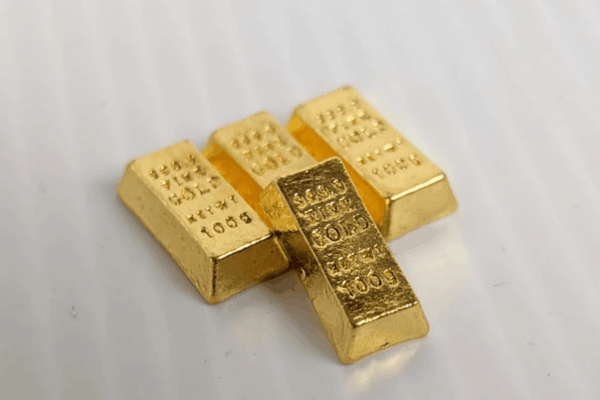
A gold-backed ETF is an exchange-traded security designed to give you exposure to gold without making you buy, move, or store metal yourself. The World Gold Council says most funds in its global list are fully backed by physical gold, but retail investors typically own shares rather than taking possession of bars or coins. With physical gold, you buy bars or coins from a dealer or bank and take responsibility for storage and eventual resale.
There is also a practical ownership difference. Large gold funds such as GLD say creation and redemption are handled through Authorized Participants in large basket blocks, while iShares says ETF shares are not individually redeemable. So a gold ETF gives you price exposure and convenience, but it is not the same experience as personally owning bullion.
Why Gold ETFs Are Usually the Better Buy for Traders
If your goal is trading rather than storing wealth, gold ETFs are hard to beat. SEC guidance says ETF shares trade on national exchanges at market prices, can be bought and sold throughout the trading day, and may trade at slight premiums or discounts to net asset value. In practical terms, that makes ETFs easier to chart, enter, exit, size, and rebalance than physical bars or coins.
The World Gold Council also describes physical gold ETFs as a convenient modern product that can be bought as easily and quickly as listed companies. That is why gold ETFs generally suit day traders, swing traders, short-term speculators, and portfolio investors who want to add or trim gold exposure without worrying about delivery, safekeeping, or resale logistics.
The trade-off is that ETFs are still financial products. You normally need a brokerage account, ETF investors pay management fees and other expenses, and some gold trusts explicitly state that expenses reduce the gold represented by each share over time. The ETF route is easier, but it is not the same as owning metal directly.
When Physical Gold is the Better Buy
Physical gold makes more sense when your priority is possession. Bars and coins are tangible, can be self-stored or professionally vaulted, and the World Gold Council notes that professional vaulting can make bullion easier to sell while insurance is often included in the storage fee. For buyers who care most about direct ownership, that can matter more than intraday liquidity.
This is why physical gold usually suits long-term wealth preservers more than active traders. It can make sense for people building a generational holding or for investors who simply feel more comfortable owning bullion rather than fund shares. The drawback is friction: you must think about delivery, storage, insurance, and where you will sell it later.
Gold ETF vs Physical Gold: Which is Cheaper?
For many buyers, gold ETFs are cheaper and cleaner at the start. SEC guidance says ETFs charge management fees indirectly, and investors may also face transaction costs such as brokerage commissions. Those costs are real, but they are usually simple to compare before you buy.
Physical gold costs look different. The World Gold Council says investors buying bars or coins usually pay a premium over the spot price, and total ownership costs can include transaction fees, storage, and insurance. It also notes that smaller bars and coins typically cost more per ounce than larger bars. That is a major reason physical gold is often a poor tool for short-term trading: you begin with more cost to overcome before the position turns profitable.
Which Type Suits You Best?
Day trader or swing trader
Buy the gold ETF. Intraday pricing, exchange trading, and easier execution make it the more practical tool for short-term moves.
Portfolio investor who wants simple gold exposure
Usually buy the gold ETF. It is easier to add to a diversified portfolio and rebalance because there is no metal to store personally.
Long-term buyer who wants tangible ownership
Buy physical gold. It is better suited to people who want bars or coins they can personally hold or place in professional storage, even if that means paying premiums and handling storage decisions.
Buyer making frequent small purchases
The ETF usually wins on efficiency. The World Gold Council notes that smaller bars and coins are more expensive per ounce, so repeated small physical purchases can get costly fast.
Buyer who wants both liquidity and tangible ownership
A split approach often makes sense in practice: ETF for liquid trading exposure, physical gold for long-term bullion ownership. That matches each product to what it does best.
Conclusion
To sum it up, gold ETF is the better buy for most traders. It is faster, easier to trade, simpler to manage, and more practical for portfolio use.
For buyers focused on direct ownership and long-term wealth preservation, physical gold is the better buy. It is less convenient, but it gives you something an ETF cannot: bullion you can personally hold or store in your own arrangement.
So in the gold ETF vs physical gold debate, the real answer will depend on what kind of buyer you are. Traders usually want liquidity. Long-term wealth preservers usually want possession. Pick the one that matches what you want gold to do.
FAQs
Is a gold ETF backed by real gold?
Many gold-backed funds are. The World Gold Council says most funds in its global gold ETF list are fully backed by physical gold.
Can you redeem a gold ETF for physical gold?
Usually not as a normal retail investor. Large funds such as GLD say creation and redemption are handled through Authorized Participants in large blocks, and iShares says ETF shares are not individually redeemable.
Which is better for short-term trading?
Gold ETF. Exchange trading and real-time pricing make it much more practical than buying and reselling physical bars or coins.
Share Now
Disclaimer:This content is provided for informational purposes only and does not constitute, and should not be construed as, financial, investment, or other professional advice. No statement or opinion contained herein should be considered a recommendation by Ultima Markets or the author regarding any specific investment product, strategy, or transaction. Readers are advised not to rely solely on this material when making investment decisions and should seek independent advice where appropriate.
Thank you for visiting the Ultima Markets website. Please note that this website is intended for individuals residing in jurisdictions where access is permitted by law. Ultima and its affiliated entities do not operate in your home jurisdiction.
By clicking ‘Acknowledge’, you confirm that you are entering this website solely on your own initiative and not as a result of any specific marketing outreach. You wish to obtain information from this website based on reverse solicitation principles, in accordance with the applicable laws of your home jurisdiction.