This website is managed by Ultima Markets’ international entities, and it’s important to emphasise that they are not subject to regulation by the FCA in the UK. Therefore, you must understand that you will not have the FCA’s protection when investing through this website – for example:
You will not be guaranteed Negative Balance Protection
You will not be protected by FCA’s leverage restrictions
You will not have the right to settle disputes via the Financial Ombudsman Service (FOS)
You will not be protected by Financial Services Compensation Scheme (FSCS)
Any monies deposited will not be afforded the protection required under the FCA Client Assets Sourcebook. The level of protection for your funds will be determined by the regulations of the relevant local regulator.
Note: UK clients are kindly invited to visit https://www.ultima-markets.co.uk/. Ultima Markets UK expects to begin onboarding UK clients in accordance with FCA regulatory requirements in 2026.
If you would like to proceed and visit this website, you acknowledge and confirm the following:
1.The website is owned by Ultima Markets’ international entities and not by Ultima Markets UK Ltd, which is regulated by the FCA.
2.Ultima Markets Limited, or any of the Ultima Markets international entities, are neither based in the UK nor licensed by the FCA.
3.You are accessing the website at your own initiative and have not been solicited by Ultima Markets Limited in any way.
4.Investing through this website does not grant you the protections provided by the FCA.
5.Should you choose to invest through this website or with any of the international Ultima Markets entities, you will be subject to the rules and regulations of the relevant international regulatory authorities, not the FCA.
Ultima Markets wants to make it clear that we are duly licensed and authorised to offer the services and financial derivative products listed on our website. Individuals accessing this website and registering a trading account do so entirely of their own volition and without prior solicitation.
By confirming your decision to proceed with entering the website, you hereby affirm that this decision was solely initiated by you, and no solicitation has been made by any Ultima Markets entity.
Ultima Markets does not have an establishment in Singapore and does not operate from Singapore.
Ultima Markets does not provide products or services to citizens or residents of Singapore, and account applications from Singapore citizens or residents will not be accepted.
If you are a citizen or resident of Singapore, please do not open an account or use Ultima Markets’ products or services.
By selecting “Acknowledge and Continue Browsing”, you confirm that you are accessing this website on your own initiative and that your access is not the result of any direct marketing, targeted advertising, solicitation, or promotional activity by Ultima Markets.
Nothing on this website constitutes an offer, solicitation, or promotion of products or services in any jurisdiction where such activity is prohibited. You are responsible for ensuring that your access to and use of this website complies with applicable local laws and regulations.
Learn effective gap trading strategies in Forex, including buying, selling, and fading gaps. Manage risk and capitalize on market opportunities.
Gap Trading Strategies in Forex
What is Gapping in Forex?
Gapping in Forex refers to a price movement in the market where a currency pair opens at a significantly different price from its previous close. This results in a “gap” on the price chart, where the opening price and the closing price of the previous trading session do not align, creating an empty space or a jump in the chart. Gaps can occur during various times, such as during the market open after weekends, holidays, or in reaction to major news or events that happen when the market is closed.
These gaps are typically a result of sudden shifts in market sentiment, new economic data, or geopolitical events that cause a significant change in the perception of a currency’s value. For Forex traders, understanding gapping is crucial because it can present both opportunities and risks depending on the type of gap and how it aligns with market conditions.
Gaps can appear in both up and down directions and can be categorized based on their significance, such as common gaps, breakaway gaps, runaway gaps, and exhaustion gaps. Each type of gap has its own set of characteristics and trading implications.
How Does Gapping Work in Forex?
Gapping in Forex occurs when the price of a currency pair opens significantly higher or lower than its previous closing price, creating a gap on the price chart. This price difference typically happens after market hours, such as during weekends, holidays, or overnight trading when markets are closed or have low liquidity. When the market reopens, new information, news events, or market sentiment may cause a dramatic shift in price, resulting in a gap.
Here’s a breakdown of how gapping works:
Market Closes at One Price: The market closes at a certain price during the end of a trading session, for example, the close of the New York session on Friday night. This is the last price at which the currency pair was traded before the market closes.
Information or Event During the Off-Hours: Between market closes, new information, economic data releases, geopolitical events, or central bank decisions may occur. These events can alter the market’s perception of a currency’s value, causing traders to adjust their positions or enter new trades.
Opening Price at a New Level: When the market reopens after the break (e.g., on Sunday evening or the next trading day), the price opens at a new level, often far from the previous close. This new price level creates a gap, as there’s no trading activity in the gap area on the chart.
Gaps Represent Market Sentiment: The gap that forms represents a shift in market sentiment. If the gap is upward (higher opening price), it suggests that the market is bullish and optimistic about the currency. Conversely, if the gap is downward (lower opening price), it suggests that the market is bearish or pessimistic about the currency.
Types of Gapping in Forex
There are several types of gaps that traders may encounter in the Forex market. Each type has its own characteristics and implications for trading.
Common Gaps
Common gaps are the most frequent type of gap and typically occur during normal market conditions. These gaps are often small and unremarkable, appearing without significant news or market-moving events.
Common gaps are typically not significant enough to indicate a strong trend. Traders often expect these gaps to fill quickly as the market returns to its previous price range.
For example, a minor price jump between trading sessions, caused by standard market fluctuations or an inconsequential news item.
Breakaway Gaps
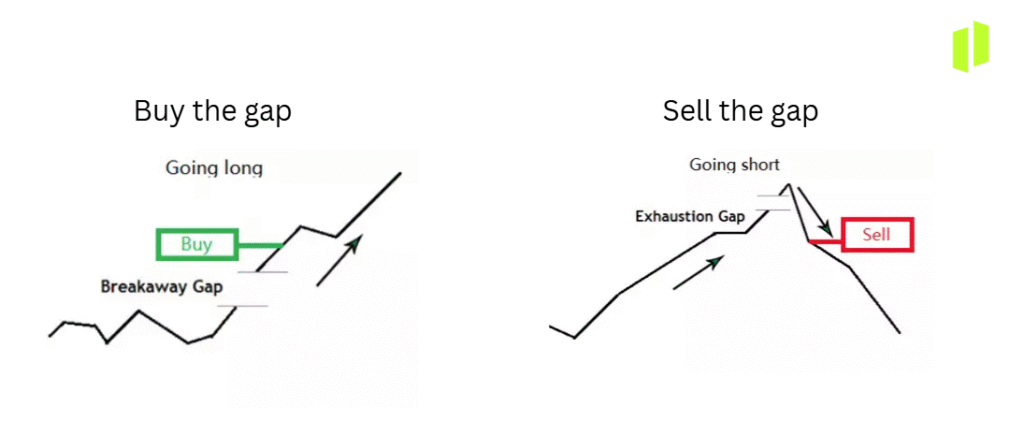
A breakaway gap occurs when the market opens significantly above or below a key support or resistance level, often signaling the start of a new trend. This gap usually happens after a period of consolidation or range-bound trading.
Breakaway gaps are often used by traders as signals to enter positions in the direction of the gap. This type of gap suggests that the market is ready to start a new trend, and traders may look to follow the new direction.
For example, the price of EUR/USD opens significantly higher than the previous day’s high, breaking above a resistance level, indicating a potential bullish trend.
Runaway Gaps (Continuation Gaps)
A runaway gap, also known as a continuation gap, appears in the middle of an existing trend and reflects a continuation of the prevailing market sentiment. These gaps typically happen when the market is moving strongly in one direction, and the gap extends the existing trend.
Runaway gaps provide traders with the opportunity to enter positions in the direction of the trend. These gaps suggest that the market is moving in one direction with strong momentum and is likely to continue in that direction.
In an uptrend, a currency pair opens significantly higher than the previous close, continuing the bullish momentum as more buyers enter the market.
Exhaustion Gaps
Definition: Exhaustion gaps occur near the end of a strong trend and often signal that the trend is losing momentum and could be about to reverse. These gaps typically appear after a long, extended trend and can indicate that the market is overbought or oversold.
Exhaustion gaps are crucial for traders looking to identify potential trend reversals. These gaps can indicate that the market is overextended and that a shift in market sentiment may occur, leading to a possible reversal.
After a strong upward trend in GBP/USD, the market opens higher, but the gap fails to hold, and the price begins to reverse, signaling that the uptrend may be coming to an end.
How to Trade Gaps in Forex
Trading gaps in Forex requires a solid understanding of price action and market sentiment. Here are some strategies traders use when trading gaps:
Gap and Go Strategy (Momentum Trading)
This strategy involves trading in the direction of the gap, expecting the price to continue moving in the same direction. Traders typically look for breakaway or runaway gaps as signals that the price movement will continue, and they open positions following the market’s opening.
If the market opens significantly higher than the previous close, a trader may go long, expecting the price to continue rising in the direction of the gap. Similarly, a gap down may prompt a short position.
Gap Fill Strategy
This strategy assumes that most gaps in Forex will eventually be filled, especially common gaps. Traders will place trades in the opposite direction of the gap, aiming to take advantage of the market closing the gap.
For example, if a currency pair gaps higher, a trader may wait for the price to come back down and fill the gap, selling at a higher price and closing the gap. The idea is that the market is likely to “correct” itself over time.
Risk: This strategy may involve more risk in cases of breakaway or runaway gaps, where the gap doesn’t close immediately.
Trading the Breakout
If the gap occurs at a key support or resistance level, it may signal the start of a new trend. Traders can trade the breakout, opening positions in the direction of the gap. Breakaway gaps are often considered strong signals of market direction.
If a currency pair gaps above a major resistance level, a trader might go long, assuming that the gap will act as a catalyst for a new uptrend.
Waiting for Confirmation
Traders may choose to wait for additional confirmation of price action before entering a trade after a gap. This might involve waiting for a candlestick pattern, a specific price action setup, or a momentum indicator confirming the direction of the gap.
After a gap up, a trader may wait for a candlestick pattern like a bullish engulfing or confirmation from an oscillator (e.g., RSI, MACD) to ensure the market is likely to continue its upward move.
Gapping Trading Strategies
Here are some popular strategies to trade gaps in the Forex market:
Buy the Gap
In this strategy, you buy a currency pair after a gap appears, anticipating that the price will rise. This is a bullish approach, where you go long, expecting the market to continue moving upward after the gap forms.
Sell the Gap
If a gap appears and your analysis signals a downward move, you sell the currency pair. This is a bearish strategy, where you short-sell the market, expecting the price to drop further after the gap.
Fade the Gap
This strategy involves taking a position against the gap’s direction, betting that the gap will close and the price will move in the opposite direction. For example, you could sell when the market is rising or buy when the market is falling. However, this approach carries higher risk, as it requires the gap to fill quickly. It’s essential to implement strong risk management, such as stop-loss orders, to minimize losses if the market moves against you.
Conclusion
Gapping trading strategies can provide profitable opportunities if used correctly, whether you’re buying, selling, or fading the gap. However, it’s crucial to understand the type of gap you’re dealing with and manage your risk effectively. With the right strategy and risk management, trading gaps can be an excellent way to capitalize on market movements.
Ready to take advantage of gap trading opportunities? Open a live account today and start executing these strategies in the dynamic Forex market!
FAQs
What is Gapping in Trading Forex?
Gapping in Forex occurs when the price of a currency pair opens significantly higher or lower than its previous closing price, creating an empty space or “gap” on the price chart.
How to Use Gaps in Trading?
Gaps can be used to identify potential trend continuation or reversal opportunities. Traders can either trade in the direction of the gap (Gap and Go strategy) or trade against it, expecting the gap to fill (Gap Fill strategy).
How to Trade Gaps Successfully?
To trade gaps successfully, identify the type of gap (breakaway, runaway, or exhaustion), use proper risk management, wait for confirmation through price action or indicators, and enter trades in the direction of the gap or after the gap fills, depending on the strategy.
Share Now
Disclaimer:This content is provided for informational purposes only and does not constitute, and should not be construed as, financial, investment, or other professional advice. No statement or opinion contained herein should be considered a recommendation by Ultima Markets or the author regarding any specific investment product, strategy, or transaction. Readers are advised not to rely solely on this material when making investment decisions and should seek independent advice where appropriate.
Thank you for visiting the Ultima Markets website. Please note that this website is intended for individuals residing in jurisdictions where access is permitted by law. Ultima and its affiliated entities do not operate in your home jurisdiction.
By clicking ‘Acknowledge’, you confirm that you are entering this website solely on your own initiative and not as a result of any specific marketing outreach. You wish to obtain information from this website based on reverse solicitation principles, in accordance with the applicable laws of your home jurisdiction.