This website is managed by Ultima Markets’ international entities, and it’s important to emphasise that they are not subject to regulation by the FCA in the UK. Therefore, you must understand that you will not have the FCA’s protection when investing through this website – for example:
You will not be guaranteed Negative Balance Protection
You will not be protected by FCA’s leverage restrictions
You will not have the right to settle disputes via the Financial Ombudsman Service (FOS)
You will not be protected by Financial Services Compensation Scheme (FSCS)
Any monies deposited will not be afforded the protection required under the FCA Client Assets Sourcebook. The level of protection for your funds will be determined by the regulations of the relevant local regulator.
Note: UK clients are kindly invited to visit https://www.ultima-markets.co.uk/. Ultima Markets UK expects to begin onboarding UK clients in accordance with FCA regulatory requirements in 2026.
If you would like to proceed and visit this website, you acknowledge and confirm the following:
1.The website is owned by Ultima Markets’ international entities and not by Ultima Markets UK Ltd, which is regulated by the FCA.
2.Ultima Markets Limited, or any of the Ultima Markets international entities, are neither based in the UK nor licensed by the FCA.
3.You are accessing the website at your own initiative and have not been solicited by Ultima Markets Limited in any way.
4.Investing through this website does not grant you the protections provided by the FCA.
5.Should you choose to invest through this website or with any of the international Ultima Markets entities, you will be subject to the rules and regulations of the relevant international regulatory authorities, not the FCA.
Ultima Markets wants to make it clear that we are duly licensed and authorised to offer the services and financial derivative products listed on our website. Individuals accessing this website and registering a trading account do so entirely of their own volition and without prior solicitation.
By confirming your decision to proceed with entering the website, you hereby affirm that this decision was solely initiated by you, and no solicitation has been made by any Ultima Markets entity.
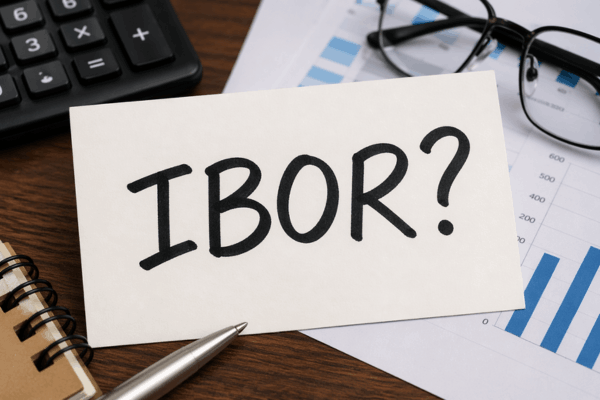
Discover what IBOR is, see its role in financial markets, and learn how the transition to risk-free rates (RFRs) is reshaping global lending benchmarks.
In the global financial markets, interest rate benchmarks are crucial tools that influence how traders, borrowers, and investors make decisions. One of the most widely recognised of these is the Interbank Offered Rate (IBOR).
Historically, IBOR has played a key role in setting the cost of short-term borrowing between major global banks. But what exactly is IBOR, and why has its significance shifted over the years?
This article explores the importance of IBOR, its role in the financial landscape, and how recent regulatory changes are affecting its usage.
What is IBOR?
IBOR stands for Interbank Offered Rate, which refers to the rate at which major global banks are willing to lend to one another on an unsecured basis in the short-term interbank market.
These rates were published daily for several currencies, such as the US dollar (USD), British pound (GBP), and euro (EUR), providing a snapshot of the cost of borrowing between banks.
IBOR was calculated for various maturities ranging from overnight to one year and served as the basis for a wide array of financial products, including loans, mortgages, derivatives, and bonds. Historically, it was a cornerstone of the global financial system.
Why IBOR Was Widely Used
IBOR played a critical role in financial markets for decades. Here’s why:
Benchmark for Financial Products: Many financial products such as floating-rate loans, mortgages, and derivatives were tied to IBOR. Changes in IBOR directly affected the cost of borrowing for consumers and businesses.
Market Confidence: As a widely-used benchmark, IBOR helped establish transparency in the interbank lending market, offering investors and financial institutions a reliable gauge of credit risk.
Global Reference: IBOR was recognised globally, helping create a unified reference for interest rates across various financial markets and asset classes.
The Challenges with IBOR
While IBOR was vital, it was not without its issues. Over the years, concerns began to arise:
Lack of Market Activity: By the 2000s, interbank lending had decreased significantly, and the rates were based on less frequent transactions, which reduced the accuracy of the data.
Manipulation Risks: The rate was based on estimates submitted by banks, leaving it vulnerable to manipulation, as was revealed by scandals in 2012.
These issues ultimately led to the decision to phase out IBOR in favour of more robust, transaction-based benchmarks.
The Transition from IBOR to Risk-Free Rates
The move away from IBOR began in earnest after the 2008 financial crisis. With IBOR being based on estimates rather than actual transactions, regulators recognised the need for a more reliable and transparent benchmark system.
Why the Change Was Necessary
Several factors contributed to the transition:
Transparency: The new benchmark rates, known as Risk-Free Rates (RFRs), are based on actual market transactions, making them more transparent and harder to manipulate.
Market Reliability: Unlike IBOR, which was prone to manipulation and inaccuracies, RFRs reflect actual borrowing costs in the market, offering a more reliable reference point.
Regulatory Push: Regulatory bodies like the UK’s Financial Conduct Authority (FCA) and the U.S. Alternative Reference Rates Committee (ARRC) began leading efforts to move away from IBOR in favour of more robust alternatives.
What Has Replaced IBOR?
The transition from IBOR to RFRs is a major shift that has already begun impacting global financial markets. The following RFRs have replaced IBOR in their respective markets:
SOFR (Secured Overnight Financing Rate): SOFR has replaced USD LIBOR and is based on actual transactions in the repurchase agreement (repo) market. It reflects the cost of borrowing secured funds.
SONIA (Sterling Overnight Index Average): SONIA has replaced GBP LIBOR and is used in the UK. It reflects overnight borrowing costs in the unsecured money market.
€STR (Euro Short-Term Rate): €STR replaced EURIBOR in the Eurozone and reflects actual transactions in the euro money market.
TONA (Tokyo Overnight Average Rate): TONA is Japan’s overnight rate and is the replacement for JPY LIBOR.
These RFRs are considered more reliable and transparent because they are based on actual transactions, reducing the risk of manipulation.
Key Differences Between IBOR and Risk-Free Rates
The key differences between IBOR and the new RFRs can be summarised in the table below:
Feature
IBOR
Risk-Free Rate (RFR)
Basis
Bank-submitted estimates
Actual market transactions
Credit component
Yes
None or minimal
Term structure
Forward-looking (e.g., 3‑month, 6‑month)
Typically overnight (backward-looking)
Manipulation risk
Higher
Lower
These differences have significant implications for financial contracts, particularly in how rates are applied to loans, derivatives, and other products that were historically tied to IBOR.
The Ongoing Impact of the IBOR Transition
The shift away from IBOR has had a profound impact on financial markets and institutions:
1. Legacy Contracts
Many contracts still reference IBOR, and transitioning these to RFRs has involved extensive legal work. Financial institutions and borrowers had to amend existing contracts to accommodate the new benchmark rates.
2. Pricing and Valuation
Financial products, such as derivatives, loans, and bonds, that were previously priced based on IBOR needed to be repriced according to the new RFRs. This has affected pricing models and strategies in the market.
3. Regulatory Compliance
Institutions had to update their systems and processes to comply with the new regulatory frameworks around RFRs. This includes updating financial products, risk models, and communication with clients about the changes.
4. Market Liquidity
The transition to RFRs has been relatively smooth for most major currencies, but liquidity in certain markets may take time to fully align with these new benchmarks. This has led to some temporary instability and uncertainty.
Conclusion
The Interbank Offered Rate (IBOR) has long been an essential reference point in global financial markets, influencing everything from loans and mortgages to derivatives and bonds.
However, due to concerns over its reliability and transparency, IBOR is being replaced by Risk-Free Rates (RFRs) such as SOFR, SONIA, and €STR. These new benchmarks are based on actual market transactions, providing a more accurate and trustworthy reference for financial products.
While the transition from IBOR to RFRs is a major change, it is ultimately aimed at creating a more stable, transparent, and reliable financial system. Investors, borrowers, and financial institutions will need to adjust to these new benchmarks, but the benefits in terms of transparency and market integrity are expected to outweigh the challenges.
FAQs
What does IBOR stand for?
IBOR stands for Interbank Offered Rate, which is the rate at which major global banks lend to each other in the short-term interbank market.
Why is IBOR being replaced?
IBOR is being replaced due to concerns over its reliance on estimates rather than actual market transactions. The new Risk-Free Rates (RFRs) are more transparent and based on real market data.
What are the main alternatives to IBOR?
The main alternatives to IBOR are SOFR (for USD), SONIA (for GBP), and €STR (for EUR), which are based on actual transactions in their respective markets.
Share Now
Disclaimer:This content is provided for informational purposes only and does not constitute, and should not be construed as, financial, investment, or other professional advice. No statement or opinion contained herein should be considered a recommendation by Ultima Markets or the author regarding any specific investment product, strategy, or transaction. Readers are advised not to rely solely on this material when making investment decisions and should seek independent advice where appropriate.
Thank you for visiting the Ultima Markets website. Please note that this website is intended for individuals residing in jurisdictions where access is permitted by law. Ultima and its affiliated entities do not operate in your home jurisdiction.
By clicking ‘Acknowledge’, you confirm that you are entering this website solely on your own initiative and not as a result of any specific marketing outreach. You wish to obtain information from this website based on reverse solicitation principles, in accordance with the applicable laws of your home jurisdiction.