
Ultima Markets App
Trade Anytime, Anywhere





Important Information
This website is managed by Ultima Markets’ international entities, and it’s important to emphasise that they are not subject to regulation by the FCA in the UK. Therefore, you must understand that you will not have the FCA’s protection when investing through this website – for example:
- You will not be guaranteed Negative Balance Protection
- You will not be protected by FCA’s leverage restrictions
- You will not have the right to settle disputes via the Financial Ombudsman Service (FOS)
- You will not be protected by Financial Services Compensation Scheme (FSCS)
- Any monies deposited will not be afforded the protection required under the FCA Client Assets Sourcebook. The level of protection for your funds will be determined by the regulations of the relevant local regulator.
Note: Ultima Markets is currently developing a dedicated website for UK clients and expects to onboard UK clients under FCA regulations in 2026.
If you would like to proceed and visit this website, you acknowledge and confirm the following:
- 1.The website is owned by Ultima Markets’ international entities and not by Ultima Markets UK Ltd, which is regulated by the FCA.
- 2.Ultima Markets Limited, or any of the Ultima Markets international entities, are neither based in the UK nor licensed by the FCA.
- 3.You are accessing the website at your own initiative and have not been solicited by Ultima Markets Limited in any way.
- 4.Investing through this website does not grant you the protections provided by the FCA.
- 5.Should you choose to invest through this website or with any of the international Ultima Markets entities, you will be subject to the rules and regulations of the relevant international regulatory authorities, not the FCA.
Ultima Markets wants to make it clear that we are duly licensed and authorised to offer the services and financial derivative products listed on our website. Individuals accessing this website and registering a trading account do so entirely of their own volition and without prior solicitation.
By confirming your decision to proceed with entering the website, you hereby affirm that this decision was solely initiated by you, and no solicitation has been made by any Ultima Markets entity.
I confirm my intention to proceed and enter this website Please direct me to the website operated by Ultima Markets , regulated by the FCA in the United Kingdom

A Beginner’s Guide on How to Trade Oil
Oil trading is one of the most dynamic and potentially profitable activities in global financial markets. Whether you’re a seasoned trader or just getting started, understanding how to trade oil effectively can lead to significant opportunities.
In this article, we will explore the essential steps involved in trading oil, the factors that influence oil prices, and the different methods you can use to participate in the oil market.
Understanding the Basics of Oil Trading
Oil is one of the most important commodities worldwide, with its prices impacting everything from global economies to consumer prices.
When you trade oil, you’re essentially buying or selling contracts based on the price of oil at a given time. There are two main types of oil that are most commonly traded:
- Brent Crude Oil: A global benchmark sourced from the North Sea, used to price two-thirds of the world’s oil.
- West Texas Intermediate (WTI): A major U.S. oil benchmark known for its high quality, often trading at a premium over Brent Crude.
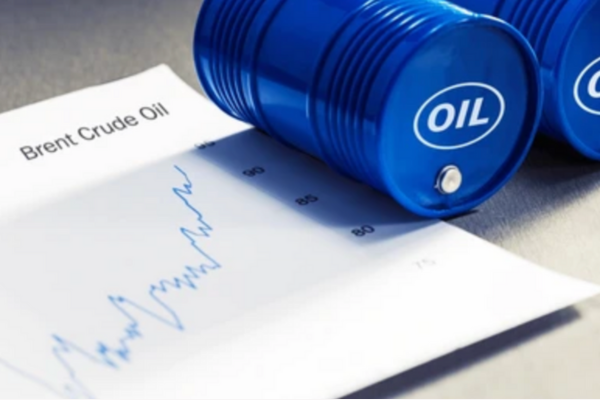
The key to successful oil trading is understanding the factors that influence the price of oil, as well as choosing the right instruments for trading.
How to Trade Oil: The Different Methods
There are various ways to trade oil, and each method has its own benefits and risks.
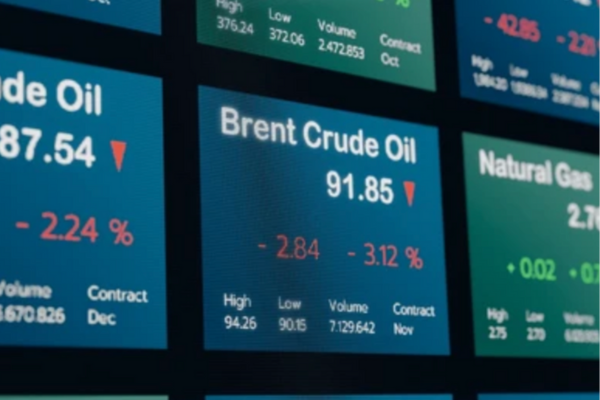
The most common ways to trade oil include:
1. Oil Futures Contracts
Futures contracts are agreements to buy or sell oil at a predetermined price on a specific date in the future. This is the most traditional form of oil trading and is used by institutional investors and oil companies. Trading oil futures allows you to speculate on the price of oil, either going long (buying) if you expect prices to rise or going short (selling) if you expect prices to fall.
While futures contracts offer the potential for high returns, they also come with the risk of substantial losses, especially if you don’t use proper risk management.
2. Oil CFDs (Contracts for Difference)
Contracts for Difference (CFDs) allow traders to speculate on the price movements of oil without actually owning the underlying commodity. Instead, you enter into an agreement with your broker to exchange the difference in price between the opening and closing of your position.
CFDs offer the advantage of high leverage, meaning you can control a large position with a smaller amount of capital. However, leverage can also amplify losses, so it’s important to use it cautiously.
3. Oil Options
Oil options give traders the right, but not the obligation, to buy or sell oil at a specified price before the option expires. Options can be used as a hedging tool or for speculative purposes. They offer flexibility, as traders can choose whether to exercise the option based on market conditions.
However, options require a good understanding of the market and can be complex for beginners. They also involve the risk of losing the premium paid for the option.
4. Oil ETFs (Exchange-Traded Funds)
For those who want exposure to oil prices without the complexity of futures or options, oil ETFs provide an easier way to invest. These funds track the performance of oil prices or oil-related stocks and can be bought and sold like regular stocks.
Oil ETFs are ideal for long-term investors who want to avoid the volatility and complexity of futures trading but still wish to benefit from oil price movements.
Factors That Influence Oil Prices
To trade oil successfully, it’s crucial to understand the factors that affect oil prices. Here are some of the main influences:
1. Supply and Demand
Like any commodity, oil prices are largely determined by supply and demand. When demand outpaces supply, prices tend to rise. Conversely, when supply exceeds demand, prices fall. Global events such as natural disasters, geopolitical tensions, or changes in oil production can cause sharp fluctuations in supply and demand, and, consequently, oil prices.
2. Geopolitical Events
Oil prices are highly sensitive to geopolitical risks. Tensions in major oil-producing regions, such as the Middle East, can cause oil prices to spike due to concerns about supply disruptions. For example, conflicts like the Iran–Iraq war or U.S.–Iran tensions often result in price increases.
3. Economic Data
Economic indicators, such as GDP growth, unemployment rates, and manufacturing activity, can give traders clues about future oil demand. A strong economy usually leads to higher energy consumption, which can push oil prices up. On the other hand, signs of economic slowdown can lead to reduced demand for oil and lower prices.
4. OPEC and Oil Production Decisions
The Organization of Petroleum Exporting Countries (OPEC) plays a significant role in influencing global oil prices. OPEC member countries, which control a large portion of the world’s oil supply, regularly meet to discuss production quotas. If OPEC decides to cut production, oil prices may rise. Conversely, if OPEC increases production, prices may fall.
Practical Strategies on How to Trade Oil
1. Use Technical Analysis
Technical analysis involves studying historical price data to predict future price movements. Common tools include moving averages, relative strength index (RSI), and candlestick patterns. By understanding these tools, you can identify trends and key support/resistance levels that can inform your trading decisions.
2. Follow Market News and Events
Oil prices are highly sensitive to news events. Keeping up with global economic reports, geopolitical developments, and announcements from OPEC can help you anticipate price movements. For example, if you hear about potential disruptions in supply due to political unrest in a major oil-producing region, you may want to adjust your positions accordingly.
3. Manage Your Risk
Oil markets can be highly volatile, so it’s essential to implement risk management strategies. This includes setting stop-loss orders to limit potential losses and never risking more than a small percentage of your capital on any single trade. Also, consider using proper position sizing and leverage to manage your exposure.
Recent Market Trends and 2025-2026 Outlook
As of the end of 2025, oil prices have shown mixed signals. On one hand, production cuts by OPEC have supported prices, while oversupply concerns from non-OPEC countries like the U.S. have put downward pressure on prices.
Analysts predict that oil prices may remain volatile through 2026, with key factors such as global demand recovery post-pandemic and geopolitical tensions in oil-producing regions shaping the market.
For traders, this volatility presents both risks and opportunities. Staying informed about the latest market trends and being ready to adjust strategies based on market changes will be crucial to success.
Conclusion
Trading oil offers substantial opportunities for those who understand the market’s complexities. By utilizing the right trading instruments, staying informed on key price drivers, and applying effective risk management strategies, you can successfully navigate the oil market. Whether you’re trading futures, CFDs, options, or ETFs, it’s important to stay educated and keep a close eye on global events that impact oil prices.
As with any form of trading, the key to success in oil trading is preparation, strategy, and discipline.
Disclaimer: This content is provided for informational purposes only and does not constitute, and should not be construed as, financial, investment, or other professional advice. No statement or opinion contained here in should be considered a recommendation by Ultima Markets or the author regarding any specific investment product, strategy, or transaction. Readers are advised not to rely solely on this material when making investment decisions and should seek independent advice where appropriate.
Latest Articles



FOLLOW US






Ultima Markets is a member of The Financial Commission, an international independent body responsible for resolving disputes in the Forex and CFD markets.

All clients of Ultima Markets are protected under insurance coverage provided by Willis Towers Watson (WTW), a global insurance brokerage established in 1828, with claims eligibility up to US$1,000,000 per account.

Ultima Markets is the first United CFD broker to be part of the United Nations Global Compact.
FOLLOW US
TRADE WITH US
RISK DISCLOSURE
Risk Warning:
Trading leveraged financial products, including Contracts for Difference (CFDs), carries a high level of risk and may result in losses exceeding your initial investment. These products are not suitable for all investors and should only be traded with funds you can afford to lose. You do not own or have any rights to the underlying assets of these derivatives (e.g., entitlement to dividends). Please ensure you fully understand the associated risks. Before trading, consider your level of experience, investment objectives, and seek independent financial advice if necessary. Refer to our legal documents and disclosures before making any trading decisions.
General Advice Warning:
The information provided on this website is general in nature and does not take into account your personal objectives, financial situation, or needs. Before acting on any advice, you should assess its appropriateness in light of your individual circumstances and consult our legal documentation.
Regional Restrictions:
The information and services on this website are not intended for residents of certain jurisdictions, including but not limited to the United States, United Kingdom, Singapore, and any jurisdictions subject to international sanctions. For further information, please contact our customer support team.
Regulatory Information:
Ultima Markets is a trading name shared amongst multiple entities operating in various jurisdictions. These following entities are authorised to operate under the Ultima Markets brand and trademarks.
-
Ultima Markets UK Limited, reference number 470325, is authorised and regulated by the Financial Conduct Authority (FCA). Registered address: 1 Blossom Yard, Fourth Floor, London, E1 6RS, UNITED KINGDOM.
-
Ultima Markets Ltd is authorised and regulated by the Financial Services Commission (FSC) of Mauritius as a Full-Service Investment Dealer (excluding Underwriting), under licence number GB 23201593.
Registered address: 2nd Floor, The Catalyst, 40 Silicon Avenue, Ebene Cybercity, 72201, Mauritius.

Copyright © 2025 Ultima Markets Ltd. All rights reserved.
-

Messenger


Continue on Messenger
Take the conversation to your Messenger account. You can return anytime.
Scan the QR code and then send the message that appears in your Messenger.
Open Messenger on this device.
-

Instagram

Continue on Instagram
Take the conversation to your Instagram account. You can return anytime.
Scan the QR code to open Instagram. Follow @ultima_markets to send a DM.
Open Instagram on this device.
-

Live Chat
-

