Important Information
This website is managed by Ultima Markets’ international entities, and it’s important to emphasise that they are not subject to regulation by the FCA in the UK. Therefore, you must understand that you will not have the FCA’s protection when investing through this website – for example:
- You will not be guaranteed Negative Balance Protection
- You will not be protected by FCA’s leverage restrictions
- You will not have the right to settle disputes via the Financial Ombudsman Service (FOS)
- You will not be protected by Financial Services Compensation Scheme (FSCS)
- Any monies deposited will not be afforded the protection required under the FCA Client Assets Sourcebook. The level of protection for your funds will be determined by the regulations of the relevant local regulator.
Note: UK clients are kindly invited to visit https://www.ultima-markets.co.uk/. Ultima Markets UK expects to begin onboarding UK clients in accordance with FCA regulatory requirements in 2026.
If you would like to proceed and visit this website, you acknowledge and confirm the following:
- 1.The website is owned by Ultima Markets’ international entities and not by Ultima Markets UK Ltd, which is regulated by the FCA.
- 2.Ultima Markets Limited, or any of the Ultima Markets international entities, are neither based in the UK nor licensed by the FCA.
- 3.You are accessing the website at your own initiative and have not been solicited by Ultima Markets Limited in any way.
- 4.Investing through this website does not grant you the protections provided by the FCA.
- 5.Should you choose to invest through this website or with any of the international Ultima Markets entities, you will be subject to the rules and regulations of the relevant international regulatory authorities, not the FCA.
Ultima Markets wants to make it clear that we are duly licensed and authorised to offer the services and financial derivative products listed on our website. Individuals accessing this website and registering a trading account do so entirely of their own volition and without prior solicitation.
By confirming your decision to proceed with entering the website, you hereby affirm that this decision was solely initiated by you, and no solicitation has been made by any Ultima Markets entity.
I confirm my intention to proceed and enter this website Please direct me to the website operated by Ultima Markets , regulated by the FCA in the United Kingdom
Ultima Markets App
Trade Anytime, Anywhere





10 Trading Terms You Need to Know
If you want to trade confidently and manage risk effectively, you need to understand the language of the market. These 10 trading terms you must know form the foundation of how trades are priced, executed, and controlled across forex, indices, commodities, and shares.
This guide explains each term clearly, with practical context based on how markets operate today, helping both new and experienced traders make better decisions.
Key Trading Terms Every Trader Should Know
Bid and Ask Price
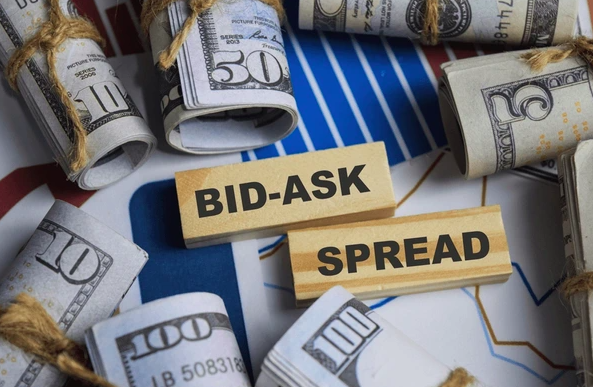
The bid price is the price buyers are willing to pay for an asset. The ask price is the price sellers are willing to accept.
Every tradable instrument shows these two prices simultaneously. The difference between them is known as the spread. In highly liquid markets such as major currency pairs, bid and ask prices are usually very close. During volatile periods or low liquidity sessions, the gap can widen.
For example, EUR/USD shows Bid: 1.085, Ask: 1.0852. If you buy EUR/USD, you enter at 1.0852. If you sell, you enter at 1.0850.
Your trade begins at the ask when buying and at the bid when selling. Understanding this helps you measure true entry cost and avoid misjudging performance.
Spread
The spread is the difference between the bid and ask price. Spreads may be fixed or variable, depending on market conditions and the broker’s pricing model. Variable spreads often widen during major economic releases or sudden price moves.
For example, using the EUR/USD quote, Spread = 1.0852 minus 1.0850, Spread = 2 pips
If the spread widens to 5 pips during a news release, price must move further in your favour to break even.
The spread is a built in trading cost. Wider spreads require price to move further before a trade becomes profitable, especially for short term strategies.
Leverage
Leverage allows traders to control a larger position using a smaller amount of capital.
For example, with 1:20 leverage, a trader controls 20 units of value for every 1 unit of margin. While leverage increases market exposure, it does not reduce risk.
Leverage amplifies both gains and losses. Used without proper risk management, it can quickly deplete trading capital.
Margin
Margin is the amount of capital required to open and maintain a leveraged position. It is not a fee. Instead, it acts as a security deposit while the trade remains open. If market losses reduce available margin too much, positions may be closed automatically.
For example, you open a 10,000 unit position with a 5 percent margin requirement. Required margin = 500 units. If losses reduce your available margin too much, the position may be closed automatically.
Poor margin management can lead to forced liquidation during temporary price swings, even if the trade idea is still valid.
Stop Loss
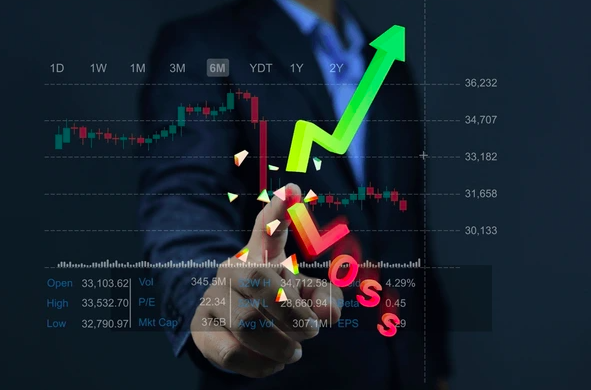
A stop loss is an order that closes a trade automatically once price reaches a specified level of loss.
Stop losses help remove emotion from decision making and protect capital during unexpected market moves. They can be placed based on price structure, volatility, or fixed risk limits.
For example, you buy GBP/USD at 1.2600. You place a stop loss at 1.2550. If price falls to 1.2550, the trade closes automatically, limiting your loss.
Traders who survive long term focus on limiting losses first. A single unmanaged trade can undo months of consistent performance.
Take Profit
A take profit order closes a trade automatically when a target price is reached.
It ensures profits are locked in without relying on manual exits. Many traders align take profit levels with technical resistance, support, or predefined risk to reward ratios.
For example, you buy USD/JPY at 148.00. You place a take profit at 149.00. If price reaches 149.00, the trade closes and locks in profit.
Consistent profit taking improves discipline and prevents small gains from turning into losses during reversals.
Volatility
Volatility measures how much and how quickly prices move.
High volatility creates opportunity but also increases risk, slippage, and emotional pressure. Volatility often rises around economic data releases, central bank decisions, or geopolitical events.
For example, during a central bank rate decision, EUR/USD may move 100 pips in minutes, compared to a normal daily range of 40 pips.
Position size and stop placement should adjust to volatility. Trading the same size in all conditions exposes accounts to unnecessary risk.
Liquidity
Liquidity refers to how easily an asset can be bought or sold without causing large price changes.
Highly liquid markets usually offer tighter spreads, faster execution, and more stable pricing. Low liquidity instruments can experience sharp price jumps and poor fills.
For example, major pairs like EUR/USD usually execute instantly with minimal slippage. Exotic currency pairs may experience delayed fills or larger price jumps.
Liquidity affects execution quality. Even well planned trades can perform poorly if liquidity is thin.
Slippage
Slippage occurs when a trade is executed at a different price than requested.
This often happens during fast moving markets, price gaps, or high impact news events. Slippage can be positive or negative, but negative slippage is more common during volatility spikes.
For example, you place a buy order at 1.2000. Due to sudden volatility, your trade executes at 1.2005. The 5 pip difference is slippage.
Real world results differ from theoretical entries. Factoring slippage into risk planning leads to more realistic expectations.
Risk to Reward Ratio
The risk to reward ratio compares potential loss to potential gain on a trade.
For example, risking 100 units to potentially gain 200 units creates a 1:2 risk to reward ratio. A trader can remain profitable over time even with a lower win rate if risk to reward is managed properly.
Strong risk to reward structures protect capital during losing streaks and stabilise long term performance.
Conclusion
For beginners, understanding these 10 trading terms you must know is the first step toward trading with confidence. Before risking real capital, many new traders choose to open a demo account to practise using leverage, setting stop losses, managing margin, and experiencing real market volatility without financial pressure.
Another option beginners often explore is copy trading, where you can follow experienced traders and observe how they apply concepts like risk to reward, position sizing, and trade management in live market conditions. This can shorten the learning curve while helping you understand how these trading terms work together in real time.
Platforms like Ultima Markets offer demo trading environments and copy trading solutions designed to support beginners as they build practical experience. Starting with education, practising on a demo account, and learning from experienced traders allows new market participants to develop discipline and risk awareness before transitioning to live trading.
Trading is a skill developed over time. A strong foundation in these core terms helps beginners make more informed decisions and approach the markets with clarity rather than guesswork.
FAQs
A stop-loss order automatically sells a security when its price reaches a certain level, helping traders limit losses and manage risk.
Leverage allows traders to control larger positions with less capital, increasing both potential profits and risks.
A market order buys or sells immediately at the best price, while a limit order buys or sells only at a specific price or better.
Disclaimer: This content is provided for informational purposes only and does not constitute, and should not be construed as, financial, investment, or other professional advice. No statement or opinion contained here in should be considered a recommendation by Ultima Markets or the author regarding any specific investment product, strategy, or transaction. Readers are advised not to rely solely on this material when making investment decisions and should seek independent advice where appropriate.
Latest Articles



FOLLOW US






Ultima Markets is a member of The Financial Commission, an international independent body responsible for resolving disputes in the Forex and CFD markets.

All clients of Ultima Markets are protected under insurance coverage provided by Willis Towers Watson (WTW), a global insurance brokerage established in 1828, with claims eligibility up to US$1,000,000 per account.

Ultima Markets is the first United CFD broker to be part of the United Nations Global Compact.
FOLLOW US
TRADE WITH US
RISK DISCLOSURE
Risk Warning:
Trading leveraged financial products, including Contracts for Difference (CFDs), carries a high level of risk and may result in losses exceeding your initial investment. These products are not suitable for all investors and should only be traded with funds you can afford to lose. You do not own or have any rights to the underlying assets of these derivatives (e.g., entitlement to dividends). Please ensure you fully understand the associated risks. Before trading, consider your level of experience, investment objectives, and seek independent financial advice if necessary. Refer to our legal documents and disclosures before making any trading decisions.
General Advice Warning:
The information provided on this website is general in nature and does not take into account your personal objectives, financial situation, or needs. Before acting on any advice, you should assess its appropriateness in light of your individual circumstances and consult our legal documentation.
Regional Restrictions:
The information and services on this website are not intended for residents of certain jurisdictions, including but not limited to the United States, United Kingdom, Singapore, and any jurisdictions subject to international sanctions. For further information, please contact our customer support team.
Regulatory Information:
Ultima Markets is a trading name shared amongst multiple entities operating in various jurisdictions. These following entities are authorised to operate under the Ultima Markets brand and trademarks.
-
Ultima Markets UK Limited, reference number 470325, is authorised and regulated by the Financial Conduct Authority (FCA). Registered address: 1 Blossom Yard, Fourth Floor, London, E1 6RS, UNITED KINGDOM.
-
Ultima Markets Ltd is authorised and regulated by the Financial Services Commission (FSC) of Mauritius as a Full-Service Investment Dealer (excluding Underwriting), under licence number GB 23201593.
Registered address: 2nd Floor, The Catalyst, 40 Silicon Avenue, Ebene Cybercity, 72201, Mauritius.
-
Ultima Markets EU OÜ, incorporated in Estonia with registry code 17134727. Registered address: Harju maakond, Tallinn, Kristiine linnaosa, Seebi tn 1-1501, 11316. This entity does not offer regulated financial products or provide trading services.

Copyright © 2026 Ultima Markets Ltd. All rights reserved.
-

Messenger


Continue on Messenger
Take the conversation to your Messenger account. You can return anytime.
Scan the QR code and then send the message that appears in your Messenger.
Open Messenger on this device.
-

Instagram

Continue on Instagram
Take the conversation to your Instagram account. You can return anytime.
Scan the QR code to open Instagram. Follow @ultima_markets to send a DM.
Open Instagram on this device.
-

Live Chat
-

