This website is managed by Ultima Markets’ international entities, and it’s important to emphasise that they are not subject to regulation by the FCA in the UK. Therefore, you must understand that you will not have the FCA’s protection when investing through this website – for example:
You will not be guaranteed Negative Balance Protection
You will not be protected by FCA’s leverage restrictions
You will not have the right to settle disputes via the Financial Ombudsman Service (FOS)
You will not be protected by Financial Services Compensation Scheme (FSCS)
Any monies deposited will not be afforded the protection required under the FCA Client Assets Sourcebook. The level of protection for your funds will be determined by the regulations of the relevant local regulator.
Note: UK clients are kindly invited to visit https://www.ultima-markets.co.uk/. Ultima Markets UK expects to begin onboarding UK clients in accordance with FCA regulatory requirements in 2026.
If you would like to proceed and visit this website, you acknowledge and confirm the following:
1.The website is owned by Ultima Markets’ international entities and not by Ultima Markets UK Ltd, which is regulated by the FCA.
2.Ultima Markets Limited, or any of the Ultima Markets international entities, are neither based in the UK nor licensed by the FCA.
3.You are accessing the website at your own initiative and have not been solicited by Ultima Markets Limited in any way.
4.Investing through this website does not grant you the protections provided by the FCA.
5.Should you choose to invest through this website or with any of the international Ultima Markets entities, you will be subject to the rules and regulations of the relevant international regulatory authorities, not the FCA.
Ultima Markets wants to make it clear that we are duly licensed and authorised to offer the services and financial derivative products listed on our website. Individuals accessing this website and registering a trading account do so entirely of their own volition and without prior solicitation.
By confirming your decision to proceed with entering the website, you hereby affirm that this decision was solely initiated by you, and no solicitation has been made by any Ultima Markets entity.
Discover the most expensive currency in the world in 2026. Learn why rankings rarely change and the economic forces behind the strongest exchange rates.
The most expensive currency in the world refers to currencies with the highest exchange rate value against the US Dollar. It is important to understand that the most expensive currency does not necessarily reflect economic size, global influence, or purchasing power, but rather how much one unit of currency is worth in FX markets.
As of 2026, the most expensive currency rankings remain highly stable, dominated mainly by oil-backed economies and currencies with fixed or tightly managed exchange rate systems.
While global monetary policy shifts from central banks such as the US Federal Reserve and European Central Bank continue to influence volatility across forex markets, the top positions in this ranking have barely changed for decades.
This long-term stability makes the most expensive currency list one of the most structurally predictable rankings in global finance.
What Defines the Most Expensive Currency?
To properly understand the most expensive currency, we need to separate perception from mechanics.
There are two main measurement frameworks:
1. Nominal Exchange Rate Value
This is the most widely used definition. It compares how much one unit of a currency is worth against the US Dollar.
2. Structural Monetary Strength
Beyond price, economists also consider:
Exchange rate regimes (fixed vs floating)
Central bank policy discipline
Foreign reserves
Commodity backing such as oil and gas exports
Many of the world’s highest-valued currencies are not free-floating. Instead, they are carefully managed or pegged to maintain long-term stability.
Top 10 Most Expensive Currency in 2026
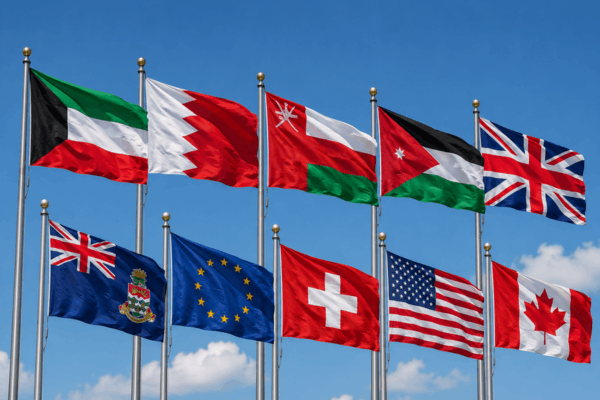
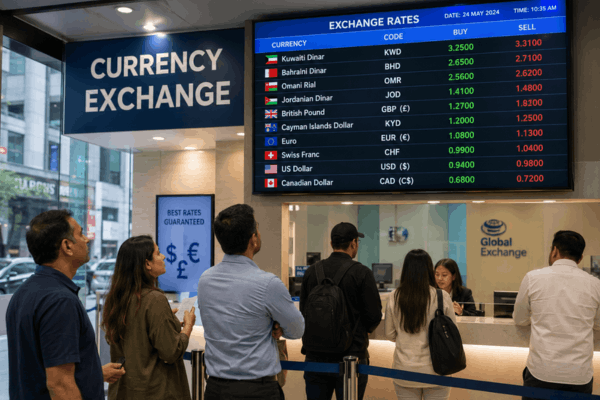
The global ranking of the most expensive currency remains largely unchanged in 2026:
Kuwaiti Dinar (KWD)
Bahraini Dinar (BHD)
Omani Rial (OMR)
Jordanian Dinar (JOD)
British Pound (GBP)
Cayman Islands Dollar (KYD)
Euro (EUR)
Swiss Franc (CHF)
US Dollar (USD)
Canadian Dollar (CAD)
This list reflects the current structure of global FX markets, where commodity-linked and tightly managed currencies continue to dominate the top positions.
Why the Most Expensive Currency Rankings Rarely Change
One of the most interesting characteristics of the most expensive currency list is its long-term stability.
Unlike equities or crypto markets, forex rankings at the top end are not driven by speculation. Instead, they are shaped by structural monetary systems.
1. Pegged and Managed Exchange Rates
Currencies such as the Kuwaiti Dinar, Bahraini Dinar, Omani Rial, and Cayman Islands Dollar are either pegged or tightly controlled. This reduces volatility and preserves high nominal value.
2. Commodity-Backed Economies
Oil and gas exports remain a major driver. Countries in the Gulf region generate strong fiscal surpluses, supporting currency stability over long periods.
3. Strong Reserve Buffers
High foreign currency reserves allow central banks to defend their exchange rate systems during global shocks.
This combination explains why the most expensive currency rankings have remained almost unchanged since the late 20th century.
Why the Kuwaiti Dinar Remains the Most Expensive Currency
The Kuwaiti Dinar continues to hold the top position as the most expensive currency in the world.
Its strength is driven by:
Large sovereign wealth reserves
Strong oil export revenue
Managed exchange rate system
Conservative fiscal policy
What makes the Kuwaiti Dinar particularly unique is its long-term consistency. It has remained at the top of the most expensive currency ranking since the 1980s, making it one of the most stable currencies in modern financial history.
Free-Floating vs Managed Currency Strength
A key insight often missed in discussions about the most expensive currency is the difference between free-floating and managed currencies.
Managed currencies (higher nominal value):
KWD, BHD, OMR, JOD, KYD
Stable due to policy control
Low volatility but limited market-driven pricing
Free-floating currencies:
GBP, EUR, USD, CHF, CAD
Value driven by trade flows, inflation, and interest rates
More responsive to global economic cycles
This distinction is critical because it explains why some of the highest-valued currencies are not necessarily the most traded or most influential globally.
Currency Value vs Global Influence
A common misconception is that the most expensive currency also represents the most powerful economy. In reality, currency value and economic influence are not the same.
For example:
The US Dollar remains the dominant global reserve currency despite not being the highest-valued unit.
The Euro plays a major role in global trade settlement but is not the top-ranked currency by exchange rate.
This shows that the most expensive currency ranking is purely numerical, not a reflection of global financial dominance.
Historical Stability of the Most Expensive Currency List
The top positions in the most expensive currency ranking have shown remarkable consistency:
Gulf currencies have dominated since the 1980s
The British Pound has remained a long-term high-value floating currency
The Swiss Franc has consistently held safe-haven status
The US Dollar has anchored global liquidity for decades
This long-term stability highlights how structural monetary design often outweighs short-term economic cycles.
Why This Matters for Forex Traders
Understanding the most expensive currency is not just theoretical. It helps traders:
Identify stable currency pairs for long-term positioning
Understand which currencies are structurally resistant to volatility
Avoid misinterpreting nominal value as investment strength
Build better macro-driven trading strategies
In forex markets, context matters more than headline rankings.
Conclusion
The global most expensive currency ranking is shaped by structural economics rather than short-term market sentiment. Oil-backed economies, pegged systems, and strong reserve policies continue to dominate the top positions.
While the list evolves slowly, the underlying logic remains consistent: stability and monetary structure matter more than market hype.
FAQs
What is the most expensive currency in the world?
The Kuwaiti Dinar is currently the most expensive currency based on exchange rate value.
Does the most expensive currency mean the strongest economy?
No. It only reflects exchange rate value, not economic size or influence.
Why are Gulf currencies always at the top?
Because they are backed by oil exports and managed exchange rate systems.
Is the US Dollar the most expensive currency?
No, but it is the world’s most important reserve currency.
Share Now
Disclaimer:This content is provided for informational purposes only and does not constitute, and should not be construed as, financial, investment, or other professional advice. No statement or opinion contained herein should be considered a recommendation by Ultima Markets or the author regarding any specific investment product, strategy, or transaction. Readers are advised not to rely solely on this material when making investment decisions and should seek independent advice where appropriate.
Thank you for visiting the Ultima Markets website. Please note that this website is intended for individuals residing in jurisdictions where access is permitted by law. Ultima and its affiliated entities do not operate in your home jurisdiction.
By clicking ‘Acknowledge’, you confirm that you are entering this website solely on your own initiative and not as a result of any specific marketing outreach. You wish to obtain information from this website based on reverse solicitation principles, in accordance with the applicable laws of your home jurisdiction.