
Ultima Markets App
Trade Anytime, Anywhere





Important Information
This website is managed by Ultima Markets’ international entities, and it’s important to emphasise that they are not subject to regulation by the FCA in the UK. Therefore, you must understand that you will not have the FCA’s protection when investing through this website – for example:
- You will not be guaranteed Negative Balance Protection
- You will not be protected by FCA’s leverage restrictions
- You will not have the right to settle disputes via the Financial Ombudsman Service (FOS)
- You will not be protected by Financial Services Compensation Scheme (FSCS)
- Any monies deposited will not be afforded the protection required under the FCA Client Assets Sourcebook. The level of protection for your funds will be determined by the regulations of the relevant local regulator.
Note: Ultima Markets is currently developing a dedicated website for UK clients and expects to onboard UK clients under FCA regulations in 2026.
If you would like to proceed and visit this website, you acknowledge and confirm the following:
- 1.The website is owned by Ultima Markets’ international entities and not by Ultima Markets UK Ltd, which is regulated by the FCA.
- 2.Ultima Markets Limited, or any of the Ultima Markets international entities, are neither based in the UK nor licensed by the FCA.
- 3.You are accessing the website at your own initiative and have not been solicited by Ultima Markets Limited in any way.
- 4.Investing through this website does not grant you the protections provided by the FCA.
- 5.Should you choose to invest through this website or with any of the international Ultima Markets entities, you will be subject to the rules and regulations of the relevant international regulatory authorities, not the FCA.
Ultima Markets wants to make it clear that we are duly licensed and authorised to offer the services and financial derivative products listed on our website. Individuals accessing this website and registering a trading account do so entirely of their own volition and without prior solicitation.
By confirming your decision to proceed with entering the website, you hereby affirm that this decision was solely initiated by you, and no solicitation has been made by any Ultima Markets entity.
I confirm my intention to proceed and enter this website Please direct me to the website operated by Ultima Markets , regulated by the FCA in the United Kingdom

Platinum Breaks $2500: Can It Reach $3000?
In 2026, platinum breaks $2500, reaching a new record high that has captured the attention of both investors and industries alike. The sharp price surge, driven by a mix of supply constraints, geopolitical tensions, and increased industrial demand, marks a critical point in platinum’s recovery.
As platinum climbs to new heights, this article explores the key factors driving the surge and what it means for investors in 2026.
Why Platinum Breaks $2500
As of early 2026, platinum is trading above $2500 per troy ounce, a remarkable increase from $885 a year ago. This surge represents a rise of 148% year-over-year, and platinum is approaching levels previously unseen, breaking its historical high of $2276 in 2008.
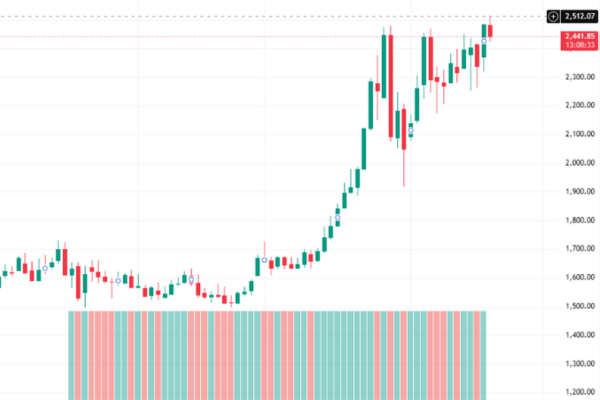
Several key factors are contributing to platinum’s rise, signaling that this commodity is poised for long-term growth.
Key Drivers Behind Platinum’s All Time High
1. Geopolitical Tensions and Market Uncertainty
One of the major catalysts behind platinum’s rise is geopolitical instability. Tensions between the US and Europe, combined with broader global economic uncertainty, have created a strong demand for safe-haven assets.
Warren Buffett, the famed investor, has gradually been increasing Berkshire Hathaway’s cash position to a record high level. This move suggests that Buffett is concerned about market valuations and a potential market crash in 2026. His strategy highlights broader market concerns about potential downturns, adding to the flight to safety that benefits platinum as a store of value.
Platinum, like gold, benefits from investor demand when geopolitical risks increase. The weakening US dollar has further compounded this effect, making precious metals like platinum more attractive for foreign investors.
Alongside this, the US government shutdown threat and global trade tensions have sparked increased volatility, leading to a rush toward platinum as a reliable hedge.
As a result, platinum breaks $2500, not just as a reaction to supply issues, but as part of a broader trend of precious metals being viewed as stores of value in uncertain times.

2. Supply Constraints and Scarcity
The supply-demand imbalance is another key driver of platinum’s price surge. Platinum has been facing supply deficits for several years, and 2026 is expected to see this trend continue.
South Africa, the world’s largest platinum producer, has faced geopolitical instability and production disruptions, which have limited the available supply of platinum. Russia, another key producer, also has strained relations with the U.S., increasing the likelihood of production disruptions.
According to reports, platinum production could fall short by up to 460,000 ounces in 2026. This supply shortage, combined with rising demand from industrial sectors, has pushed platinum’s price higher.
Platinum’s inventory logic is similar to silver’s, with mining issues and geopolitical risks making supply increasingly uncertain. The likelihood of disruptions in platinum production is higher than for gold or silver due to these geopolitical tensions. While gold remains a prominent safe-haven investment, platinum’s exposure to supply chain issues and political unrest makes it even more vulnerable, and pricier when disruptions occur.
As platinum breaks $2500, its scarcity becomes even more evident, making it an increasingly attractive option for both investors and industrial buyers.
3. Growing Industrial Demand
One of the most significant factors driving platinum’s all time high is the growing industrial demand for platinum, particularly in automotive catalysts and hydrogen fuel cells.
Platinum plays a vital role in reducing harmful emissions in diesel and hybrid vehicles, which is critical as countries tighten environmental regulations. Additionally, the rise of green energy technologies, especially hydrogen fuel cells, has increased platinum’s industrial use, further driving up demand.
As industrial consumption of platinum continues to rise, the metal’s price is set to continue its upward trajectory. This growing demand from sectors beyond traditional precious metal investments contributes to the overall bullish outlook for platinum in 2026.
Technical Indicators Shows Bullish Sentiment for Platinum
Platinum’s technical indicators are also signaling a bullish outlook for 2026. The current market momentum is supported by key technical signals, showing that platinum is on a strong upward path. Here’s a breakdown of the technical indicators for XPT/USD:
XPT/USD Technical Indicators
| Indicator | Latest Value | Signal |
| RSI (14) | 64.75 | Buy, near stretched, but still bullish |
| MACD (12, 26) | 18.56 | Buy, shows strong upward momentum |
| ADX (14) | 39.42 | Strong trend, bullish momentum continues |
| Stoch RSI (14) | ~80 | Overbought, suggests caution for short-term |
| ATR (14) | 9.12 | High volatility, price swings expected |
| MA50 (Simple) | 2,474.40 | Buy, price above moving average indicates support |
| MA200 (Simple) | 2,320.25 | Buy, long-term uptrend in place |
Platinum’s RSI at 64.75 suggests it’s still in a buy zone, with strong upward momentum and room for further upside before reaching extreme overbought levels. The MACD reflects strong buying activity, supporting continued upward price action in the short-to-medium term.
The ADX of 39.42 confirms platinum is in a strong bullish trend, as readings above 25 indicate a powerful trend. However, the Stochastic RSI near 80 shows platinum is in overbought territory, signaling potential short-term pullbacks, though this doesn’t reverse the bullish trend.
The ATR of 9.12 highlights high volatility, suggesting significant price swings that provide opportunities for both long-term investors and short-term traders.
How Analysts See Platinum’s Price Action
With platinum now breaking $2500, traders and investors are turning to analysts for insight into the potential future price trajectory of the metal. The key question on everyone’s mind: Can platinum reach $3000?
While forecasts vary, there are several optimistic scenarios in which platinum could approach or surpass the $3000 mark. However, it’s important to understand the difference between short-term price actions and long-term structural trends that could influence platinum’s rise.
Short-Term (2026):
- Consensus forecasts remain around $1500–$1700/oz, reflecting market fundamentals and seasonal volatility. Some institutional targets, like Bank of America’s $2450/oz, suggest that bullish scenarios will continue to unfold if supply remains tight and investment demand stays strong.
Medium-Term (12 Months Forward):
- Macro models see platinum reaching ~$2670/oz, implying that prices could continue to rise beyond current levels as macro conditions evolve. The geopolitical environment and industrial demand are expected to keep platinum prices buoyant.
Long-Term (2027+):
- Structural supply deficits and growing industrial demand, especially from hydrogen fuel cells and automotive catalysts, could push platinum toward $3000+ under favorable conditions. The growing trend in decarbonization and green technologies suggests that $3,000 is within the realm of possibility if platinum continues to see increased adoption in clean energy.
Conclusion
As platinum breaks $2500 in 2026, it’s clear that the metal is in a strong bullish trend, driven by supply constraints, growing industrial demand, and geopolitical instability. Platinum’s technical strength and analyst projections point to continued upward momentum, with support levels at $2474 and resistance levels at $2550 and $2600.
For short-term traders, scalping near resistance levels and buying on dips toward support levels could provide great opportunities. Long-term traders should keep a close watch on $2474 and $2320 (200-day MA) as key support areas to enter long positions.
Platinum’s industrial uses, limited supply, and geopolitical risk make it an attractive choice for diversification in the precious metals market. The bullish outlook for platinum remains intact, and with platinum breaking $2500, it shows significant potential for traders looking to capitalize on further price gains in 2026.
FAQ
Yes, with bullish momentum, support levels around $2,474 make now a strong entry point for long-term investors.
Yes, if supply shortages and industrial demand continue, $3000 is possible in the long term.
Geopolitical tensions, supply constraints, and rising demand from the automotive and green energy sectors are driving platinum’s price.
Disclaimer: This content is provided for informational purposes only and does not constitute, and should not be construed as, financial, investment, or other professional advice. No statement or opinion contained here in should be considered a recommendation by Ultima Markets or the author regarding any specific investment product, strategy, or transaction. Readers are advised not to rely solely on this material when making investment decisions and should seek independent advice where appropriate.
Latest Articles



FOLLOW US






Ultima Markets is a member of The Financial Commission, an international independent body responsible for resolving disputes in the Forex and CFD markets.

All clients of Ultima Markets are protected under insurance coverage provided by Willis Towers Watson (WTW), a global insurance brokerage established in 1828, with claims eligibility up to US$1,000,000 per account.

Ultima Markets is the first United CFD broker to be part of the United Nations Global Compact.
FOLLOW US
TRADE WITH US
RISK DISCLOSURE
Risk Warning:
Trading leveraged financial products, including Contracts for Difference (CFDs), carries a high level of risk and may result in losses exceeding your initial investment. These products are not suitable for all investors and should only be traded with funds you can afford to lose. You do not own or have any rights to the underlying assets of these derivatives (e.g., entitlement to dividends). Please ensure you fully understand the associated risks. Before trading, consider your level of experience, investment objectives, and seek independent financial advice if necessary. Refer to our legal documents and disclosures before making any trading decisions.
General Advice Warning:
The information provided on this website is general in nature and does not take into account your personal objectives, financial situation, or needs. Before acting on any advice, you should assess its appropriateness in light of your individual circumstances and consult our legal documentation.
Regional Restrictions:
The information and services on this website are not intended for residents of certain jurisdictions, including but not limited to the United States, United Kingdom, Singapore, and any jurisdictions subject to international sanctions. For further information, please contact our customer support team.
Regulatory Information:
Ultima Markets is a trading name shared amongst multiple entities operating in various jurisdictions. These following entities are authorised to operate under the Ultima Markets brand and trademarks.
-
Ultima Markets UK Limited, reference number 470325, is authorised and regulated by the Financial Conduct Authority (FCA). Registered address: 1 Blossom Yard, Fourth Floor, London, E1 6RS, UNITED KINGDOM.
-
Ultima Markets Ltd is authorised and regulated by the Financial Services Commission (FSC) of Mauritius as a Full-Service Investment Dealer (excluding Underwriting), under licence number GB 23201593.
Registered address: 2nd Floor, The Catalyst, 40 Silicon Avenue, Ebene Cybercity, 72201, Mauritius.

Copyright © 2026 Ultima Markets Ltd. All rights reserved.
-

Messenger


Continue on Messenger
Take the conversation to your Messenger account. You can return anytime.
Scan the QR code and then send the message that appears in your Messenger.
Open Messenger on this device.
-

Instagram

Continue on Instagram
Take the conversation to your Instagram account. You can return anytime.
Scan the QR code to open Instagram. Follow @ultima_markets to send a DM.
Open Instagram on this device.
-

Live Chat
-

