
Ultima Markets App
Trade Anytime, Anywhere





Important Information
This website is managed by Ultima Markets’ international entities, and it’s important to emphasise that they are not subject to regulation by the FCA in the UK. Therefore, you must understand that you will not have the FCA’s protection when investing through this website – for example:
- You will not be guaranteed Negative Balance Protection
- You will not be protected by FCA’s leverage restrictions
- You will not have the right to settle disputes via the Financial Ombudsman Service (FOS)
- You will not be protected by Financial Services Compensation Scheme (FSCS)
- Any monies deposited will not be afforded the protection required under the FCA Client Assets Sourcebook. The level of protection for your funds will be determined by the regulations of the relevant local regulator.
Note: Ultima Markets is currently developing a dedicated website for UK clients and expects to onboard UK clients under FCA regulations in 2026.
If you would like to proceed and visit this website, you acknowledge and confirm the following:
- 1.The website is owned by Ultima Markets’ international entities and not by Ultima Markets UK Ltd, which is regulated by the FCA.
- 2.Ultima Markets Limited, or any of the Ultima Markets international entities, are neither based in the UK nor licensed by the FCA.
- 3.You are accessing the website at your own initiative and have not been solicited by Ultima Markets Limited in any way.
- 4.Investing through this website does not grant you the protections provided by the FCA.
- 5.Should you choose to invest through this website or with any of the international Ultima Markets entities, you will be subject to the rules and regulations of the relevant international regulatory authorities, not the FCA.
Ultima Markets wants to make it clear that we are duly licensed and authorised to offer the services and financial derivative products listed on our website. Individuals accessing this website and registering a trading account do so entirely of their own volition and without prior solicitation.
By confirming your decision to proceed with entering the website, you hereby affirm that this decision was solely initiated by you, and no solicitation has been made by any Ultima Markets entity.
I confirm my intention to proceed and enter this website Please direct me to the website operated by Ultima Markets , regulated by the FCA in the United Kingdom

Will Venezuela Oil Stocks Rise in 2026?
In the first week of January 2026, Venezuelan oil moved from a slow-burning sanctions to become a global market catalyst. The U.S. capture of Venezuela’s leader Nicolás Maduro (Jan. 3, 2026), followed by an announced plan to channel Venezuelan crude into U.S.-controlled sales and revenue accounts has forced traders, refiners, and governments to quickly reprice risk.
With policy intervention and redirected flows, Venezuela oil prices have swung, heavy-crude differentials have shifted, and refiner stocks like Valero have jumped in a matter of days. This article will discuss how the evolving U.S. strategy is reshaping global oil markets, which energy stocks stand to benefit, and what investors should watch next.

Venezuela Oil News: What the U.S. Strategy Changes
According to a U.S. Department of Energy fact sheet dated Jan. 7, 2026, the administration’s strategy has several concrete components:
- Immediate sales: Oil sales “begin immediately” with an anticipated ~30–50 million barrels, and the program would continue indefinitely.
- U.S.-controlled revenue: Sale proceeds would first settle in U.S.-controlled accounts at “globally recognised banks,” with disbursement “at the discretion of the U.S. government.”
- Sanctions rollback: The U.S. says it is selectively rolling back sanctions to enable transport and sale of Venezuelan crude and products into global markets.
- Operational enablement: DOE says the U.S. will allow flows of U.S. diluent (light crude) into Venezuela. This is important for blending and moving Venezuela’s very heavy crude to authorise import of select oilfield equipment, parts, and services to support near-term growth.

This approach is also tightly linked to enforcement actions. Reuters reported that the U.S. has escalated a blockade and seized Venezuela-linked tankers, signaling that Washington intends to control not just revenues, but the physical flows and logistics.
Oil Price Outlook: Why Crude Futures Are Whipsawing
Crude has been reacting in both directions because Venezuela headlines can imply opposite outcomes:
- More barrels re-entering legitimate trade: incremental supply and reduced friction is potentially bearish for oil prices.
- Geopolitical escalation and shipping disruption: risk premium and near-term tightness signals bullish sentiment.
That tension showed up in recent settlements reported by Reuters:
- Jan. 7, 2026: Brent around $59.96 and WTI around $55.99, lower on the day as markets weighed the trade-flow shift and broader supply availability.
- Jan. 8, 2026: Brent around $61.99 and WTI around $57.76, higher as investors repriced Venezuela risk and broader geopolitics.
The bigger limiter for a sustained oil-price rally is the macro backdrop. Reuters cited forecasts pointing to potential oversupply in early 2026, which can cap how far benchmarks run on a single geopolitical story unless multiple disruptions stack up.
What this means for investors: the cleaner trade isn’t necessarily “bet crude up.” It’s often bet the spread, especially the companies that profit when heavy crude availability improves.
China’s Oil Strategy: Replacing Venezuelan Barrels
The U.S. strategy is explicitly about redirecting Venezuelan barrels. This inevitably pressures China’s prior role as a major destination for discounted cargoes.
Reuters reported:
- China imported about 389,000 bpd of Venezuelan oil in 2025 and independent refiners are expected to replace Venezuelan supply with other heavy grades, especially Iranian and Russian barrels, rather than bid up for unsanctioned crude.
- Venezuela cargoes already on the water in Asia could cover roughly ~75 days of Chinese demand, reducing the immediate scramble.
- Iranian Heavy was cited as a cheap substitute in ample supply (around $10/bbl below Brent in that window).
If Venezuelan crude becomes more tightly controlled and routed through more transparent, market-linked channels, China may lose some access to the deepest-discount Venezuelan barrels that helped teapots’ economics. However, China is unlikely to be of short oil because alternative sanctioned supplies exist. The shift will focus more about which suppliers win and how discounts evolve.
Venezuelan Oil Stocks to Watch
Here’s where the equity opportunity concentrates: U.S. refiners first, then licensed operators, then longer-dated rebuild plays.
Valero Energy (VLO): A Classic Heavy-Crude Winner
Valero is one of the most direct U.S.-listed beneficiaries because it operates complex refineries that can take heavy, sour crude slates. This is exactly what Venezuela produces.
Barclays analysis indicated that Valero could process an incremental ~300,000–400,000 bpd if Venezuelan supply becomes available again.
Why that matters:
- If Venezuelan barrels return at competitive economics, Valero may gain feedstock flexibility and potentially improve margins relative to refiners that are less optimised for heavy crude.
- The market has already traded this theme: Reuters reported U.S. refiners (including Valero) rallying sharply during the Venezuela policy shock window.
What to watch for VLO: concrete evidence of sustained, legal heavy-crude inflows to the Gulf Coast (e.g. licenses, cargo awards, auctions, shipping normalisation).
Phillips 66 (PSX) and Marathon Petroleum (MPC)
These names often move with the same “Venezuela oil returns” logic. They have Gulf Coast exposure and complex assets suited to heavier slates.
Reports mention that:
- U.S. refiners could absorb much of Venezuela’s crude if sanctions were removed, and Phillips 66 stated two refineries could process “a couple of hundred thousand bpd” of Venezuelan grades as supply returns.
- Refiners including Marathon, Phillips 66, PBF, and Valero rose meaningfully as investors repriced the potential for heavy crude access.
What to watch for PSX/MPC: whether the U.S. uses auctions or preferred allocations, and which refiners emerge as repeat buyers of Venezuelan cargoes.
Chevron (CVX)
Chevron is a different kind of play. It is less about refinery feedstock, more about licensed operating access and export permissions.
Reports mention that:
- Chevron has been in talks with the U.S. about an expanded Venezuela license, after prior restrictions reduced export volumes and constrained revenue arrangements.
- Under the blockade environment, Reuters described export disruptions and shifting patterns that make licensing clarity especially market-moving.
Why CVX can move fast: if licensing expands, Chevron’s operational flexibility and export optionality can improve; if rules tighten, it’s a direct hit to visibility.
Oil Services Stocks (SLB, HAL): Higher Risk, Longer Timeline
If Venezuela truly rebuilds its oil sector, service companies can benefit. However, this is typically a multi-year pathway requiring contract clarity, security, and capital.
Most credible commentary expects meaningful Venezuelan production growth to take time, even with sanctions adjustments and imported equipment.
What to Watch Next in Venezuela Oil
Venezuela’s return is turning into a refiner-first trade. The fastest beneficiaries are the companies that can immediately run heavy crude and turn it into products profitably.
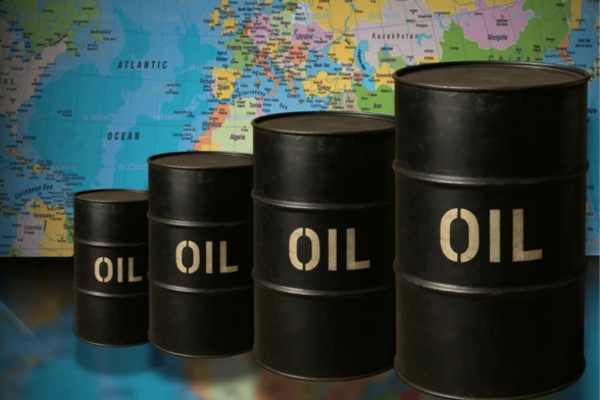
If you’re tracking “venezuela oil” for stocks, focus less on long-range reserve potential and more on near-term realities licenses, cargo awards, and who actually gets barrels onto the Gulf Coast.
FAQ
U.S. policy is likely to boost stocks of Valero and Chevron, as they can process Venezuelan heavy crude, but short-term volatility is expected due to geopolitical uncertainty.
Increased Venezuelan oil supply could lower prices, but geopolitical risks and sanctions will keep oil prices volatile in the near term.
Valero, Chevron, and Marathon Petroleum are well-positioned to benefit, as they have refineries suited to process Venezuelan heavy crude.
Disclaimer: This content is provided for informational purposes only and does not constitute, and should not be construed as, financial, investment, or other professional advice. No statement or opinion contained here in should be considered a recommendation by Ultima Markets or the author regarding any specific investment product, strategy, or transaction. Readers are advised not to rely solely on this material when making investment decisions and should seek independent advice where appropriate.
Latest Articles


FOLLOW US






Ultima Markets is a member of The Financial Commission, an international independent body responsible for resolving disputes in the Forex and CFD markets.

All clients of Ultima Markets are protected under insurance coverage provided by Willis Towers Watson (WTW), a global insurance brokerage established in 1828, with claims eligibility up to US$1,000,000 per account.

Ultima Markets is the first United CFD broker to be part of the United Nations Global Compact.
FOLLOW US
TRADE WITH US
RISK DISCLOSURE
Risk Warning:
Trading leveraged financial products, including Contracts for Difference (CFDs), carries a high level of risk and may result in losses exceeding your initial investment. These products are not suitable for all investors and should only be traded with funds you can afford to lose. You do not own or have any rights to the underlying assets of these derivatives (e.g., entitlement to dividends). Please ensure you fully understand the associated risks. Before trading, consider your level of experience, investment objectives, and seek independent financial advice if necessary. Refer to our legal documents and disclosures before making any trading decisions.
General Advice Warning:
The information provided on this website is general in nature and does not take into account your personal objectives, financial situation, or needs. Before acting on any advice, you should assess its appropriateness in light of your individual circumstances and consult our legal documentation.
Regional Restrictions:
The information and services on this website are not intended for residents of certain jurisdictions, including but not limited to the United States, United Kingdom, Singapore, and any jurisdictions subject to international sanctions. For further information, please contact our customer support team.
Regulatory Information:
Ultima Markets is a trading name shared amongst multiple entities operating in various jurisdictions. These following entities are authorised to operate under the Ultima Markets brand and trademarks.
-
Ultima Markets UK Limited, reference number 470325, is authorised and regulated by the Financial Conduct Authority (FCA). Registered address: 1 Blossom Yard, Fourth Floor, London, E1 6RS, UNITED KINGDOM.
-
Ultima Markets Ltd is authorised and regulated by the Financial Services Commission (FSC) of Mauritius as a Full-Service Investment Dealer (excluding Underwriting), under licence number GB 23201593.
Registered address: 2nd Floor, The Catalyst, 40 Silicon Avenue, Ebene Cybercity, 72201, Mauritius.

Copyright © 2026 Ultima Markets Ltd. All rights reserved.
-

Messenger


Continue on Messenger
Take the conversation to your Messenger account. You can return anytime.
Scan the QR code and then send the message that appears in your Messenger.
Open Messenger on this device.
-

Instagram

Continue on Instagram
Take the conversation to your Instagram account. You can return anytime.
Scan the QR code to open Instagram. Follow @ultima_markets to send a DM.
Open Instagram on this device.
-

Live Chat
-

