This website is managed by Ultima Markets’ international entities, and it’s important to emphasise that they are not subject to regulation by the FCA in the UK. Therefore, you must understand that you will not have the FCA’s protection when investing through this website – for example:
You will not be guaranteed Negative Balance Protection
You will not be protected by FCA’s leverage restrictions
You will not have the right to settle disputes via the Financial Ombudsman Service (FOS)
You will not be protected by Financial Services Compensation Scheme (FSCS)
Any monies deposited will not be afforded the protection required under the FCA Client Assets Sourcebook. The level of protection for your funds will be determined by the regulations of the relevant local regulator.
Note: UK clients are kindly invited to visit https://www.ultima-markets.co.uk/. Ultima Markets UK expects to begin onboarding UK clients in accordance with FCA regulatory requirements in 2026.
If you would like to proceed and visit this website, you acknowledge and confirm the following:
1.The website is owned by Ultima Markets’ international entities and not by Ultima Markets UK Ltd, which is regulated by the FCA.
2.Ultima Markets Limited, or any of the Ultima Markets international entities, are neither based in the UK nor licensed by the FCA.
3.You are accessing the website at your own initiative and have not been solicited by Ultima Markets Limited in any way.
4.Investing through this website does not grant you the protections provided by the FCA.
5.Should you choose to invest through this website or with any of the international Ultima Markets entities, you will be subject to the rules and regulations of the relevant international regulatory authorities, not the FCA.
Ultima Markets wants to make it clear that we are duly licensed and authorised to offer the services and financial derivative products listed on our website. Individuals accessing this website and registering a trading account do so entirely of their own volition and without prior solicitation.
By confirming your decision to proceed with entering the website, you hereby affirm that this decision was solely initiated by you, and no solicitation has been made by any Ultima Markets entity.
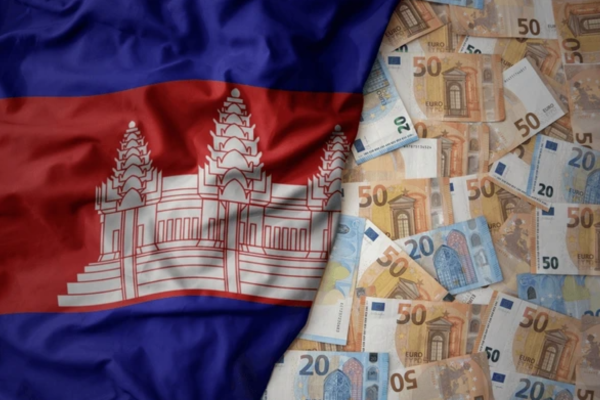
Learn about the Cambodia currency. It is the Cambodian riel KHR, why USD is widely used, today’s NBC rate, Bakong KHQR payments, and trader takeaways.
What Is the Cambodia Currency Used Now?
The Cambodia currency is the Cambodian riel (KHR). At the same time, the US dollar is widely used in daily life, especially in Phnom Penh and major tourist areas. That mix shapes how people pay, how prices are displayed, and why Cambodia has invested heavily in QR payments.
This guide explains how the Cambodia currency works on the ground, what is new since 2024, and the key points traders should know.
What Is the Cambodia Currency
Official currency: Cambodian riel (KHR)
Also commonly used: US dollar
Rule of thumb: many prices assume about 4,000 riel per 1 USD, then settle small differences in riel.
Cambodian Riel And US Dollar
Cambodia often feels like a two currency economy.
Larger items and tourist services are frequently priced in USD.
Smaller purchases are often paid in riel, and even if you pay in USD you may receive change in riel.
The practical result is simple. Keep some riel for everyday spending, even if you also carry USD.
Cambodia Currency Exchange Rate Today
For a reliable reference, check the National Bank of Cambodia daily rate.
On 2 January 2026, the official rate is 4014 KHR per USD. Consumer FX trackers usually show the pair moving in a narrow band, so the bigger difference for most people is the spread and fees you pay, not the headline rate.
Quick Conversions
5 USD is about 20,000 riel
10 USD is about 40,000 riel
20 USD is about 80,000 riel
Your final rate will vary by channel. Banks and money changers usually have tighter spreads than small shops. ATMs may add fees on top.
If you exchange cash, ask for the riel amount before you commit. Some shops build a wider rate into their prices, and ATMs can apply both local fees and card issuer fees. A quick check prevents small costs adding up.
Where To Pay With Riel Versus US Dollars
A good way to avoid friction is to match the currency to the size of the bill.
Often paid in USD
Hotels and tours
Some restaurants and intercity transport
Higher value shopping
Often easier in riel
Markets and street food
Local transport
Small services and tips
Even when a price is quoted in USD, many merchants treat riel as the default for change. Having a riel buffer removes the need to negotiate rounding.
USD Banknote Condition Rules
Older travel advice often warns that torn or marked USD notes can be rejected. That did happen in practice for many years.
In August 2024, the National Bank of Cambodia issued measures to improve USD banknote circulation and directed banks, financial institutions, and money changers to accept worn USD notes without charging extra fees, except for notes that are counterfeit or unrecognisable.
In day to day retail, preferences can still vary. If you want fewer cash hassles, pay in riel or use KHQR when available.
Digital Payments That Support The Riel
Cambodia has pushed digital payments through Bakong and the national QR standard KHQR. This matters because QR payments can make riel usage easier in a country where USD is deeply embedded.
Officially published figures show Bakong has scaled rapidly, reaching 608.32 million transactions in 2024, up from 200.93 million in 2023. This growth is one reason you will see QR codes across shops, cafés, and service providers.
Cross Border QR Payments
Cambodia is also linking QR payments regionally. A BIS speech on the Cambodia Malaysia connection notes travelers can pay by scanning KHQR at millions of touchpoints in Cambodia using participating apps.
Cambodia has also announced QR links that let Cambodian users scan QR codes abroad using Bakong connected apps, and more linkages are expected as the region aligns standards.
For visitors, this means you can often pay without hunting for small bills, while merchants settle in riel more easily.
Cambodia Currency Banknotes And A New High Denomination
Cambodia mainly uses banknotes for cash payments. In October 2024, Cambodia issued a 200,000 riel commemorative banknote, roughly around 50 USD in value. If you see it, it is real, but you will not need it for most daily purchases.
Cambodia Currency And Forex Trading
The Cambodia currency is not a mainstream retail forex pair. Liquidity is limited and many brokers do not offer KHR pairs. For most traders, Cambodia is more useful as a case study than as a direct trading instrument.
Three takeaways are practical:
USD conditions matter. In a dollarised economy, shifts in US rates, the dollar cycle, and risk sentiment can feed into local pricing and credit conditions.
Watch regional proxies. If you want tradable exposure tied to Southeast Asia themes, look at more liquid regional currencies and risk assets.
Focus on execution basics. For trading, spreads, liquidity, and risk management will matter more than trying to force exposure to an illiquid currency.
Why The Riel Often Looks Stable Versus USD
If you are coming from major FX markets, USD KHR can look unusually steady. That is because Cambodia’s exchange rate is managed and the official rate is kept close to the market rate, rather than moving freely like liquid G10 pairs.
At the same time, Cambodia remains highly dollarised, so the economy is closely linked to USD pricing. Together, these factors help explain why the riel typically moves in small steps instead of large swings.
Conclusion
The Cambodia currency is the riel, but Cambodia’s payments reality is shaped by long running USD use. For 2026, the most useful updates are the official exchange rate reference, the 2024 guidance on worn USD notes, and the continued rise of Bakong and KHQR.
If you want to trade what actually moves markets, focus on liquid FX pairs and macro drivers, then use Cambodia as context for understanding dollarisation and currency management.
Share Now
Disclaimer:This content is provided for informational purposes only and does not constitute, and should not be construed as, financial, investment, or other professional advice. No statement or opinion contained herein should be considered a recommendation by Ultima Markets or the author regarding any specific investment product, strategy, or transaction. Readers are advised not to rely solely on this material when making investment decisions and should seek independent advice where appropriate.
Thank you for visiting the Ultima Markets website. Please note that this website is intended for individuals residing in jurisdictions where access is permitted by law. Ultima and its affiliated entities do not operate in your home jurisdiction.
By clicking ‘Acknowledge’, you confirm that you are entering this website solely on your own initiative and not as a result of any specific marketing outreach. You wish to obtain information from this website based on reverse solicitation principles, in accordance with the applicable laws of your home jurisdiction.