This website is managed by Ultima Markets’ international entities, and it’s important to emphasise that they are not subject to regulation by the FCA in the UK. Therefore, you must understand that you will not have the FCA’s protection when investing through this website – for example:
You will not be guaranteed Negative Balance Protection
You will not be protected by FCA’s leverage restrictions
You will not have the right to settle disputes via the Financial Ombudsman Service (FOS)
You will not be protected by Financial Services Compensation Scheme (FSCS)
Any monies deposited will not be afforded the protection required under the FCA Client Assets Sourcebook. The level of protection for your funds will be determined by the regulations of the relevant local regulator.
Note: UK clients are kindly invited to visit https://www.ultima-markets.co.uk/. Ultima Markets UK expects to begin onboarding UK clients in accordance with FCA regulatory requirements in 2026.
If you would like to proceed and visit this website, you acknowledge and confirm the following:
1.The website is owned by Ultima Markets’ international entities and not by Ultima Markets UK Ltd, which is regulated by the FCA.
2.Ultima Markets Limited, or any of the Ultima Markets international entities, are neither based in the UK nor licensed by the FCA.
3.You are accessing the website at your own initiative and have not been solicited by Ultima Markets Limited in any way.
4.Investing through this website does not grant you the protections provided by the FCA.
5.Should you choose to invest through this website or with any of the international Ultima Markets entities, you will be subject to the rules and regulations of the relevant international regulatory authorities, not the FCA.
Ultima Markets wants to make it clear that we are duly licensed and authorised to offer the services and financial derivative products listed on our website. Individuals accessing this website and registering a trading account do so entirely of their own volition and without prior solicitation.
By confirming your decision to proceed with entering the website, you hereby affirm that this decision was solely initiated by you, and no solicitation has been made by any Ultima Markets entity.
Discover what is trading in 2026, including AI-driven trading, blockchain, and DeFi. Learn how these trends are shaping the future of financial markets.
What Is Trading? How Is It In 2026?
As we enter 2026, the question “what is trading?” remains at the forefront of many people’s minds. Trading is the act of buying and selling financial assets with the goal of profiting from price fluctuations.
As we look at the future of trading in 2026, it’s important to understand what trading means and how it’s changing with technology, new market trends, and evolving regulations.
Understanding What Is Trading
What is trading? At its core, trading involves the buying and selling of financial assets such as stocks, currencies, commodities, or cryptocurrencies with the aim of profiting from price movements. It’s a fundamental mechanism that drives the financial markets, providing liquidity and enabling price discovery.
Traders make their profits by predicting price fluctuations. If they buy an asset at a low price and sell it when the price increases, they earn a profit. Conversely, if they sell an asset at a higher price and the market moves against them, they incur a loss.
In 2026, technology plays a significant role in shaping the trading environment, introducing new opportunities and risks that make trading faster, more accessible, and more complex than ever before.
How Does Trading Work in 2026?
So, what is trading like in 2026? Trading still involves buying and selling assets, but technology has changed how it’s done. AI-powered trading algorithms, blockchain, and machine learning now play significant roles in executing trades more efficiently and effectively than ever before. In 2026, traders have access to faster data, more sophisticated tools, and advanced risk management techniques that were once unavailable.
To understand what trading is today, it’s essential to look at the technology that drives it. Real-time data analysis, automated trading systems, and predictive analytics help traders make decisions more quickly, capitalizing on market movements in ways that were impossible just a few years ago.
Types of Trading in 2026
There are various types of trading strategies, each catering to different goals, time horizons, and risk profiles. Let’s explore the most common forms of trading in 2026.
1. Day Trading
Day trading involves buying and selling assets within the same trading day. Day traders typically focus on short-term price movements, capitalizing on small fluctuations in the market. With high-frequency trading (HFT) algorithms and real-time data analytics, day trading has become faster and more data-driven in 2026.
Day traders use technical analysis, which involves studying historical price charts, volume, and other indicators to forecast future price movements. In 2026, AI-driven tools help day traders make quicker, more accurate decisions based on real-time data.
2. Swing Trading
Swing traders hold positions for a few days or weeks to take advantage of price “swings” in the market. Unlike day traders, they don’t need to make trades within a single day. Swing traders typically use a combination of technical and fundamental analysis to spot trends.
With advancements in predictive analytics, swing traders in 2026 are now able to more accurately forecast price movements by analyzing historical data, sentiment analysis, and real-time news.
3. Scalping
Scalping is a high-speed trading style where traders aim to profit from small price movements, often executing hundreds or even thousands of trades in a day. This strategy requires quick decision-making and is supported by AI-powered bots that can process trades within milliseconds.
In 2026, algorithmic trading and quantitative strategies dominate scalping, where algorithms scan the market for the smallest price discrepancies, executing orders faster than human traders can react.
4. Position Trading
Position traders hold assets for weeks, months, or even years. They focus on longer-term trends and often use fundamental analysis, such as examining economic indicators, corporate earnings, and industry outlooks. In 2026, position traders rely on more sophisticated models powered by machine learning to assess long-term trends with greater accuracy.
5. Algorithmic & AI-Driven Trading
As of 2026, AI and automated trading algorithms are dominating the market, especially in high-frequency trading(HFT) and crypto trading. These systems can process vast amounts of data, identify patterns, and execute trades at speeds far beyond human capabilities.
These algorithmic systems continuously adapt to market conditions, making them highly efficient in predicting price movements, managing risk, and adjusting strategies in real time.
What Assets Are Traded in 2026?
Traders can engage with a wide range of assets. The core categories have remained consistent, but there are new trends that have emerged in 2026.
1. Stocks
Stocks, or shares of companies, are still the most widely traded assets. However, with tech stocks continuing to grow in value, AI-related companies, and electric vehicle (EV) manufacturers like Tesla and Nvidia, are expected to dominate the market in 2026.
2. Forex (Currencies)
The foreign exchange (Forex) market remains the largest and most liquid market in the world. In 2026, the rise of digital currencies such as stablecoins and central bank digital currencies (CBDCs) are changing the dynamics of currency trading. Forex markets are expected to see increased regulation, especially around crypto-assets.
3. Commodities
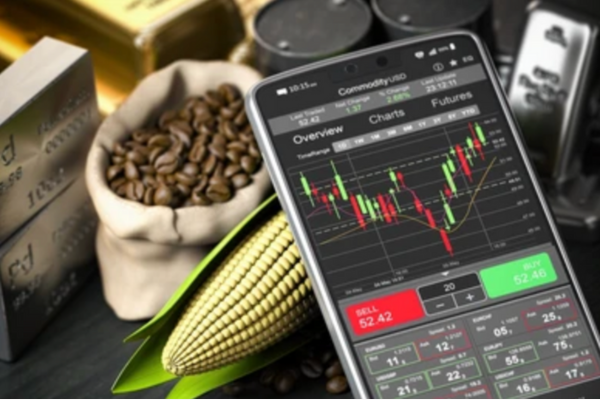
Commodities like gold, oil, and agricultural products continue to be vital trading instruments. However, as environmental concerns rise, commodities tied to green energy (like solar power stocks and electric vehicle batteries) are gaining traction.
4. Cryptocurrencies
Cryptocurrencies like Bitcoin and Ethereum continue to be traded globally. However, 2026 brings new innovations in the blockchain and DeFi (Decentralized Finance) space.
These decentralized applications (DApps) have created new trading opportunities in tokens and smart contracts, as well as new risks, especially with the rise of NFTs and digital ownership.
The Role of Technology in Trading
In 2026, technology is central to how markets function and evolve. Traders are increasingly using AI-powered platforms and automated trading systems to gain an edge in the markets.
AI & Predictive Analytics
AI is used to analyze market data, news, social sentiment, and economic events to make real-time trading decisions. By analyzing vast amounts of data, these systems can predict price movements with greater accuracy, helping traders stay ahead of the curve.
Blockchain & Decentralized Finance (DeFi)
Blockchain technology is reshaping how assets are traded, enabling DeFi platforms that allow peer-to-peer transactions without the need for intermediaries like banks. In 2026, we expect CBDCs and blockchain-based securities to become more mainstream, changing the way we view financial markets.
Risks of Trading in 2026
While trading presents opportunities, it comes with significant risks, particularly as the markets become more complex. Some of the major risks include:
Volatility: Asset prices, especially in cryptocurrency markets, are more volatile than ever.
AI and System Failures: Automated systems can malfunction, leading to large losses.
Regulatory Risks: With the growing presence of DeFi and cryptocurrencies, new regulations may change how traders operate.
Effective risk management strategies such as using stop-loss orders, diversifying portfolios, and regularly reviewing positions are more important than ever.
How to Get Started with Trading in 2026
For beginners, entering the world of trading in 2026 can seem daunting. However, with the right approach, anyone can get started:
Education: Learn about the basics of different assets, trading strategies, and platforms.
Choose a Platform: Select a trading platform that offers AI-driven tools and real-time data.
Practice: Use demo accounts to hone your skills and get comfortable with the platform.
Develop a Strategy: Create a solid plan that combines technical and fundamental analysis.
Start Small: Begin with small investments and gradually increase your exposure as you gain experience.
Stay Informed: Keep up-to-date with global market trends and economic data.
Conclusion
Trading in 2026 is an exciting and dynamic opportunity, driven by technological innovation, market globalisation, and new asset classes. While the fundamentals of trading on predicting price movements, managing risk, and using data to inform decisions remain unchanged; the tools, platforms, and strategies available to traders are more advanced than ever.
As technology continues to evolve, traders in 2026 will have even greater opportunities to profit from the financial markets. However, success in trading requires continuous learning, discipline, and a clear understanding of risk.
Share Now
Disclaimer:This content is provided for informational purposes only and does not constitute, and should not be construed as, financial, investment, or other professional advice. No statement or opinion contained herein should be considered a recommendation by Ultima Markets or the author regarding any specific investment product, strategy, or transaction. Readers are advised not to rely solely on this material when making investment decisions and should seek independent advice where appropriate.
Thank you for visiting the Ultima Markets website. Please note that this website is intended for individuals residing in jurisdictions where access is permitted by law. Ultima and its affiliated entities do not operate in your home jurisdiction.
By clicking ‘Acknowledge’, you confirm that you are entering this website solely on your own initiative and not as a result of any specific marketing outreach. You wish to obtain information from this website based on reverse solicitation principles, in accordance with the applicable laws of your home jurisdiction.