
Ultima Markets App
Trade Anytime, Anywhere





Important Information
This website is managed by Ultima Markets’ international entities, and it’s important to emphasise that they are not subject to regulation by the FCA in the UK. Therefore, you must understand that you will not have the FCA’s protection when investing through this website – for example:
- You will not be guaranteed Negative Balance Protection
- You will not be protected by FCA’s leverage restrictions
- You will not have the right to settle disputes via the Financial Ombudsman Service (FOS)
- You will not be protected by Financial Services Compensation Scheme (FSCS)
- Any monies deposited will not be afforded the protection required under the FCA Client Assets Sourcebook. The level of protection for your funds will be determined by the regulations of the relevant local regulator.
Note: Ultima Markets is currently developing a dedicated website for UK clients and expects to onboard UK clients under FCA regulations in 2026.
If you would like to proceed and visit this website, you acknowledge and confirm the following:
- 1.The website is owned by Ultima Markets’ international entities and not by Ultima Markets UK Ltd, which is regulated by the FCA.
- 2.Ultima Markets Limited, or any of the Ultima Markets international entities, are neither based in the UK nor licensed by the FCA.
- 3.You are accessing the website at your own initiative and have not been solicited by Ultima Markets Limited in any way.
- 4.Investing through this website does not grant you the protections provided by the FCA.
- 5.Should you choose to invest through this website or with any of the international Ultima Markets entities, you will be subject to the rules and regulations of the relevant international regulatory authorities, not the FCA.
Ultima Markets wants to make it clear that we are duly licensed and authorised to offer the services and financial derivative products listed on our website. Individuals accessing this website and registering a trading account do so entirely of their own volition and without prior solicitation.
By confirming your decision to proceed with entering the website, you hereby affirm that this decision was solely initiated by you, and no solicitation has been made by any Ultima Markets entity.
I confirm my intention to proceed and enter this website Please direct me to the website operated by Ultima Markets , regulated by the FCA in the United Kingdom

What is the North Korean Currency Now?
The North Korean Won (KPW) is the official currency of the Democratic People’s Republic of Korea (DPRK), but it has been a subject of much intrigue and concern due to the country’s economic isolation and ongoing struggles with inflation and currency devaluation.
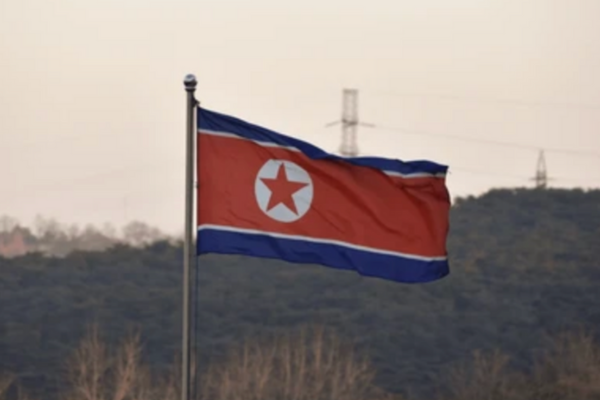
This article takes a closer look at the history, current state, and challenges facing North Korean currency, shedding light on the deeper economic dynamics at play.
The History and Role of the North Korean Won
The North Korean won was introduced in 1947, just two years after the establishment of the DPRK. It replaced the Korean yen, which had been used during Japan’s colonial rule over Korea. The currency’s introduction was part of North Korea’s effort to assert its sovereignty and economic independence following the end of the Second World War.
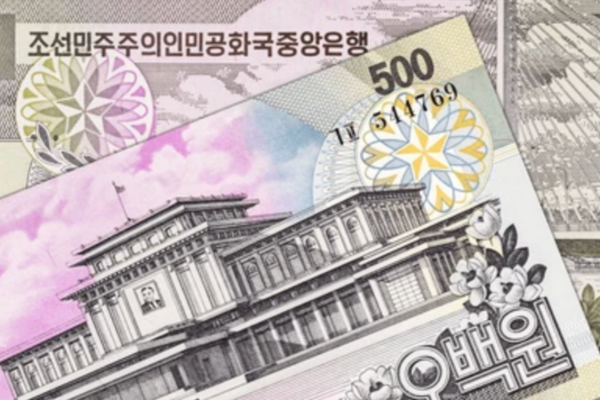
Since then, the North Korean won has undergone several revaluations, particularly in efforts to combat hyperinflation. The most notable revaluation took place in 2009, when the government removed zeroes from the currency, a move that aimed to curb inflation and the hoarding of wealth.
However, this initiative ultimately failed to stabilize the currency, and the country continued to face severe economic challenges.
Today, the North Korean won remains a symbol of the country’s self-reliance, but its actual value and purchasing power have been severely undermined by inflation, economic mismanagement, and external sanctions.
A Dual Currency System in North Korea
One of the most distinctive features of the North Korean economy is its dual currency system:
- Official Exchange Rate: The government sets a fixed exchange rate for the won, which often bears little resemblance to its actual purchasing power.
- Black Market Rate: Due to the government’s control over currency exchange and limited availability of foreign currency, much of the real-world value of the North Korean won is determined in the black market.
On the black market, the value of the won is typically much weaker than the official exchange rate. In 2025, for example, the official rate placed 1 U.S. dollar at around ₩900. However, on the black market, the same dollar was often exchanged for as much as ₩40,000. This discrepancy is a clear reflection of the country’s economic isolation and the lack of confidence in its official currency.
Inflation and the Struggles of the North Korean Won
Inflation is a major issue for the North Korean economy and has contributed significantly to the devaluation of the North Korean won.
In recent years, especially since late 2024 and into 2025, inflation has spiraled out of control. Basic goods, particularly food items such as rice and corn, have seen massive price increases due to the ongoing currency devaluation.
North Korea’s official inflation rate is rarely disclosed, but reports from South Korean think tanks and defectors consistently point to double-digit inflation. According to some sources, staple food prices have surged fourfold in just a few years, straining families that already live in poverty.
This economic pressure is exacerbated by international sanctions, which limit North Korea’s ability to trade internationally and access foreign currency.
The Black Market: North Korea’s Shadow Economy
The black market plays an essential role in North Korea’s economy, where most transactions are carried out in foreign currencies, such as the Chinese yuan and the U.S. dollar. Although using foreign currencies is technically illegal, the population has turned to them due to their relative stability compared to the volatile North Korean won.
Markets in Pyongyang and other cities feature foreign exchange rates that are vastly different from the government-controlled rates. This phenomenon, often referred to as “spontaneous dollarization”, allows citizens to protect themselves against the declining value of the North Korean won.
The rise of foreign currency markets also reflects the limited effectiveness of North Korean currency policies and the resilience of the people who have found ways to circumvent government restrictions.
The Impact of Sanctions and International Relations
North Korea’s currency issues are deeply tied to its international relations, particularly the sanctions imposed by the United Nations and other countries due to its nuclear weapons program. These sanctions have left the country largely cut off from the global financial system, with limited access to global financial markets and investment.
As a result, North Korea’s trade relations are restricted primarily to China and Russia, where the Chinese yuan has become a widely used alternative currency in both official and unofficial transactions.
The isolation of the North Korean economy and the political instability that results from its nuclear weapons program make the North Korean won highly volatile and prone to large swings in value, particularly in the context of international economic pressure.
The Future of the North Korean Currency
The future of the North Korean won remains uncertain. Given the country’s ongoing economic isolation, high inflation rates, and the reliance on black-market activity, the won’s real value will likely continue to fluctuate drastically in the coming years.
Without significant economic reforms or a shift in international relations, the North Korean won will remain a highly speculative currency, used primarily for domestic transactions but with little standing in the global market.
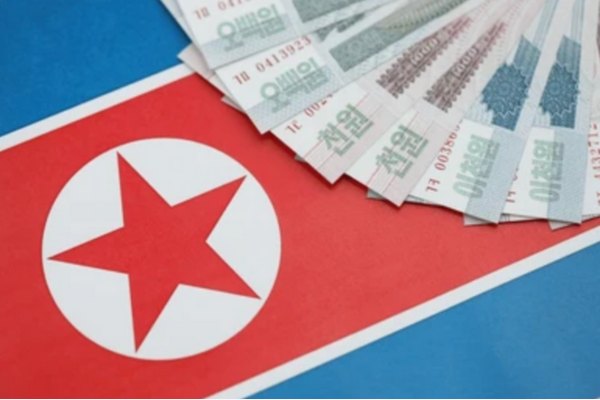
For citizens, the continued devaluation of the won means that their savings and purchasing power are at constant risk. As North Korea faces mounting challenges both internally and externally, its currency will continue to be a reflection of these struggles to hold its value amidst an ongoing economic crisis.
A Currency in Crisis
The North Korean won has long been a symbol of the country’s self-reliant economic ideology, but its real-world value has been severely undermined by inflation, economic mismanagement, and international sanctions.
The dual currency system, with its reliance on black market exchanges, reflects the challenges facing North Korea’s economy, where foreign currencies have become the preferred medium of exchange for many people.
While the country’s leadership continues to defend the won as a symbol of sovereignty, the reality is that the currency remains largely insulated from global financial systems, limiting its ability to be used outside North Korea’s borders.
For now, the North Korean won will likely continue to face significant economic pressure, with inflation and currency devaluation remaining central challenges in the years ahead.
Disclaimer: This content is provided for informational purposes only and does not constitute, and should not be construed as, financial, investment, or other professional advice. No statement or opinion contained here in should be considered a recommendation by Ultima Markets or the author regarding any specific investment product, strategy, or transaction. Readers are advised not to rely solely on this material when making investment decisions and should seek independent advice where appropriate.
Latest Articles
FOLLOW US






Ultima Markets is a member of The Financial Commission, an international independent body responsible for resolving disputes in the Forex and CFD markets.

All clients of Ultima Markets are protected under insurance coverage provided by Willis Towers Watson (WTW), a global insurance brokerage established in 1828, with claims eligibility up to US$1,000,000 per account.

Ultima Markets is the first United CFD broker to be part of the United Nations Global Compact.
FOLLOW US
TRADE WITH US
RISK DISCLOSURE
Risk Warning:
Trading leveraged financial products, including Contracts for Difference (CFDs), carries a high level of risk and may result in losses exceeding your initial investment. These products are not suitable for all investors and should only be traded with funds you can afford to lose. You do not own or have any rights to the underlying assets of these derivatives (e.g., entitlement to dividends). Please ensure you fully understand the associated risks. Before trading, consider your level of experience, investment objectives, and seek independent financial advice if necessary. Refer to our legal documents and disclosures before making any trading decisions.
General Advice Warning:
The information provided on this website is general in nature and does not take into account your personal objectives, financial situation, or needs. Before acting on any advice, you should assess its appropriateness in light of your individual circumstances and consult our legal documentation.
Regional Restrictions:
The information and services on this website are not intended for residents of certain jurisdictions, including but not limited to the United States, United Kingdom, Singapore, and any jurisdictions subject to international sanctions. For further information, please contact our customer support team.
Regulatory Information:
Ultima Markets is a trading name shared amongst multiple entities operating in various jurisdictions. These following entities are authorised to operate under the Ultima Markets brand and trademarks.
-
Ultima Markets UK Limited, reference number 470325, is authorised and regulated by the Financial Conduct Authority (FCA). Registered address: 1 Blossom Yard, Fourth Floor, London, E1 6RS, UNITED KINGDOM.
-
Ultima Markets Ltd is authorised and regulated by the Financial Services Commission (FSC) of Mauritius as a Full-Service Investment Dealer (excluding Underwriting), under licence number GB 23201593.
Registered address: 2nd Floor, The Catalyst, 40 Silicon Avenue, Ebene Cybercity, 72201, Mauritius.

Copyright © 2025 Ultima Markets Ltd. All rights reserved.
-

Messenger


Continue on Messenger
Take the conversation to your Messenger account. You can return anytime.
Scan the QR code and then send the message that appears in your Messenger.
Open Messenger on this device.
-

Instagram

Continue on Instagram
Take the conversation to your Instagram account. You can return anytime.
Scan the QR code to open Instagram. Follow @ultima_markets to send a DM.
Open Instagram on this device.
-

Live Chat
-

